
You only need to fumble for the wrong treat once while your dog is mid-recall to realise packing matters. If you are wondering how to pack dog training bag essentials properly, the goal is simple - keep rewards quick to reach, safety items easy to grab, and everything else in a place that makes sense under pressure.
A good training session moves fast. Your dog sits, looks at you, ignores a distraction or nails a loose lead moment, and your reward needs to arrive straight away. If your bag is a muddle of crushed biscuits, loose poo bags, keys and a tangled lead, timing slips and the session gets scrappy. A well-packed bag does not just feel neater. It helps you train more clearly and more consistently.
How to pack dog training bag essentials properly
The best way to pack a training bag is by thinking in zones. Put your highest-priority items where your hand can reach them without looking. Put your backup items in secure compartments. Keep messy or scented things separate from your personal bits. That sounds obvious, but it is where most dog owners come unstuck.
Start with the items you need in the exact moment of training. Treats come first. They should sit in the easiest-access pocket or treat compartment, not buried in the main section. If you use two reward levels, keep everyday treats and high-value treats apart. That might mean kibble or low-value bites in one section, and chicken, cheese or something extra exciting in another. When you can switch rewards quickly, you can match the payment to the behaviour rather than handing out whatever your fingers find first.
Next, think about your lead setup. If you are actively training lead walking, a standard lead is usually easier to manage than stuffing a long line in with everything else. If you are working on recall, a long line matters, but it should be coiled neatly and stored so it will not snag when you pull it out. The key is not to pack every possible training tool every time. Carry what suits that specific session.
Then come the non-negotiables: poo bags, wipes and water. These are not the glamorous bits, but they save you from awkward moments and cut short sessions. Wipes are particularly useful if you use soft treats, train in muddy fields or have a dog who likes to launch into puddles before getting back in the car.
What goes in a dog training bag?
A well-packed dog training bag usually includes treats, poo bags, a lead, a clicker if you use one, wipes, water, your mobile phone and keys. Beyond that, it depends on your dog, your training style and where you are heading.
If your dog is young, reactive or still learning around distractions, your bag may need a bit more structure. Higher-value treats become more important. You might want a toy reward as well, especially if your dog works better for a tug or ball than for food. If your dog is steady and you are just topping up everyday manners on walks, you can pack lighter.
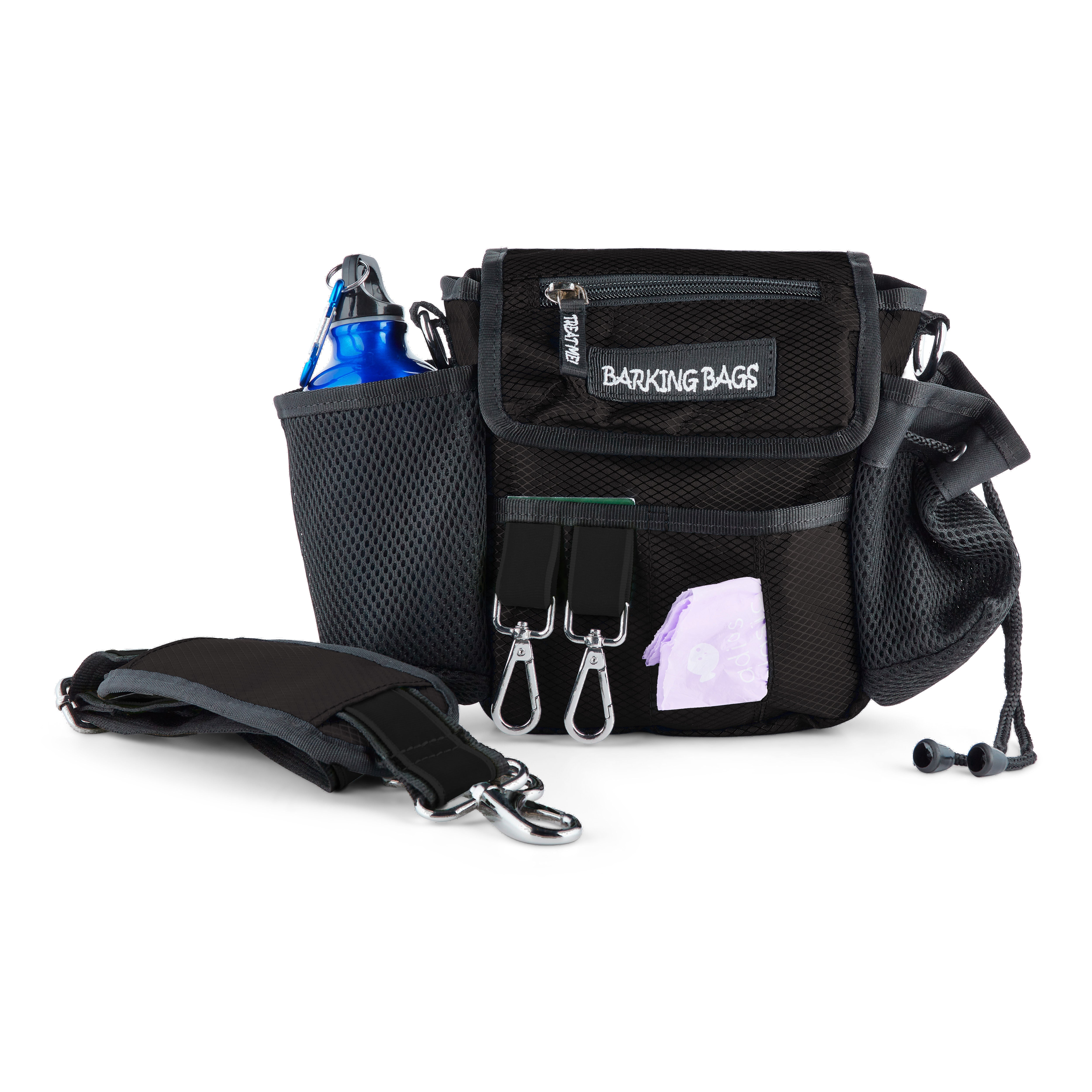
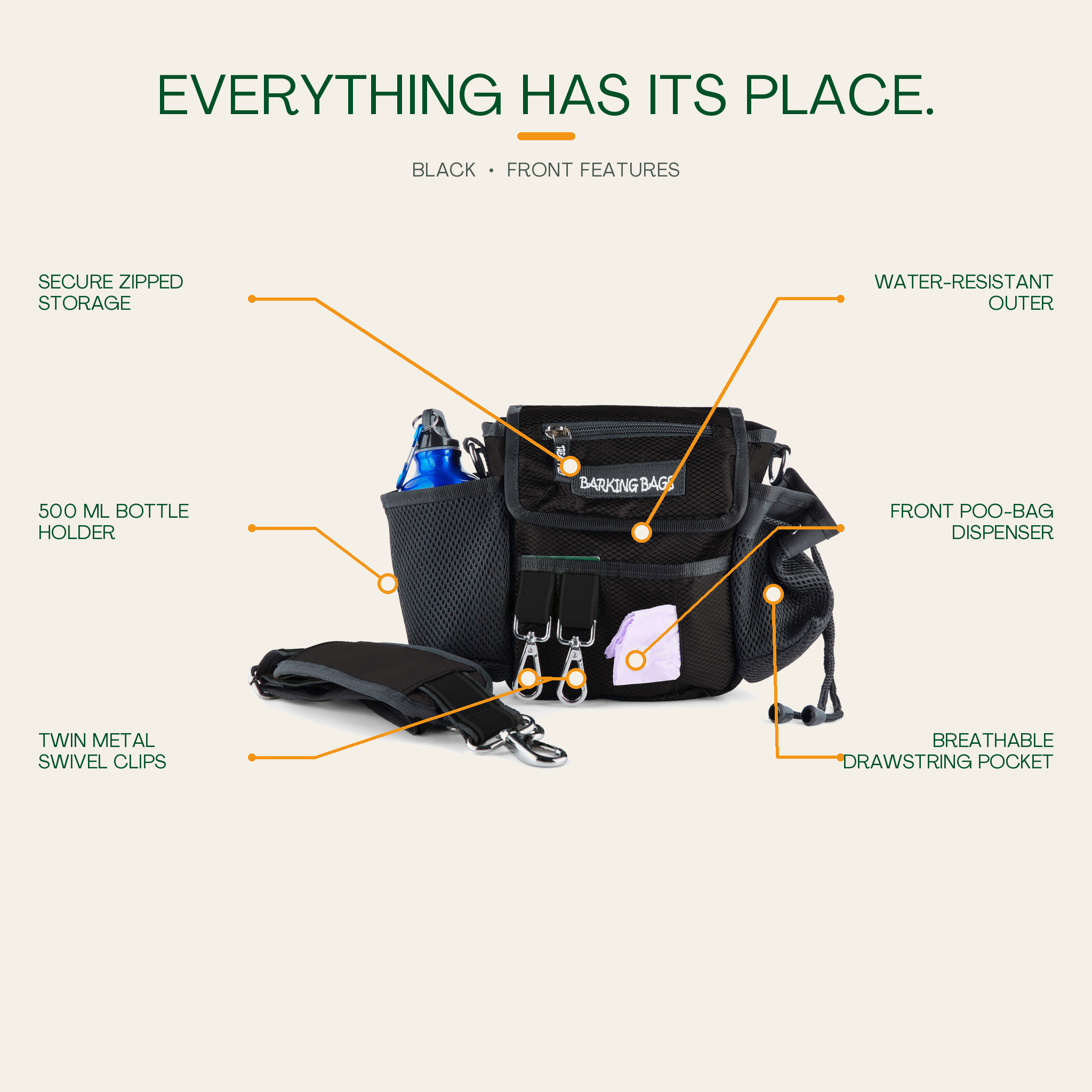
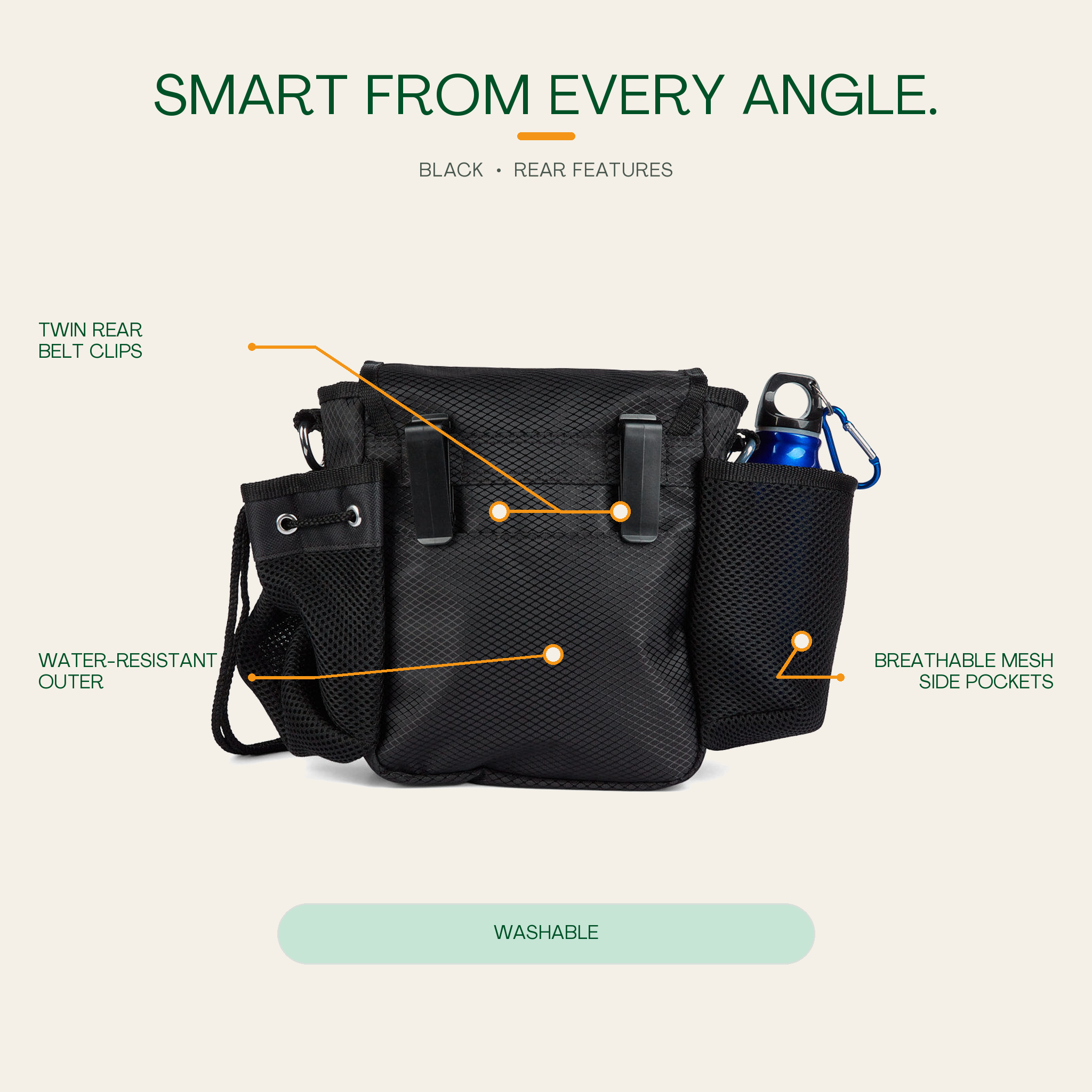
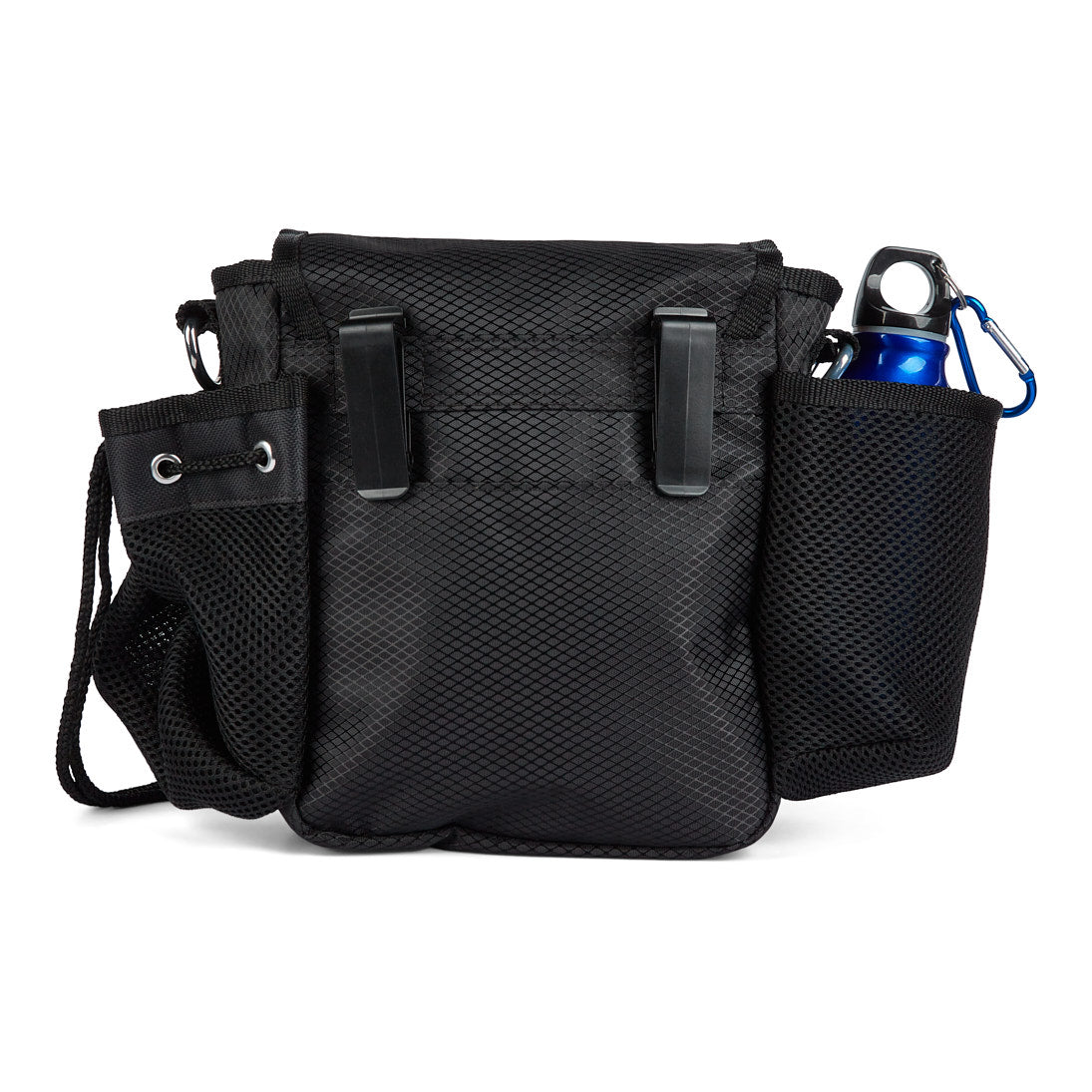
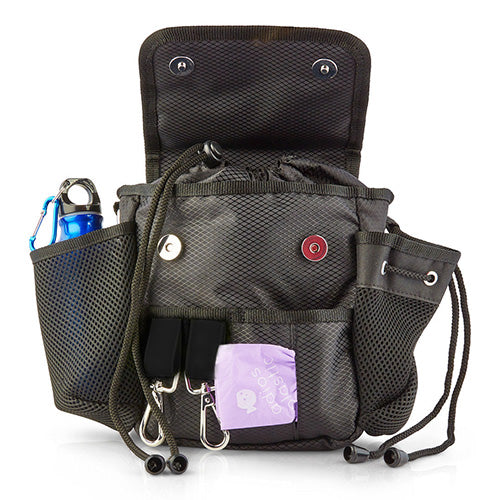
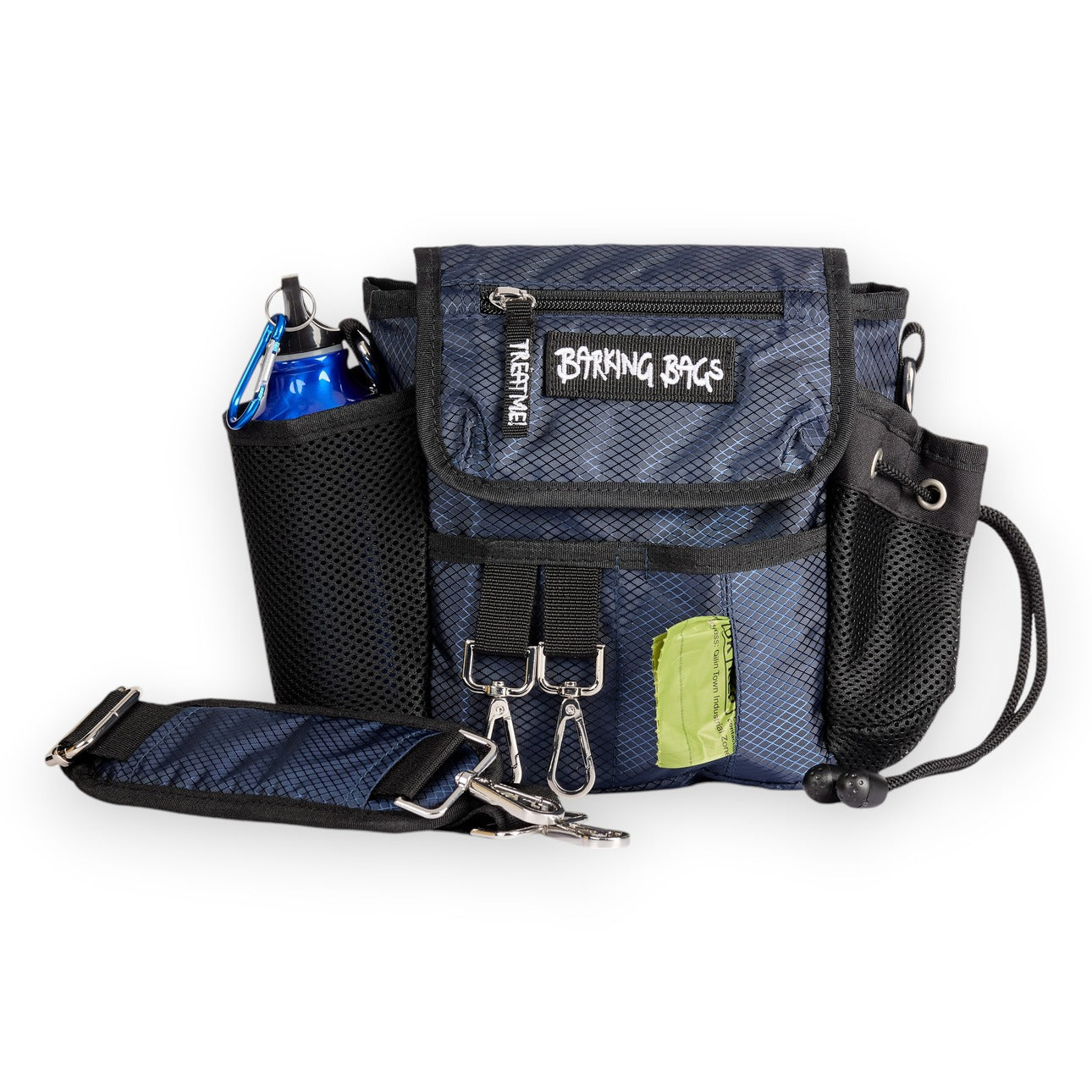
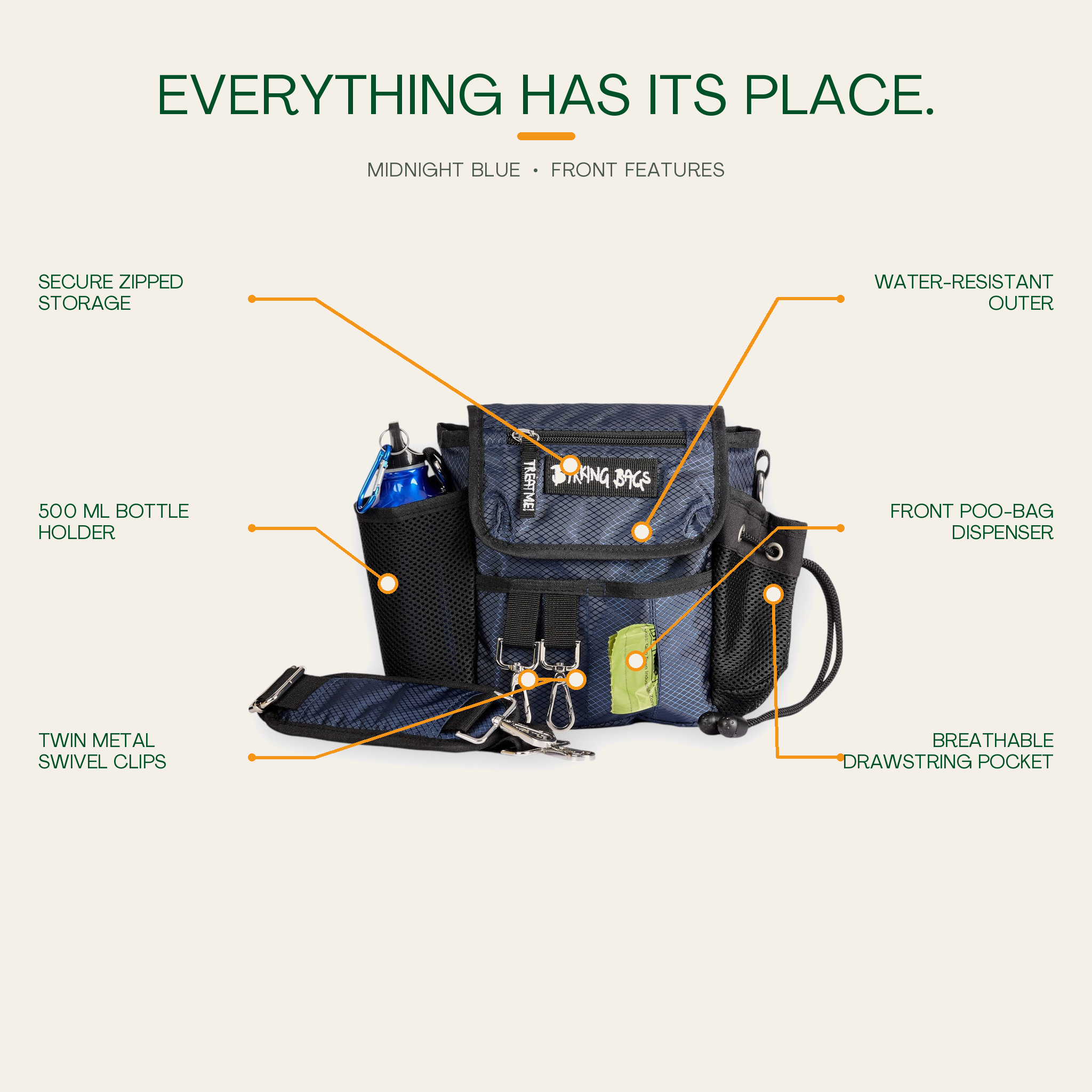
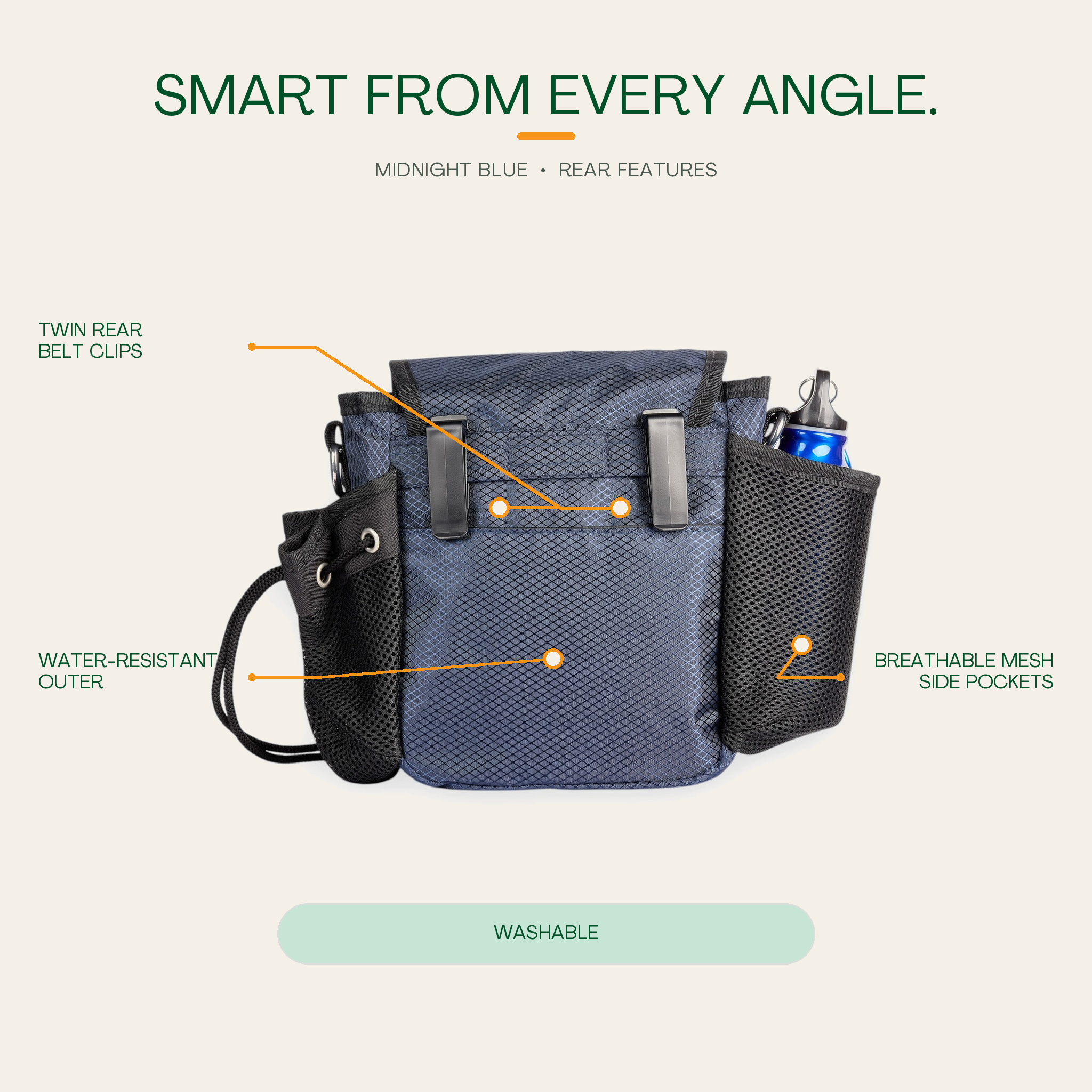
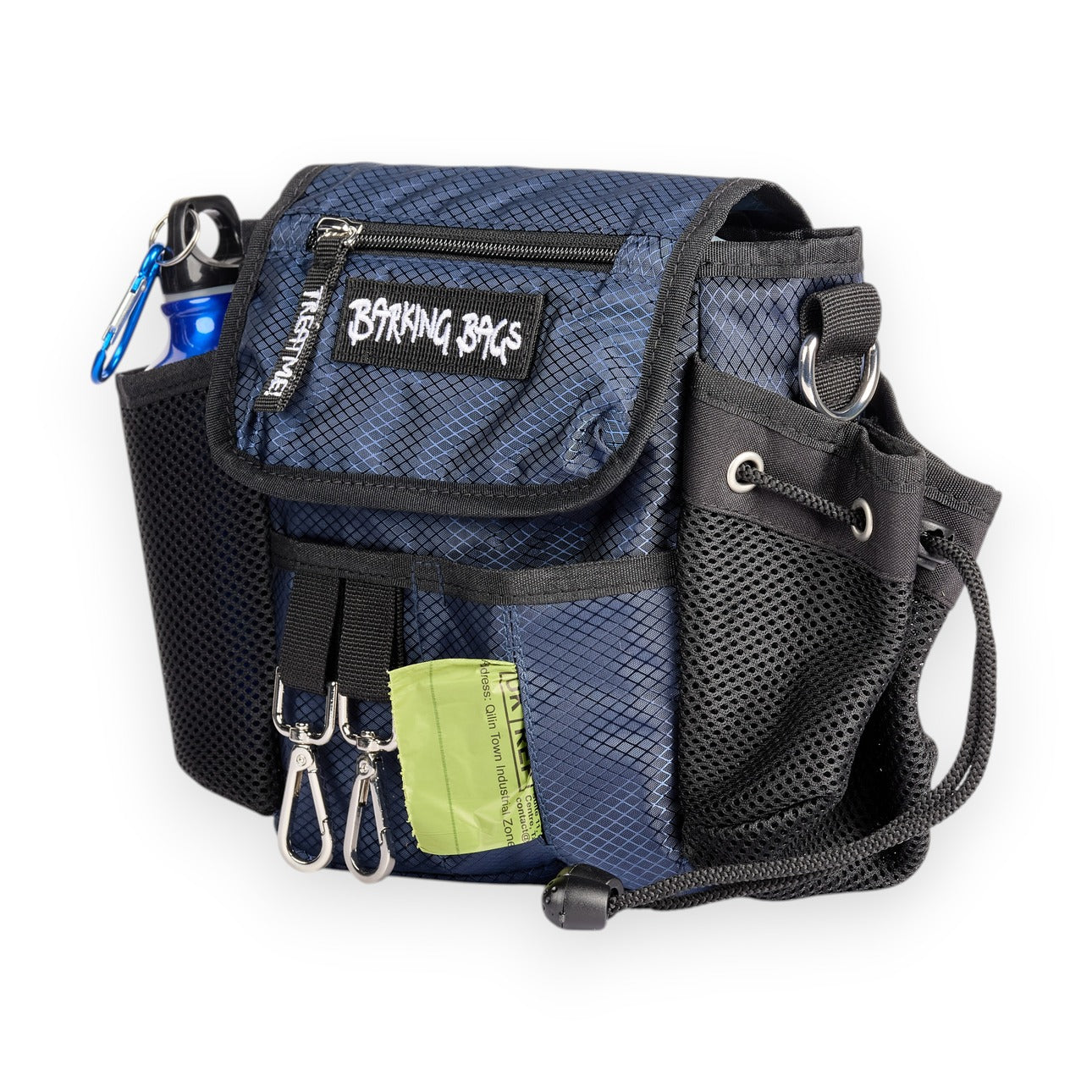
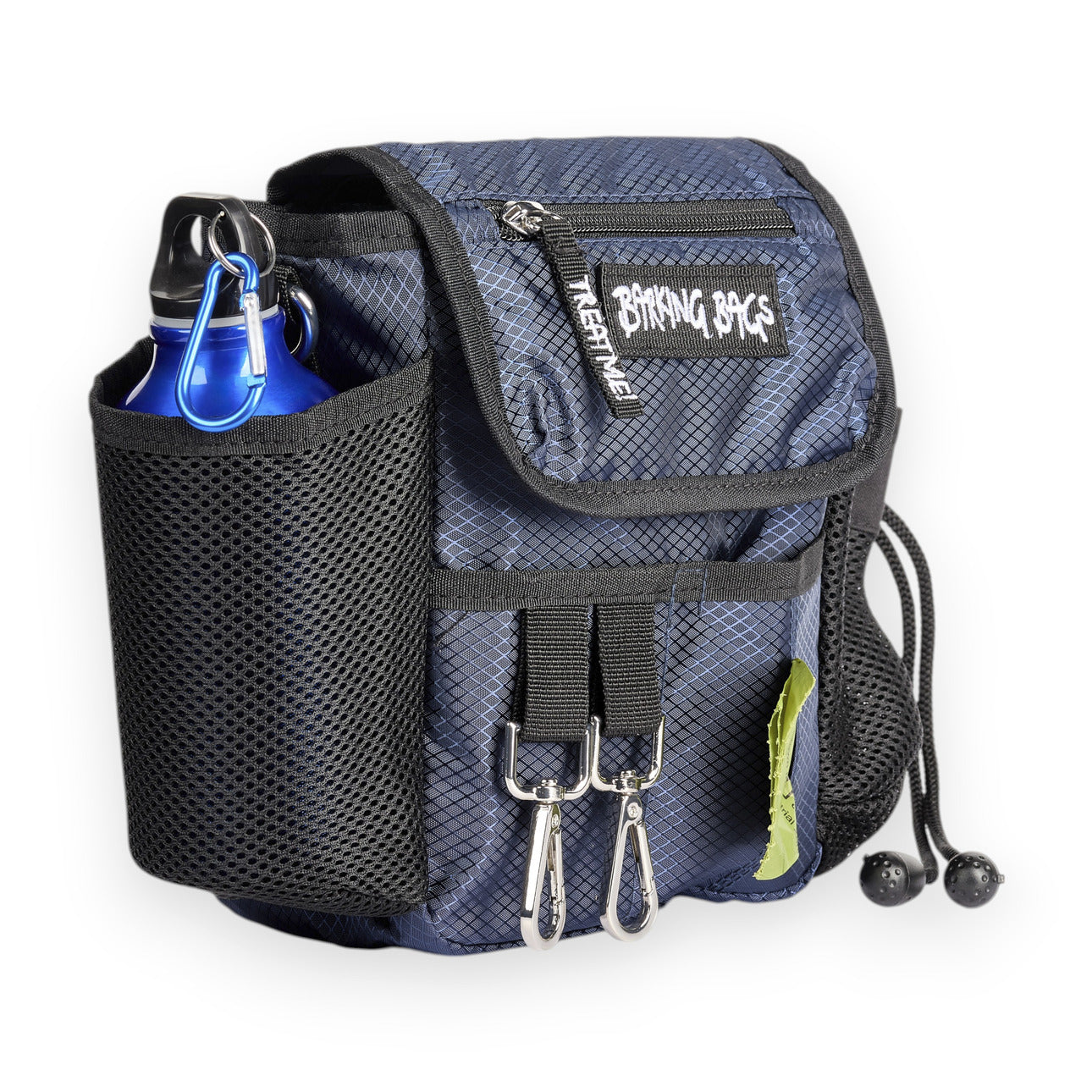
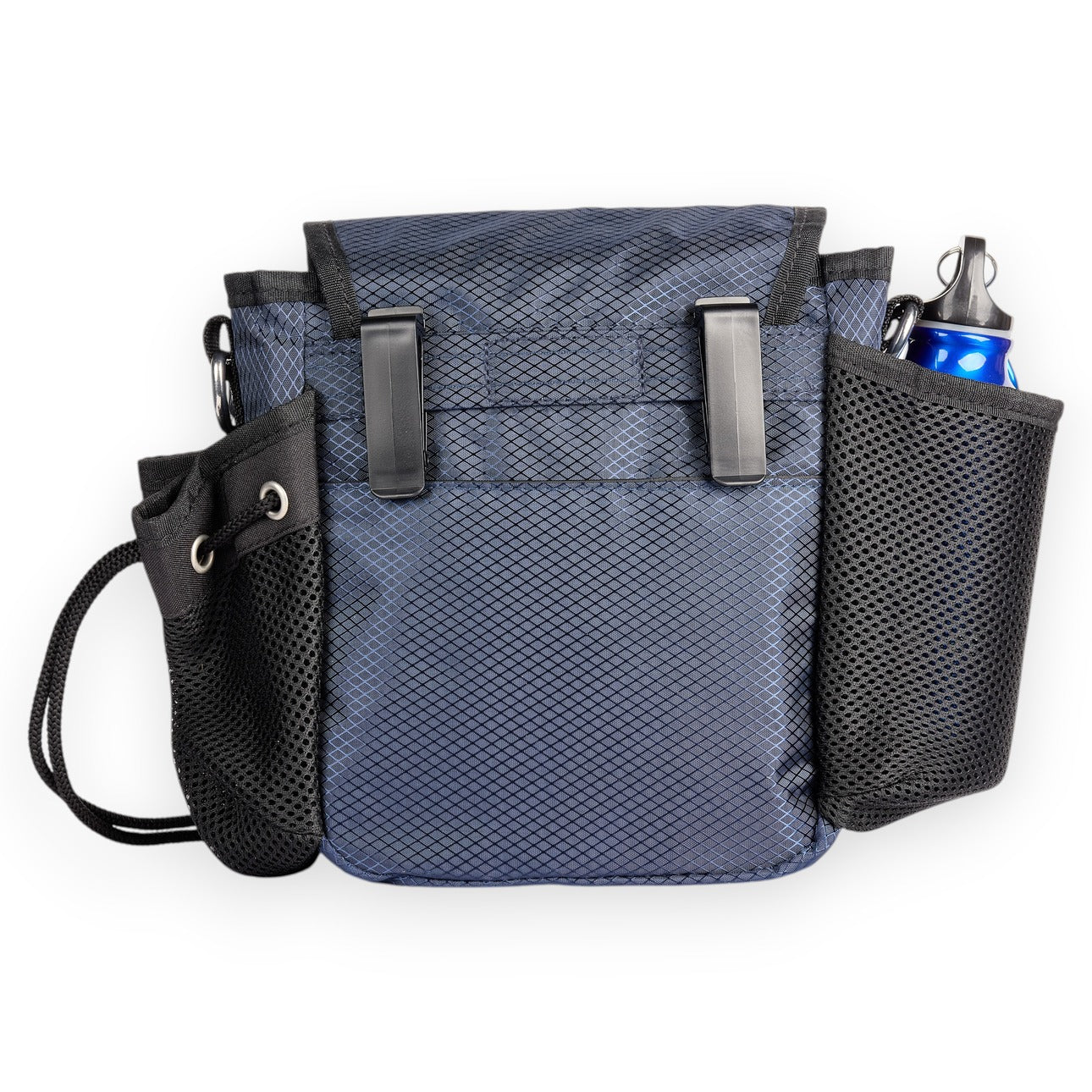
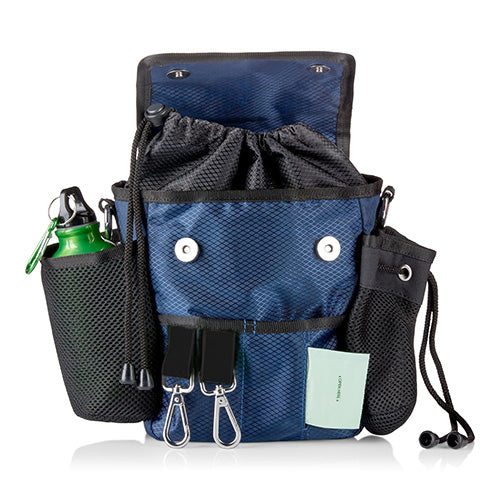
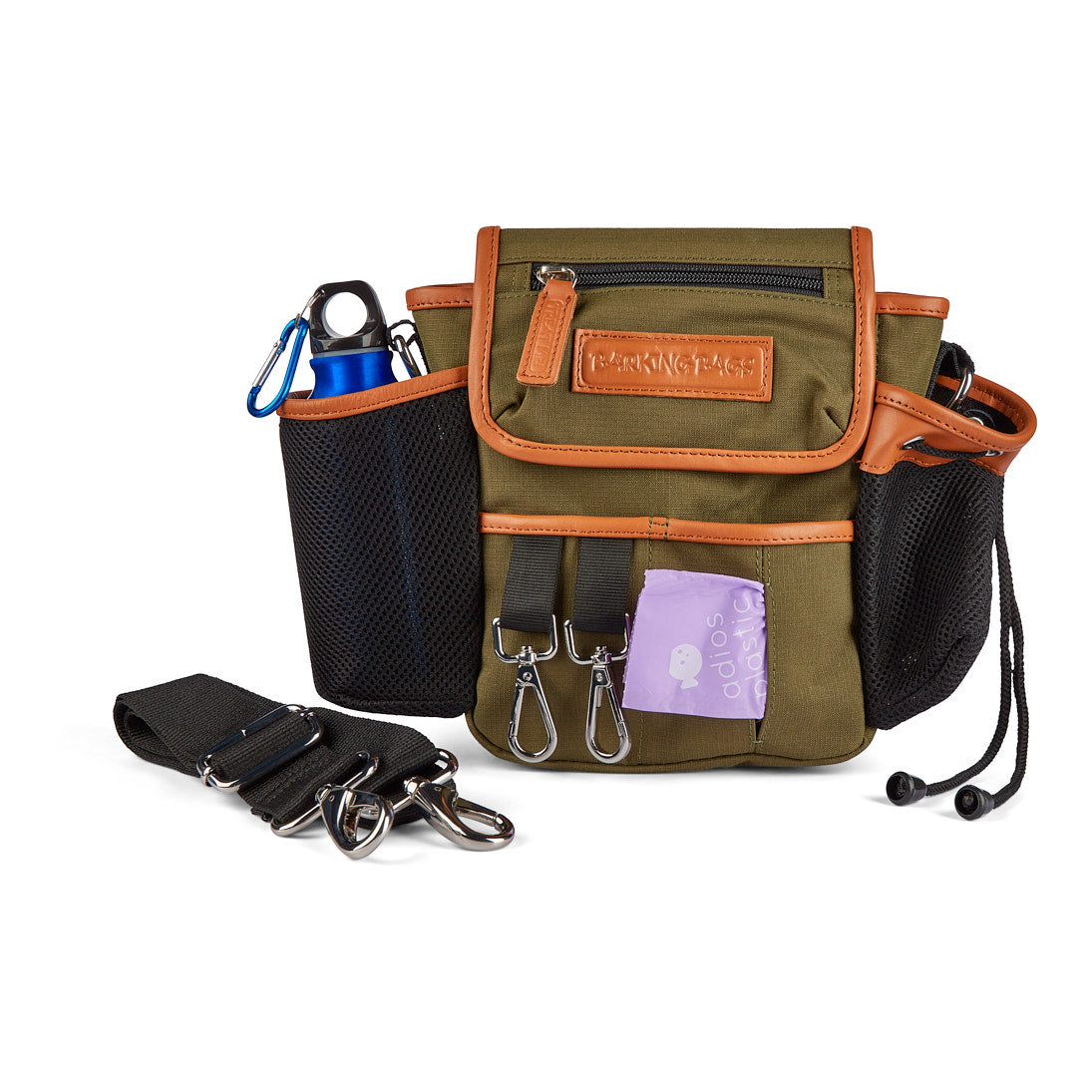
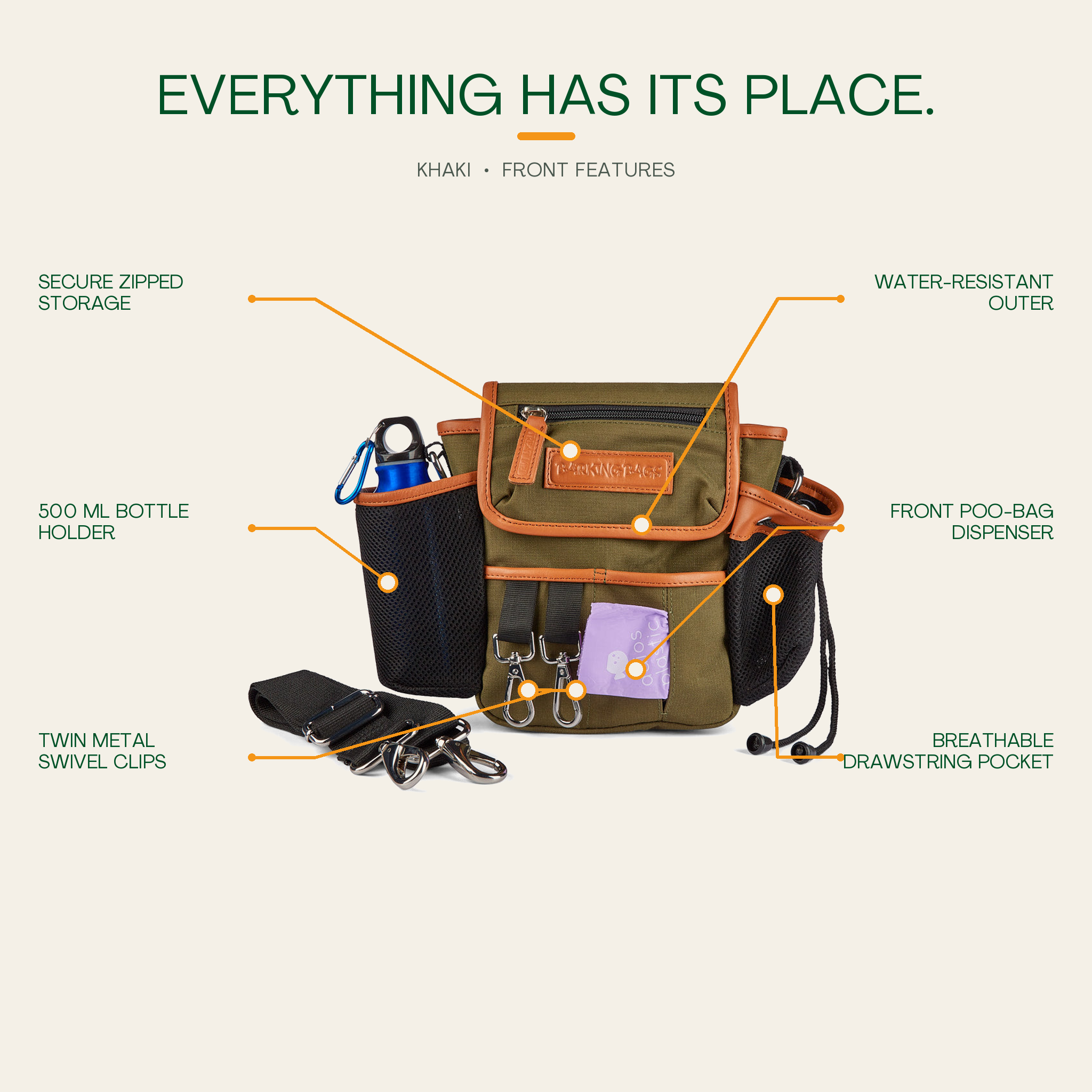
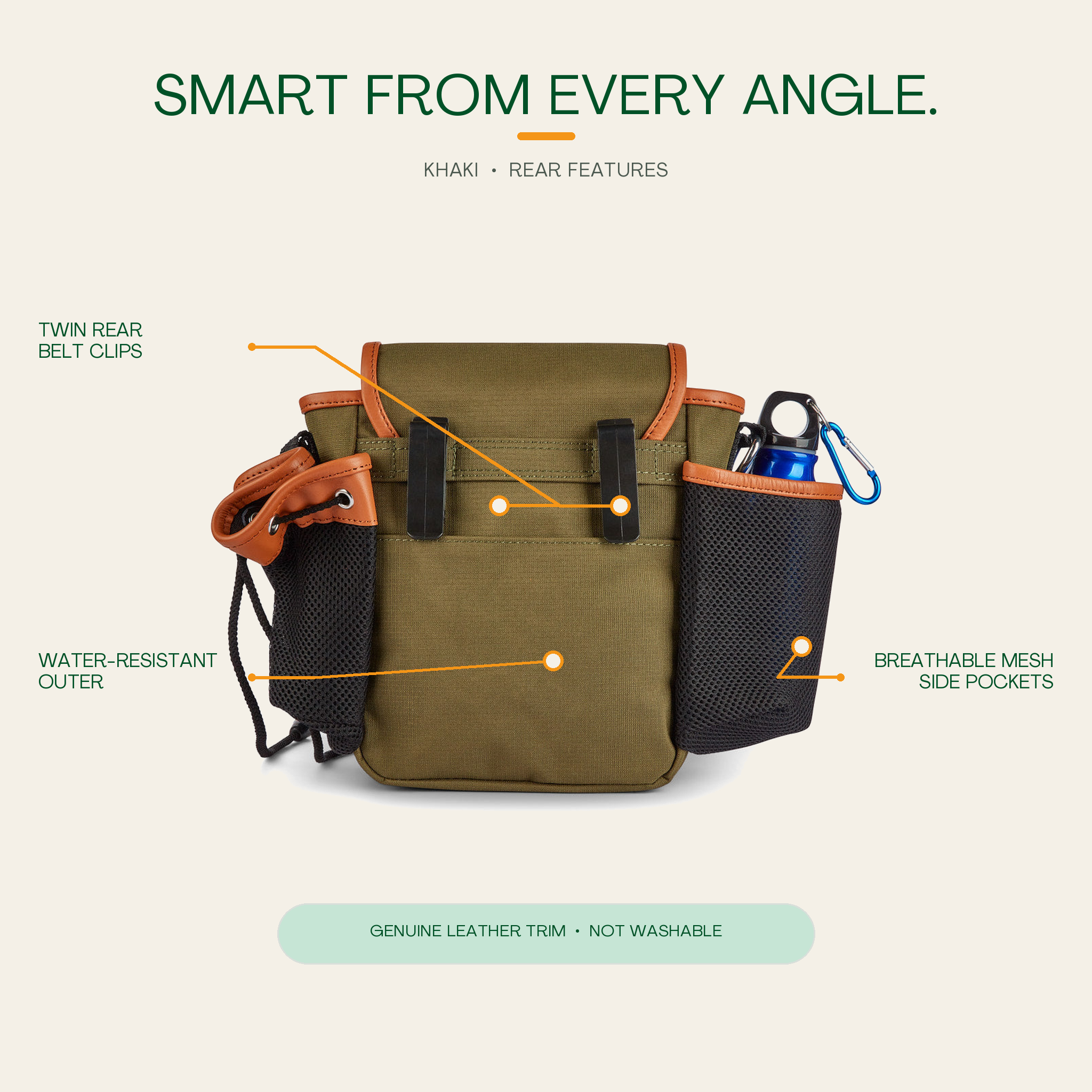
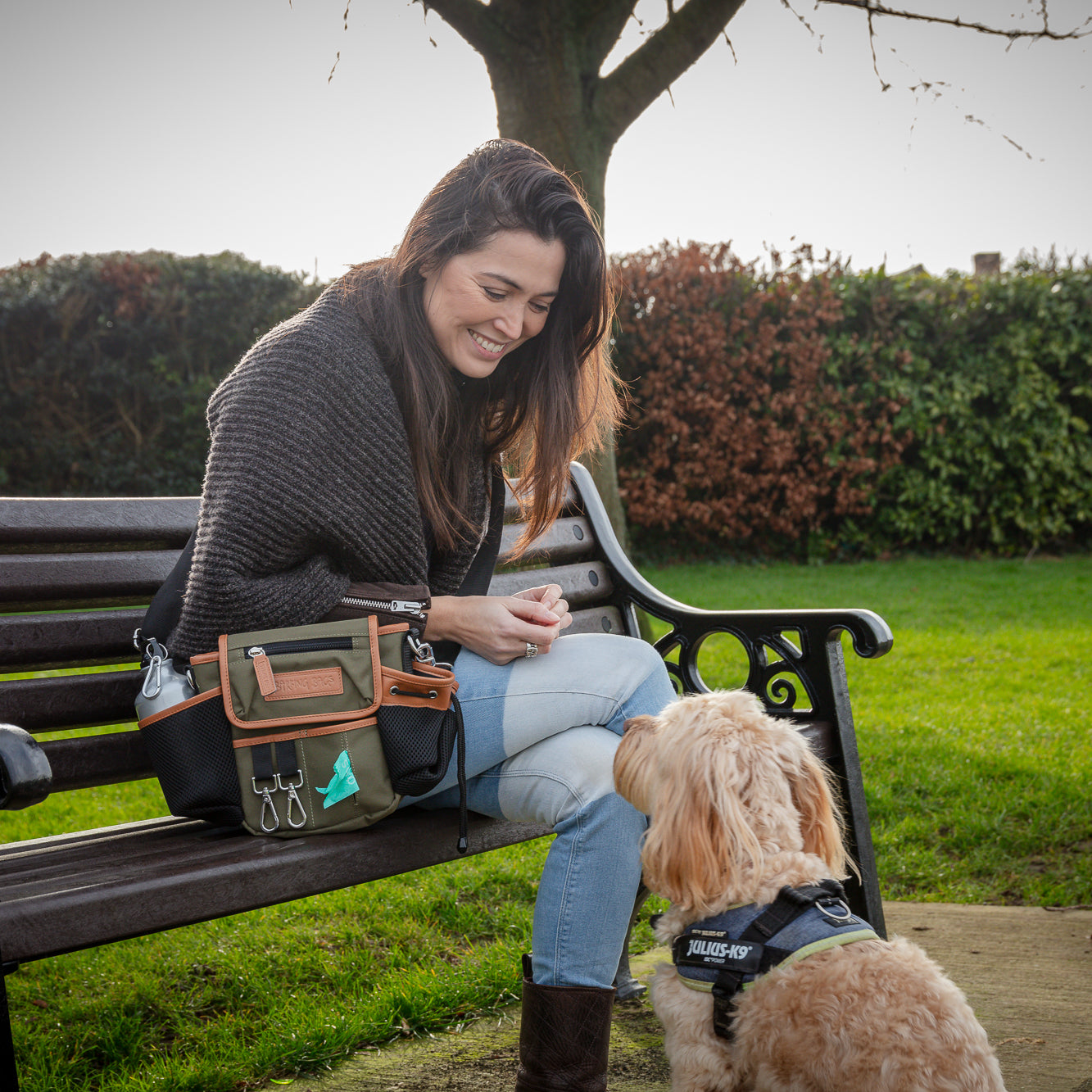
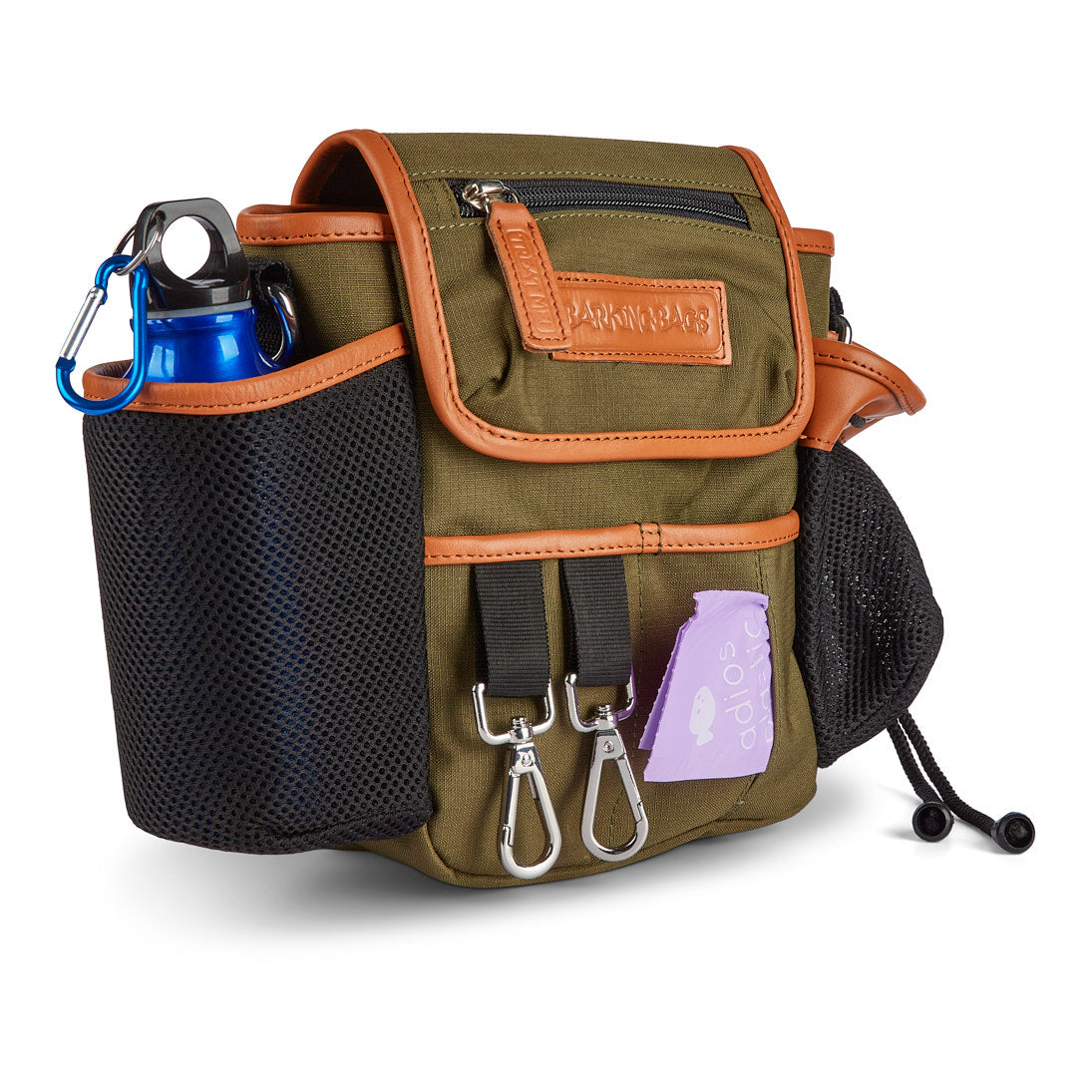
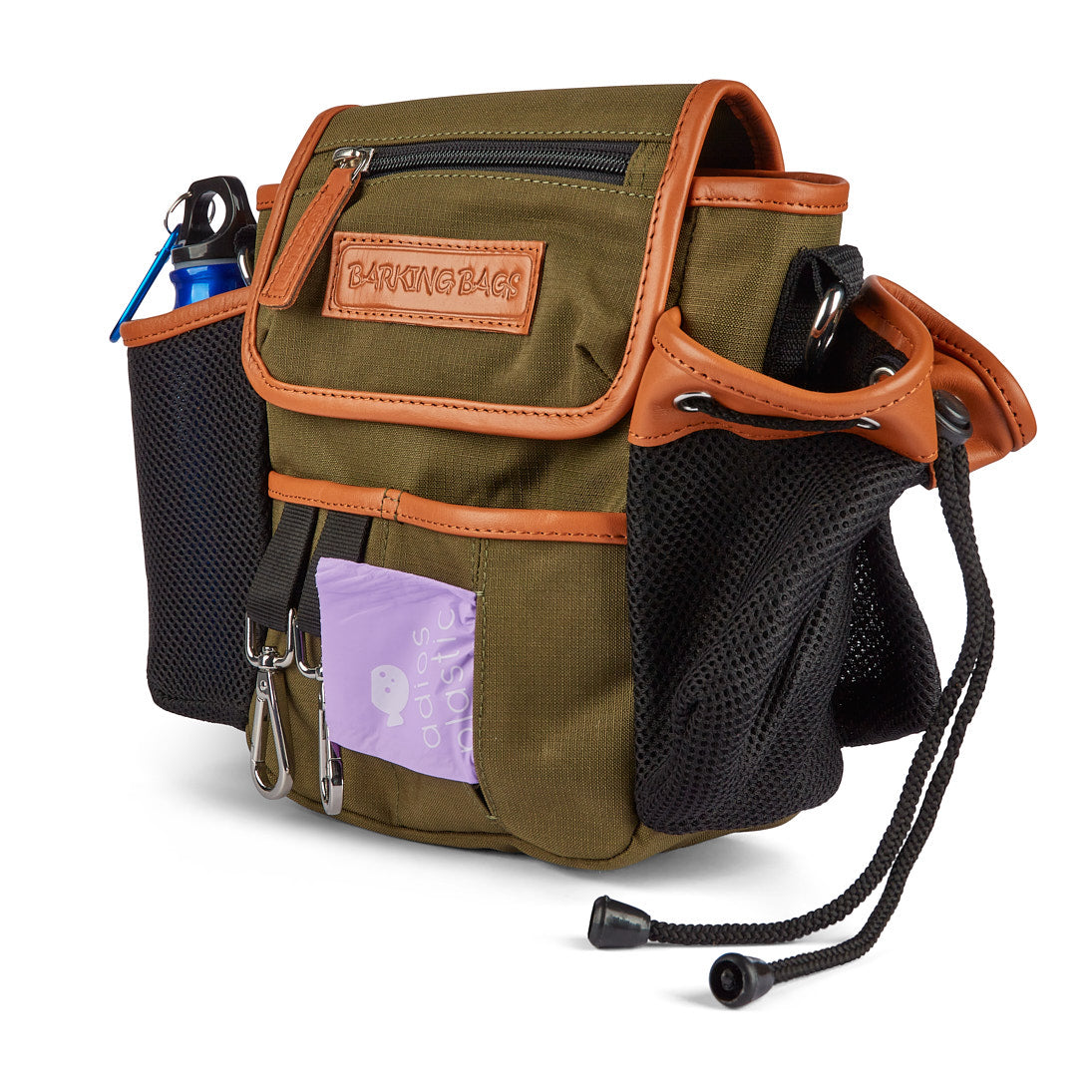
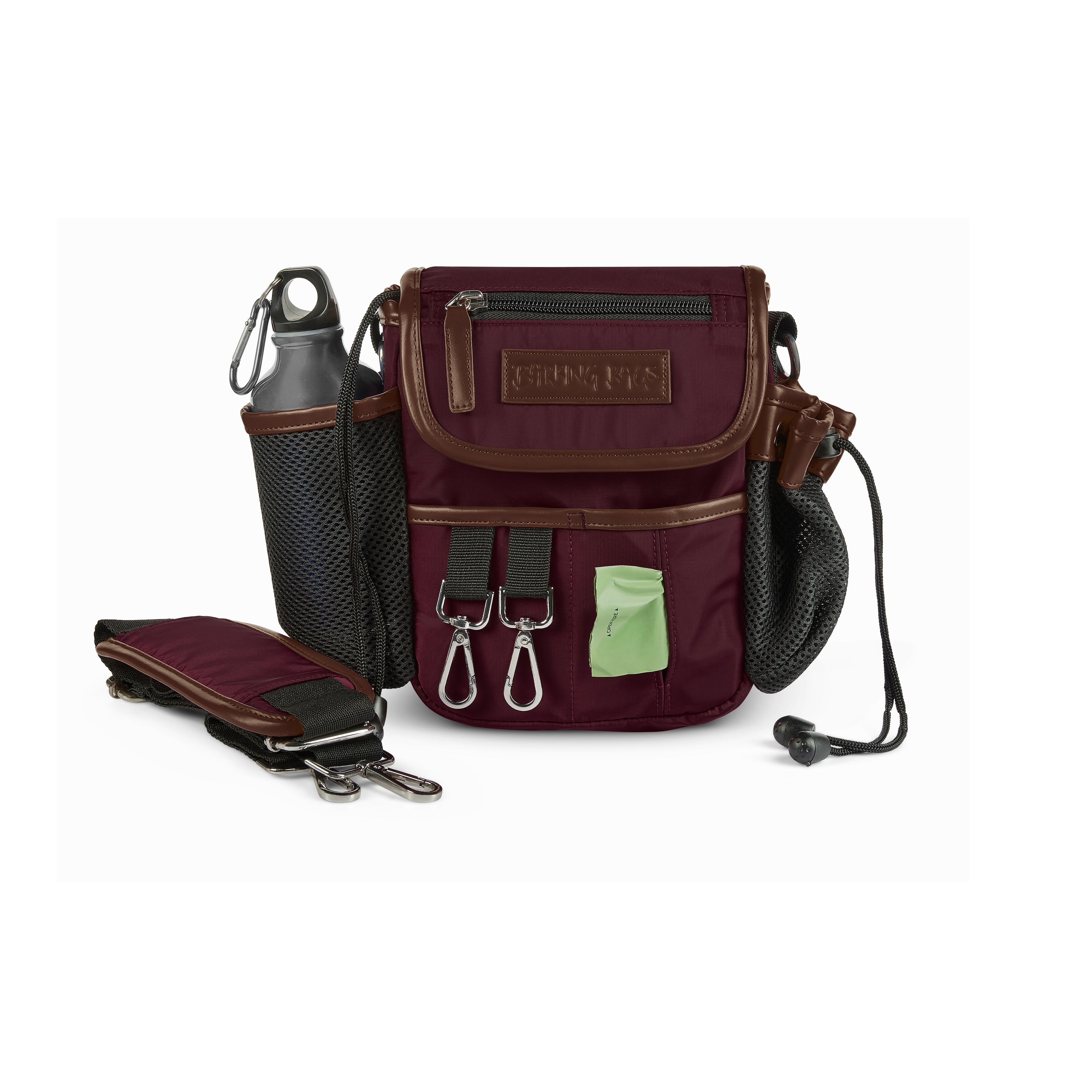
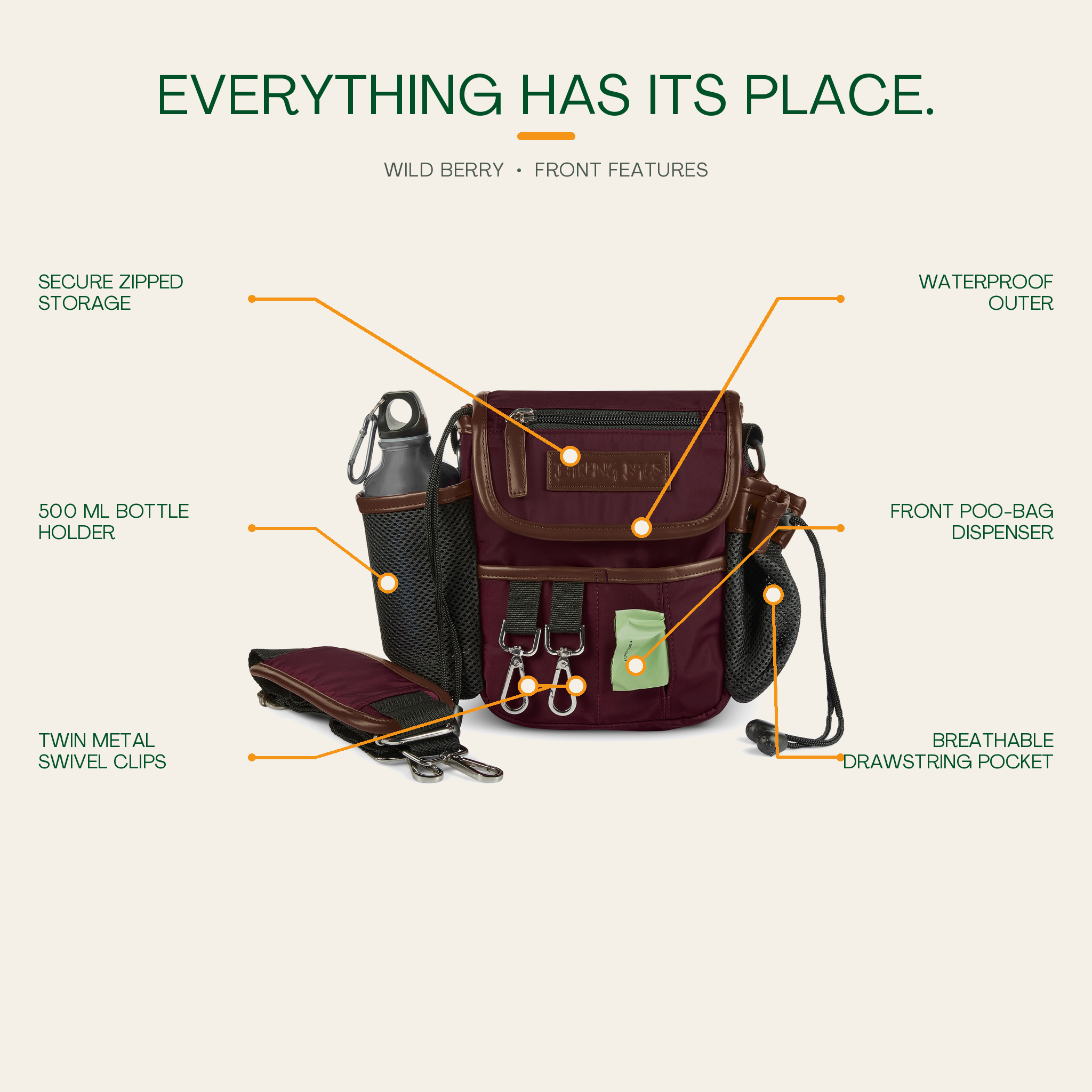
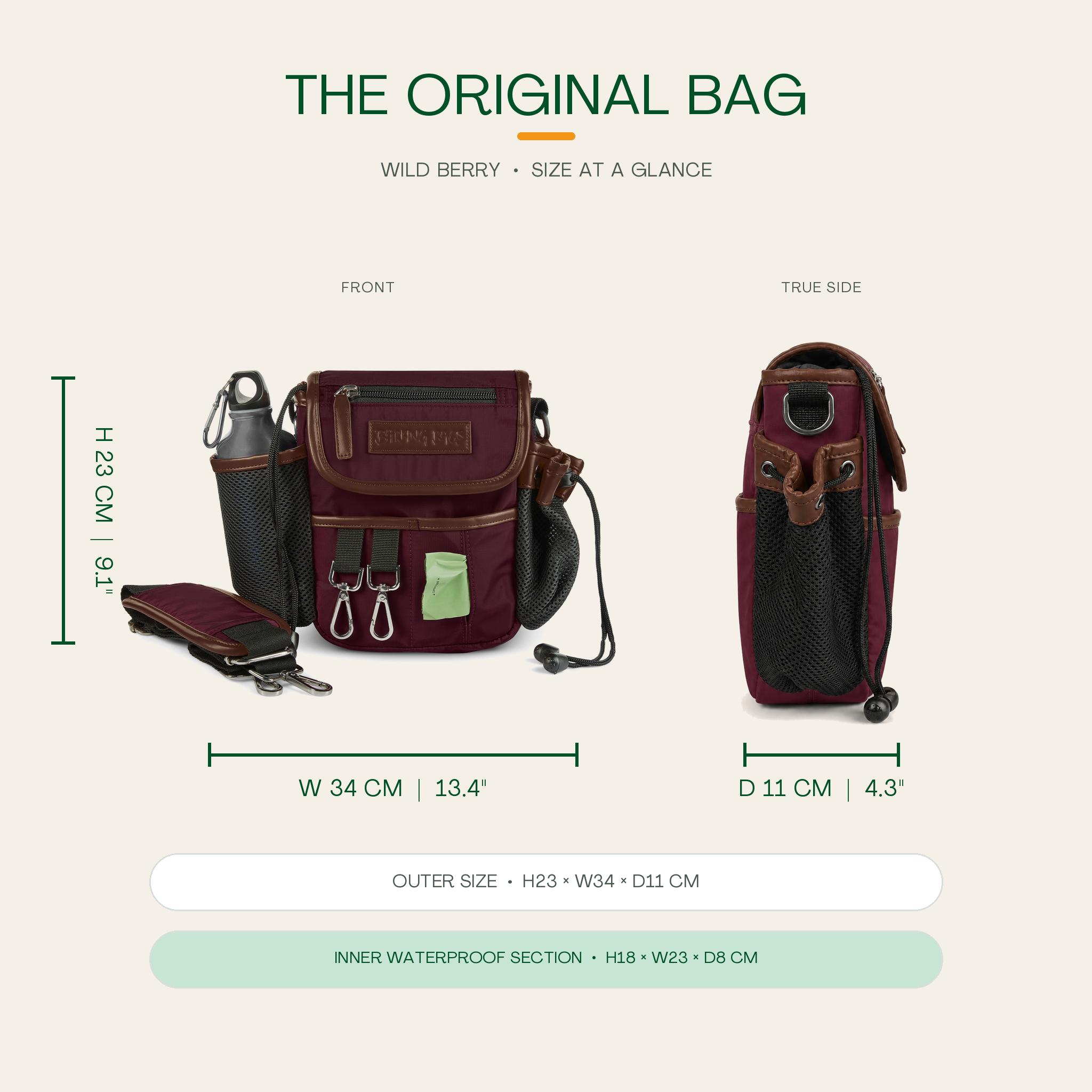
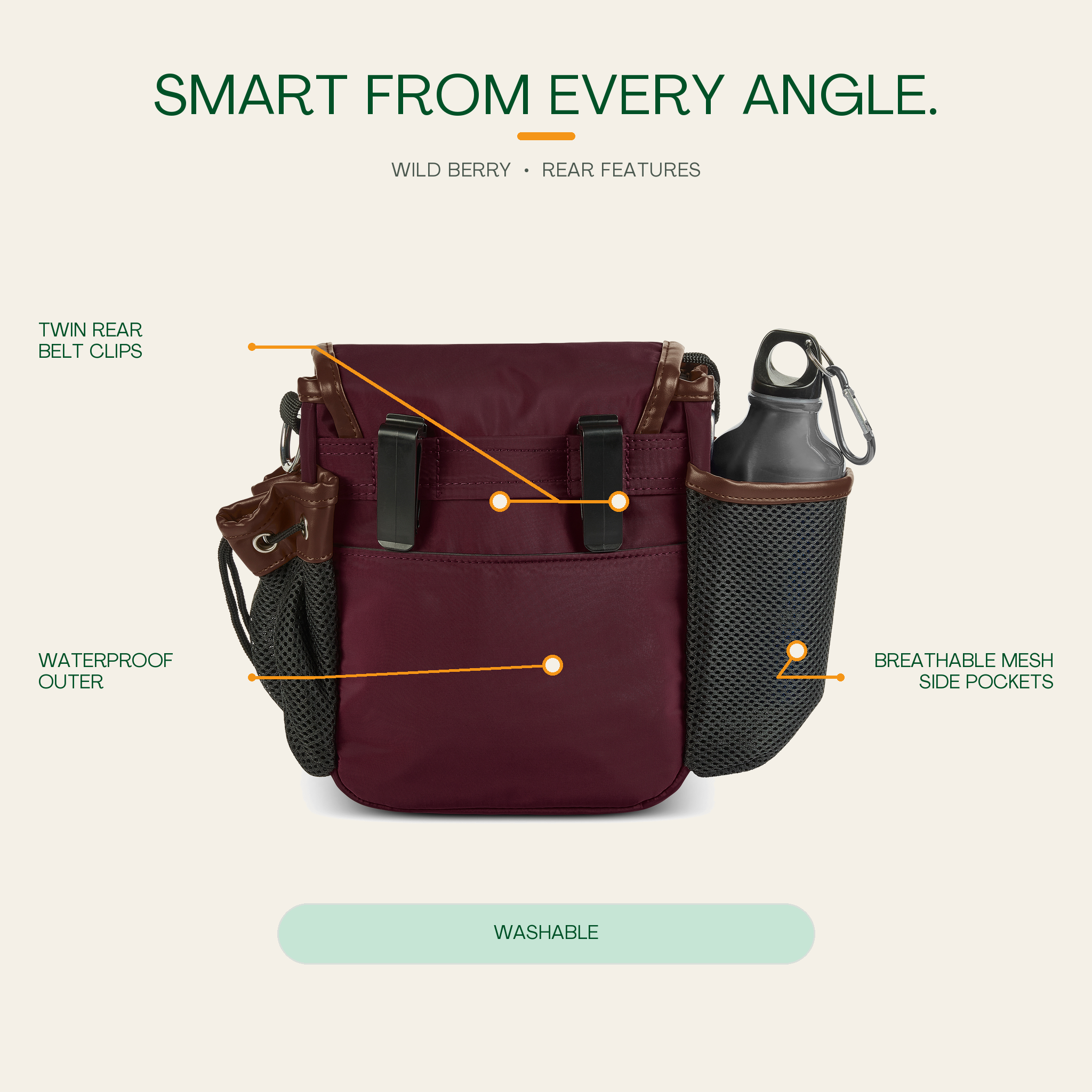
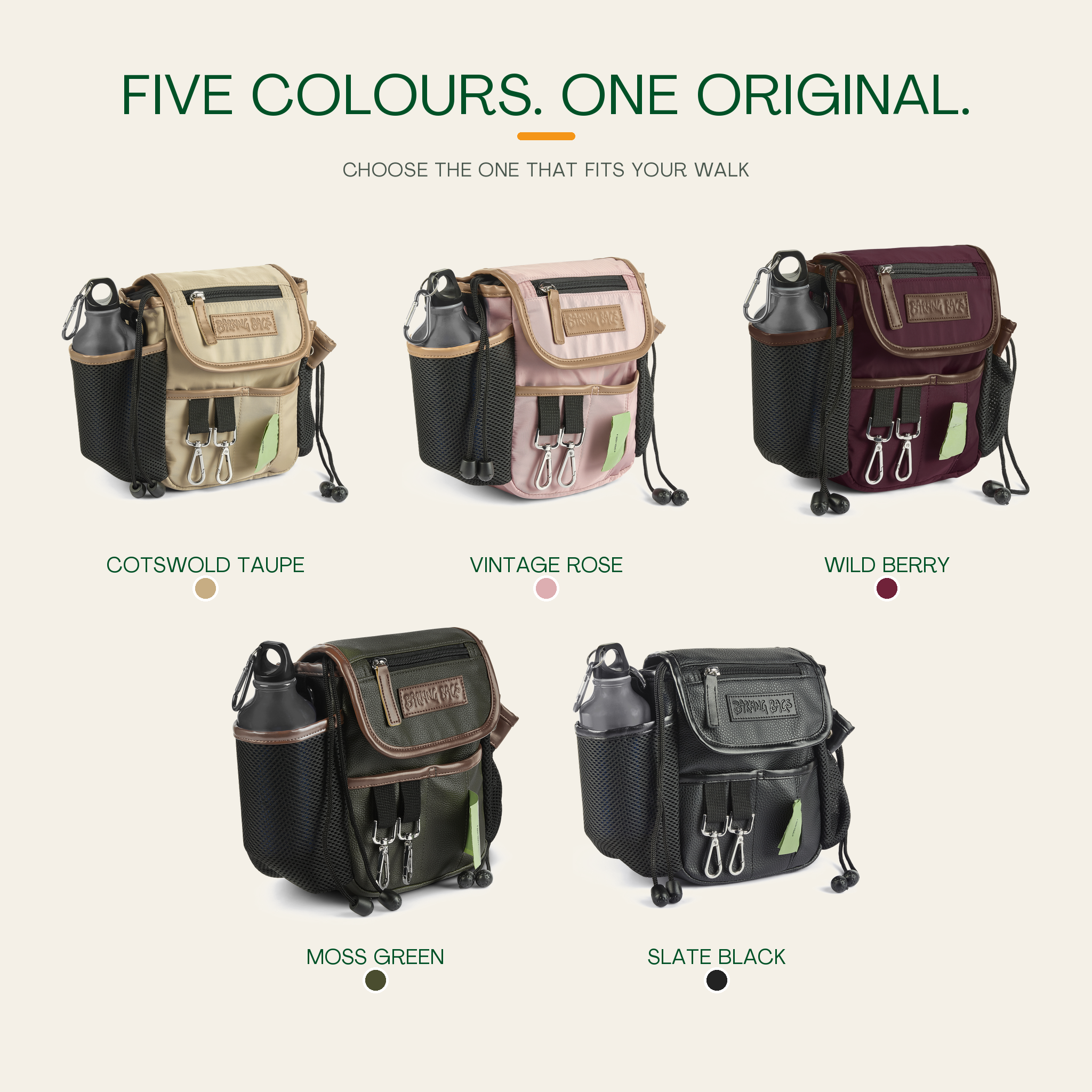
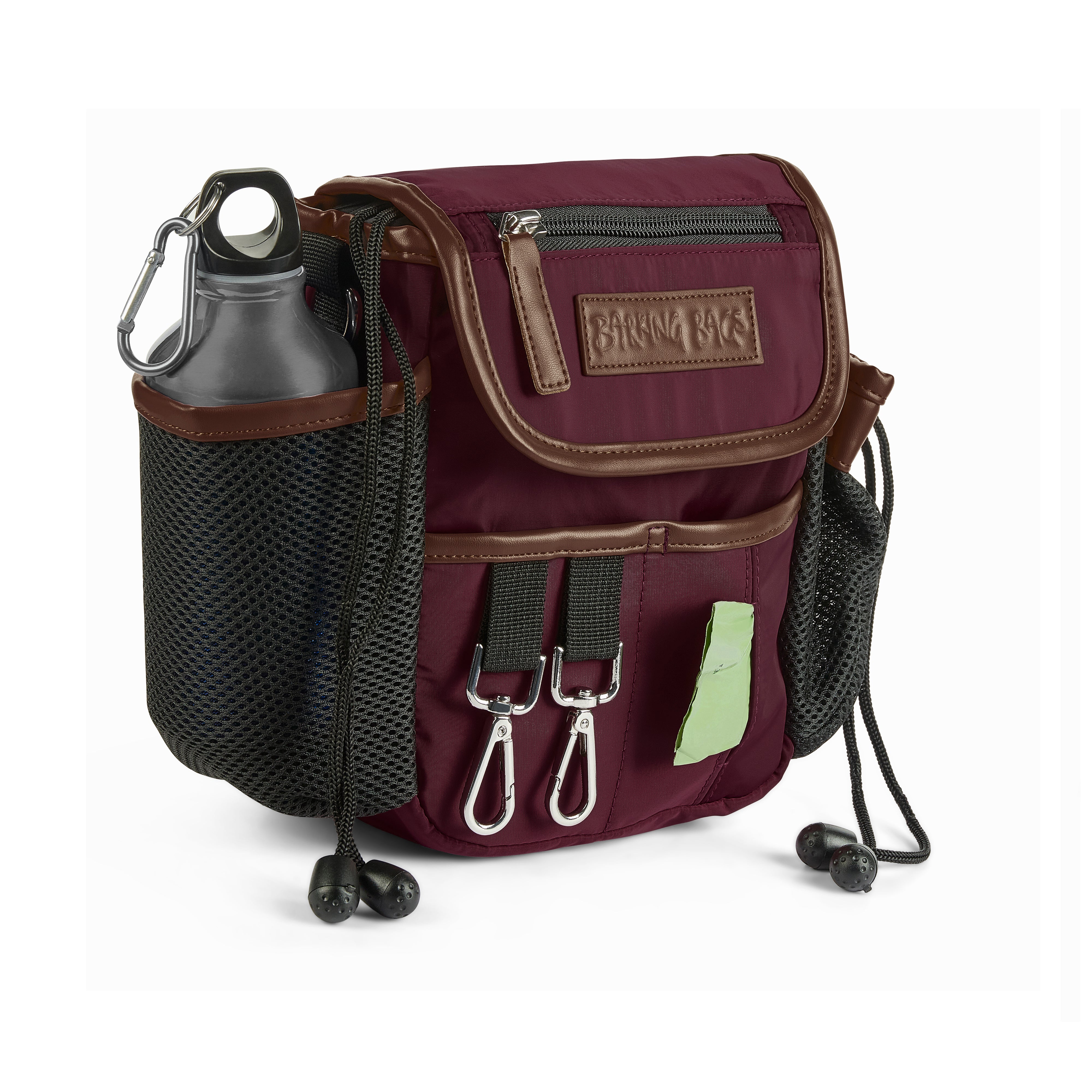
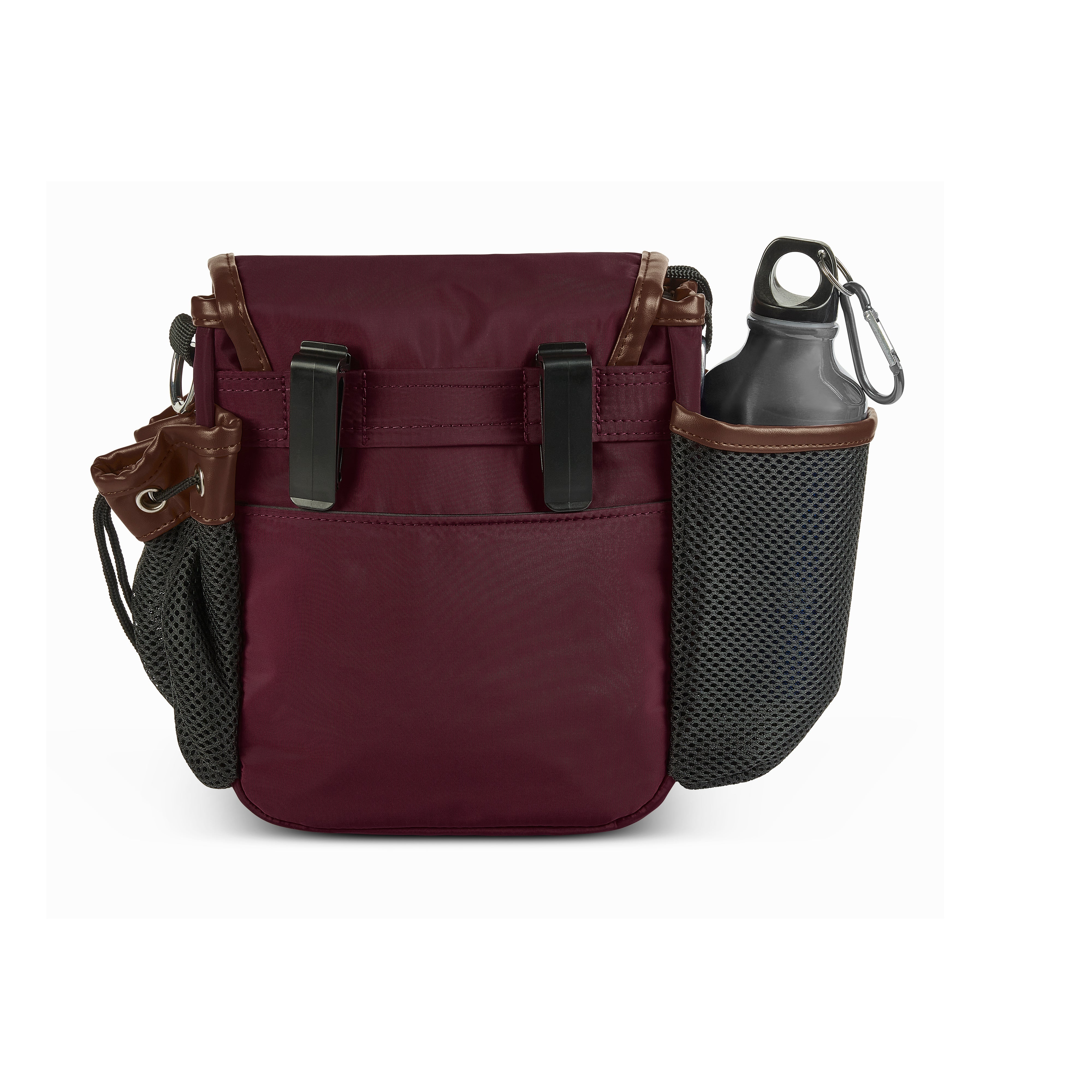
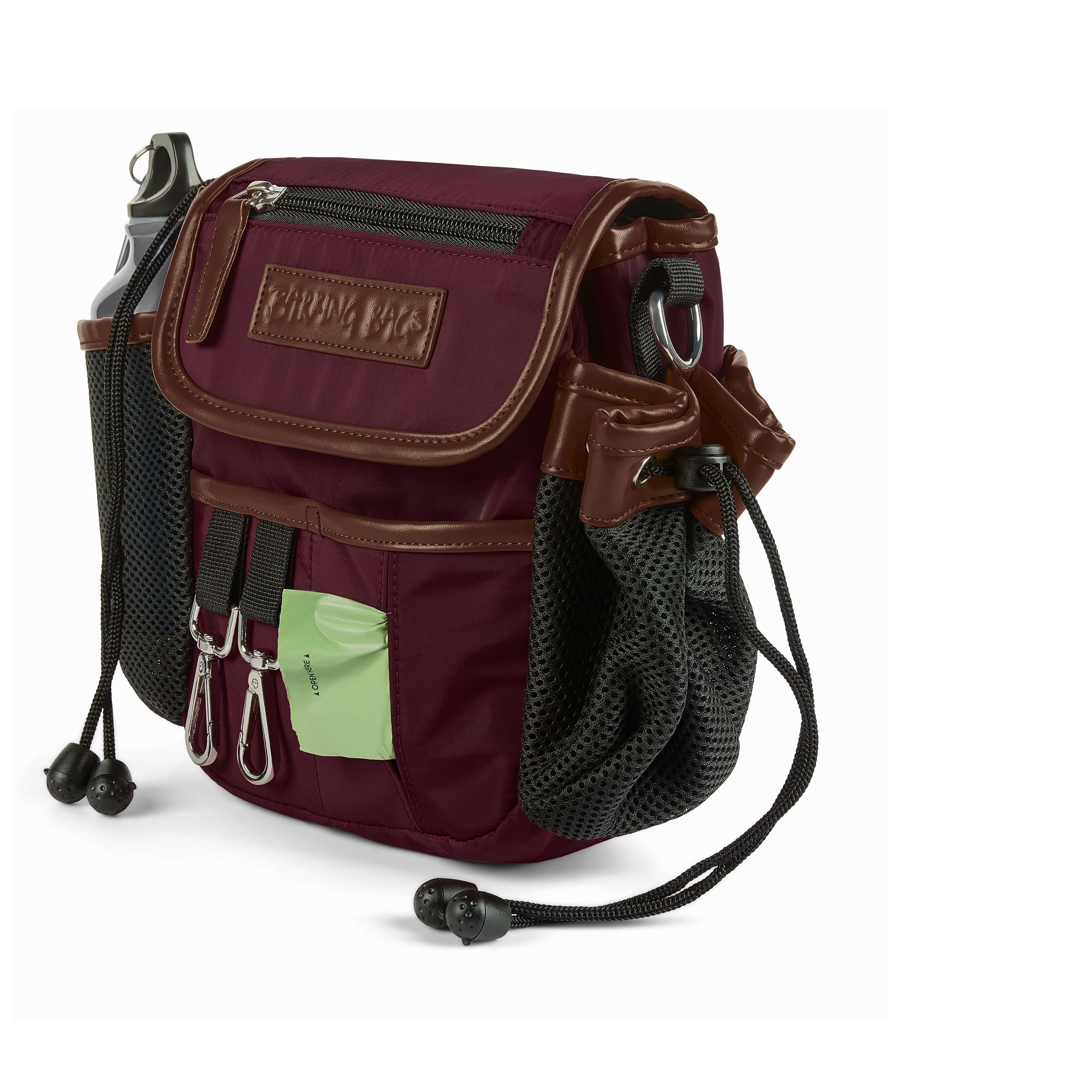
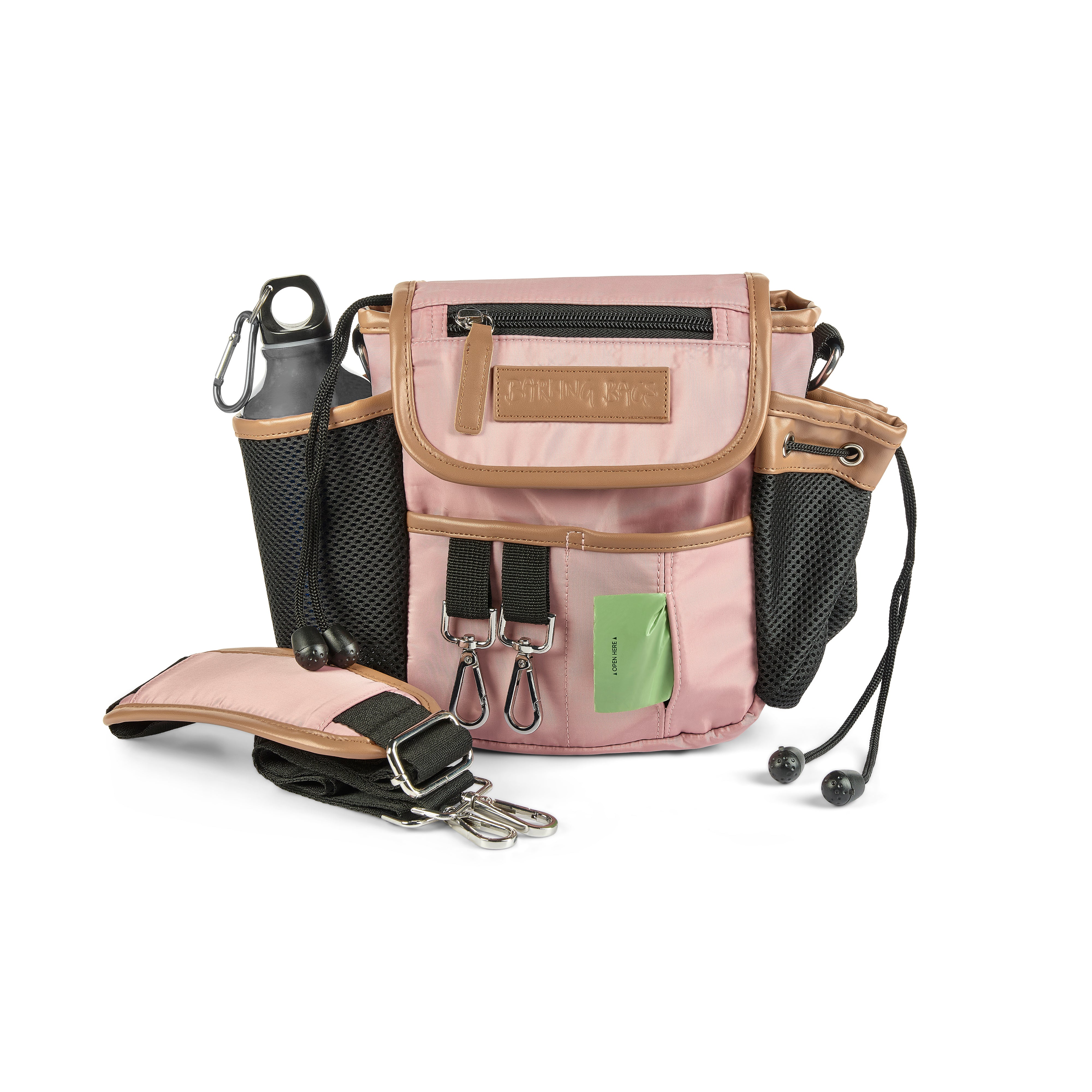
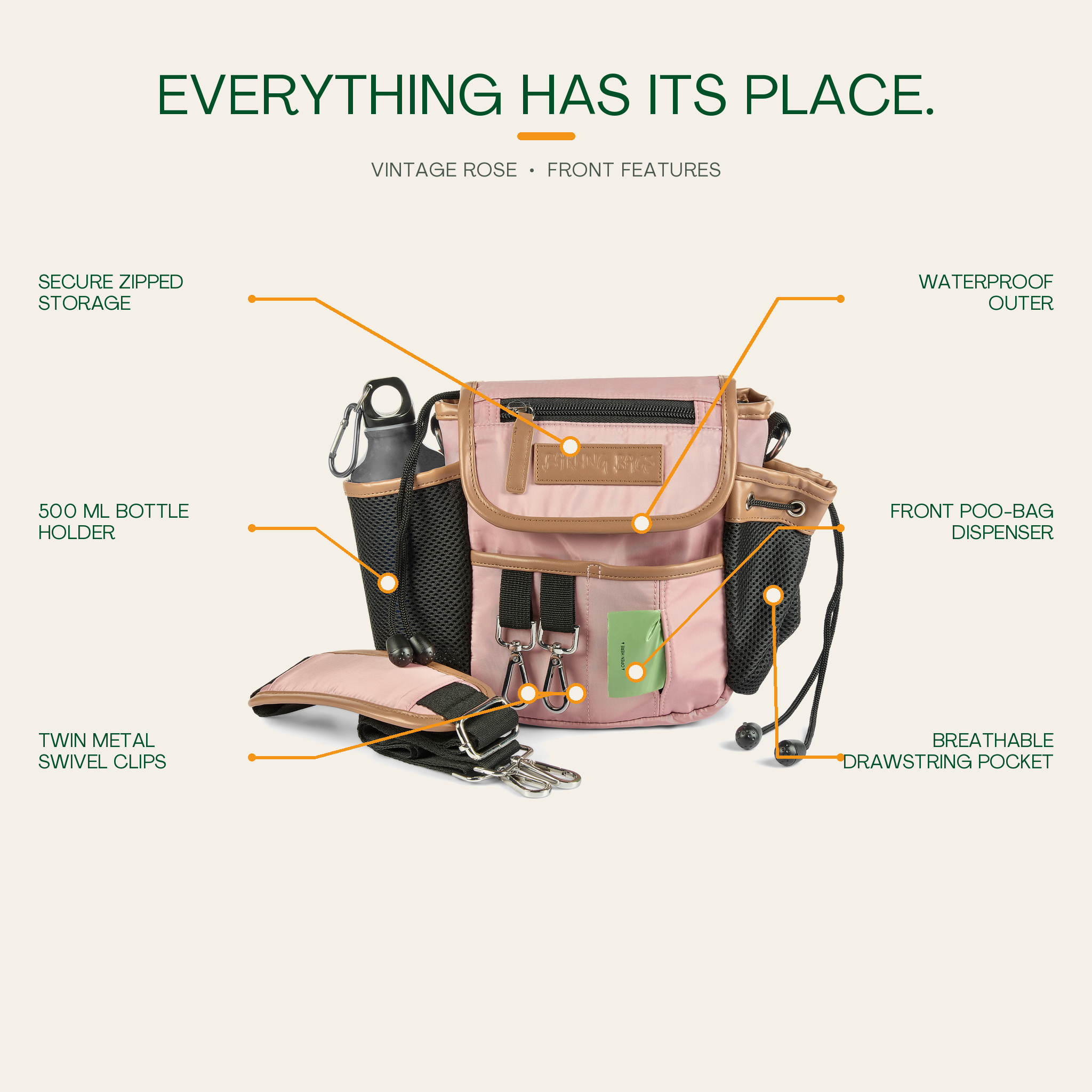
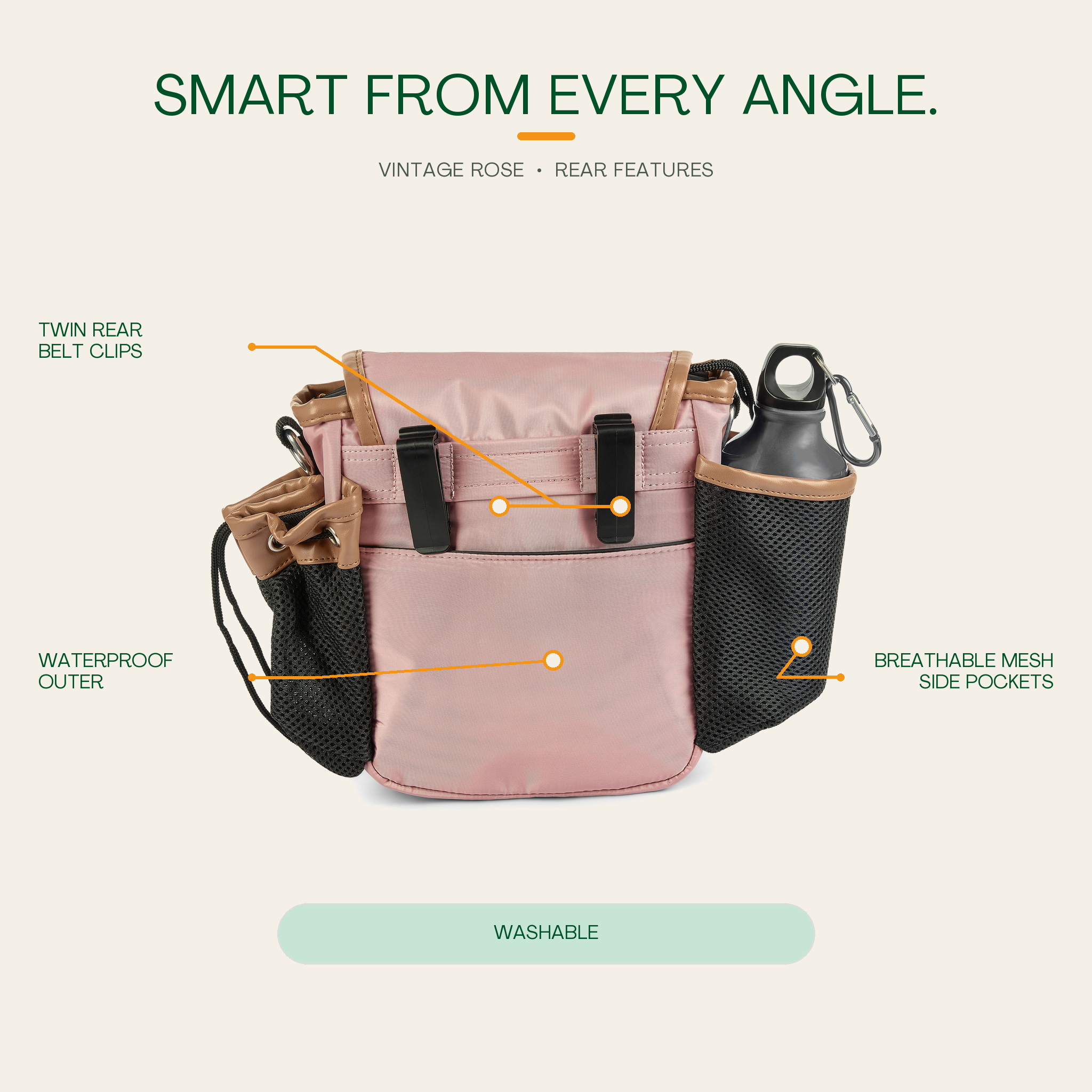
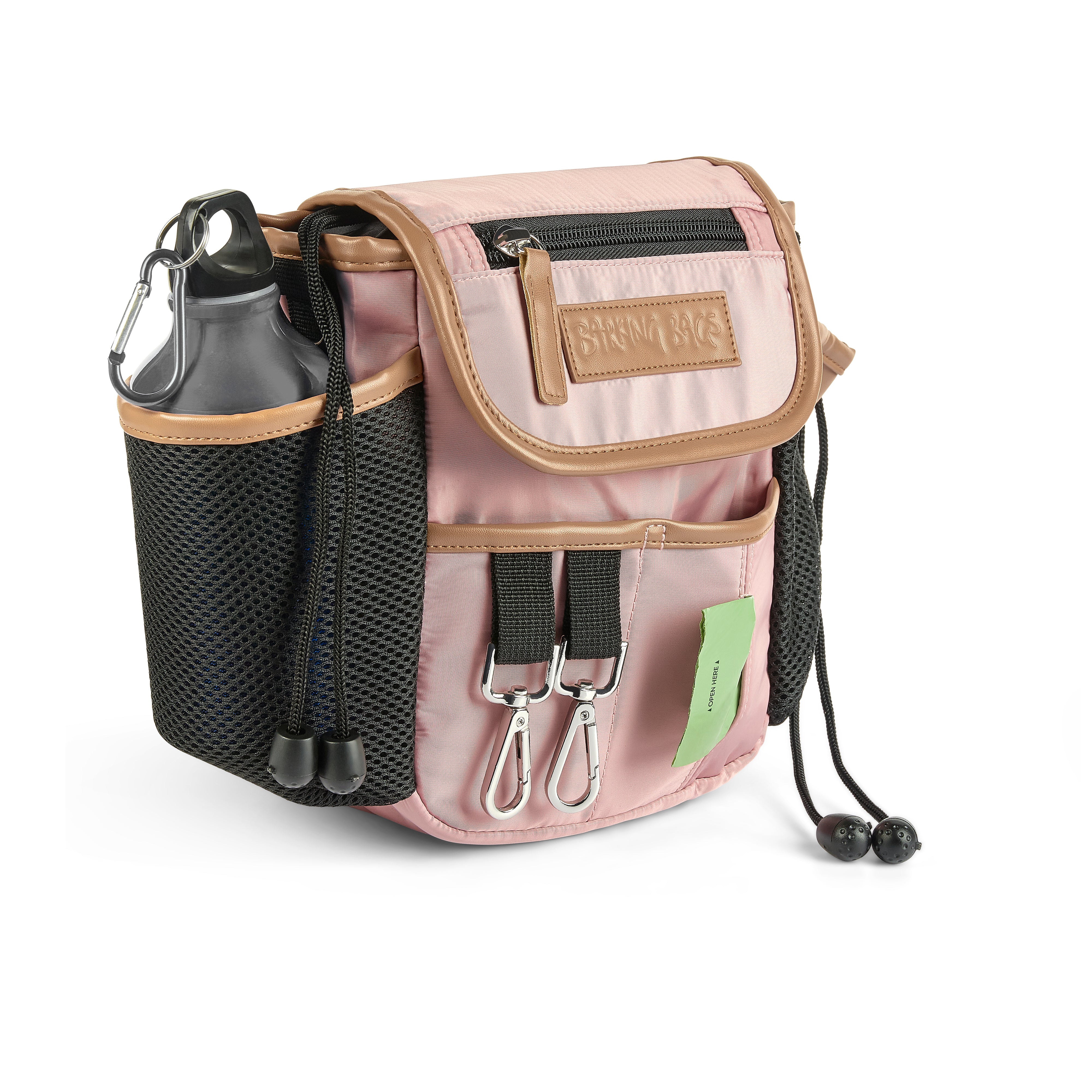
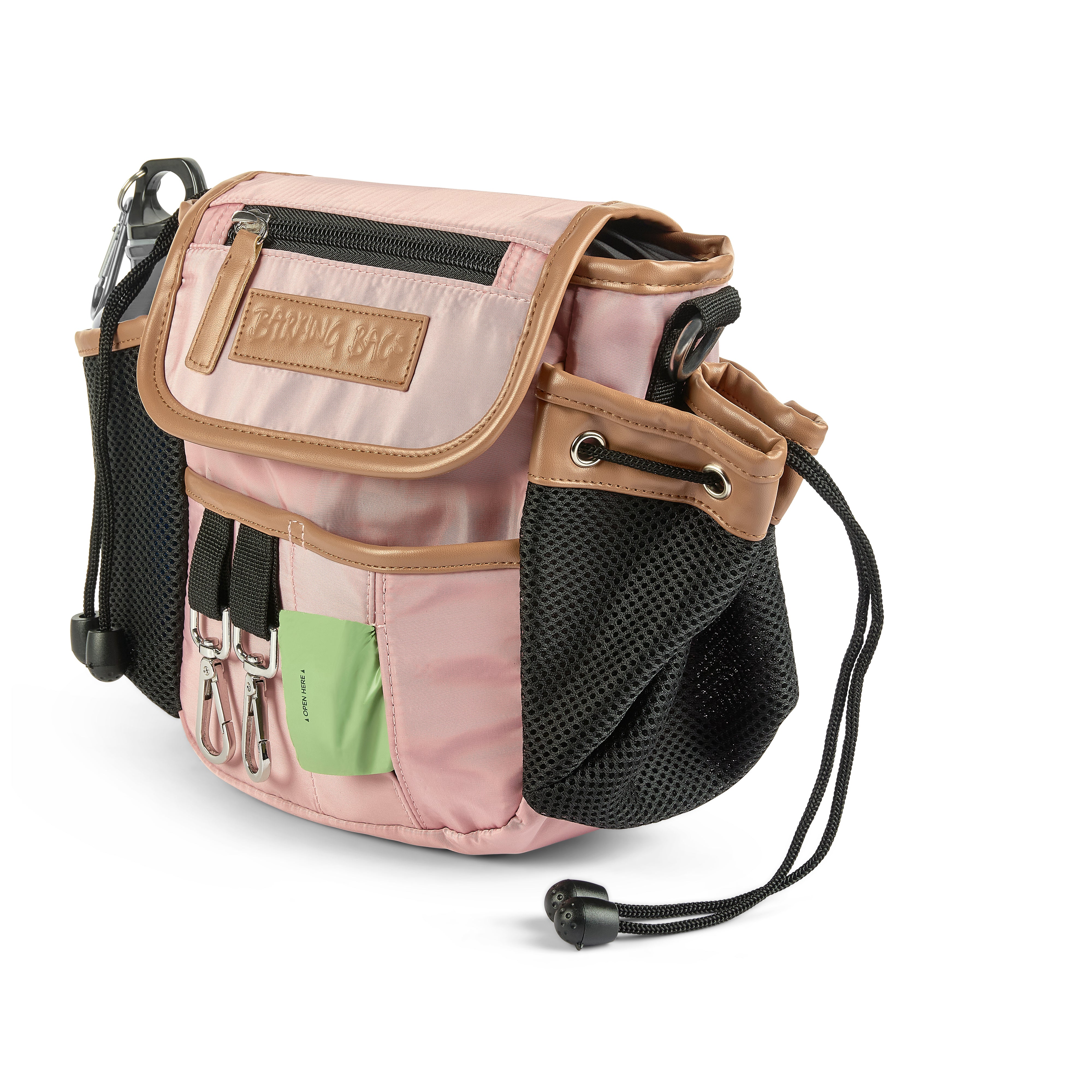
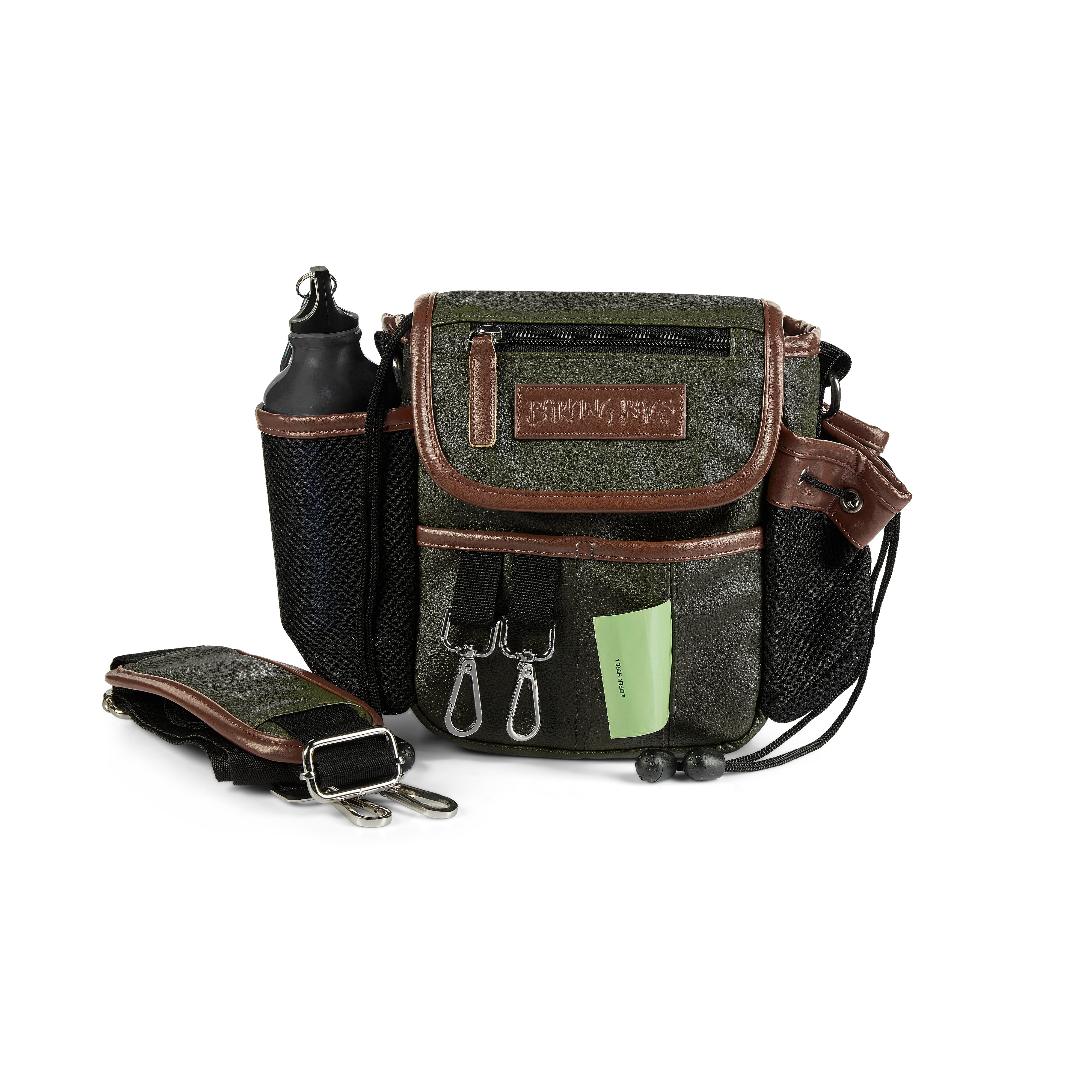
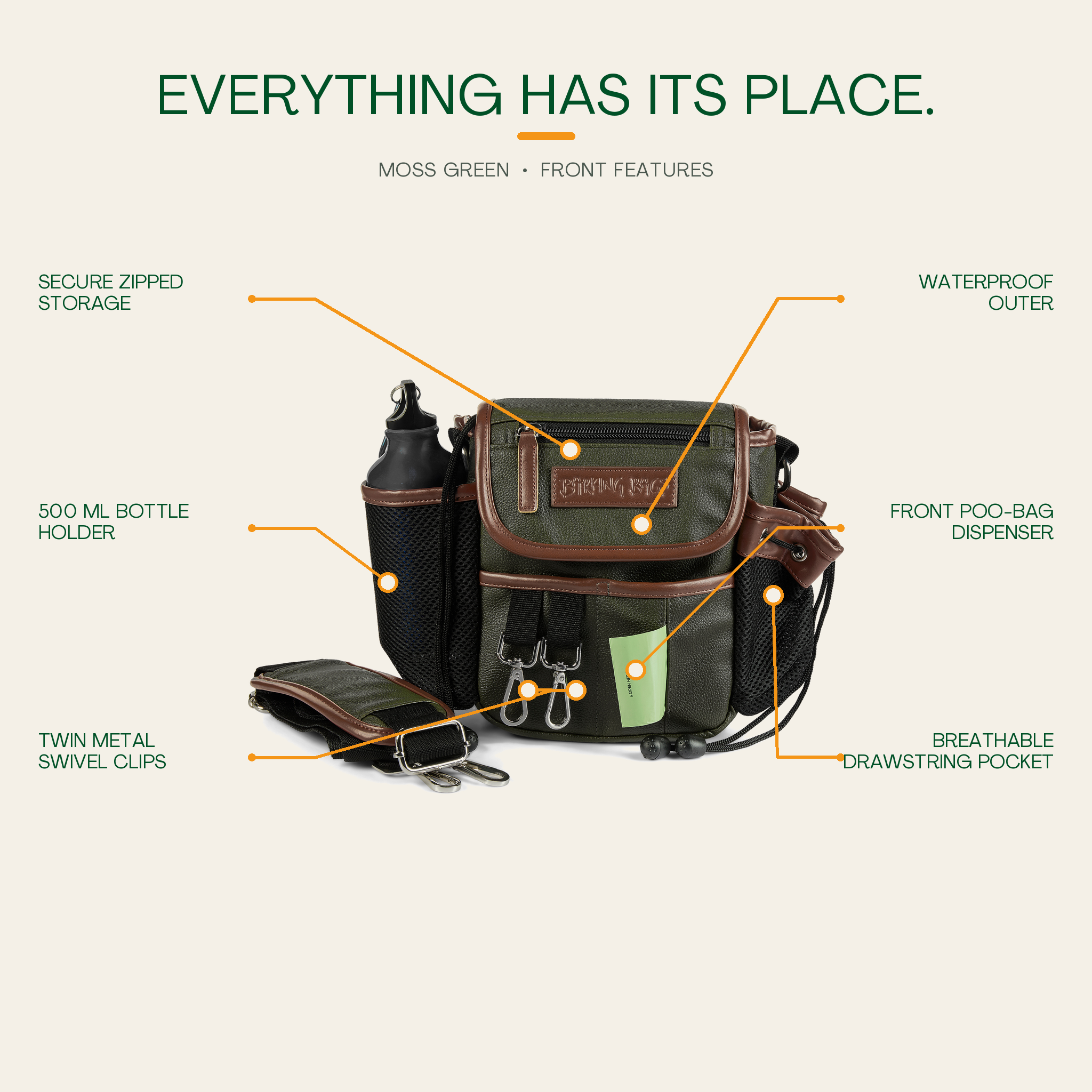
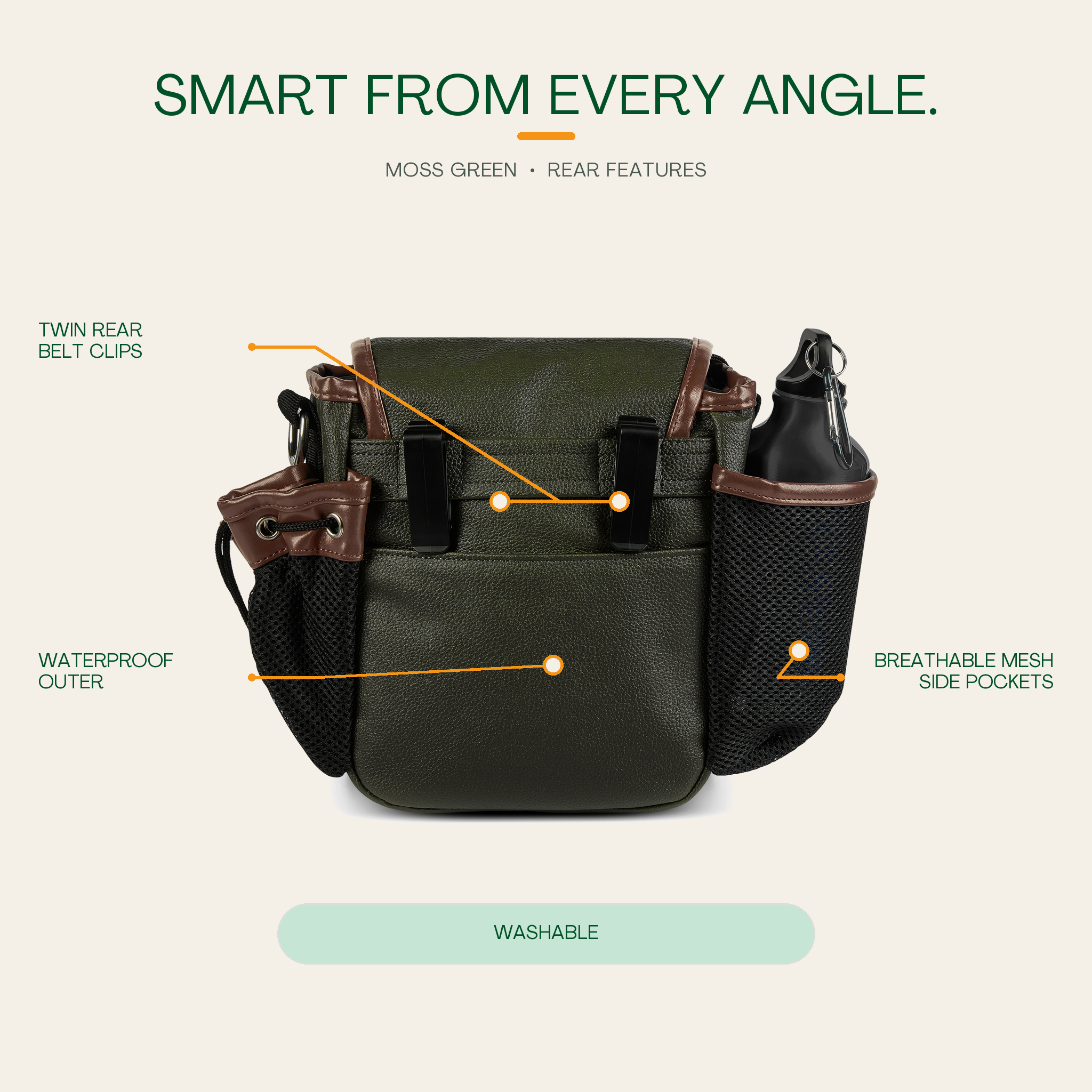
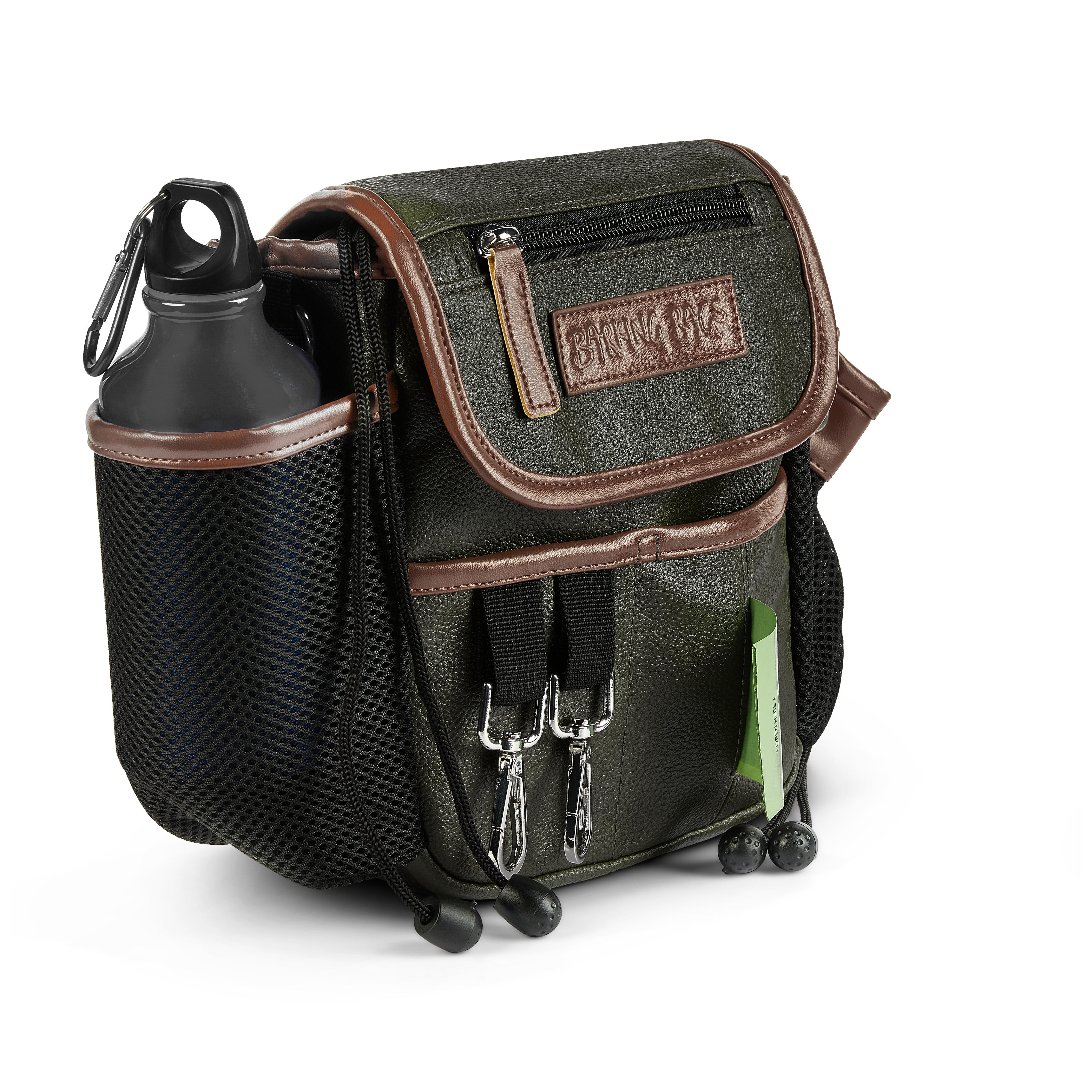
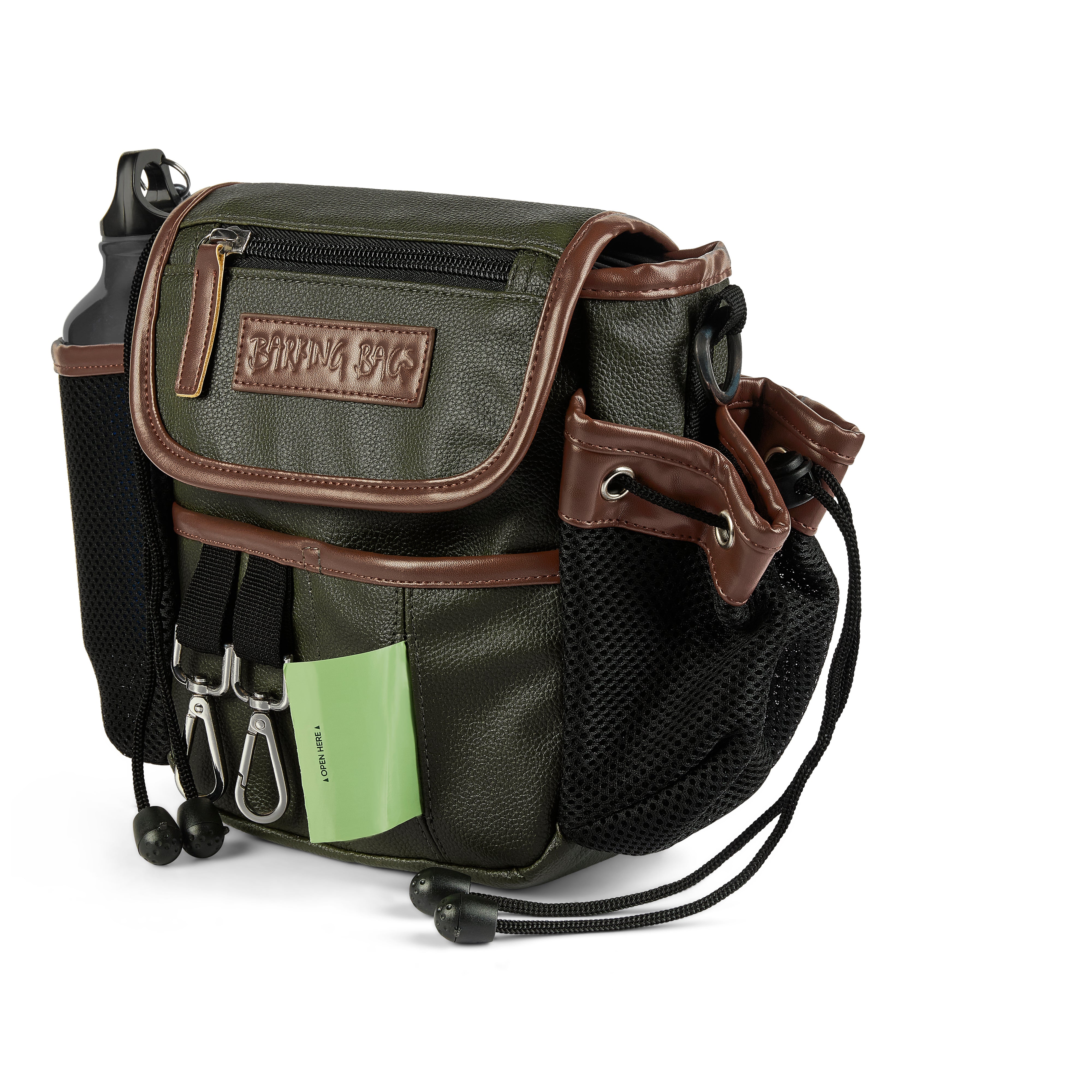
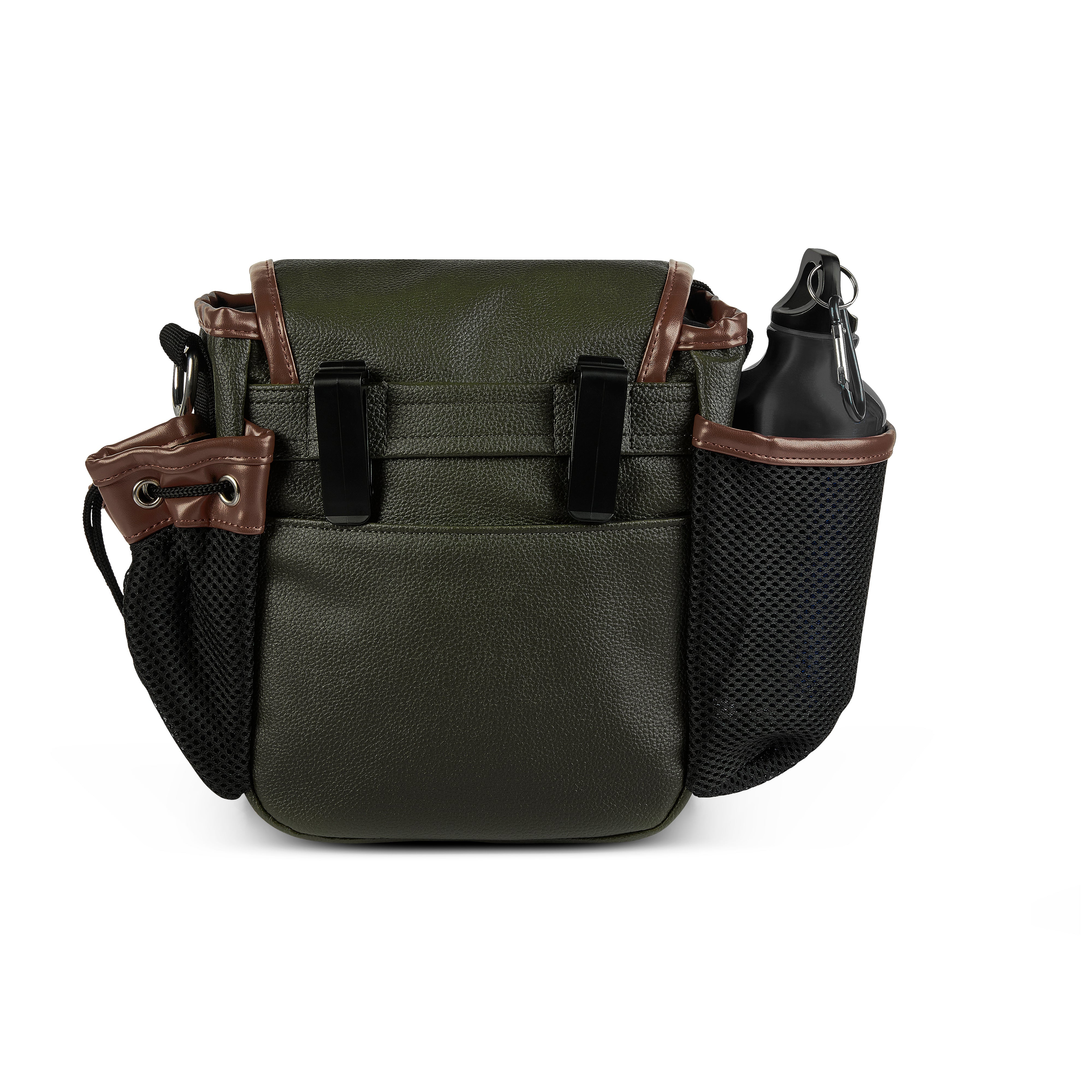
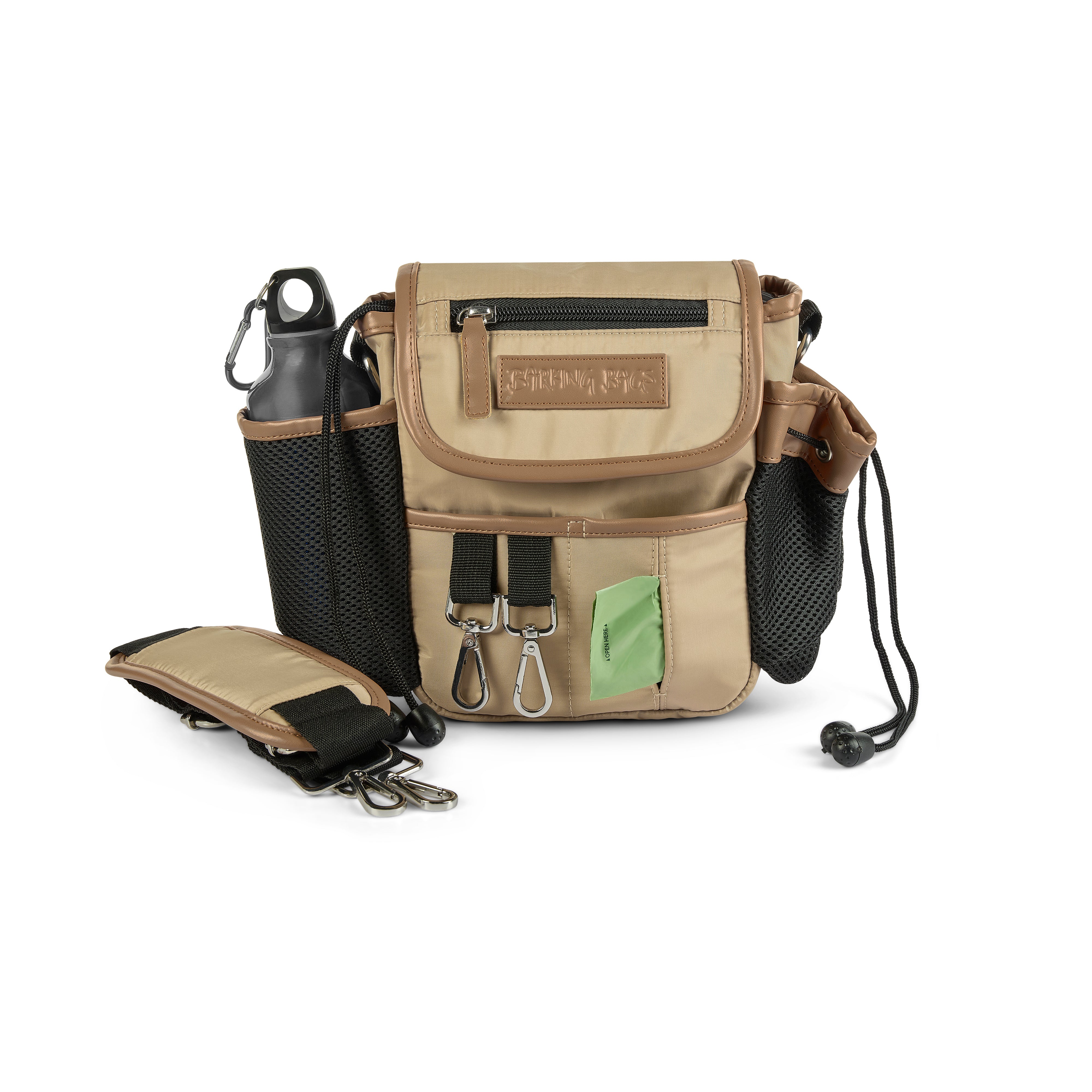
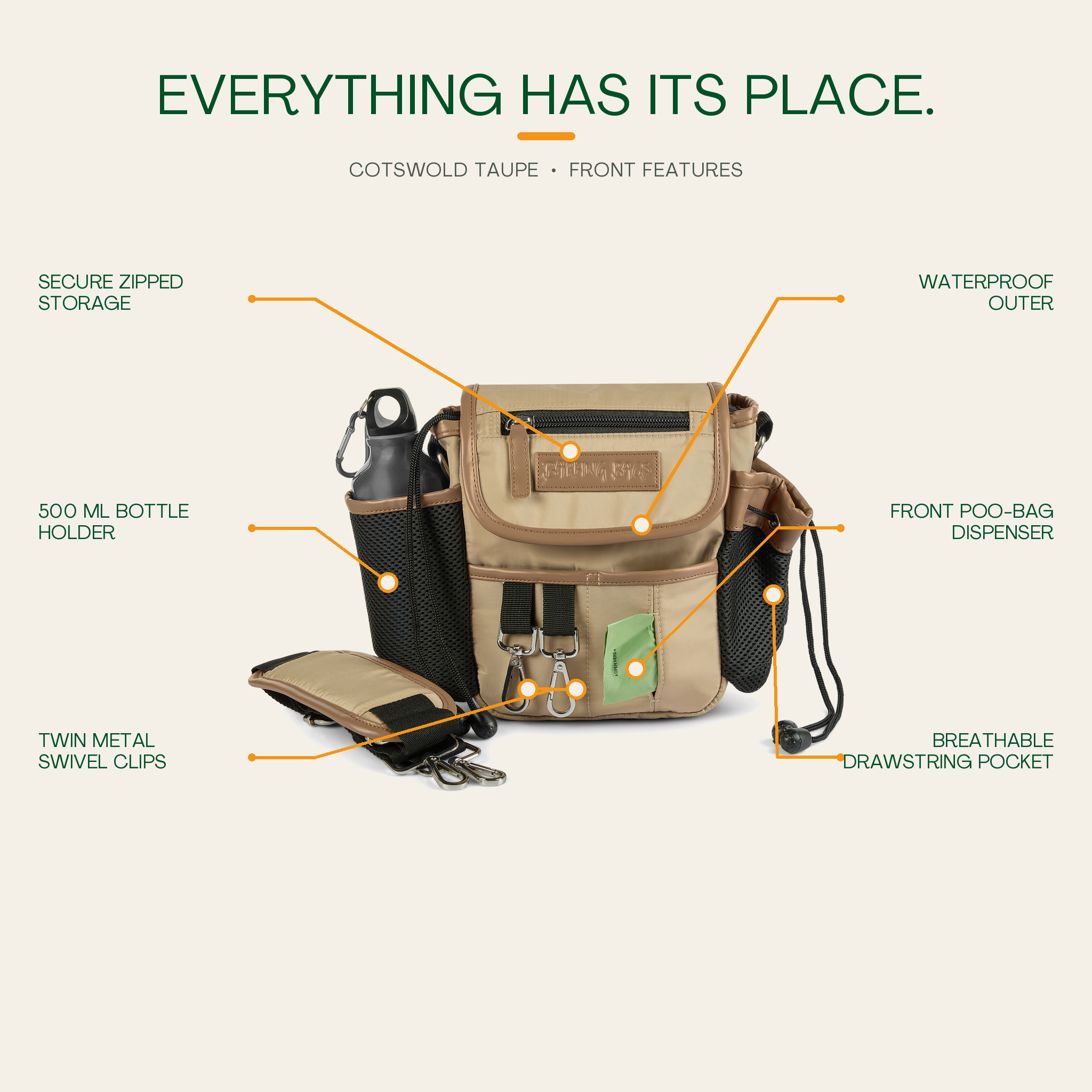
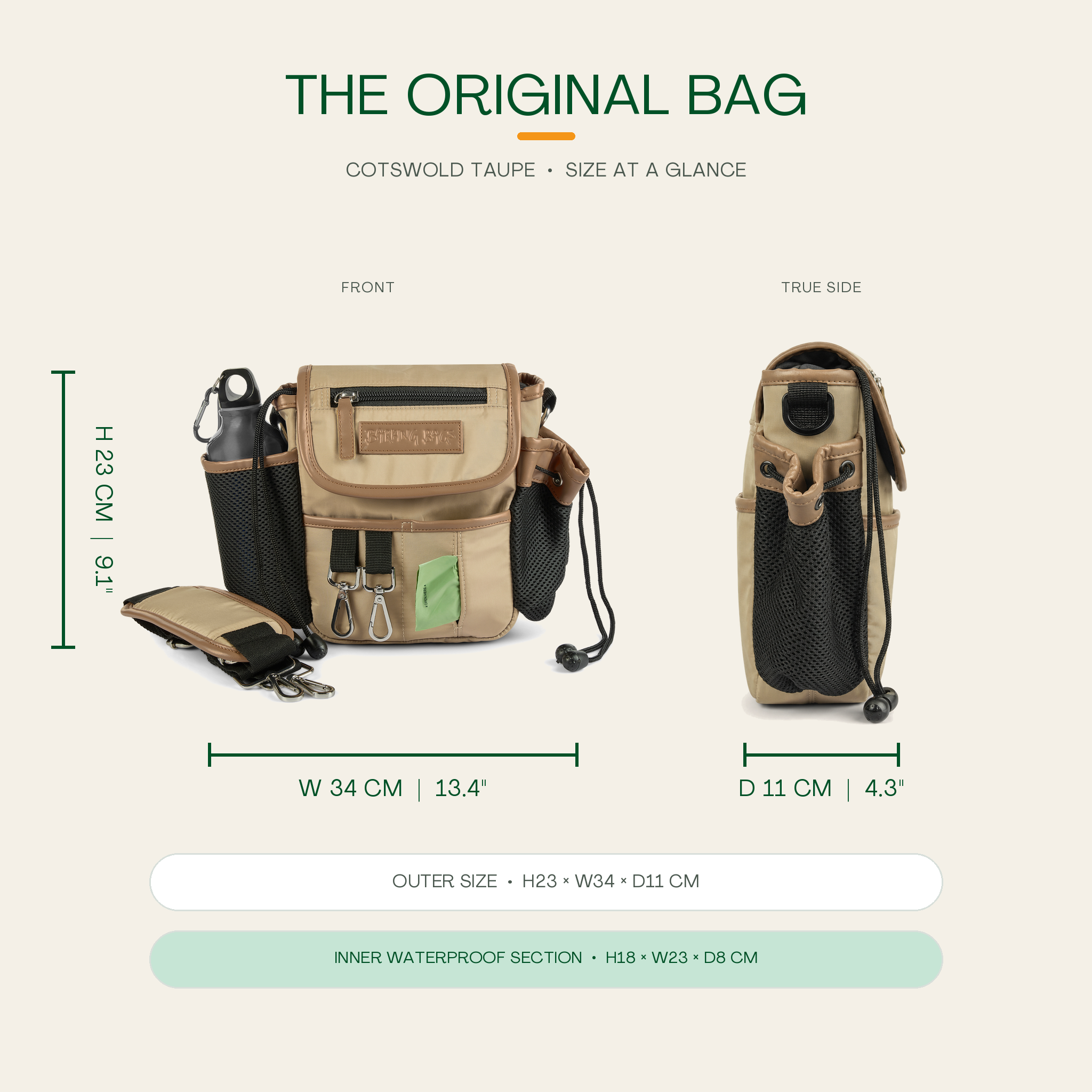
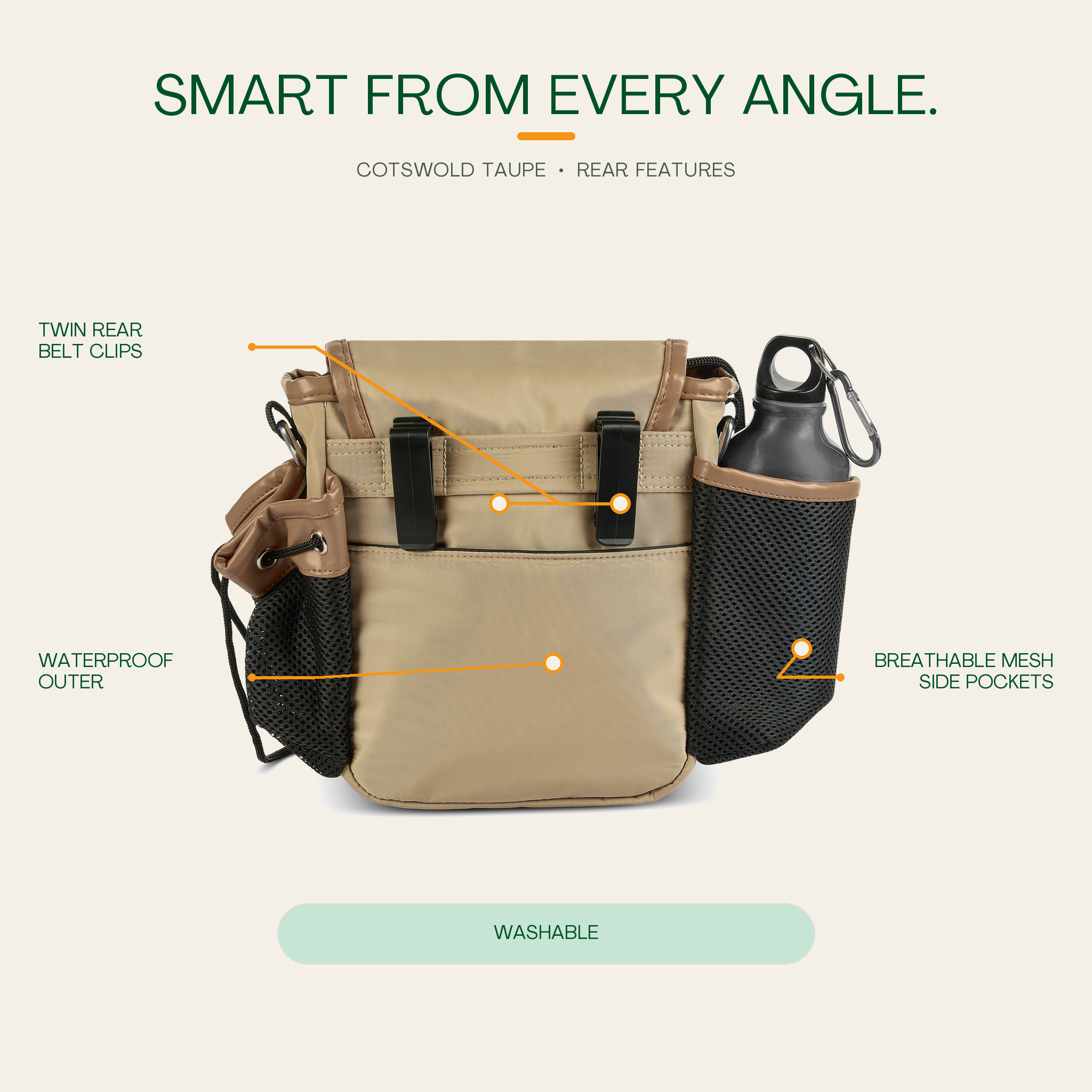
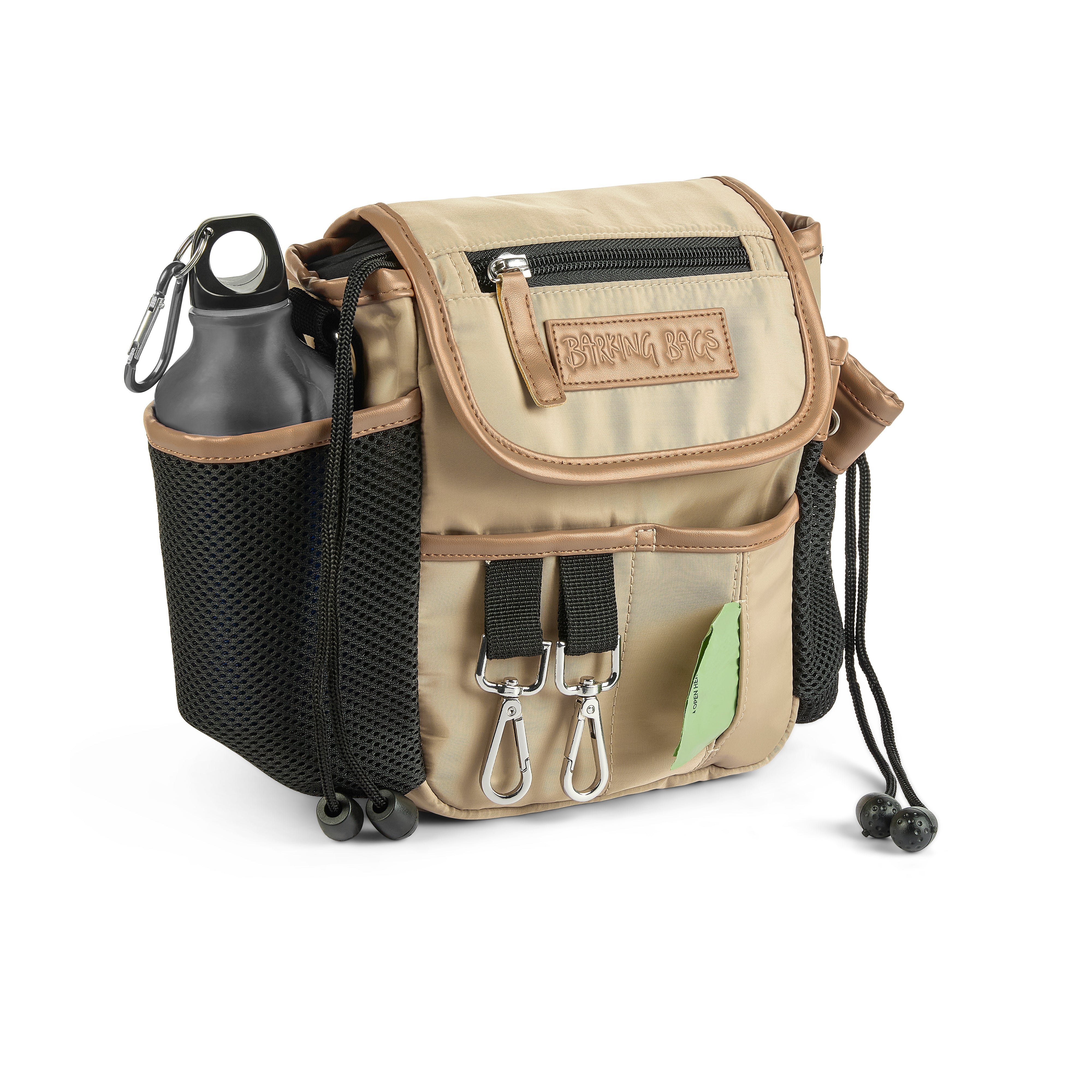
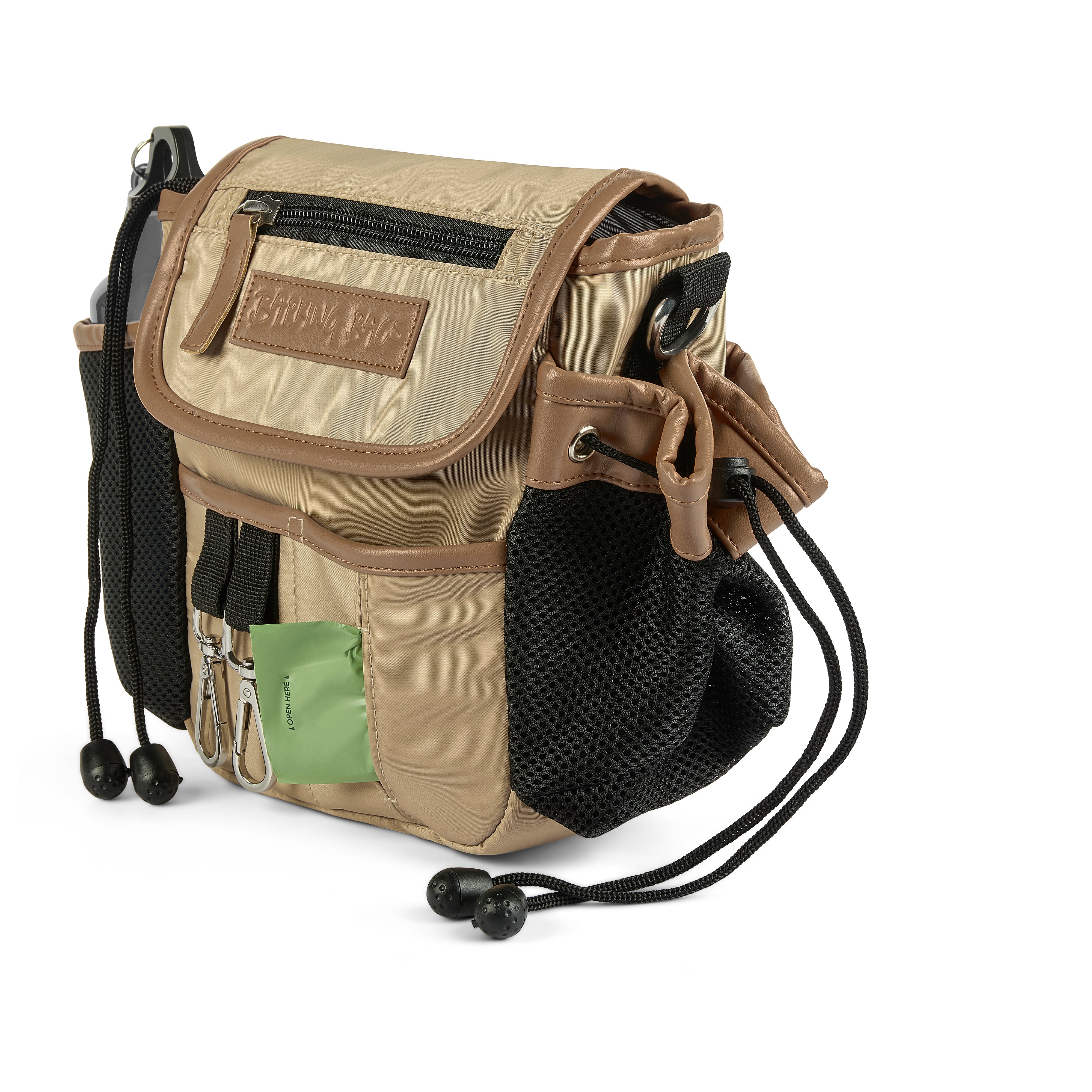
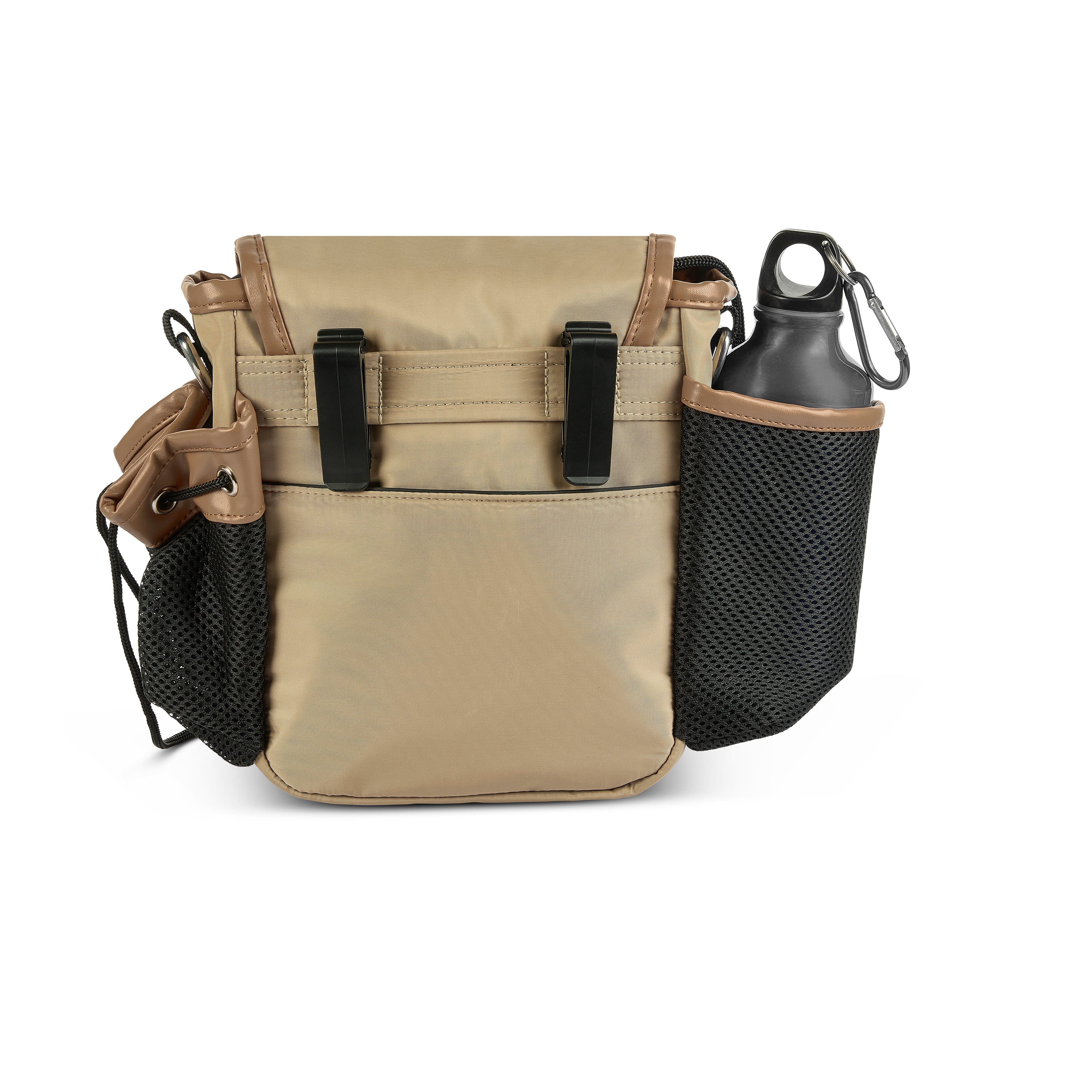
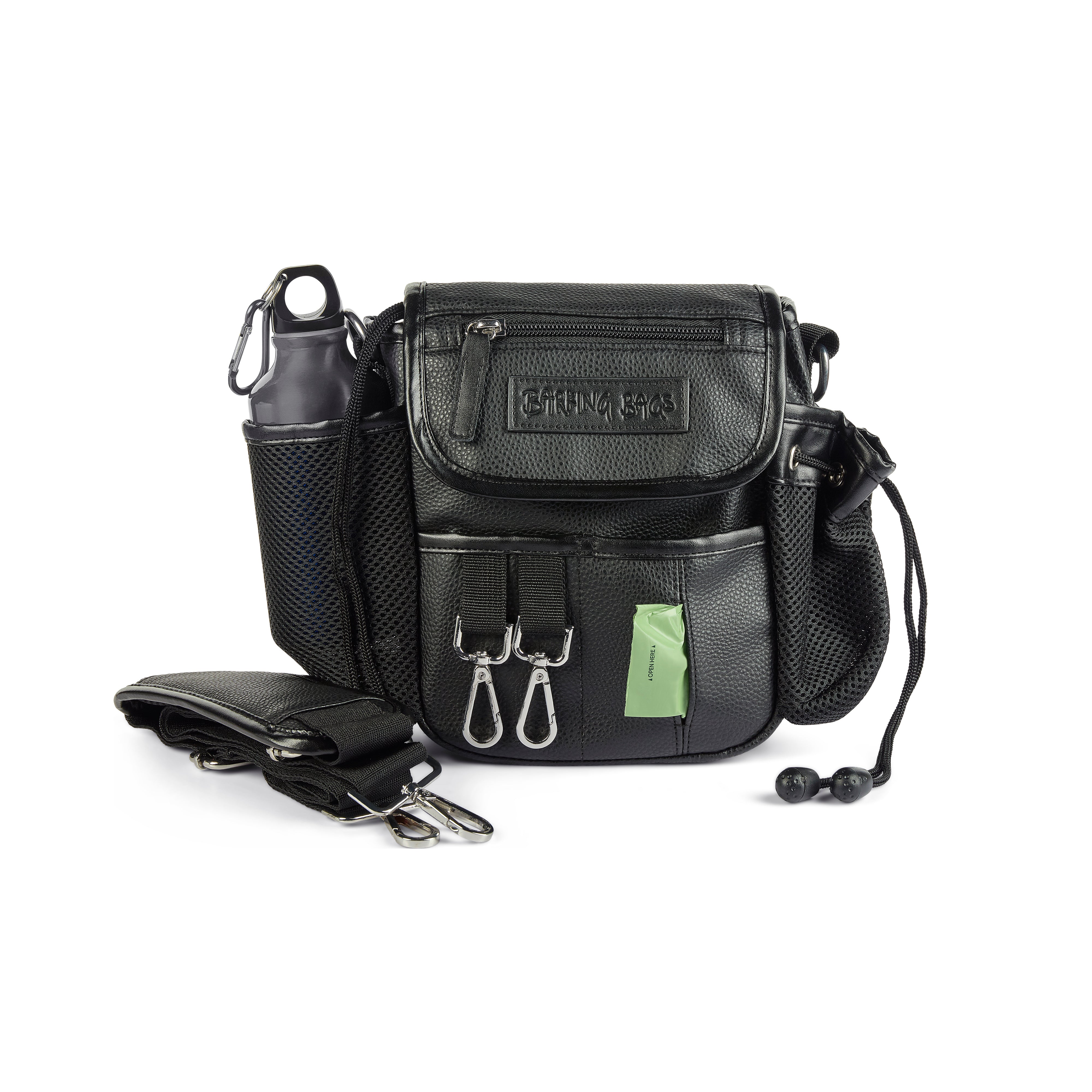
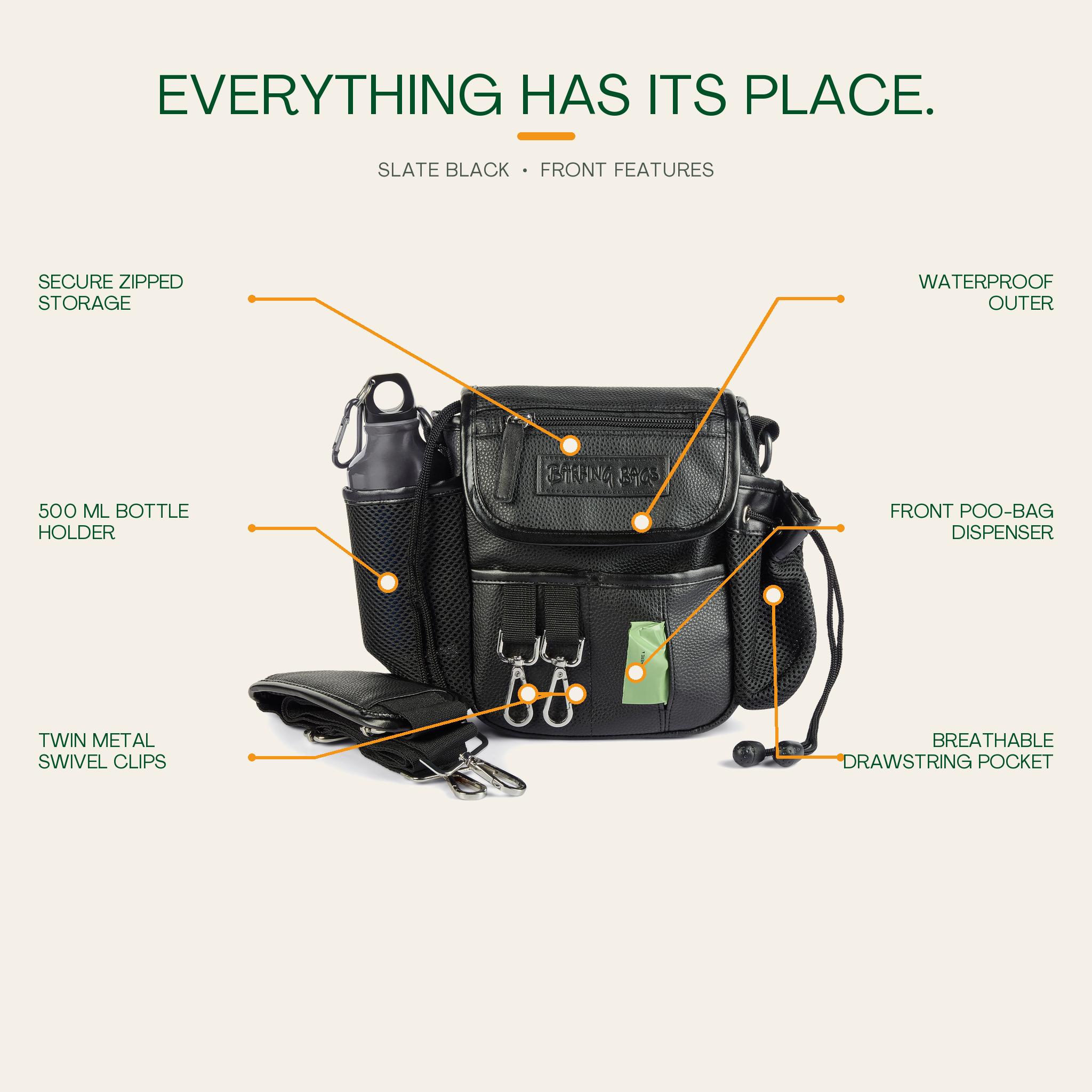
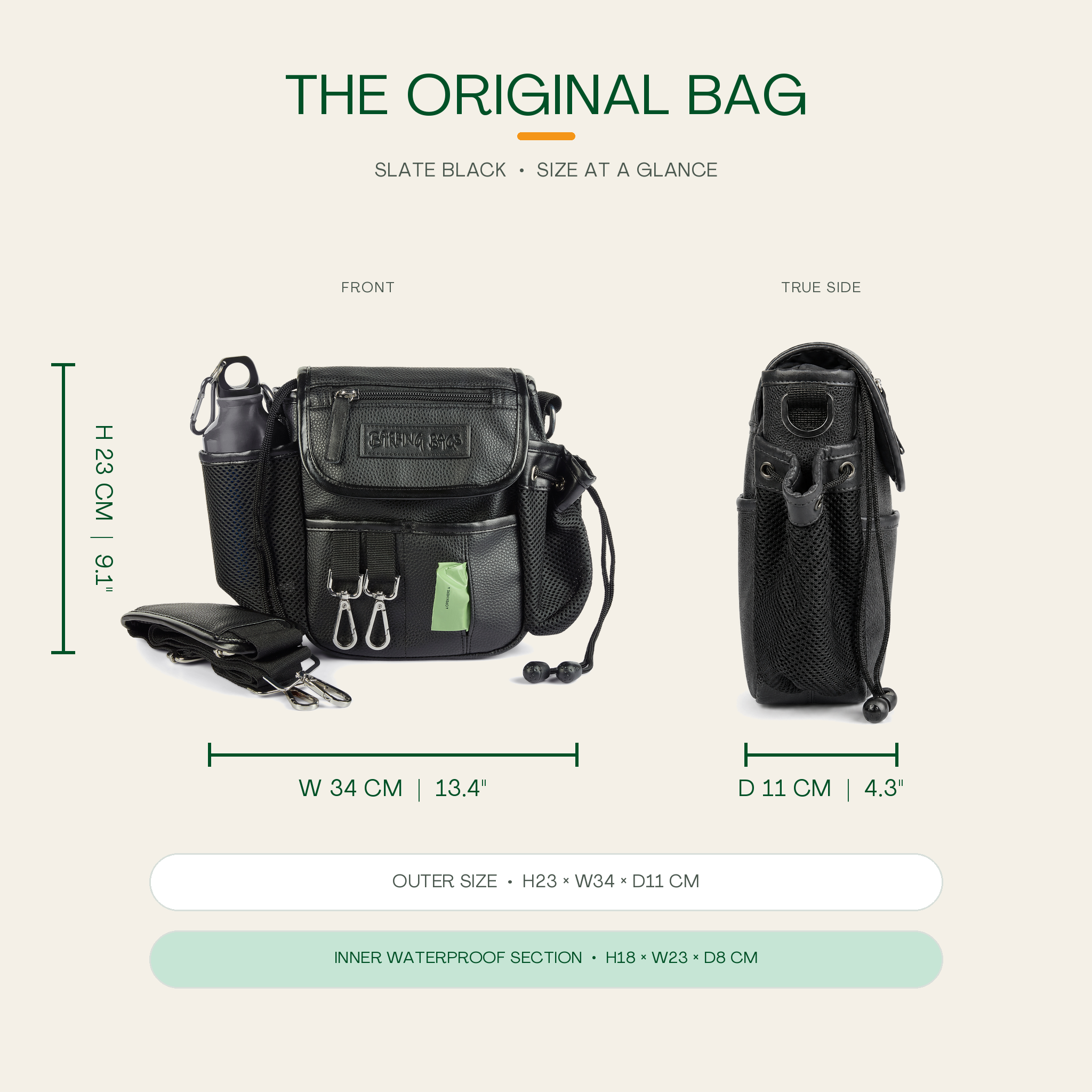
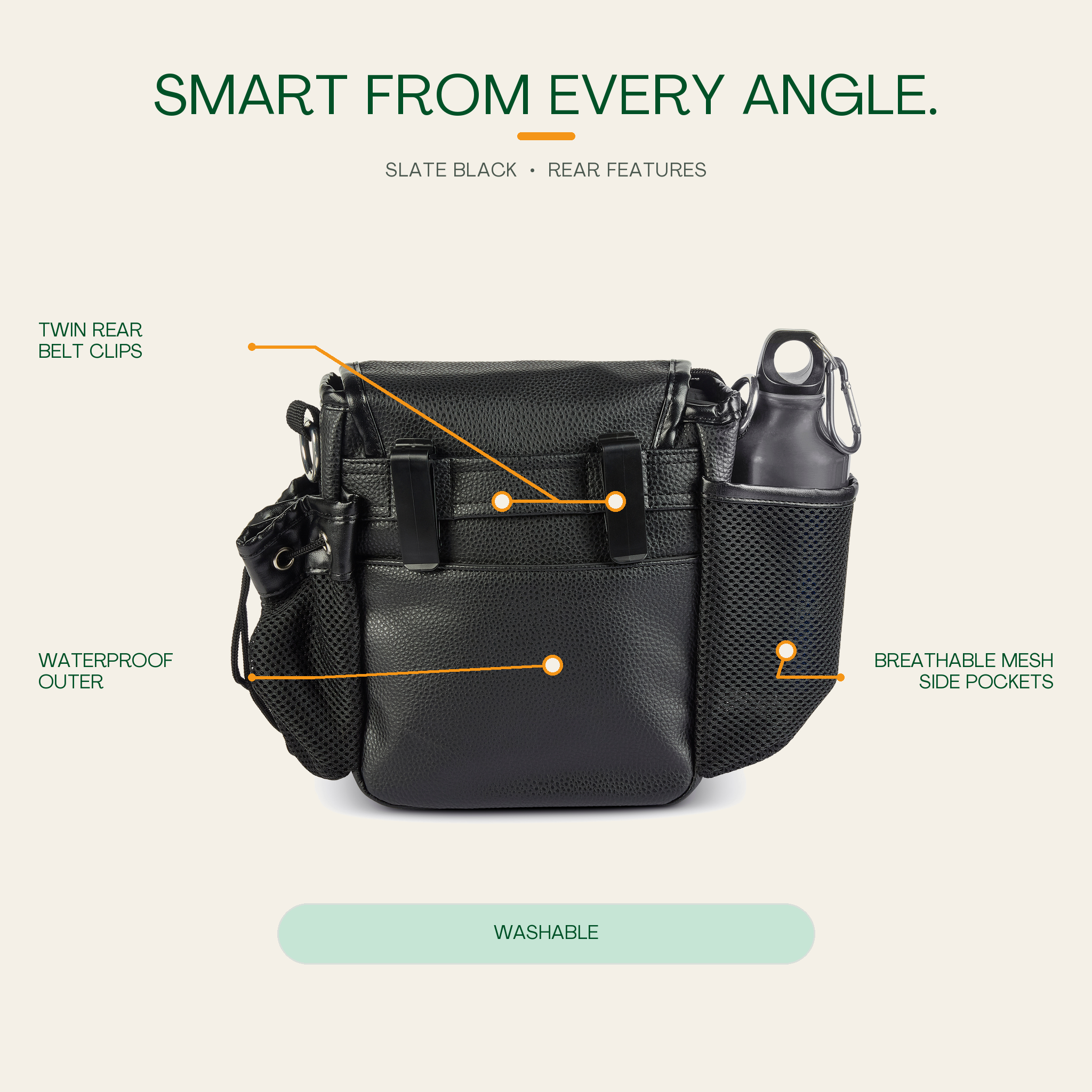
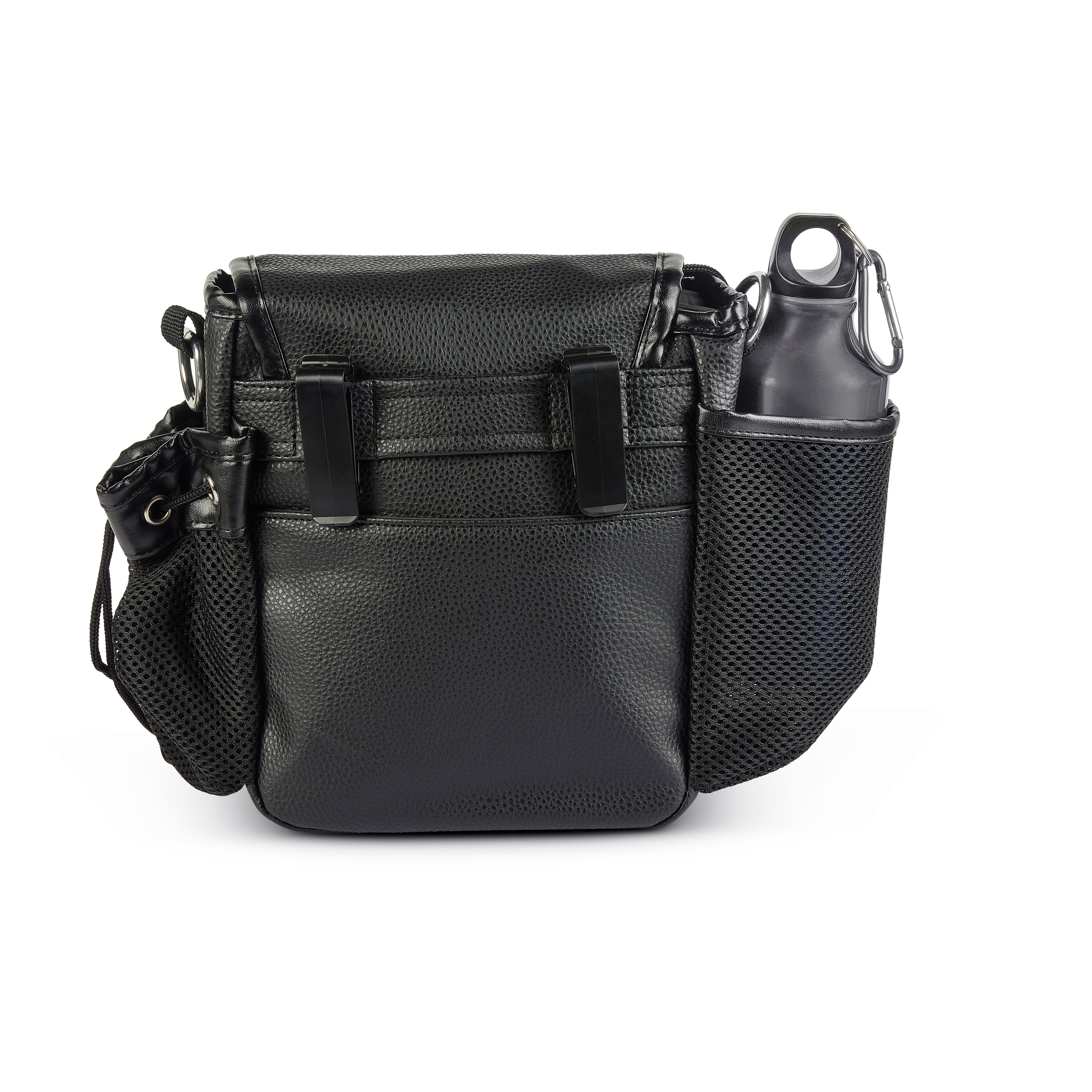
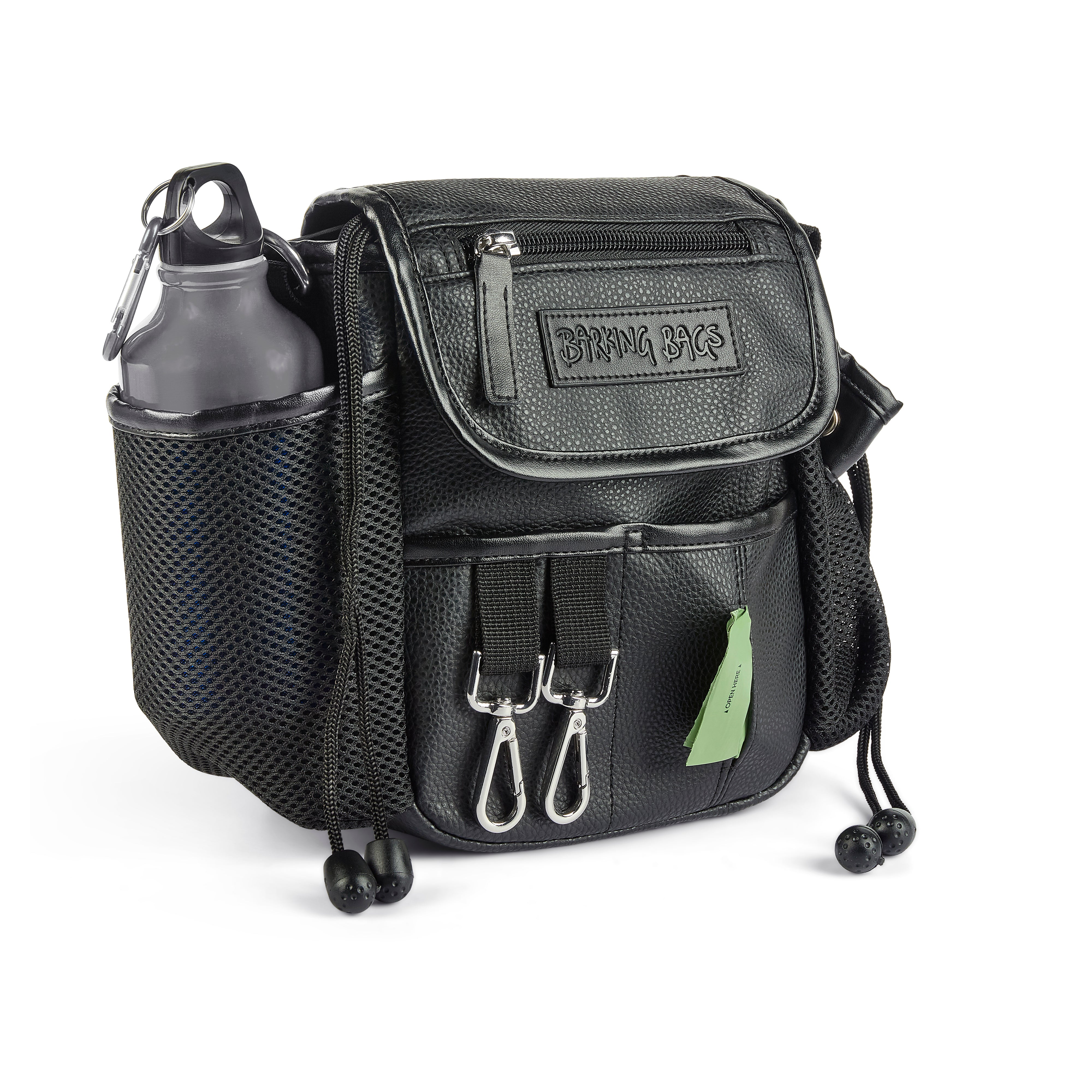
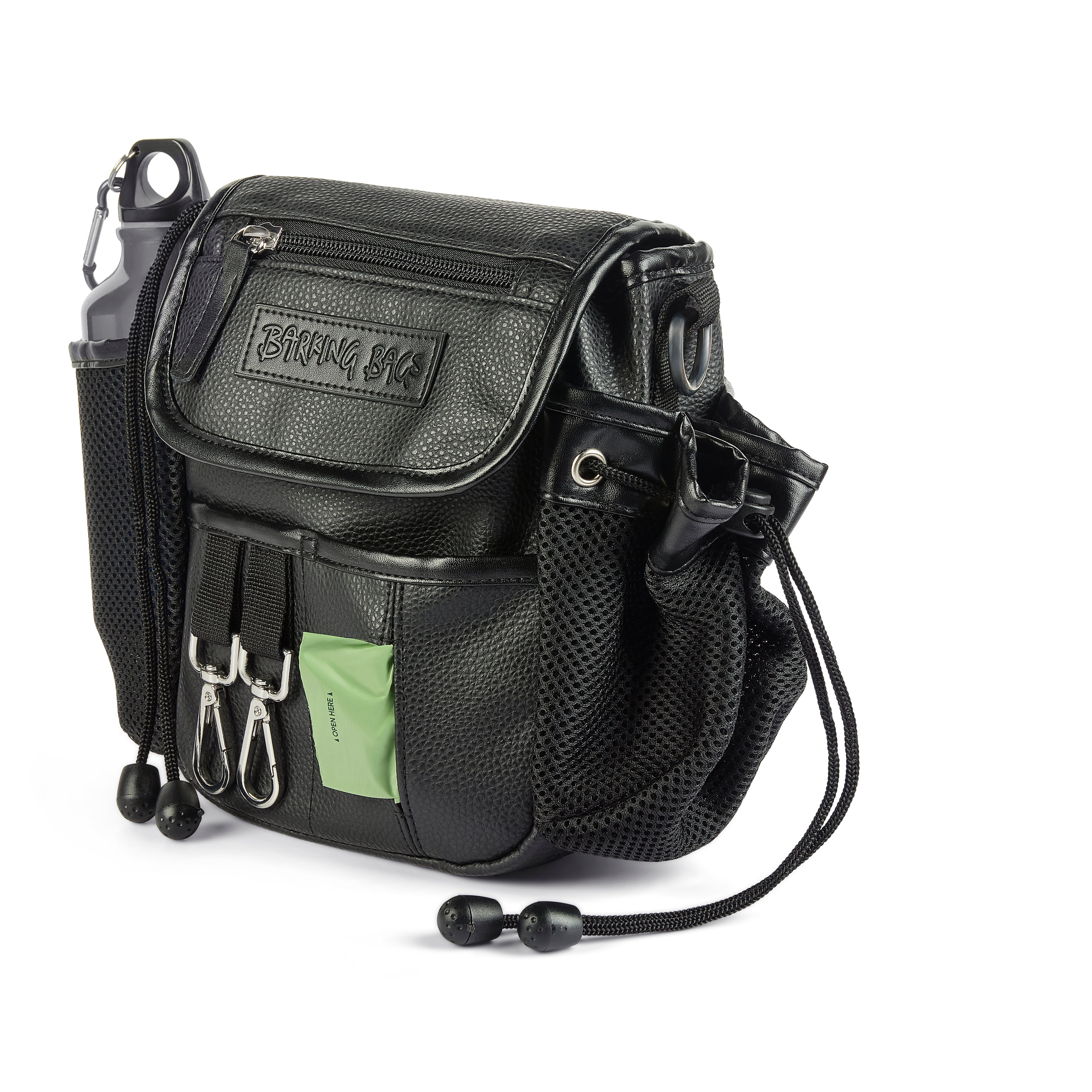
This is where a purpose-designed dog walking bag earns its place. Dedicated compartments make it easier to separate dog gear from your own essentials, and that matters more than people expect. Nobody wants to pull out their bank card smelling faintly of sprats.
The essentials to prioritise
Treats should always be first to hand. Choose pieces that are small, easy to deliver and not too crumbly. If you are on a longer outing, pack more than you think you will need. Running out halfway through a good session is frustrating, especially if you are working through a difficult stage.
Poo bags need a fixed place. The same goes for your keys. If those two items float around loose, they somehow become impossible to find when you need them. A zipped pocket for valuables and a dispenser or dedicated slot for poo bags keeps your routine smoother.
Water is worth carrying even on shorter sessions in warmer weather. Add a collapsible bowl if you are training for any length of time. For some dogs, especially excitable ones, brief water breaks can help reset the session.
The useful extras
A clicker, whistle or target item can be worth packing if they are part of your training routine, but only if you use them consistently. Random tools that sit untouched at the bottom of the bag just create clutter.
A spare lead is useful for longer days out or professional walkers handling more than one dog. So is a compact towel in winter. If you train early mornings or after work, a small torch or light attachment may be more practical than you think.
If your dog has allergies, medication or a habit of eating things they should not, your bag may need to include dog-specific extras. That is the trade-off with packing advice - there is no single perfect setup for every dog. The right bag is the one that supports your real routine, not an idealised one.
Pack by session, not by habit
One of the easiest mistakes is turning your dog training bag into permanent storage. It starts well enough, then old treat packets, used wipes, broken tennis balls and mystery crumbs build up until the whole thing feels chaotic.
A better approach is to pack according to the session you are about to do. A five-minute lead training walk around the block needs something different from a park session focused on recall. If you are heading to a busy high street, prioritise high-value rewards and simple access. If you are driving to a field, think about long lines, water and a towel.
This approach keeps the bag lighter and helps you train with more intention. It also stops you carrying gear you never use, which is where many bags start to feel bulky and overstuffed.
For puppy training
Puppy sessions are usually short, reward-heavy and slightly chaotic. Pack plenty of soft treats, poo bags, wipes and perhaps a small toy for redirection. You may also want a spare pouch or sealed section for any accidents. With puppies, convenience matters because your timing matters, and because you do not always get much warning.
For recall and outdoor work
For recall practice, a long line, very high-value rewards and water are the core setup. A toy reward can help if your dog loves movement and play. Keep your rewards especially accessible here, because recall is one of those behaviours where delayed payment can weaken the moment.
For everyday walk training
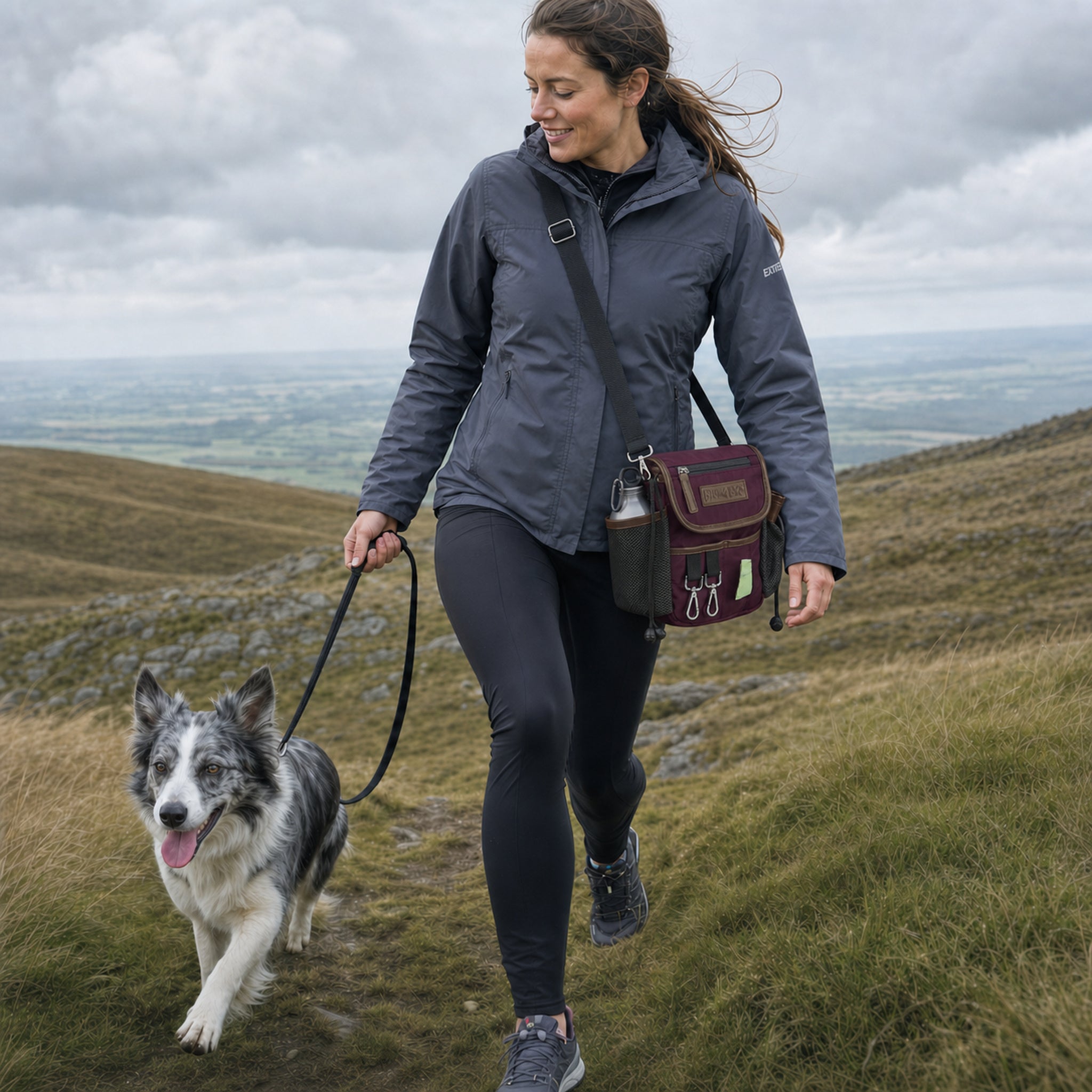
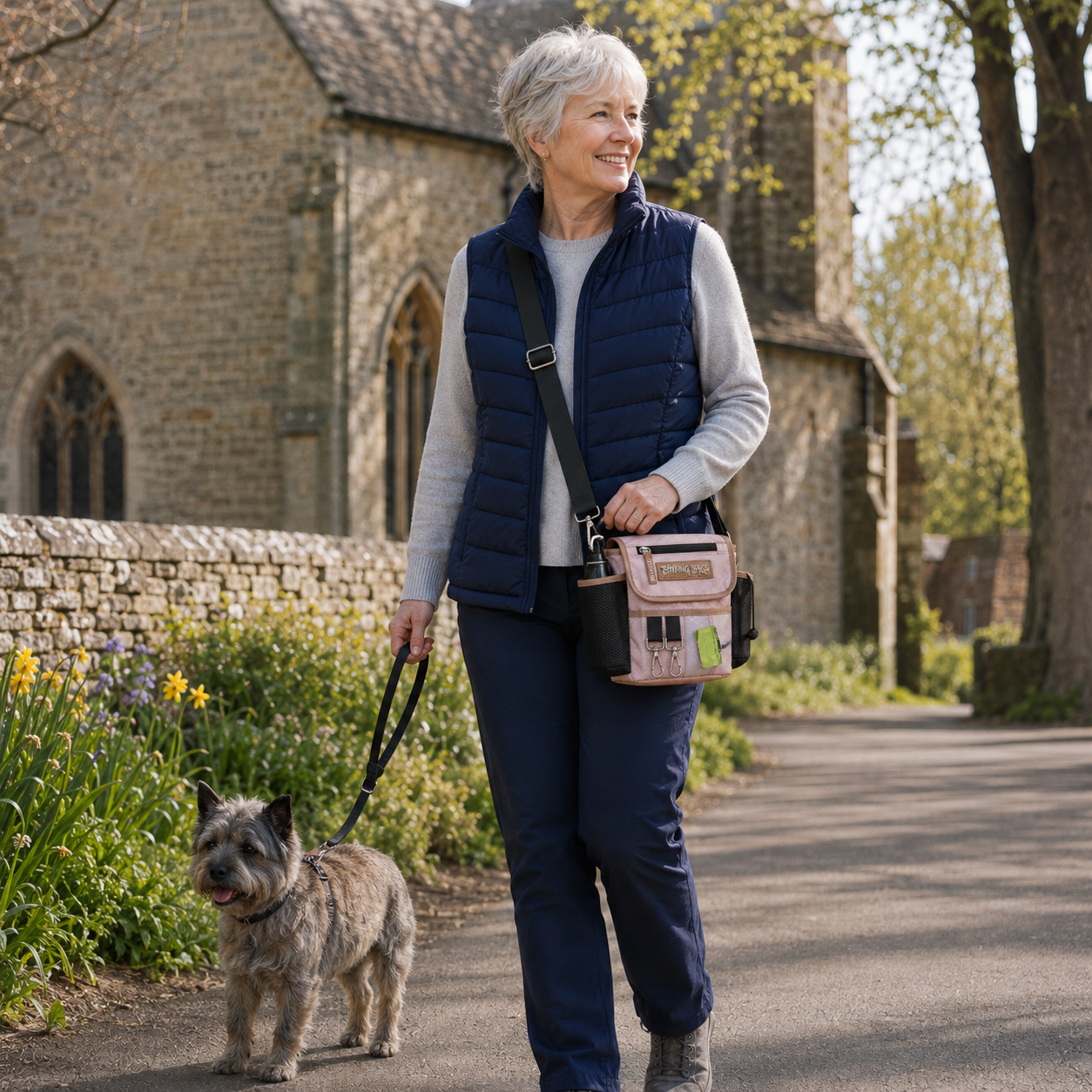
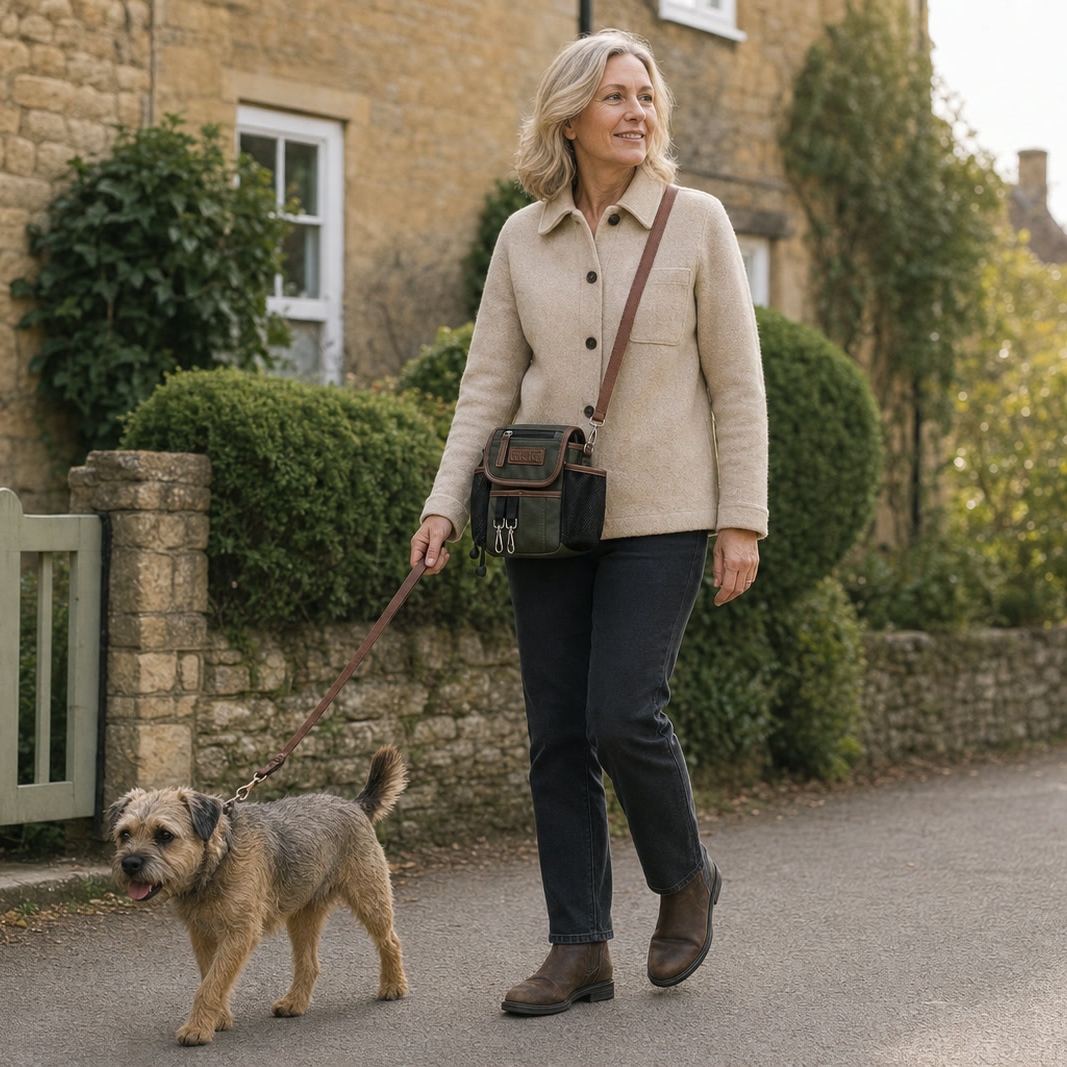
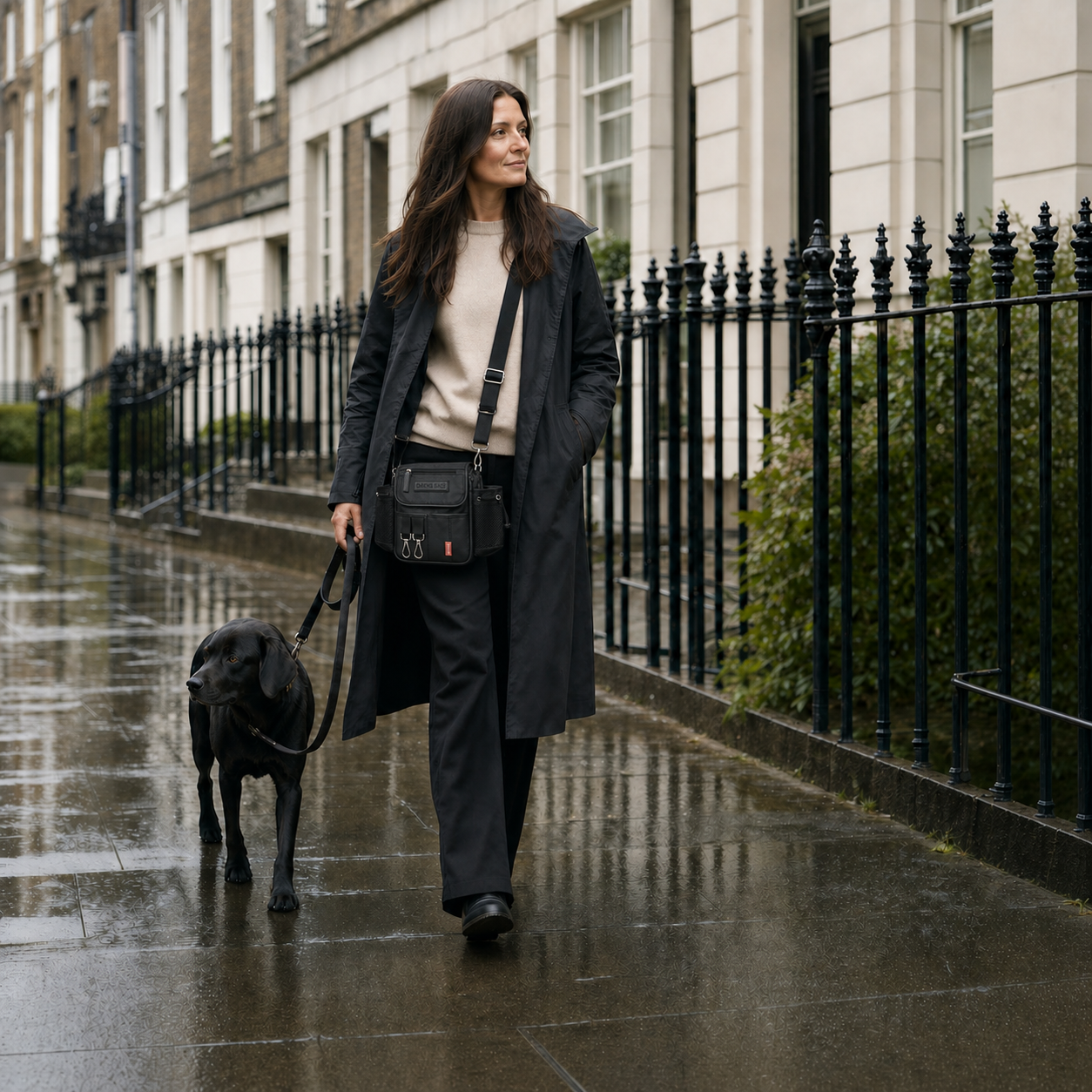
If you are reinforcing loose lead walking, calm check-ins or polite behaviour around dogs and people, your setup can be simpler. A standard lead, easy-access treats, poo bags and your own essentials are often enough. This is where smart organisation really shines, because you can reward naturally during a normal walk without stopping to rummage.
How to organise your bag so rewards stay fast
Speed matters in dog training. Your dog does not care how stylish your bag is if you cannot find the chicken quickly enough. The layout should support instant action.
Use the front or top-access section for treats. Keep one secure zipped compartment for valuables like your mobile phone, keys and cards. Store messy items such as used wipes or slobbery toys in a separate pouch if your bag does not have a dedicated section. Leads and bulkier gear belong in the main compartment, packed neatly rather than shoved in.
Try to keep the same layout every time. Dogs thrive on consistency, and so do humans. If your clicker lives in the same pocket and your poo bags are always in the same dispenser, you stop thinking about the bag and focus on the dog in front of you.
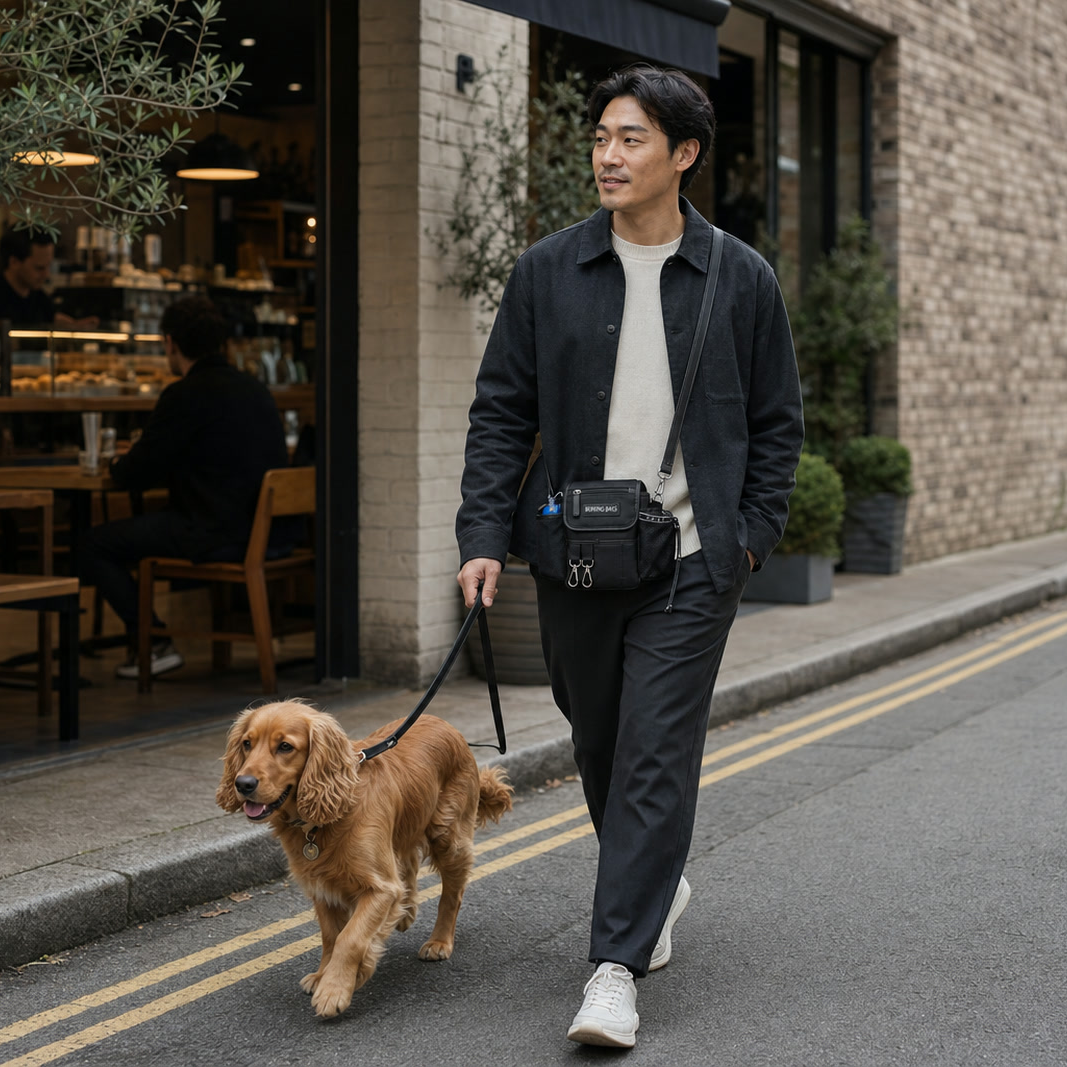
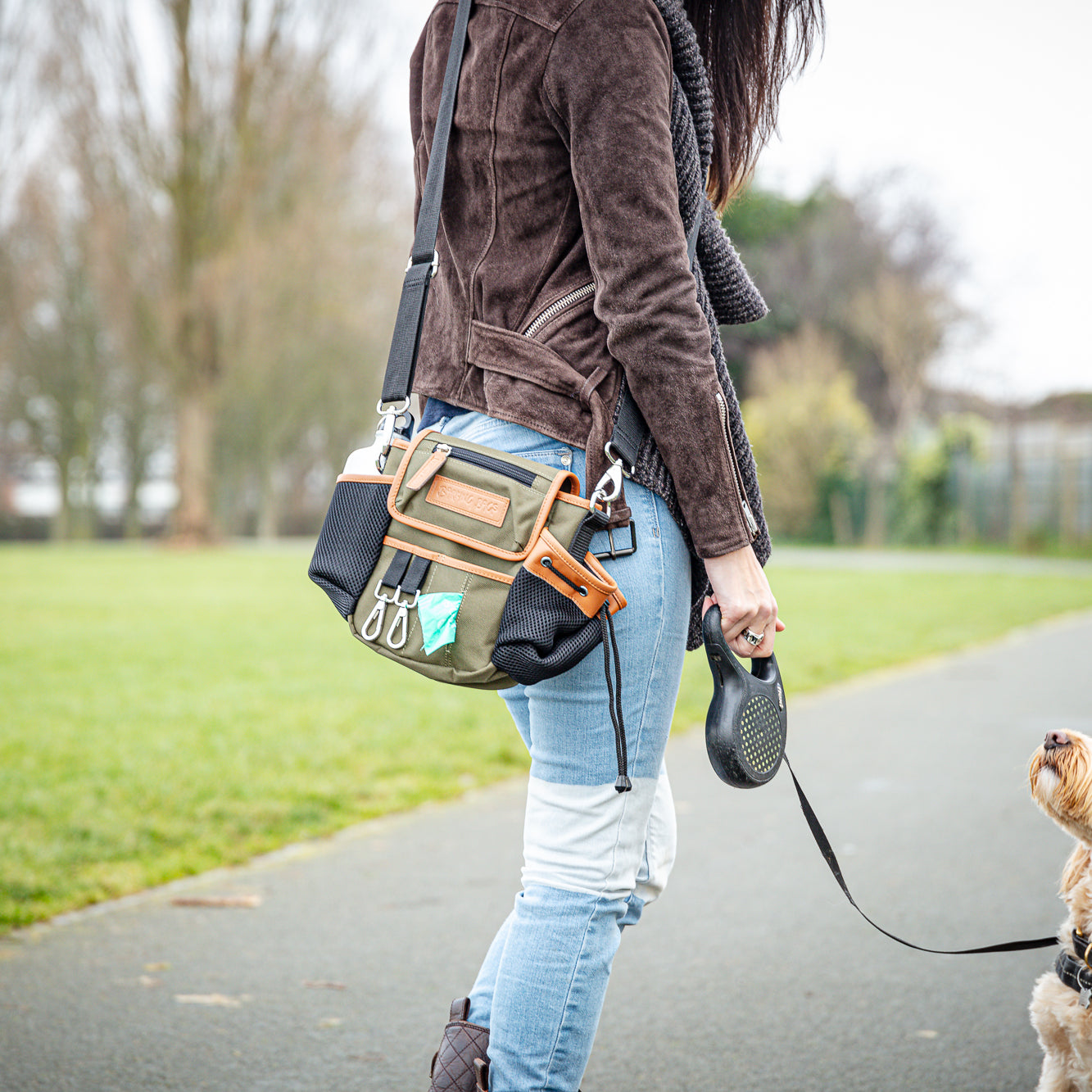
This is also why many owners move away from using a handbag, coat pocket or random backpack for training. They can work in a pinch, but they are rarely designed around one-handed access, quick treat delivery and separation between dog gear and personal items. A dedicated setup simply reduces friction. That is the whole point.
Common packing mistakes that make training harder
The biggest mistake is overpacking. More gear does not always mean better training. In fact, it often means slower hands, more clutter and less focus.
Another common one is choosing the wrong treats. If they are too big, too dry or too difficult to grab, your reward timing suffers. Soft, small treats usually work best for active sessions, though it depends on your dog and whether you mind carrying something smellier.
There is also the issue of poor bag maintenance. Old treats, sticky compartments and loose rubbish make the next outing less appealing before it has even started. Emptying and resetting your bag after each session takes a minute or two, but it saves time later.
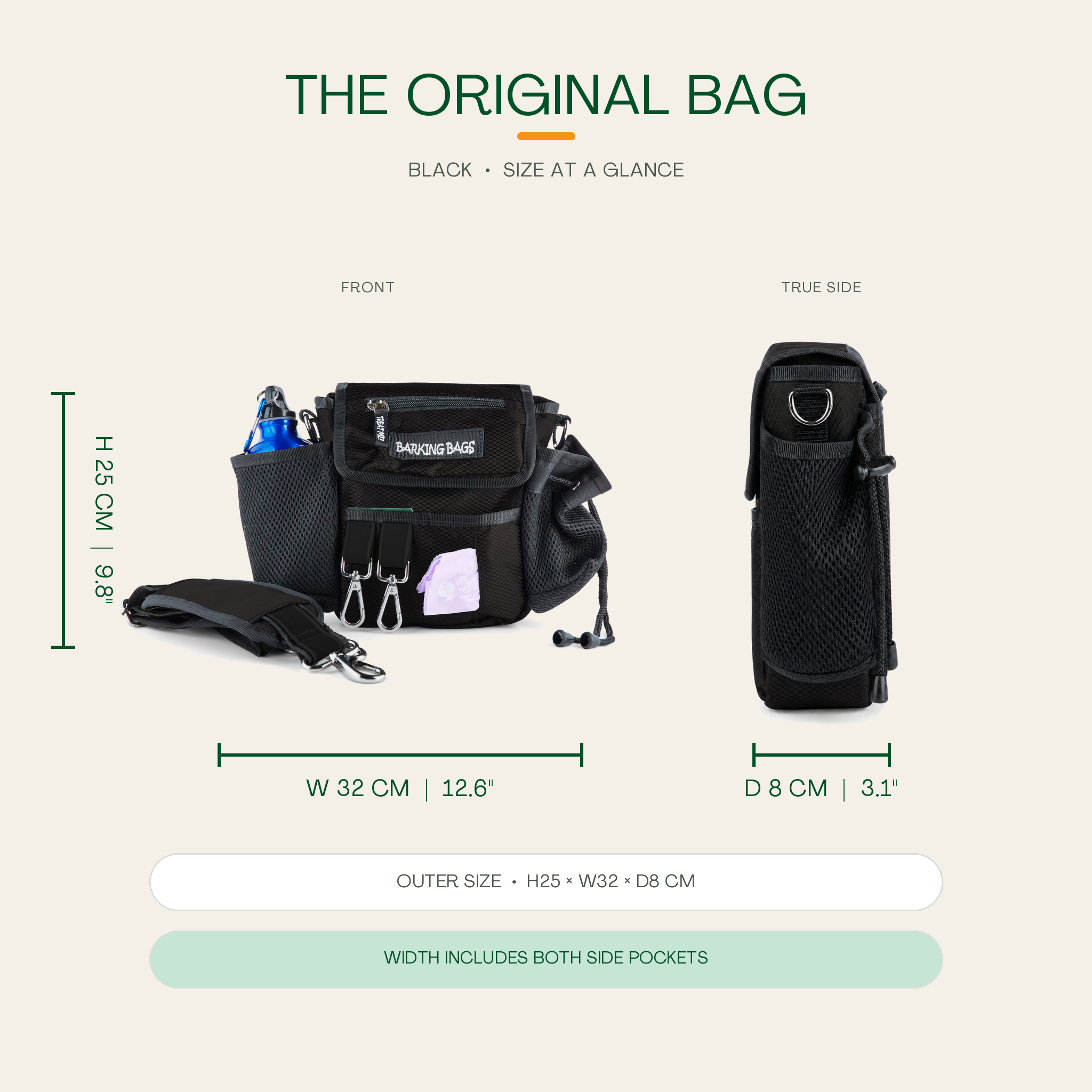
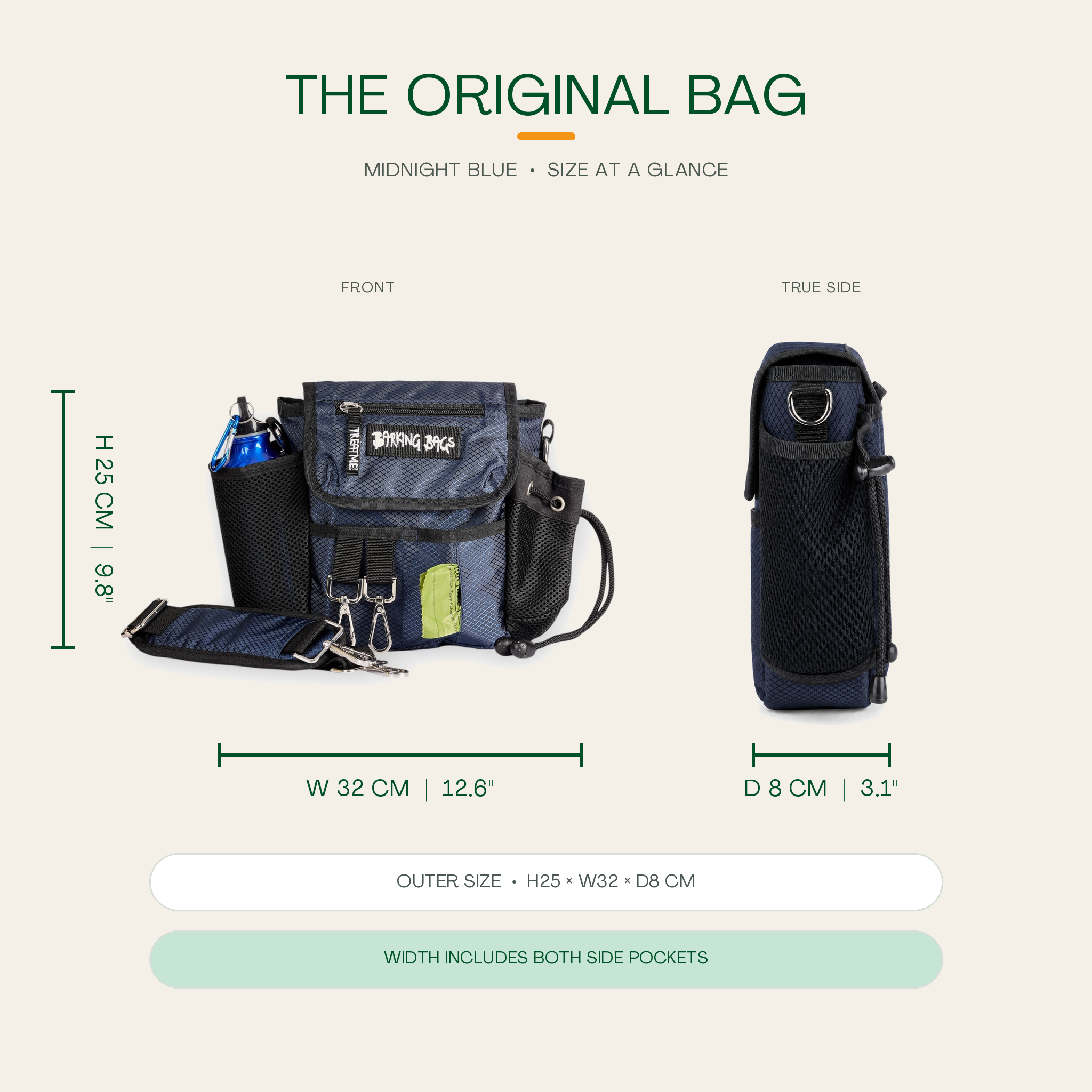
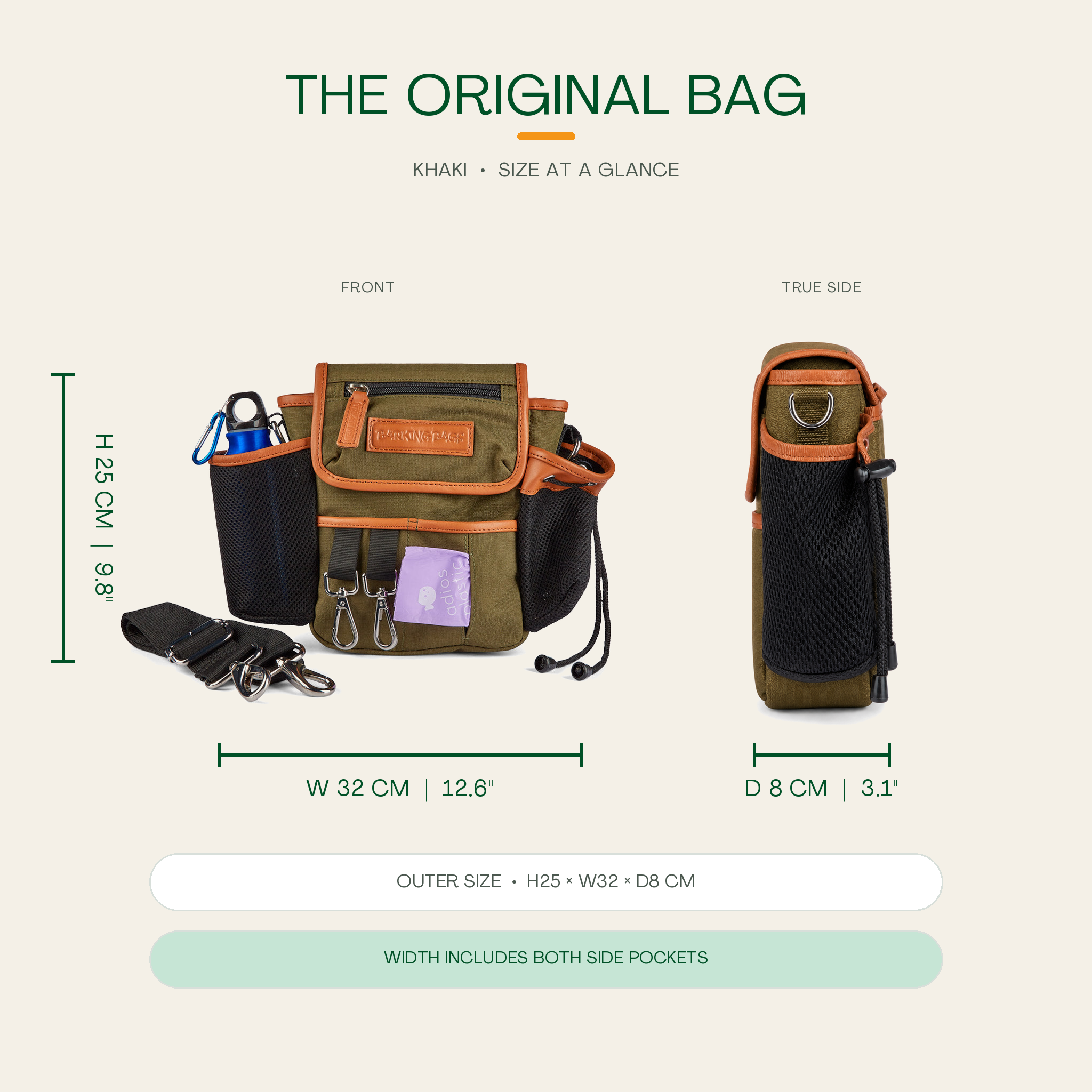
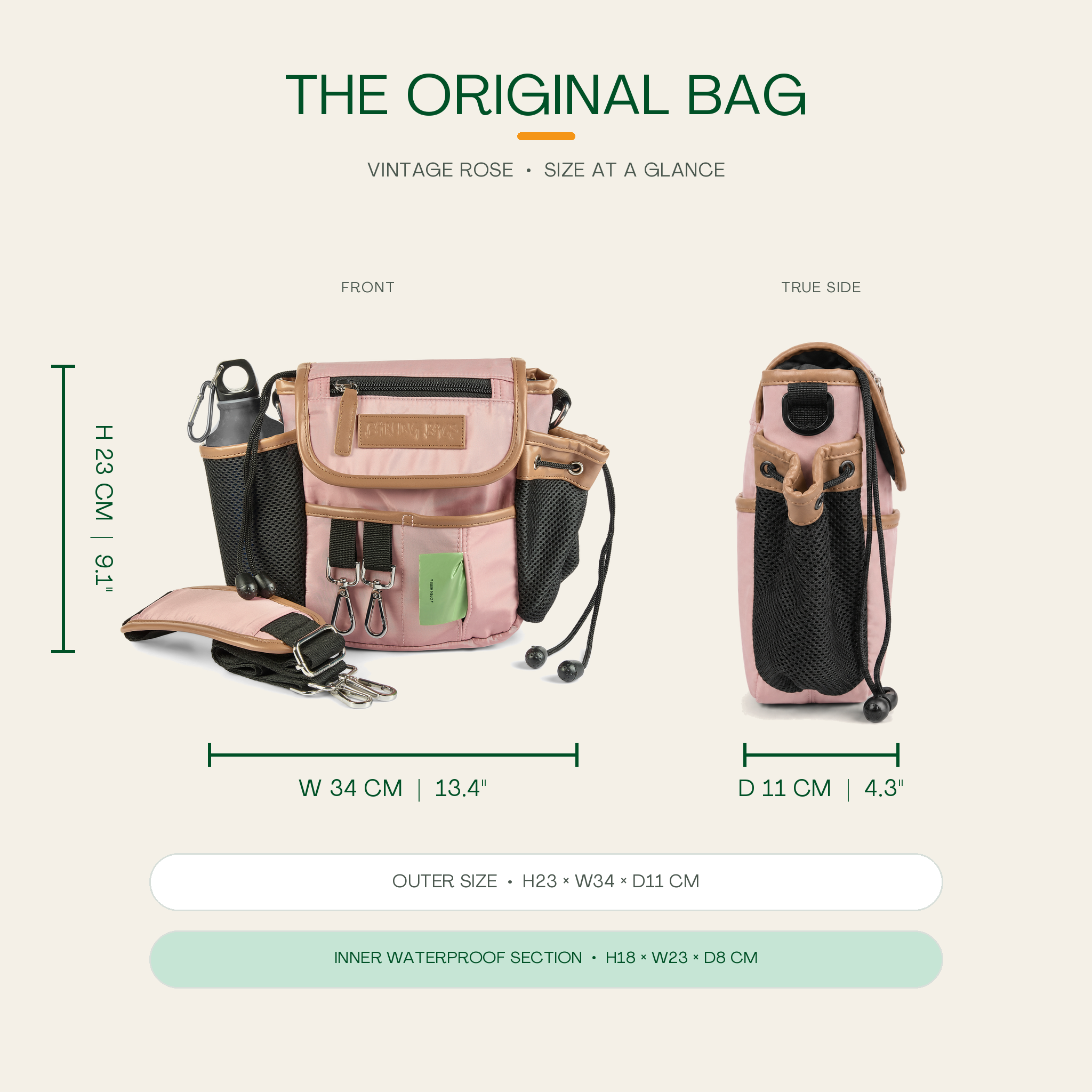
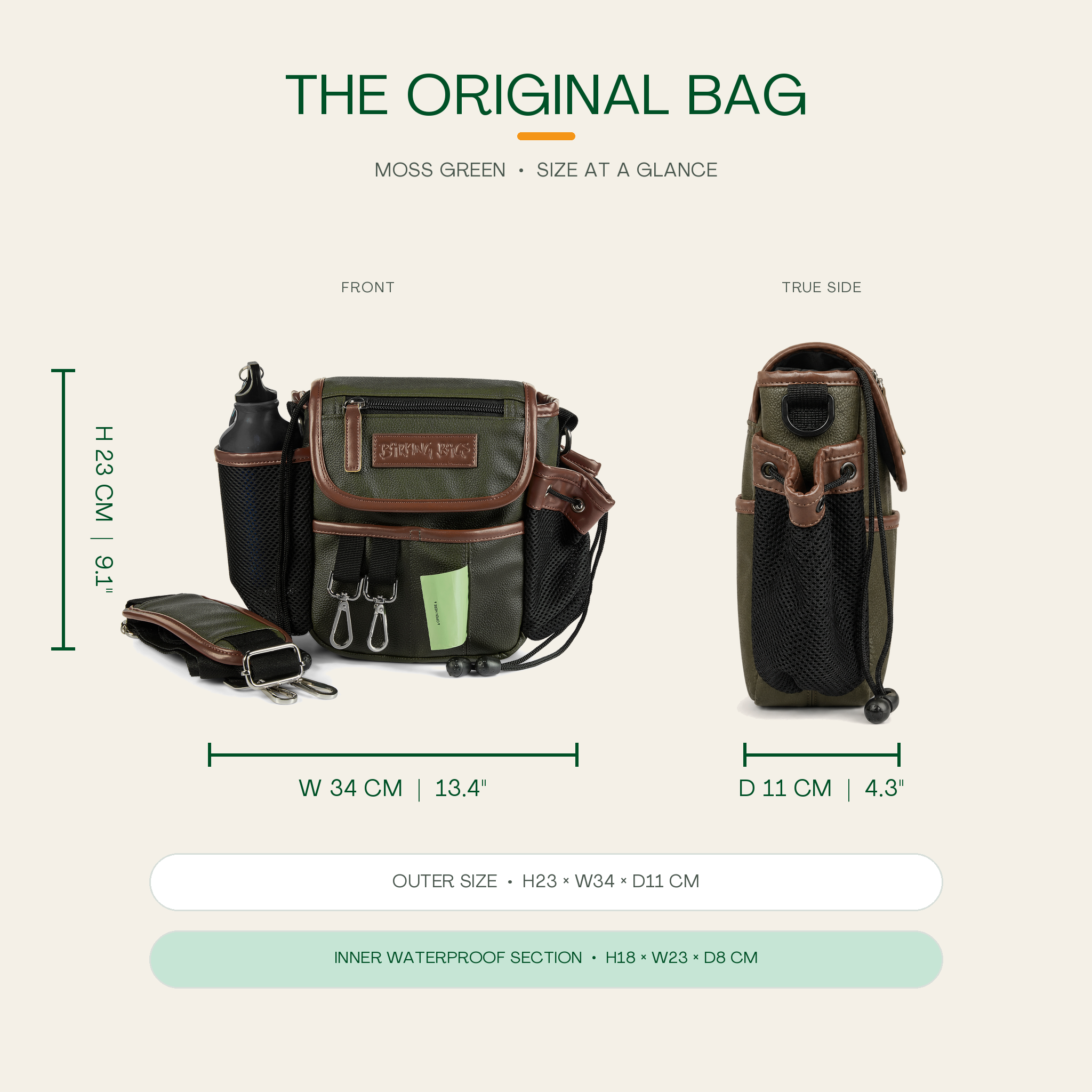
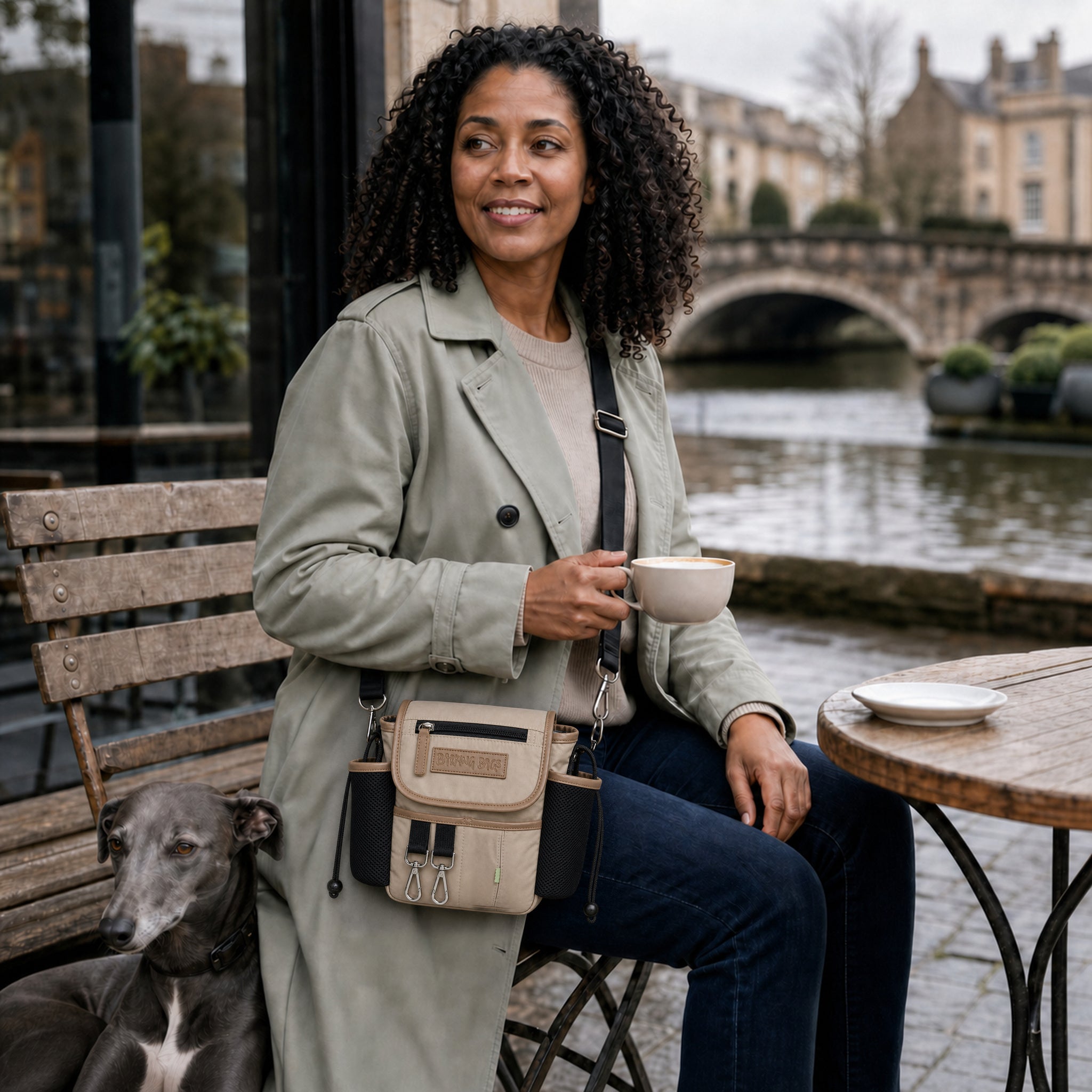
Finally, be honest about your own routine. If you always carry your mobile phone, keys, dog treats and a ball, choose a setup that handles those comfortably without turning into a bulky catch-all. Barking Bags was built around exactly that problem - making dog walking and training feel more organised without compromising on style.
The best packed dog training bag is not the one with the most kit. It is the one that lets you reward quickly, move easily and leave the house feeling ready rather than flustered.