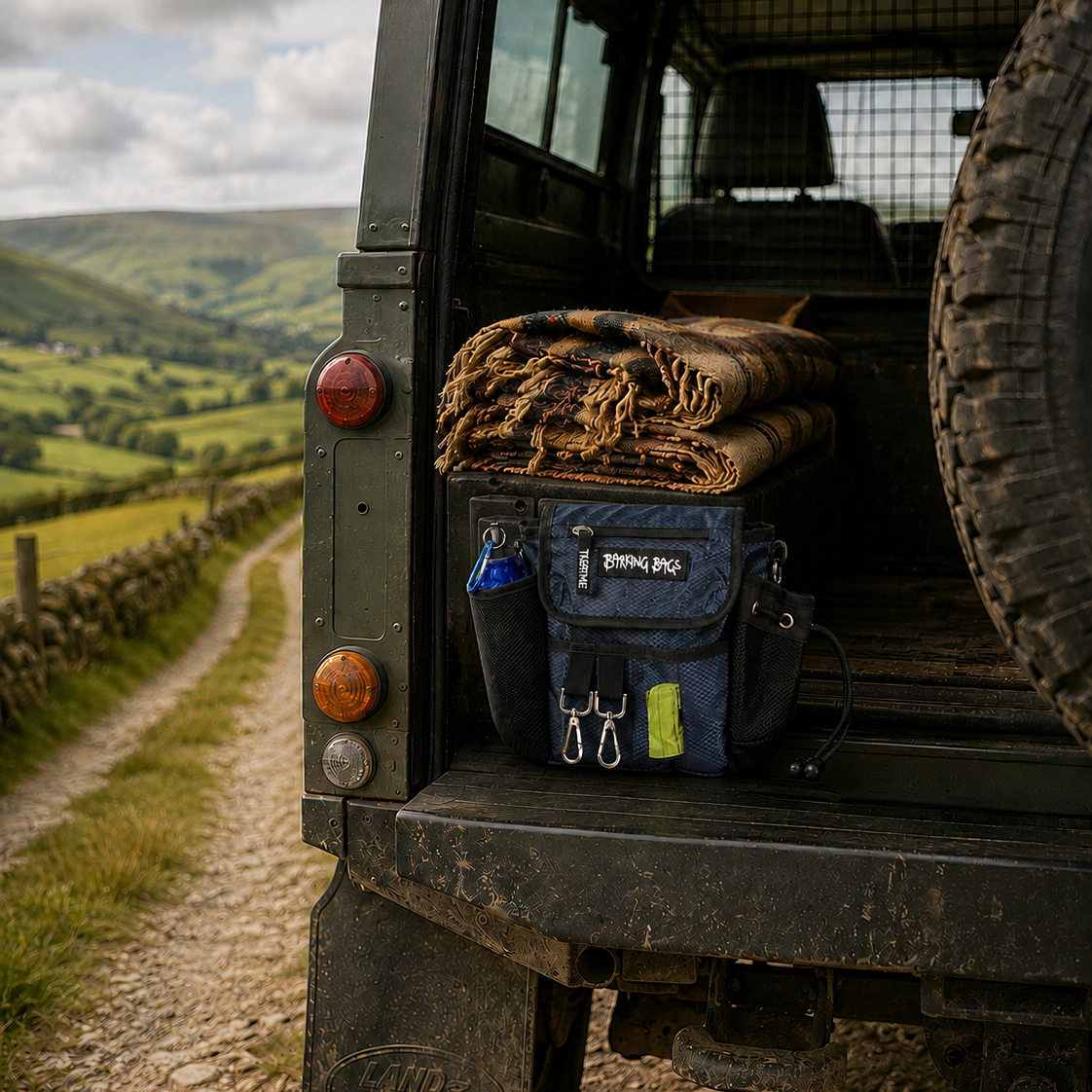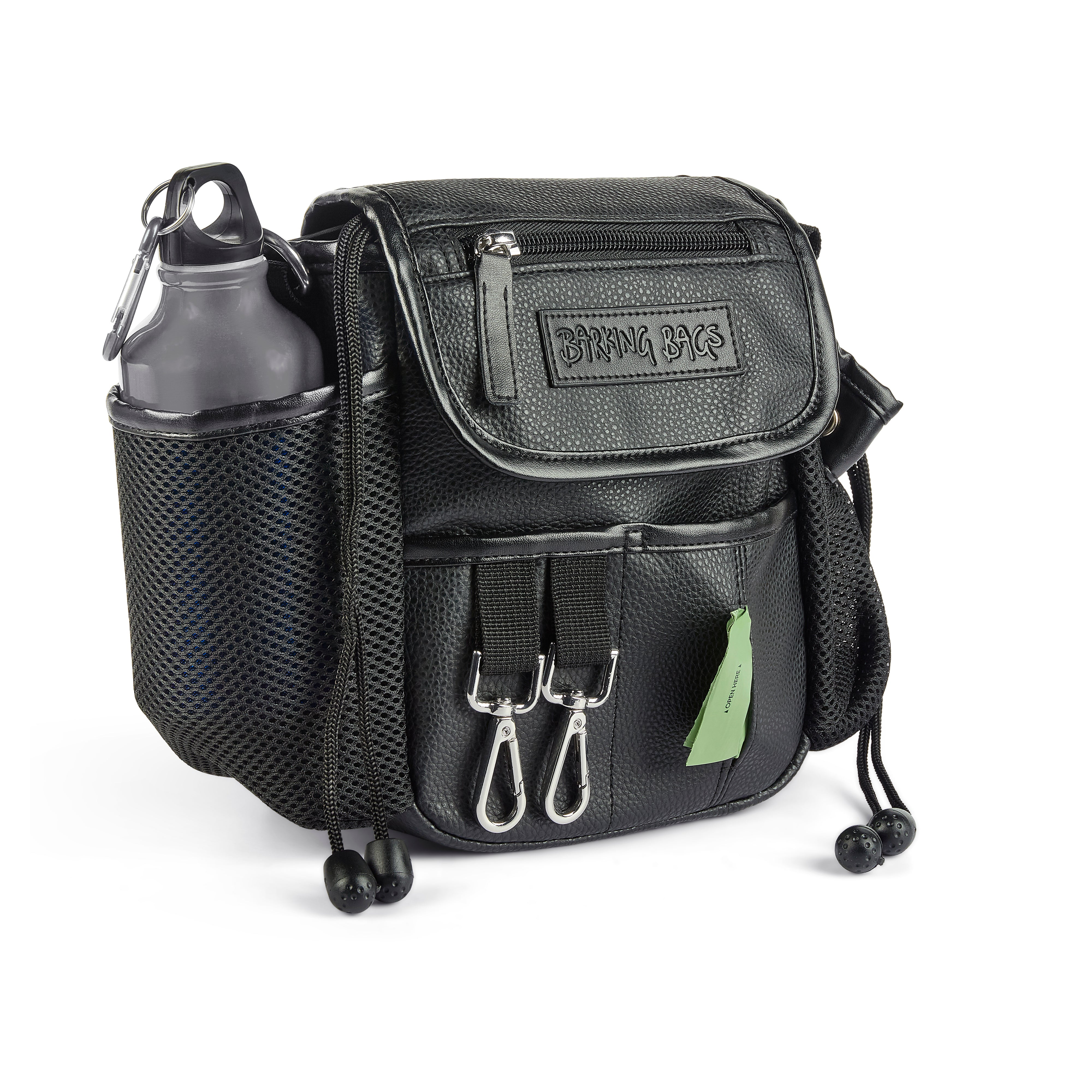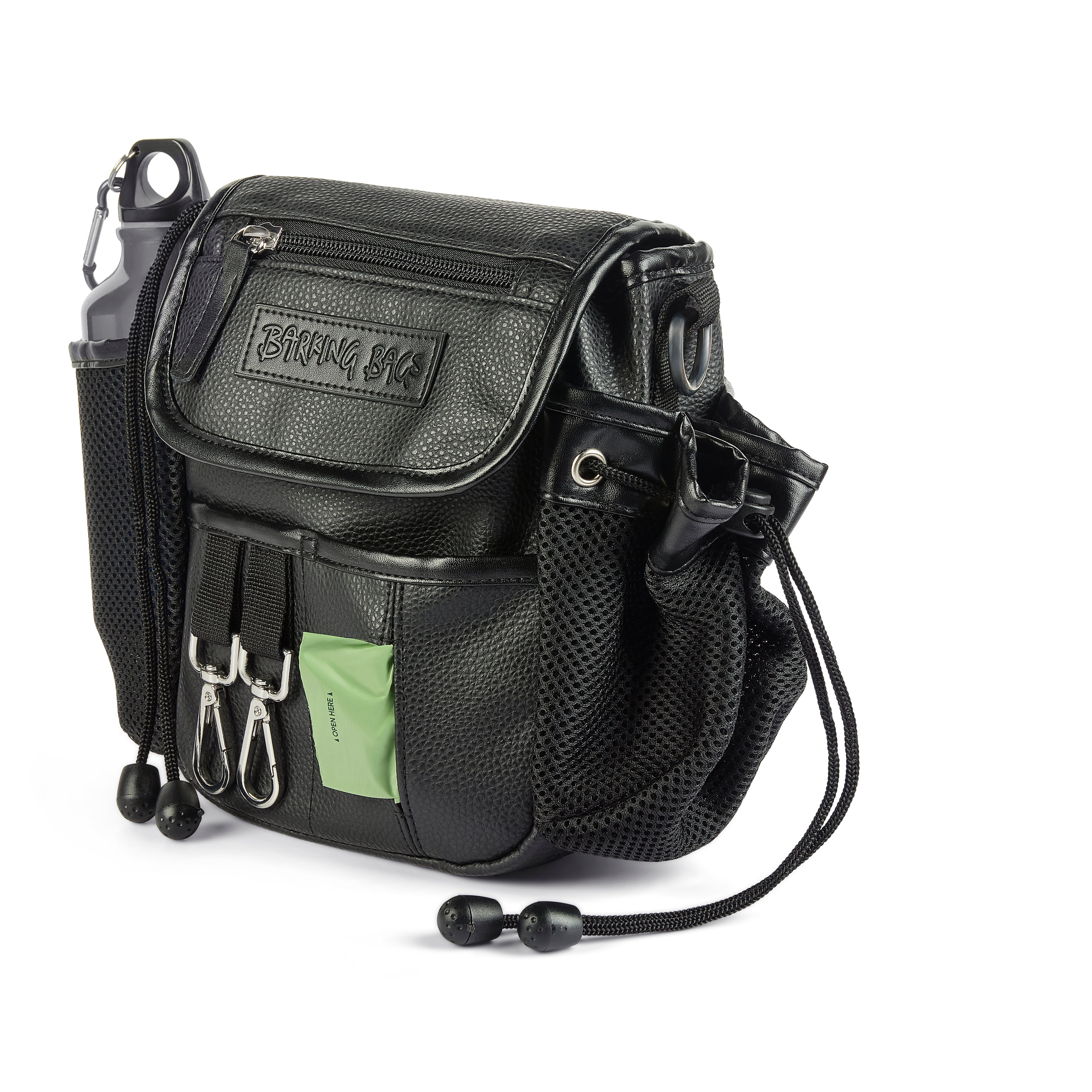

You only need to fumble for a poo bag while your dog is mid-squat once to realise that storage on a walk matters more than it seems. The dog walking bag vs backpack question usually starts there - not with fashion, but with one hand on the lead, a phone slipping in your coat pocket, and treats somehow buried under your keys.
For plenty of dog owners, either option can work. But they do different jobs. A backpack is built to carry more, while a dedicated dog walking bag is built to help you reach what you need quickly, keep essentials organised, and make everyday walks feel less chaotic. If you walk your dog once or twice a day, that difference adds up fast.
Dog walking bag vs backpack for everyday walks
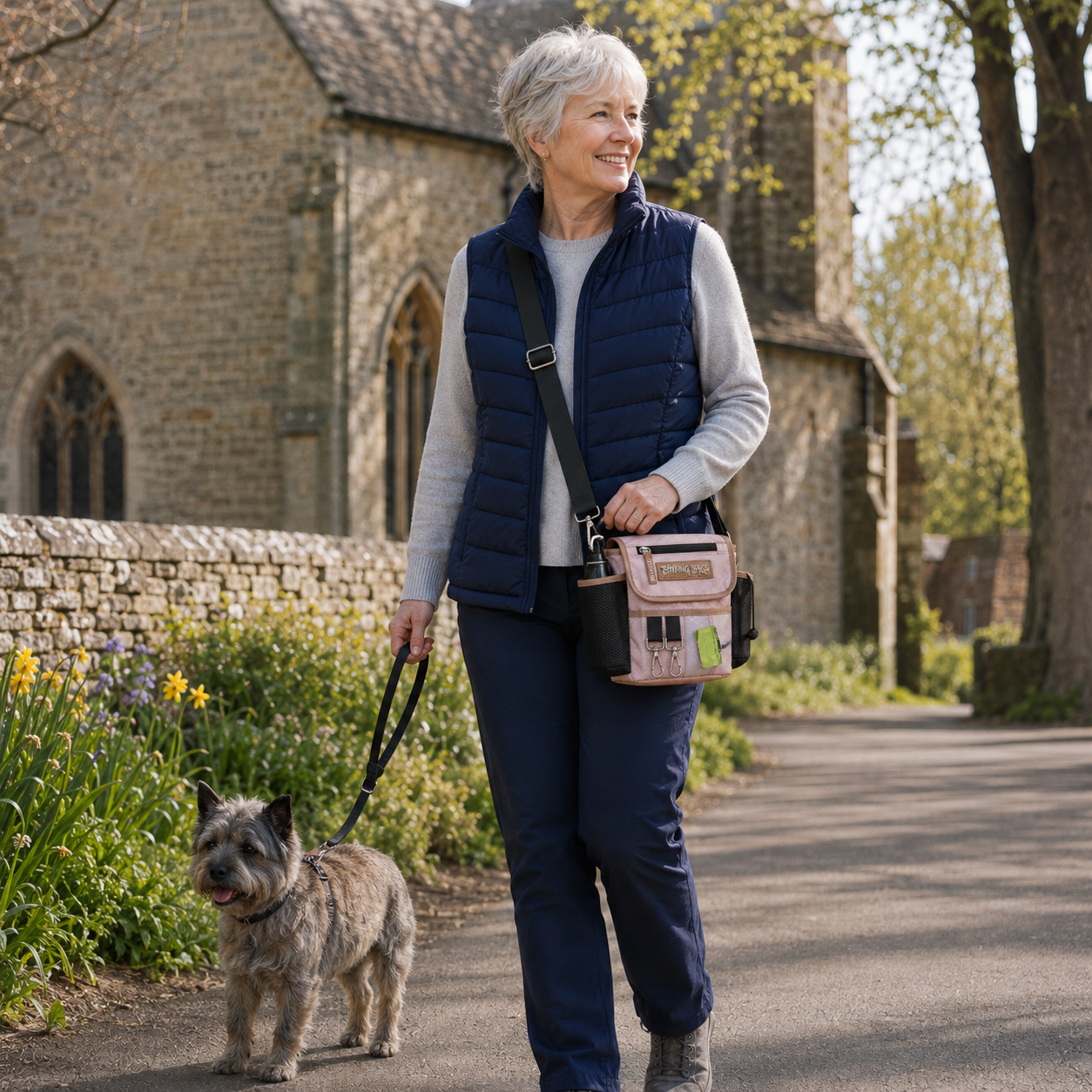
The best choice depends on what your walks actually look like. If you are heading out for a quick loop around the block, stopping for training, or fitting a walk into a busy morning, easy access usually matters more than total capacity. That is where a dog walking bag tends to come into its own.
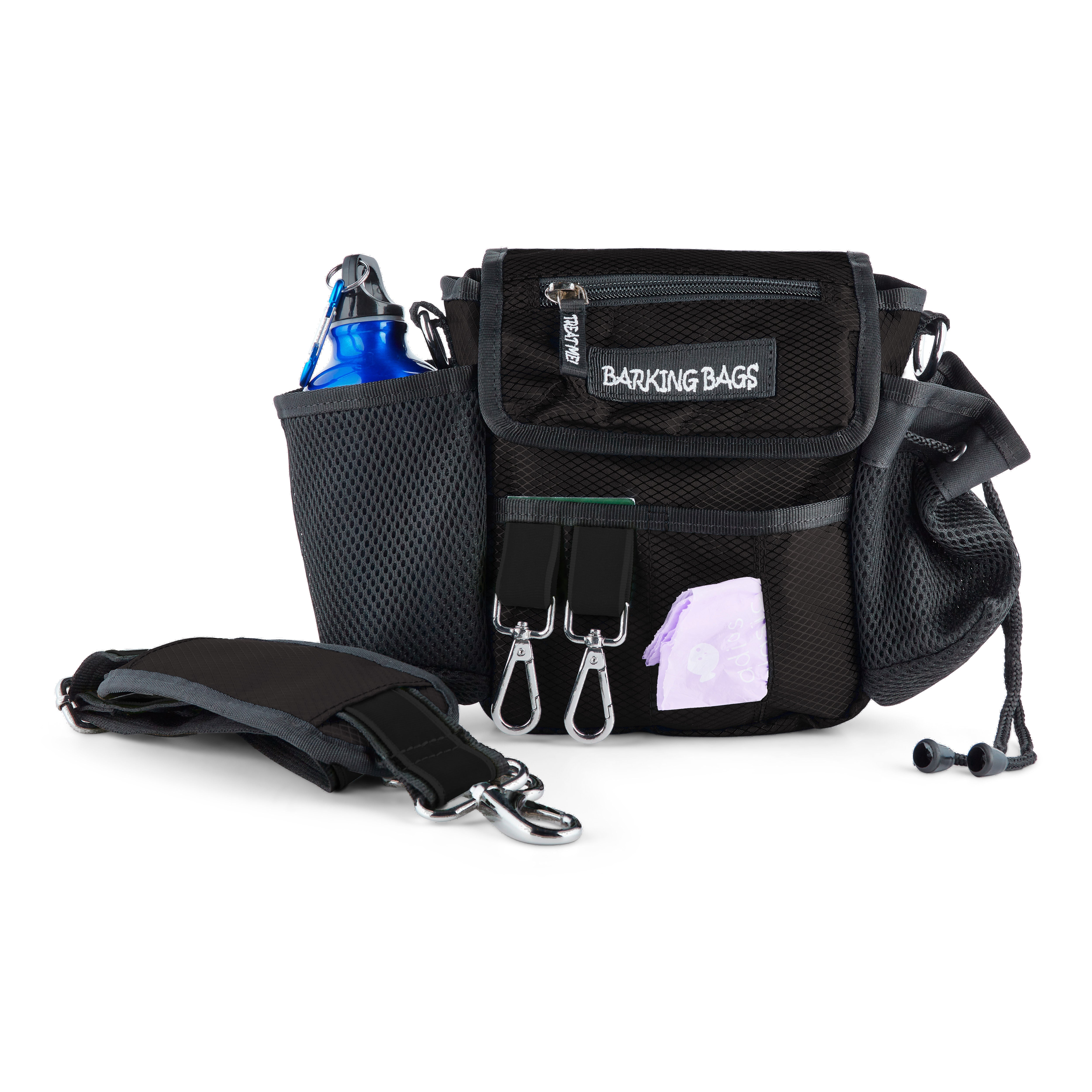
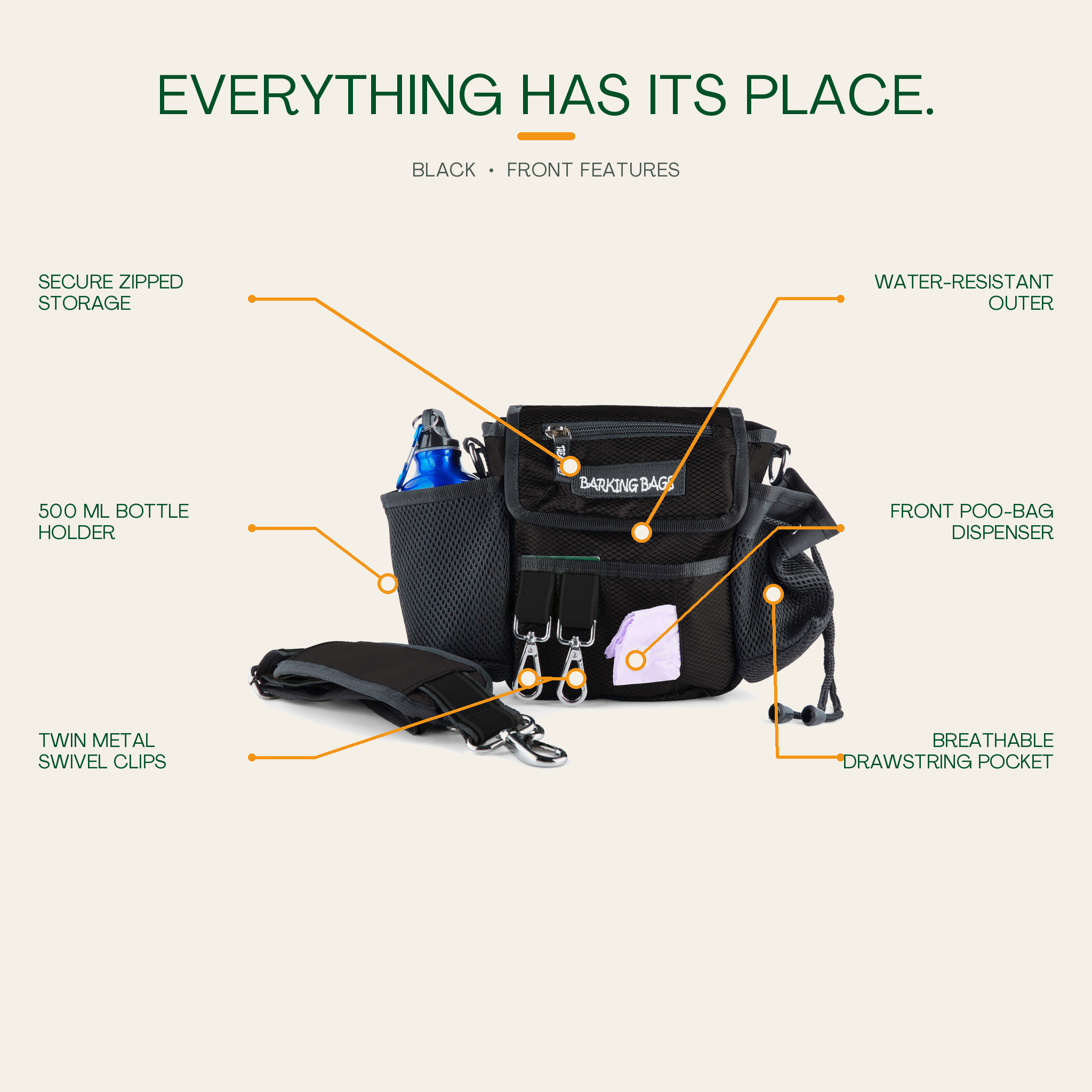
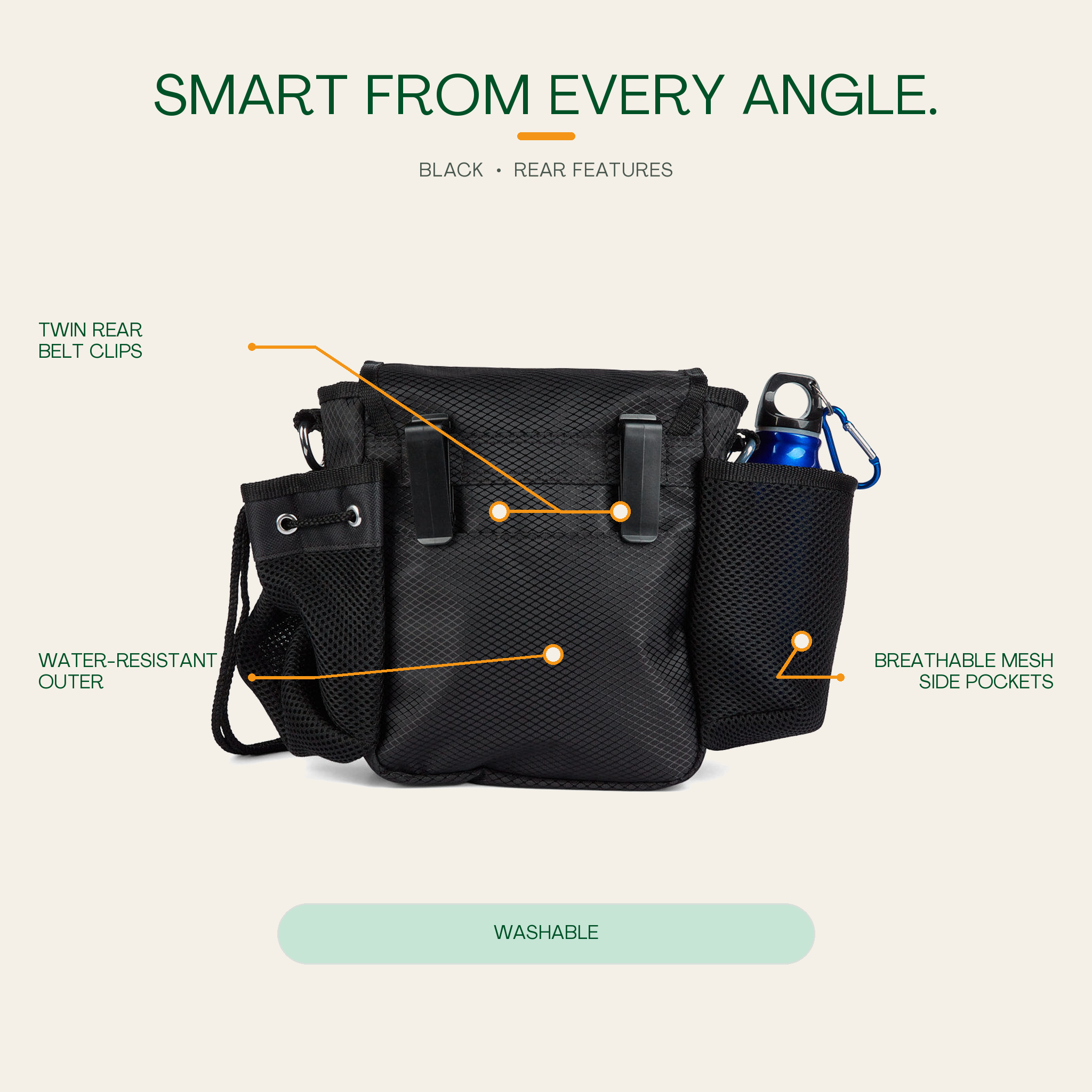
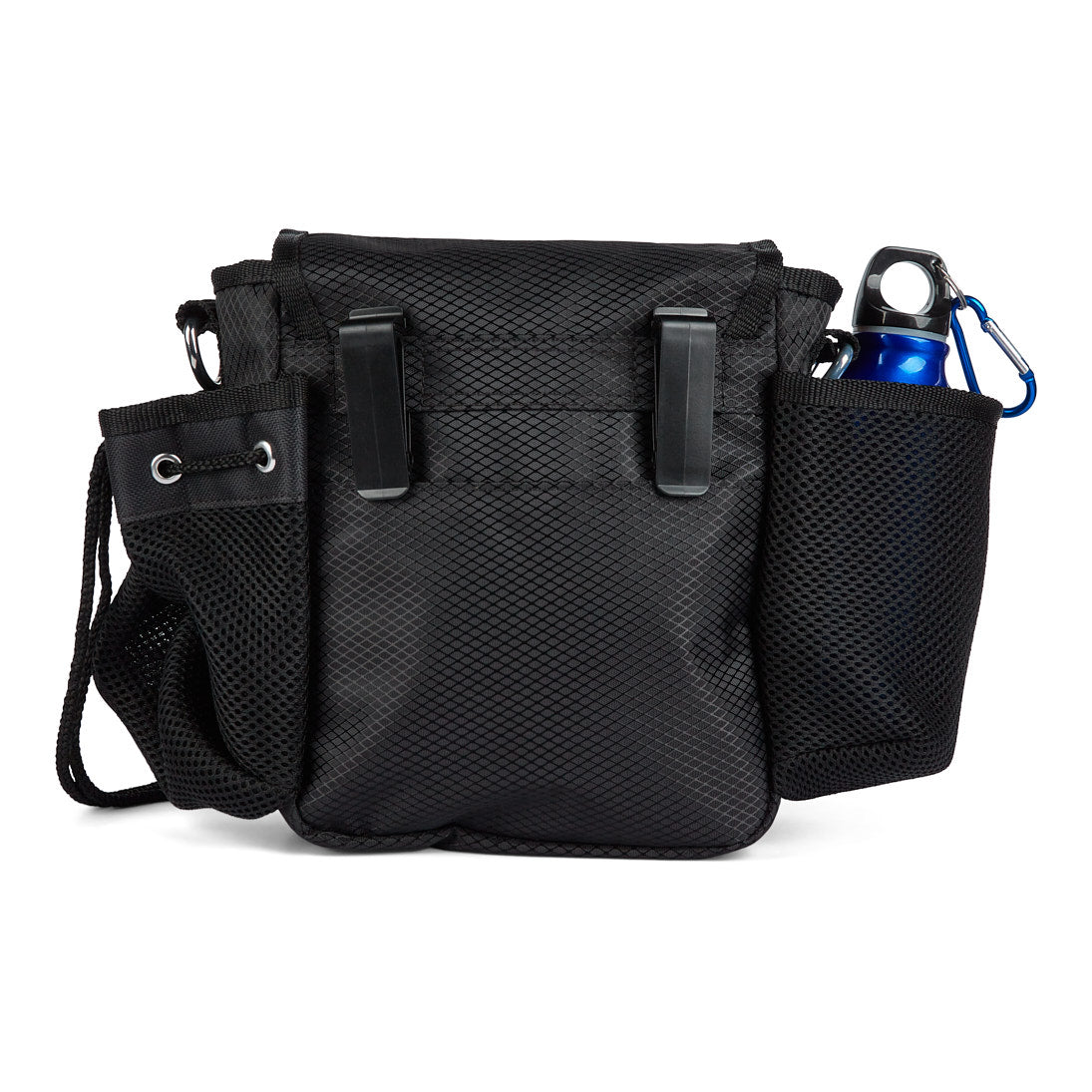
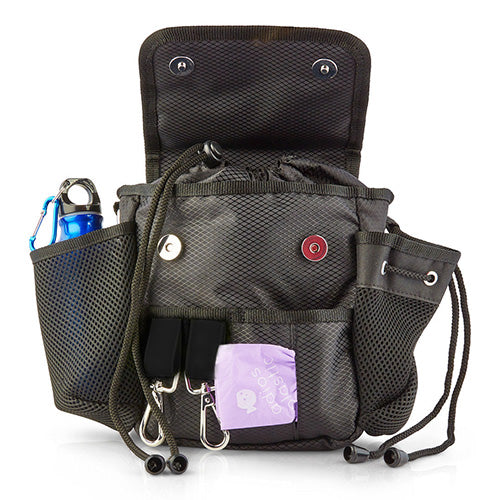
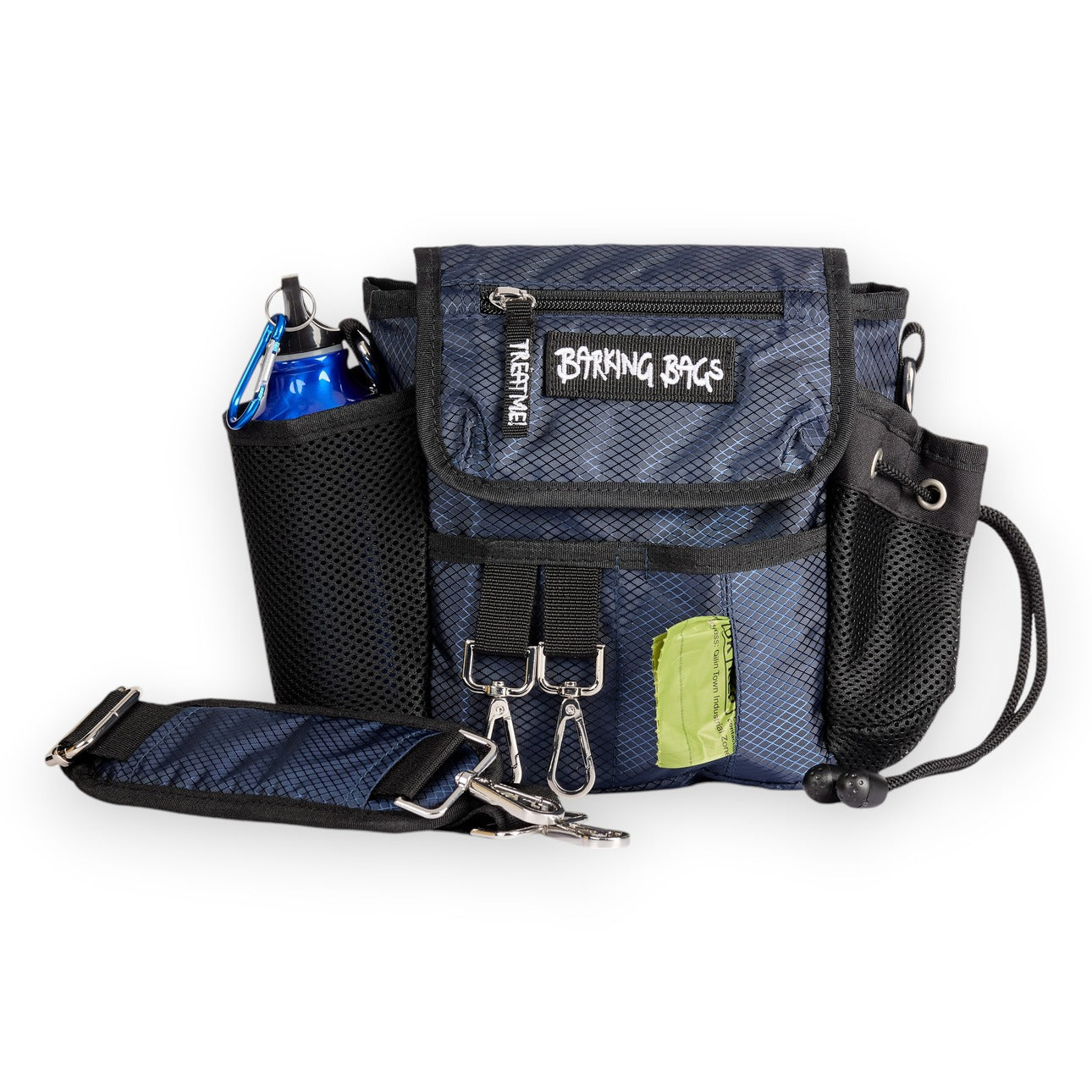
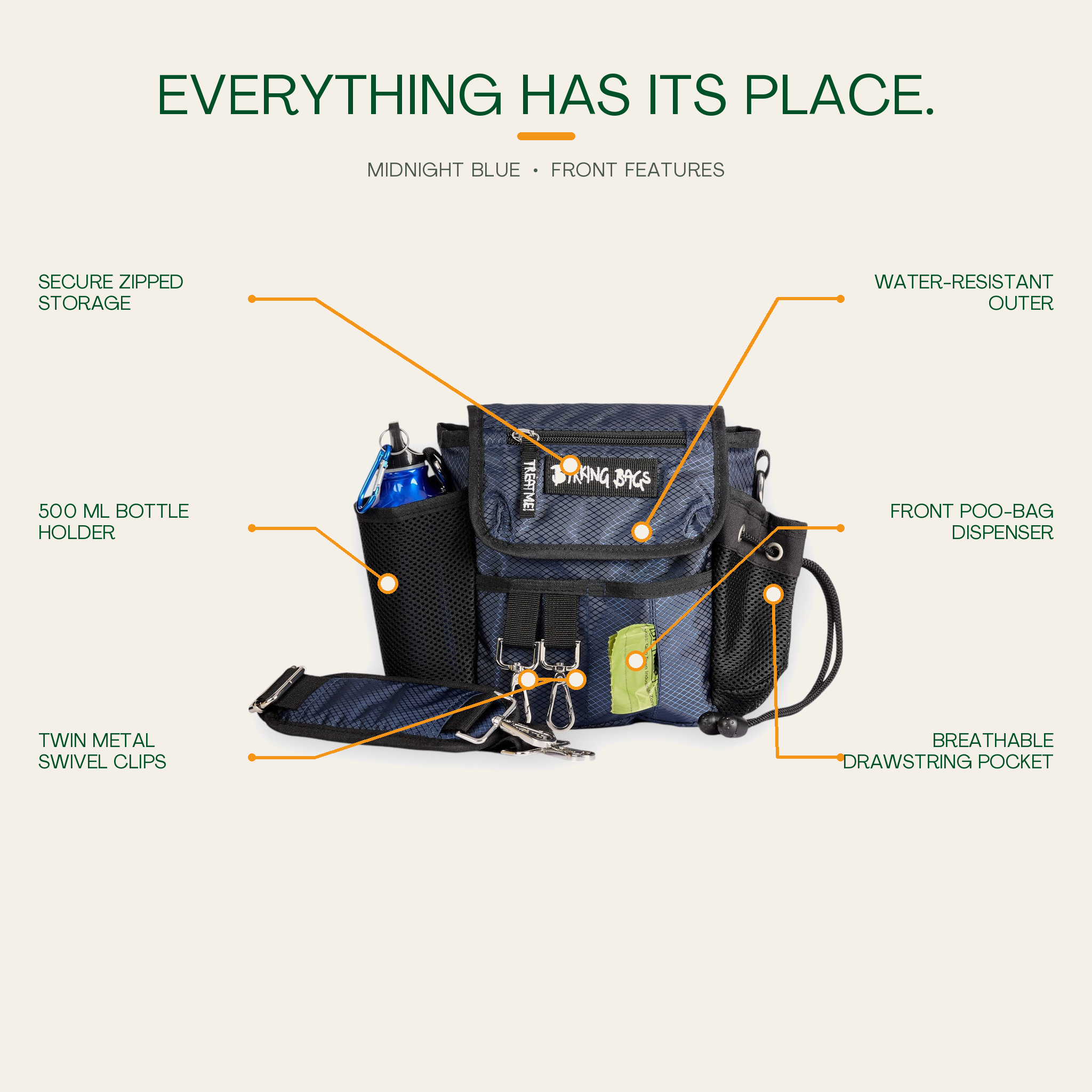
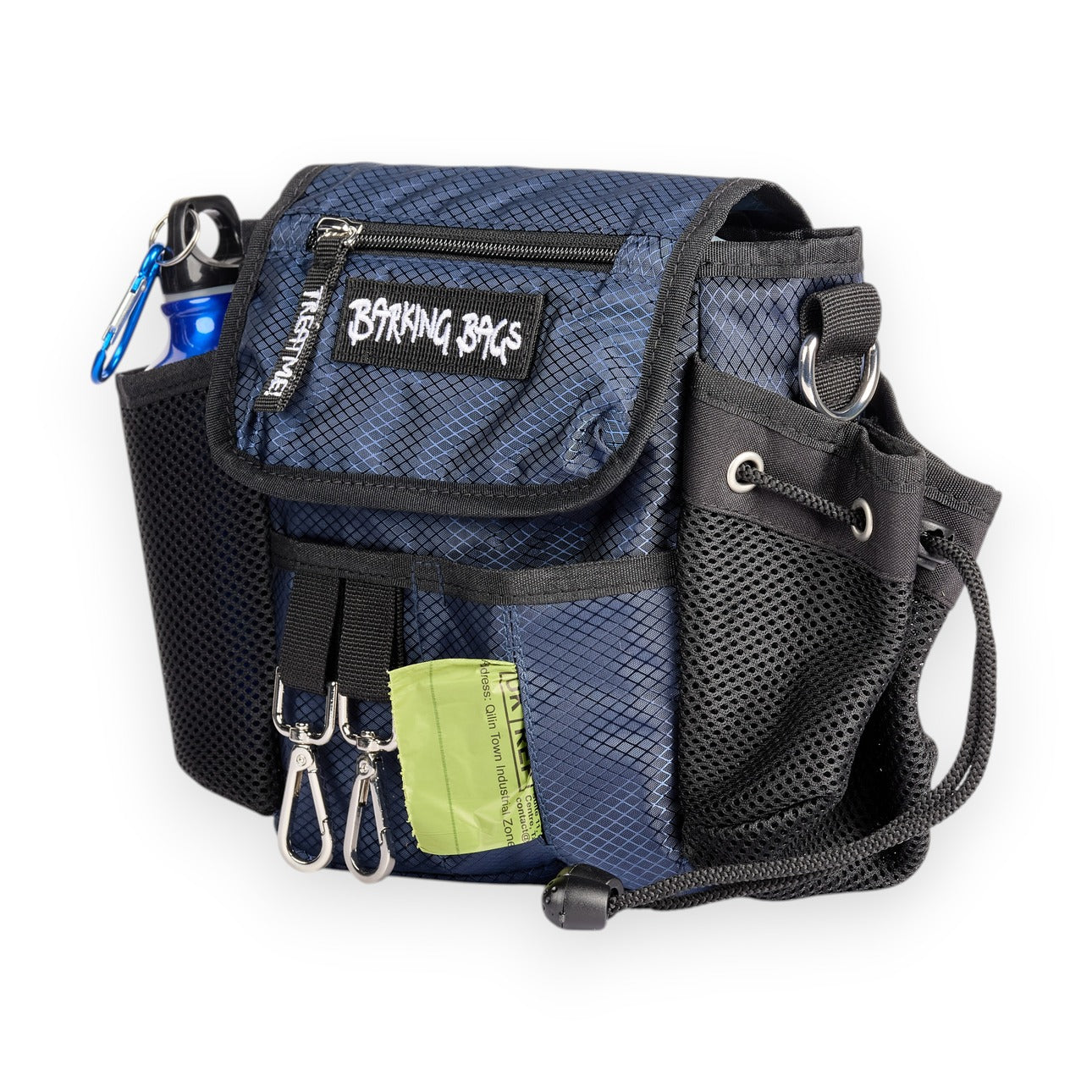
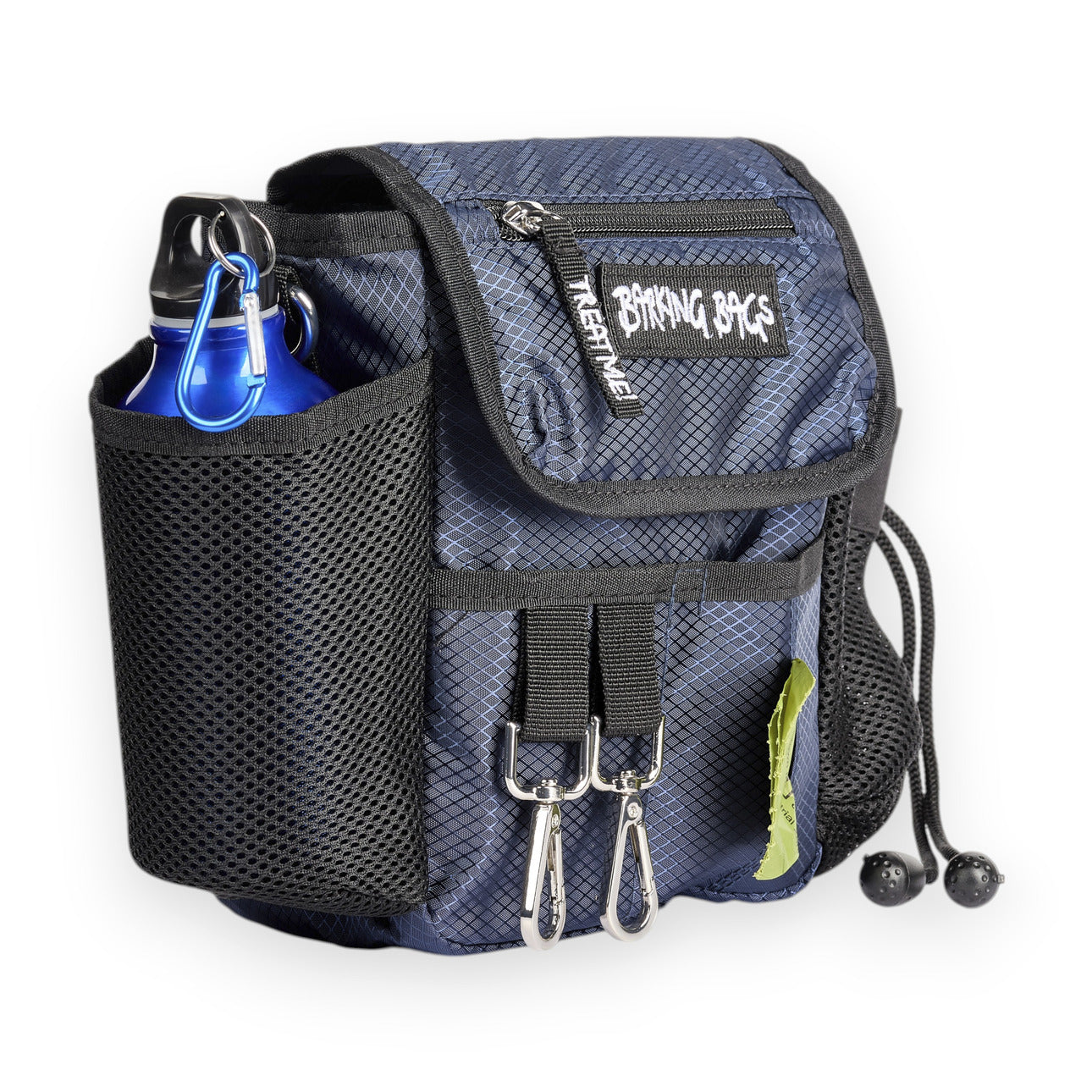
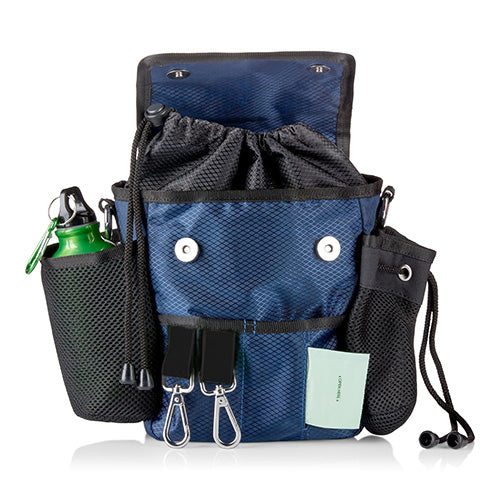
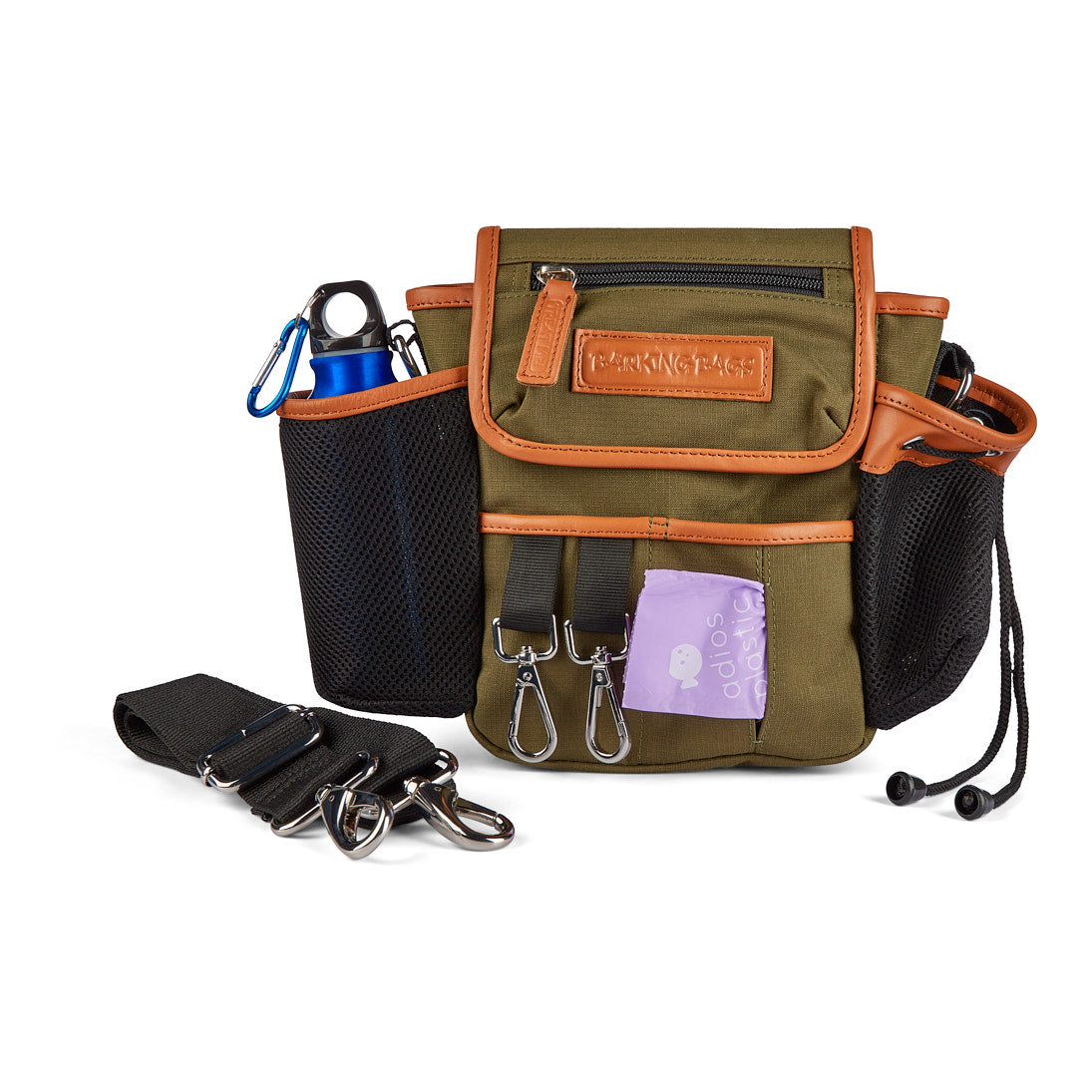
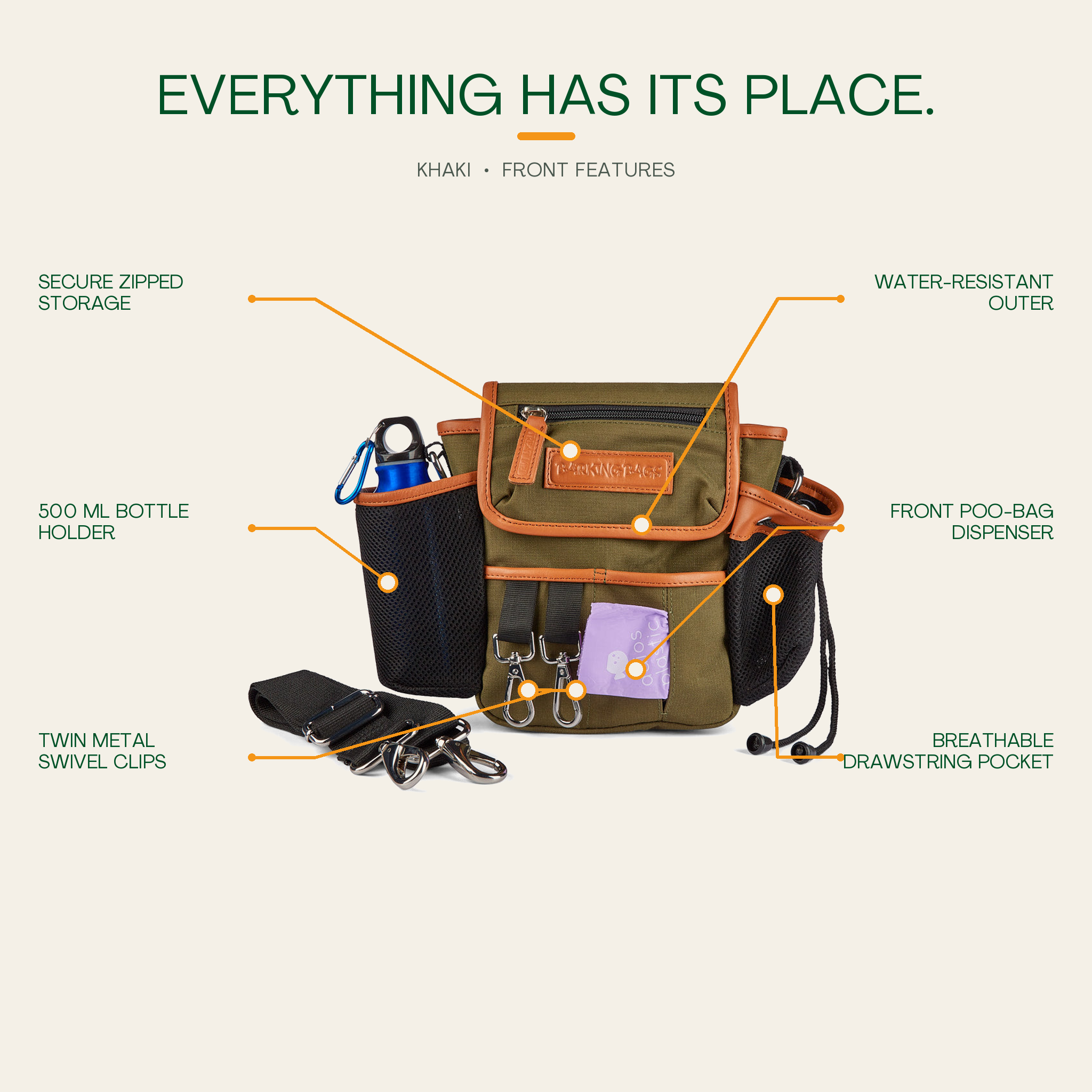
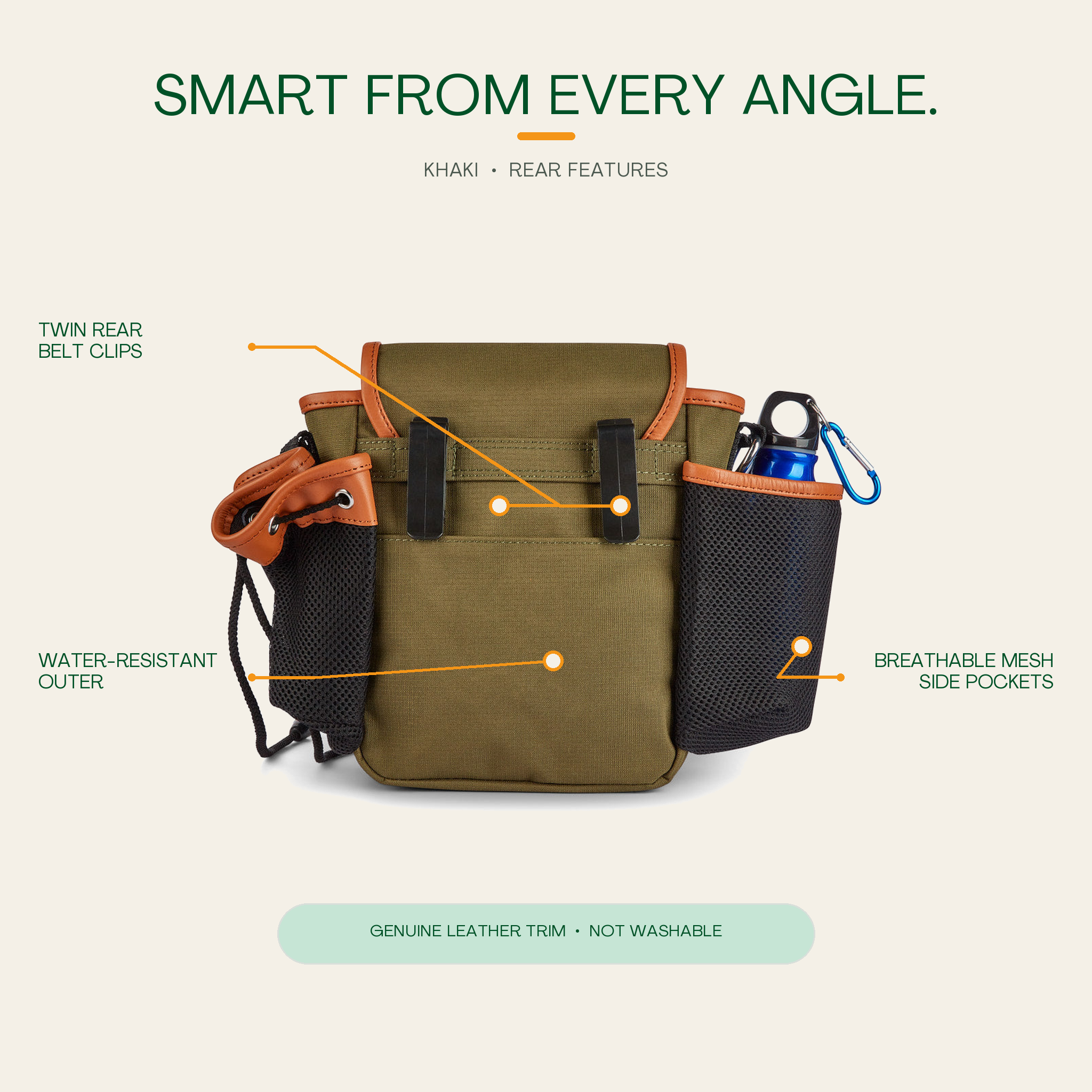
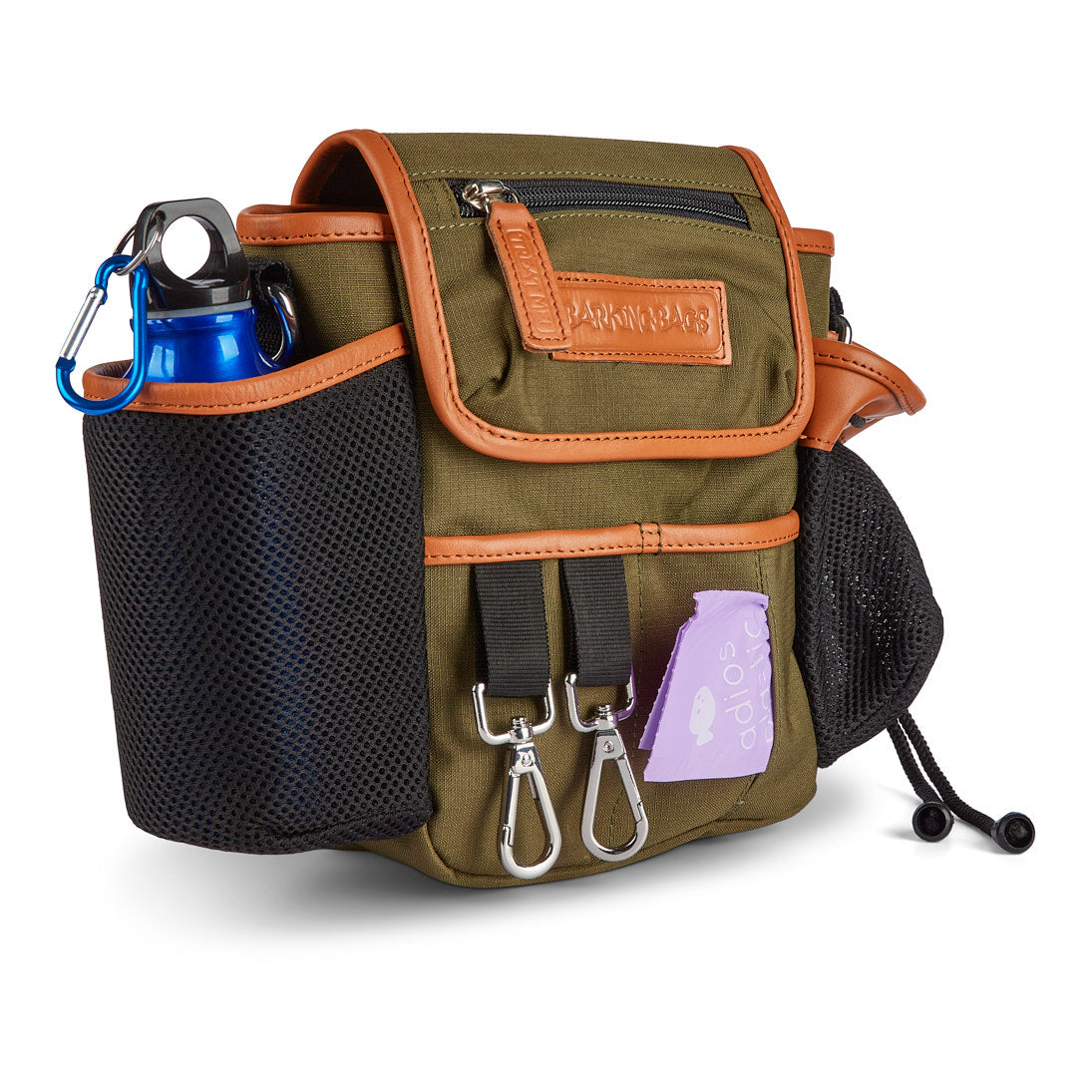
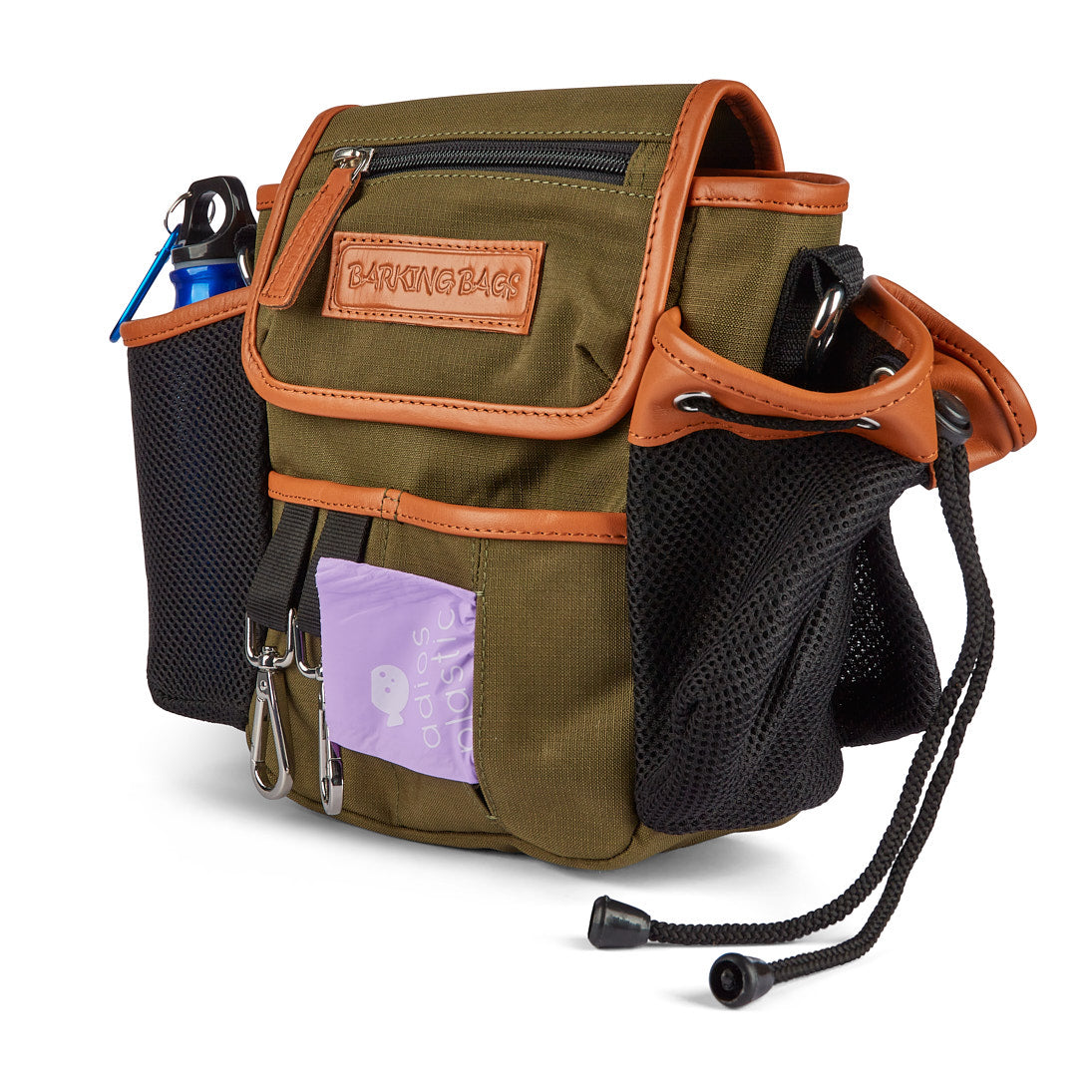
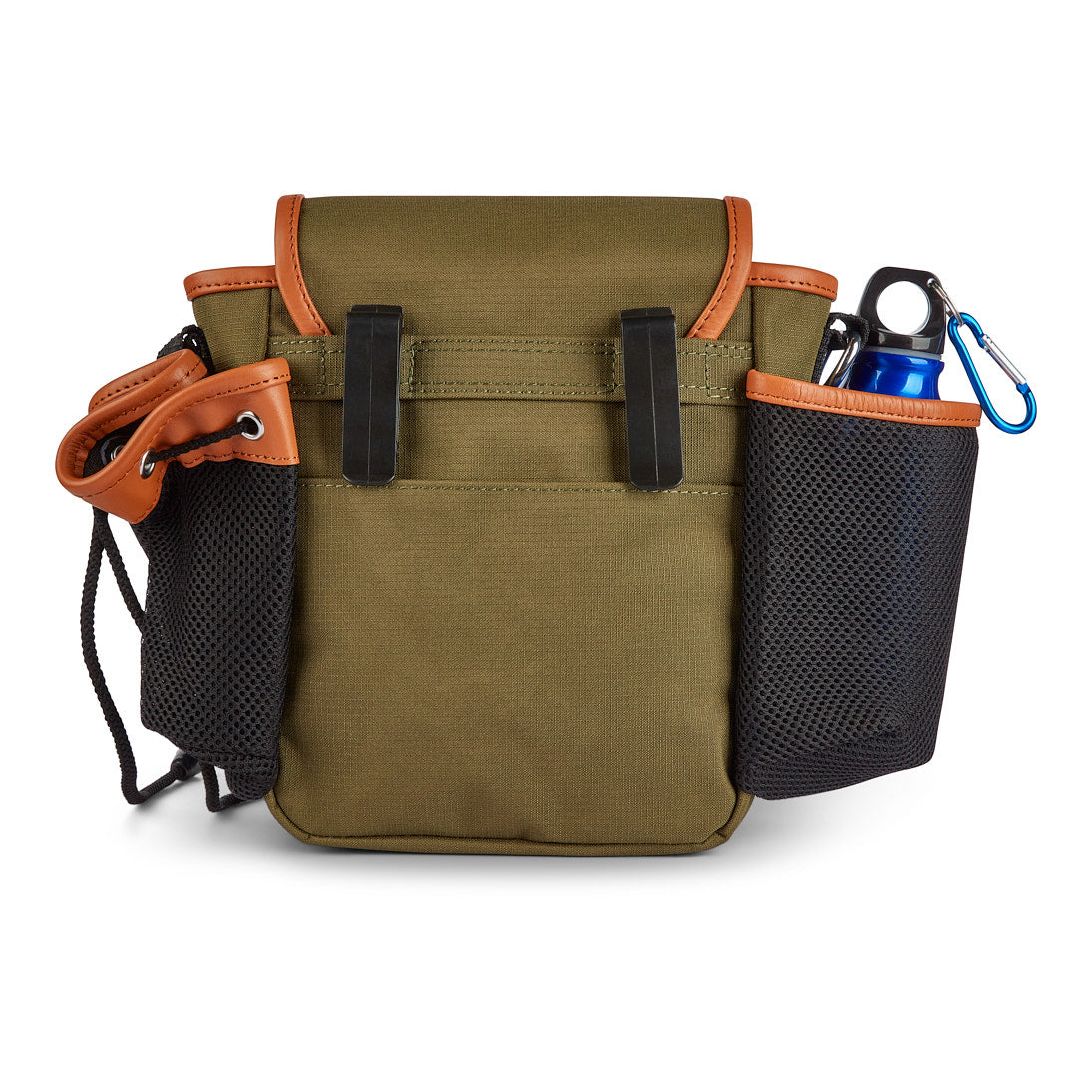
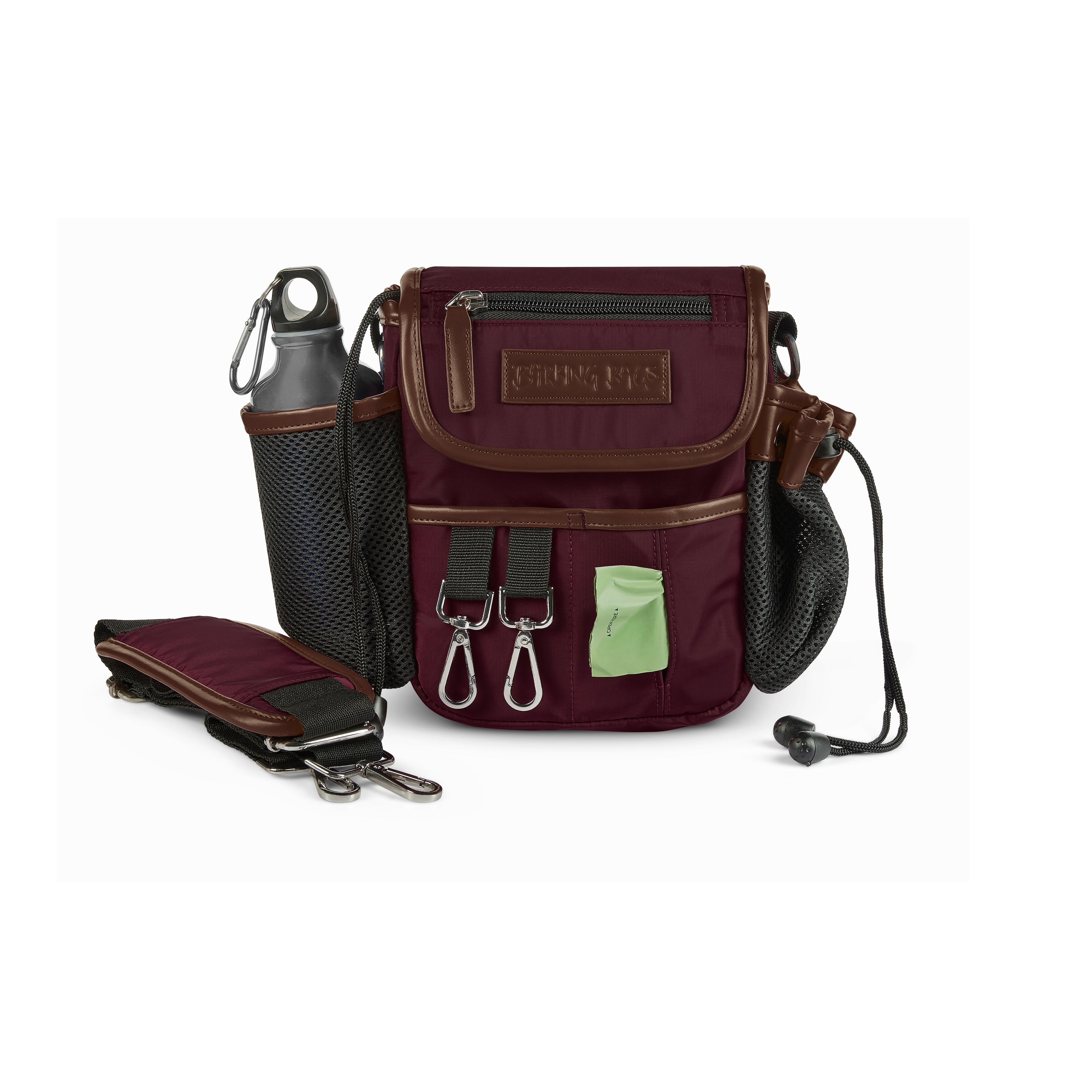
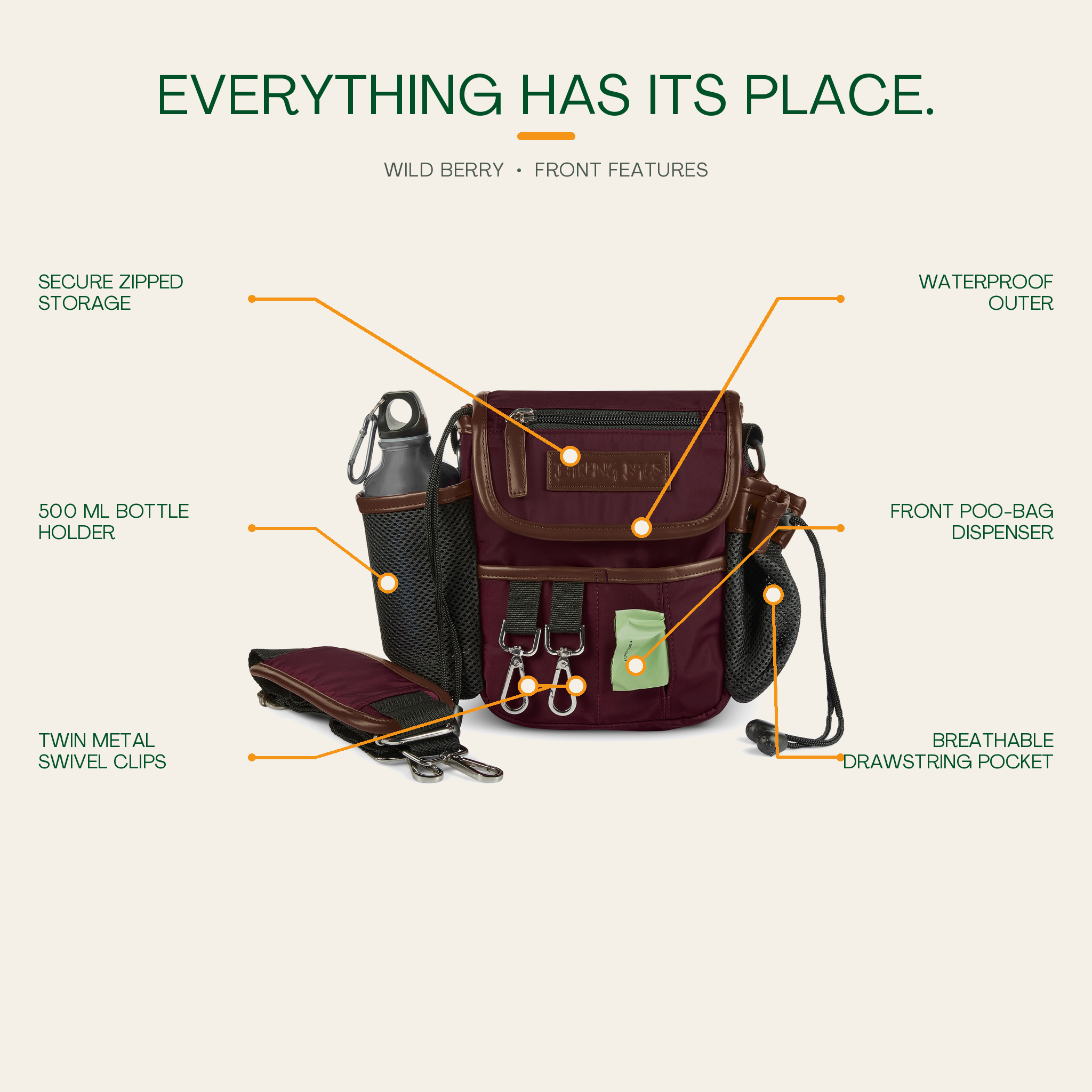
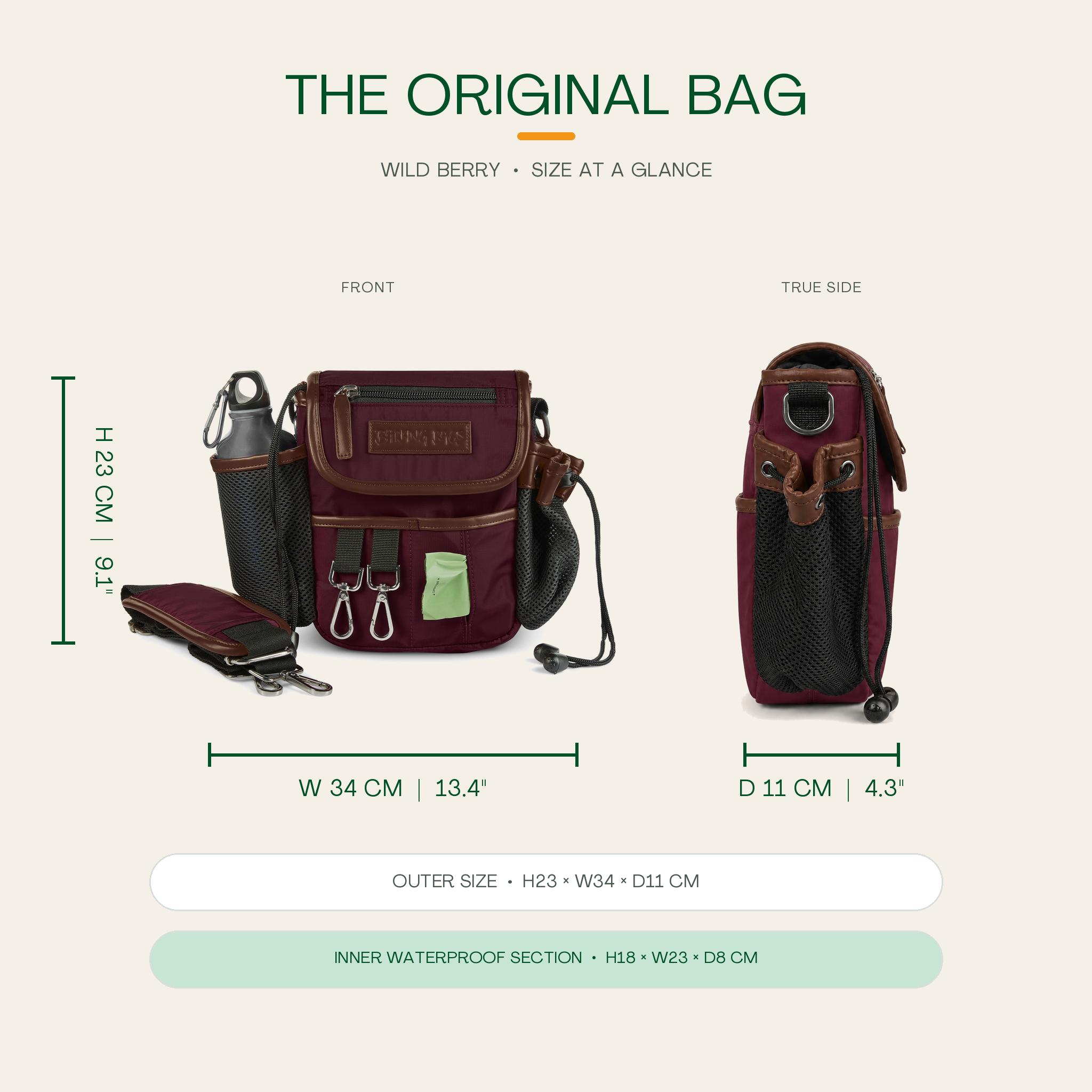
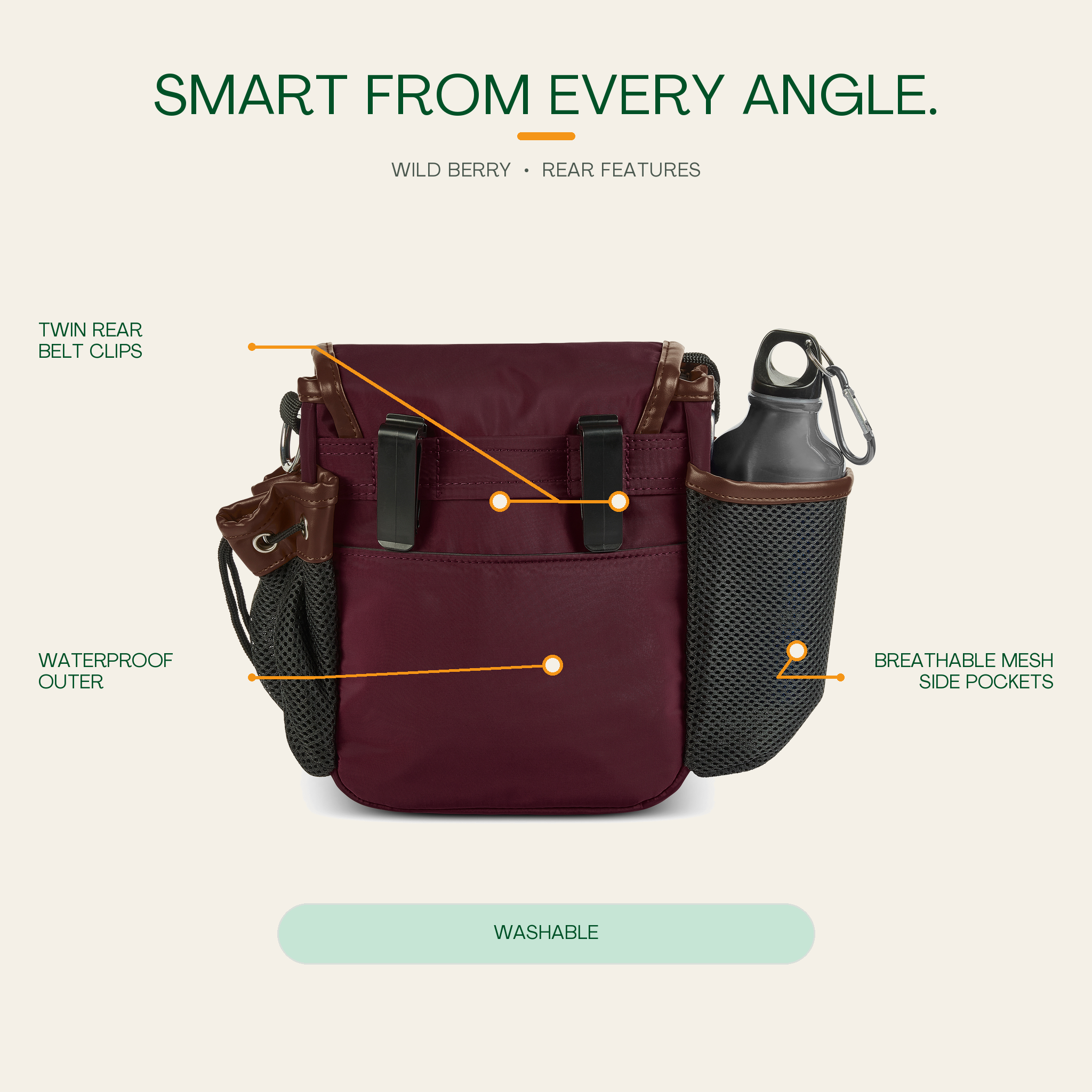
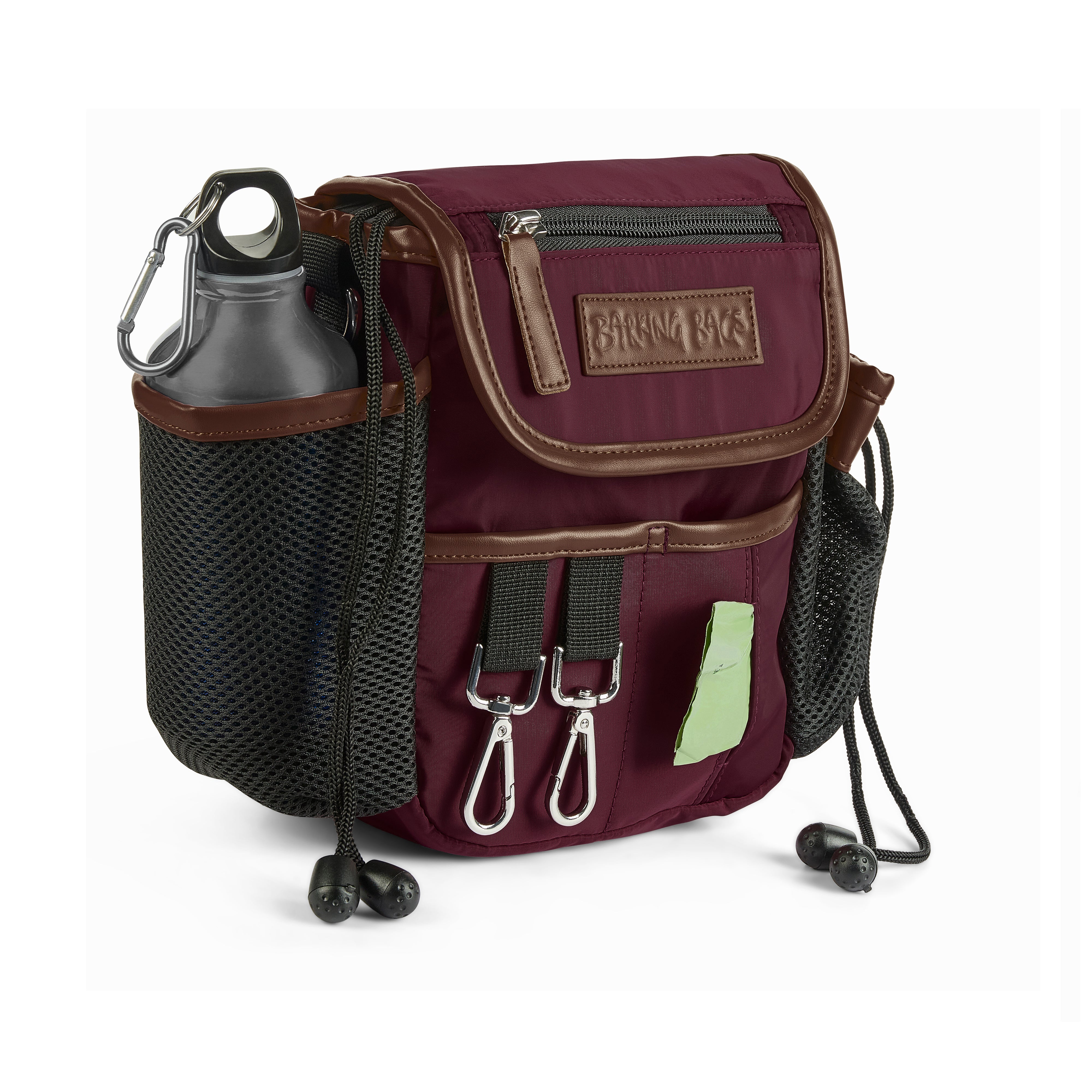
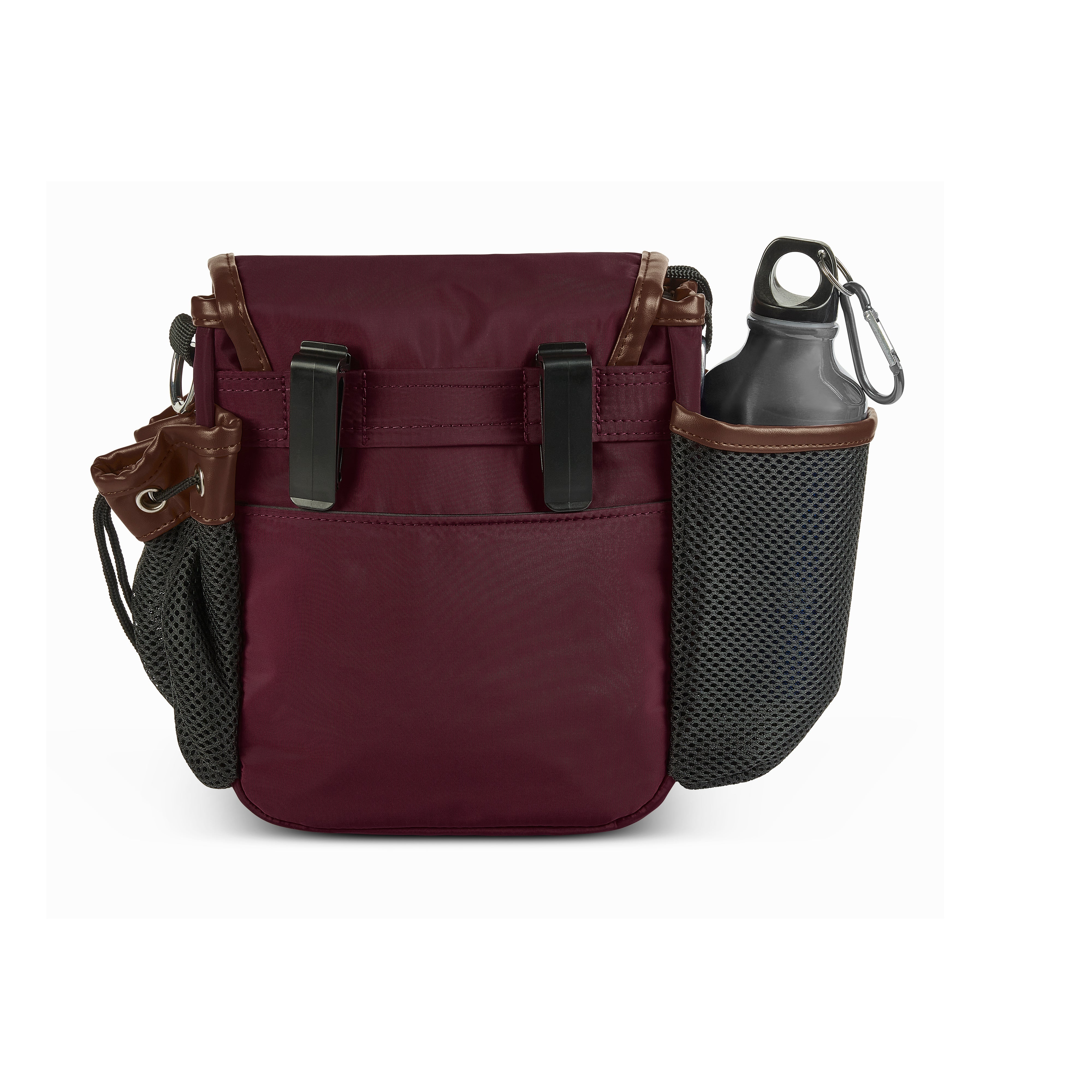
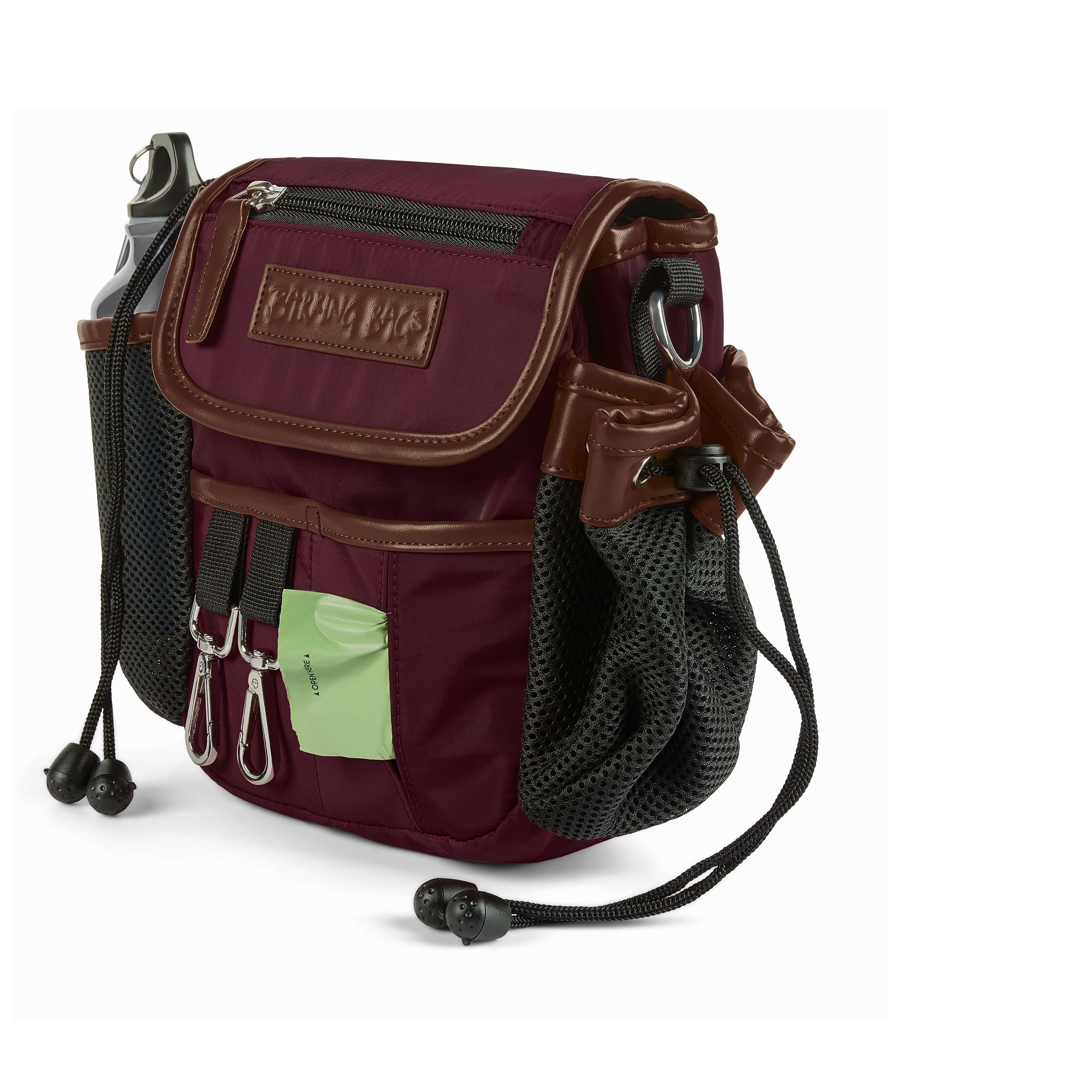
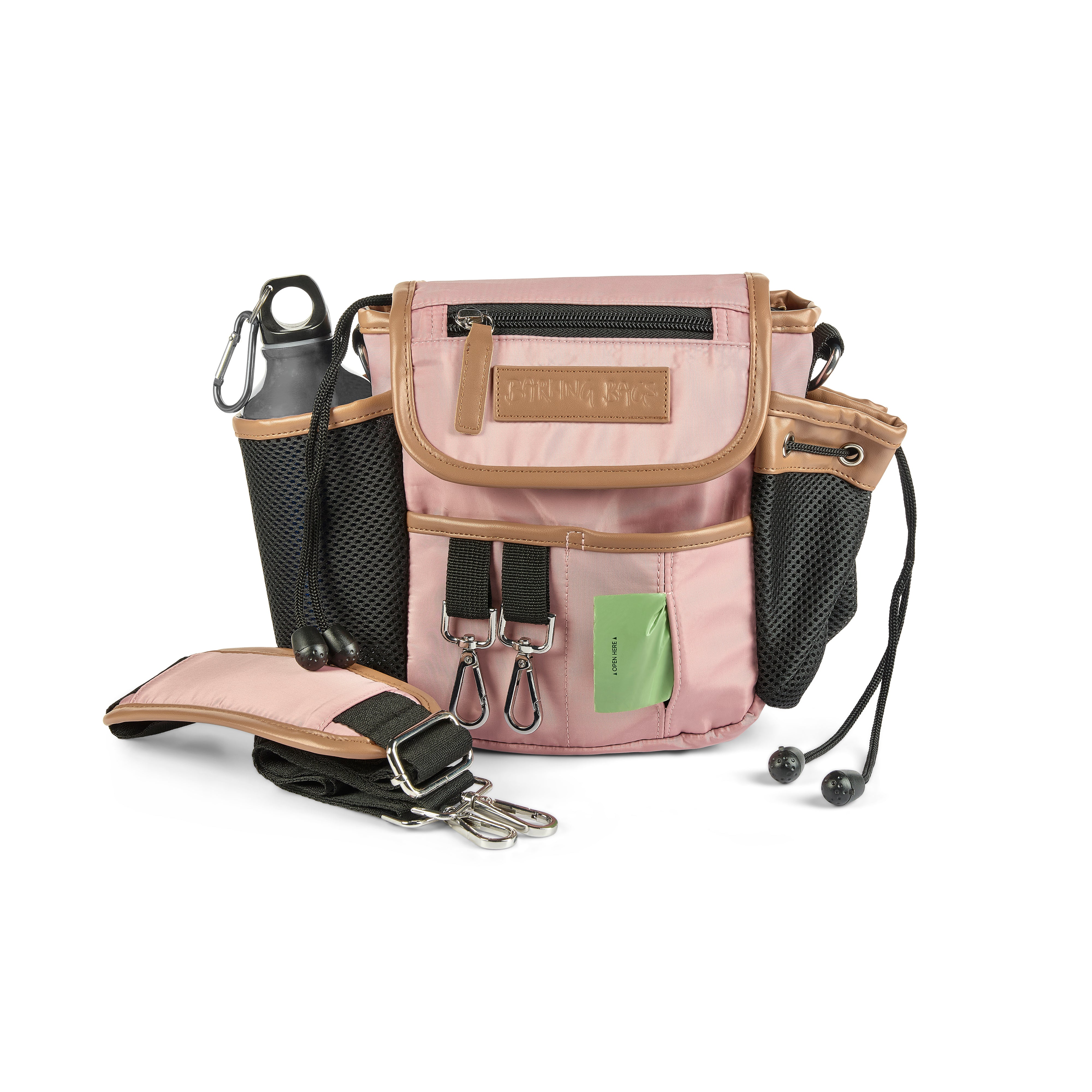
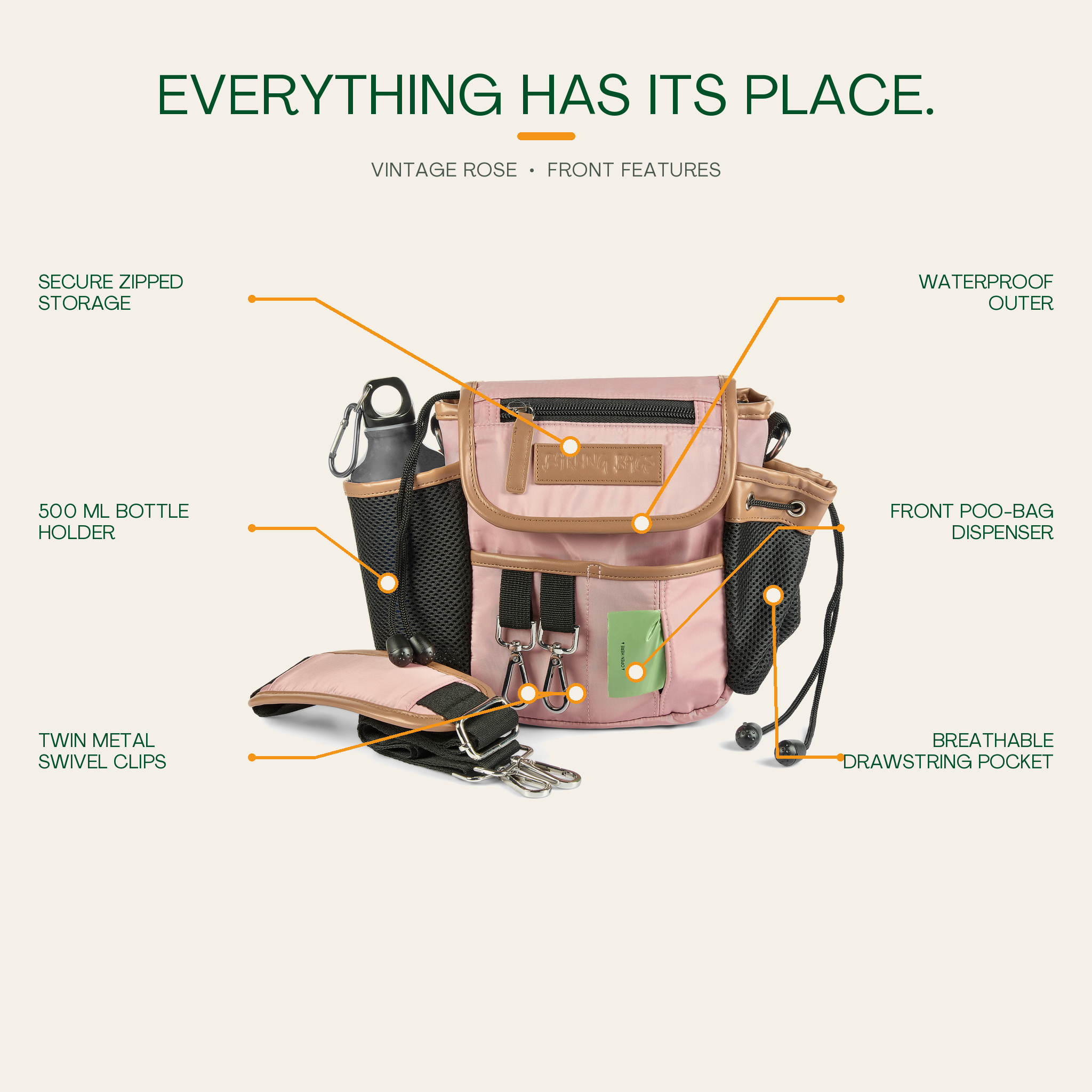
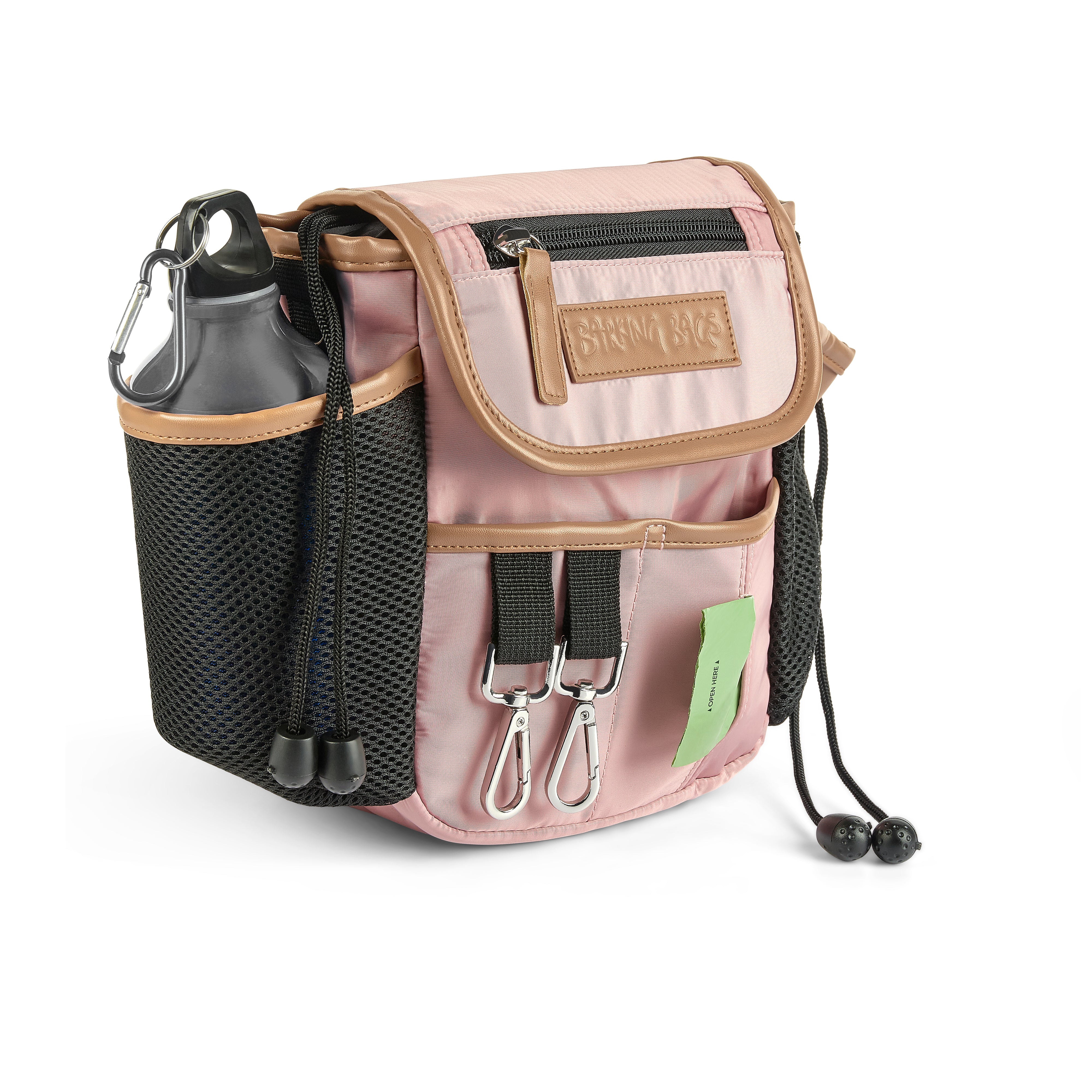
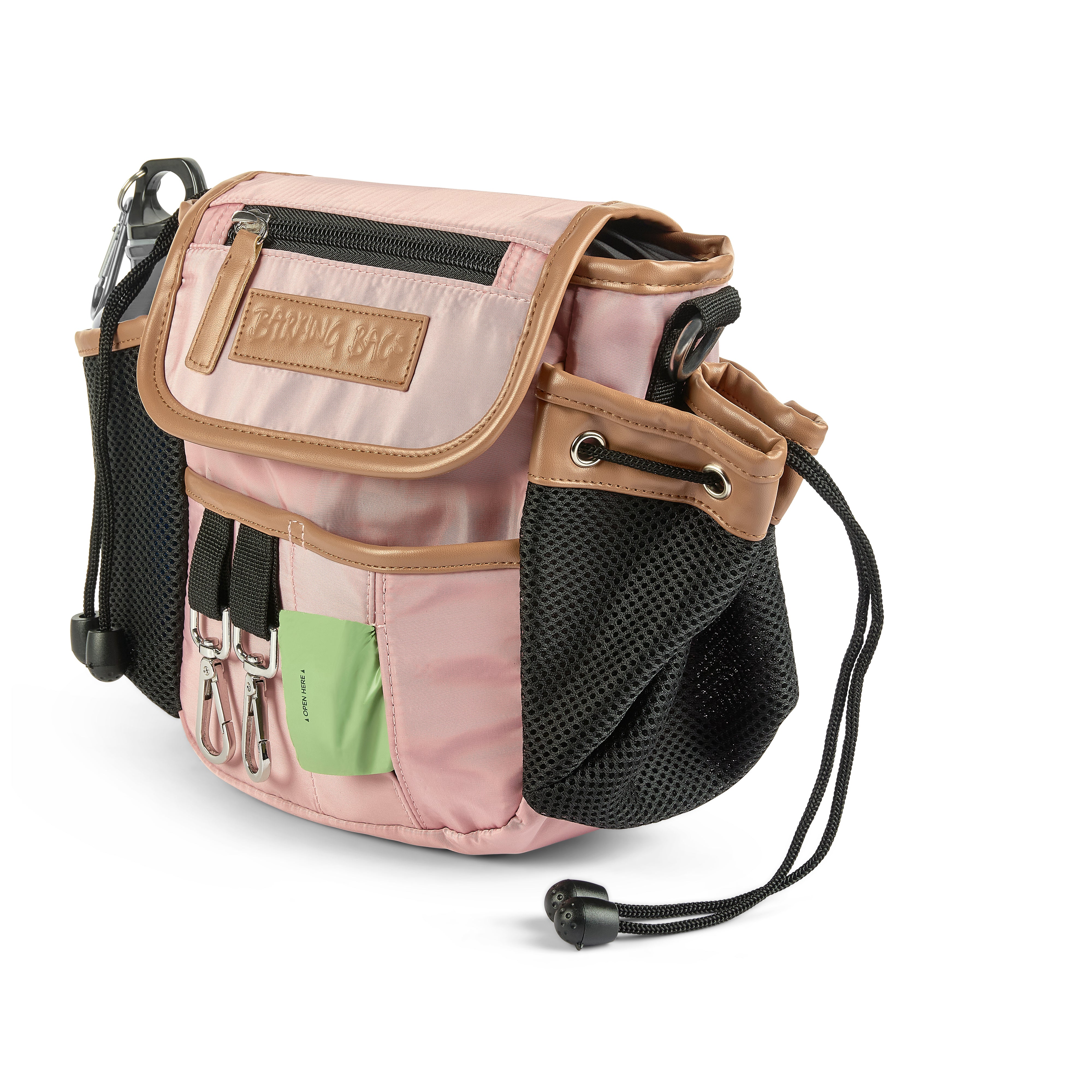
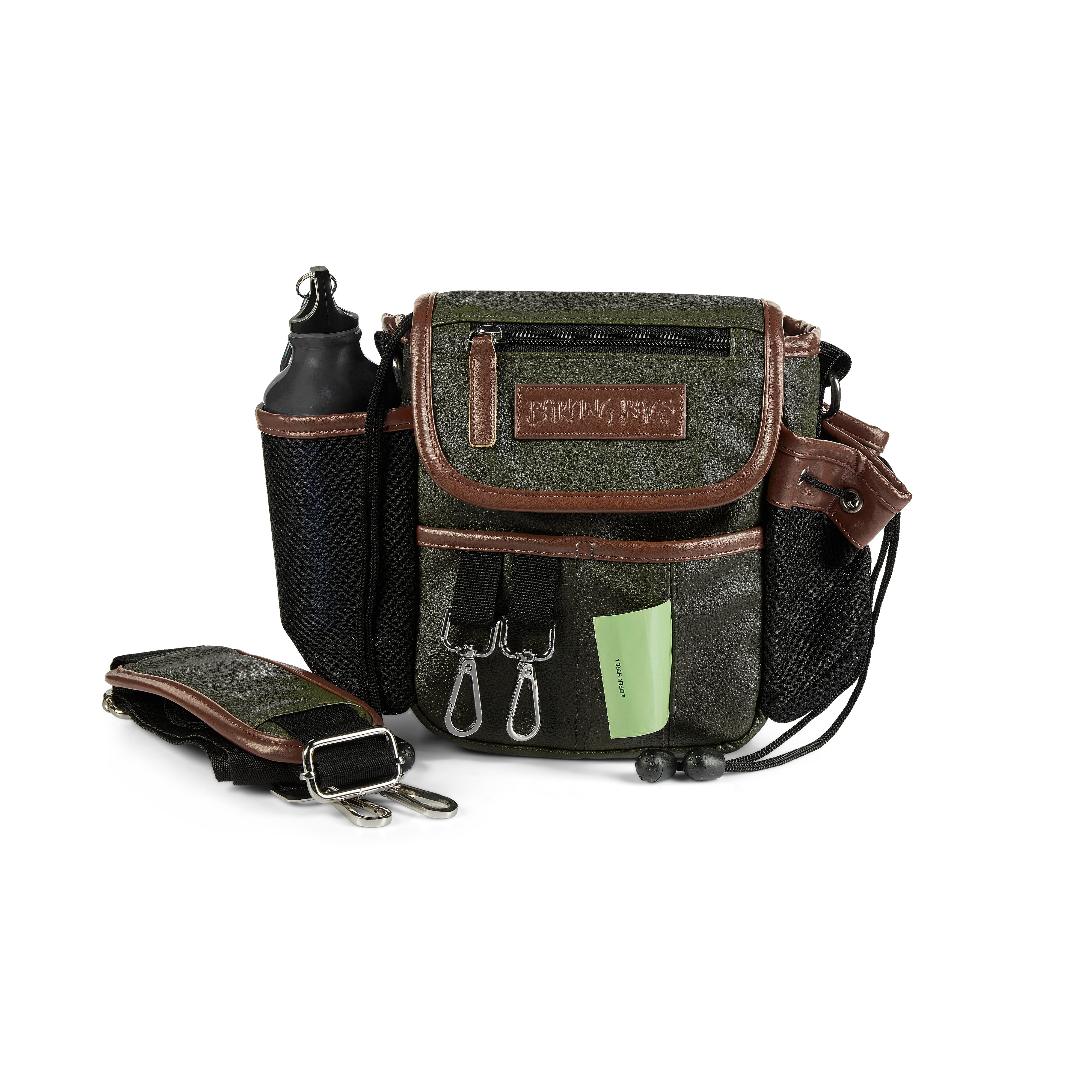
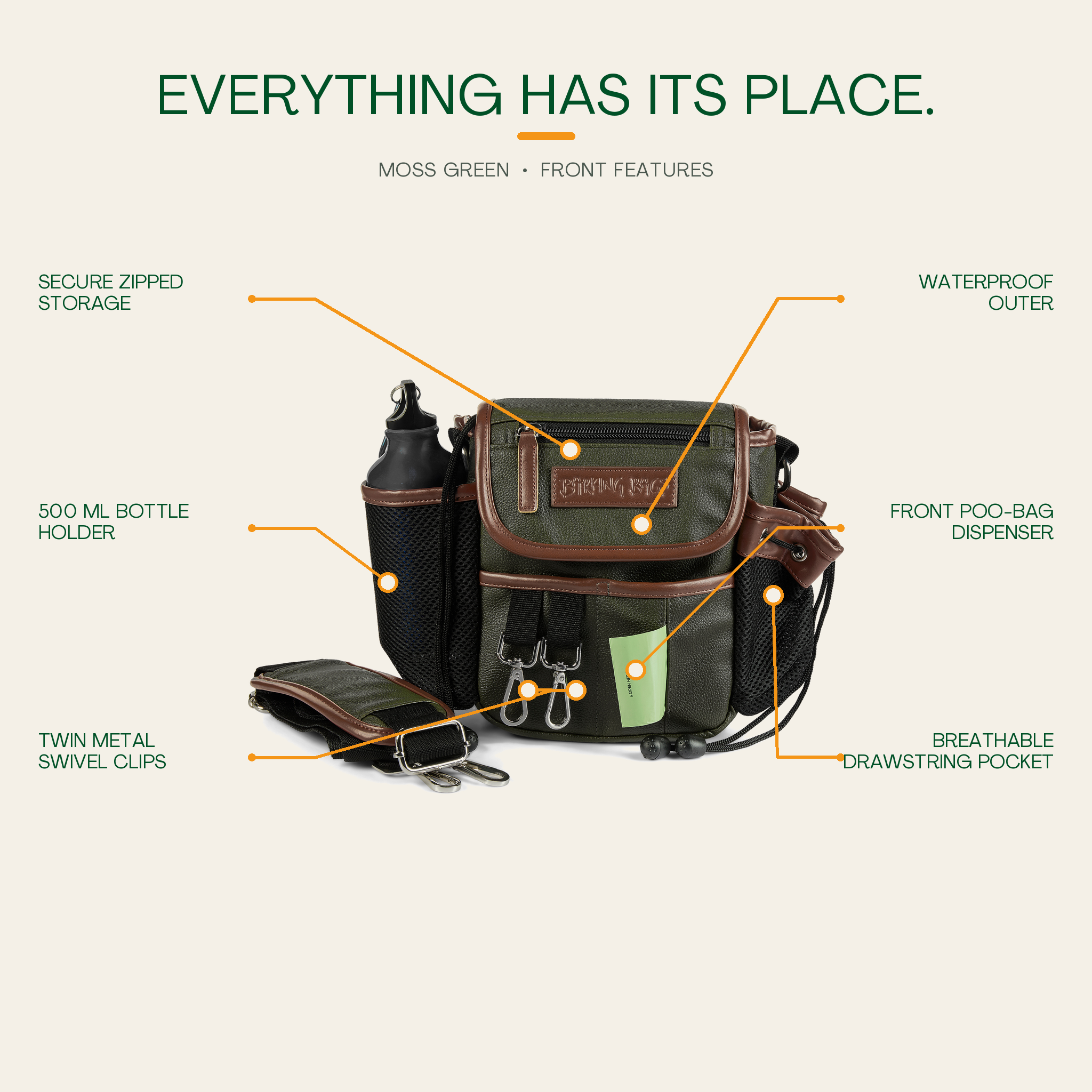
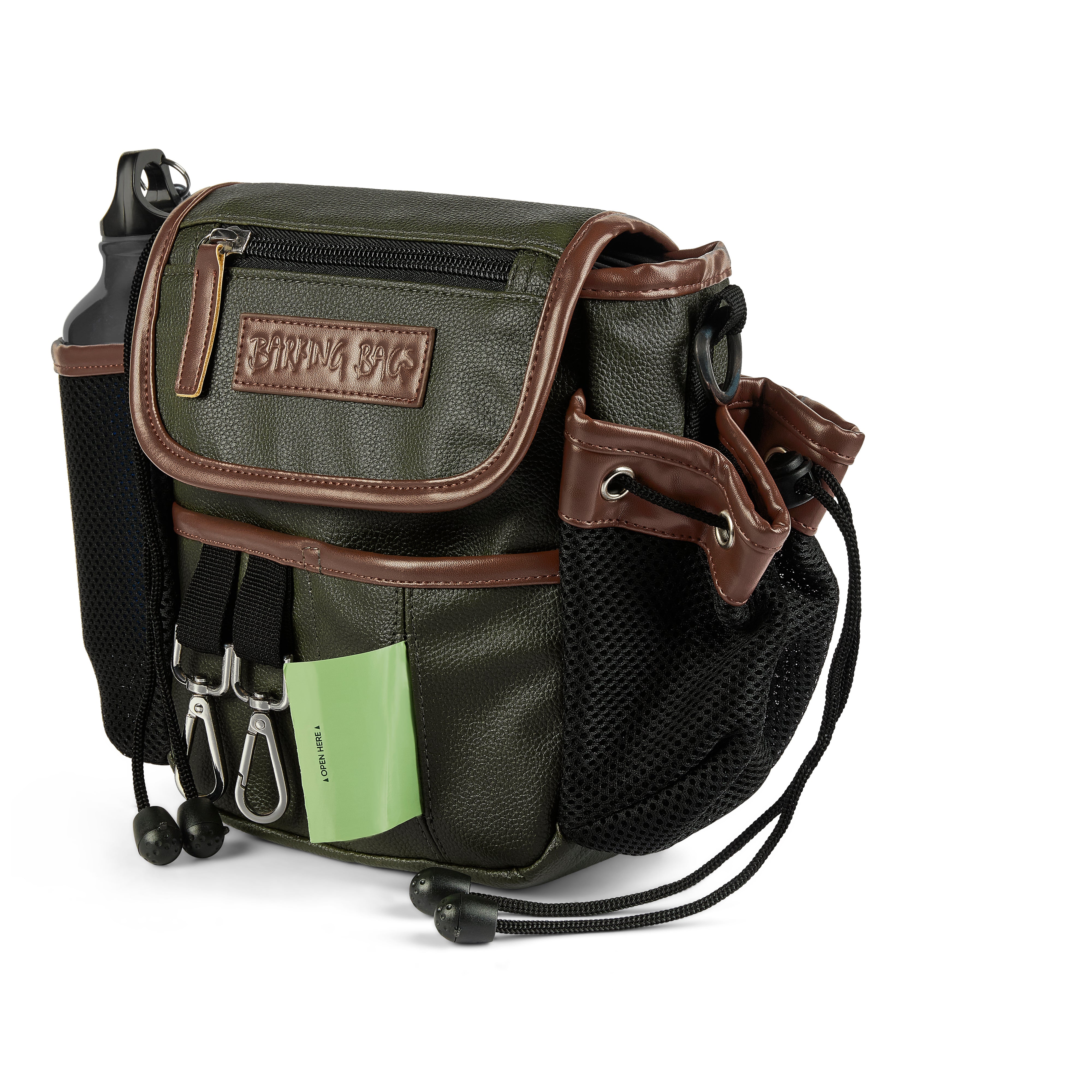
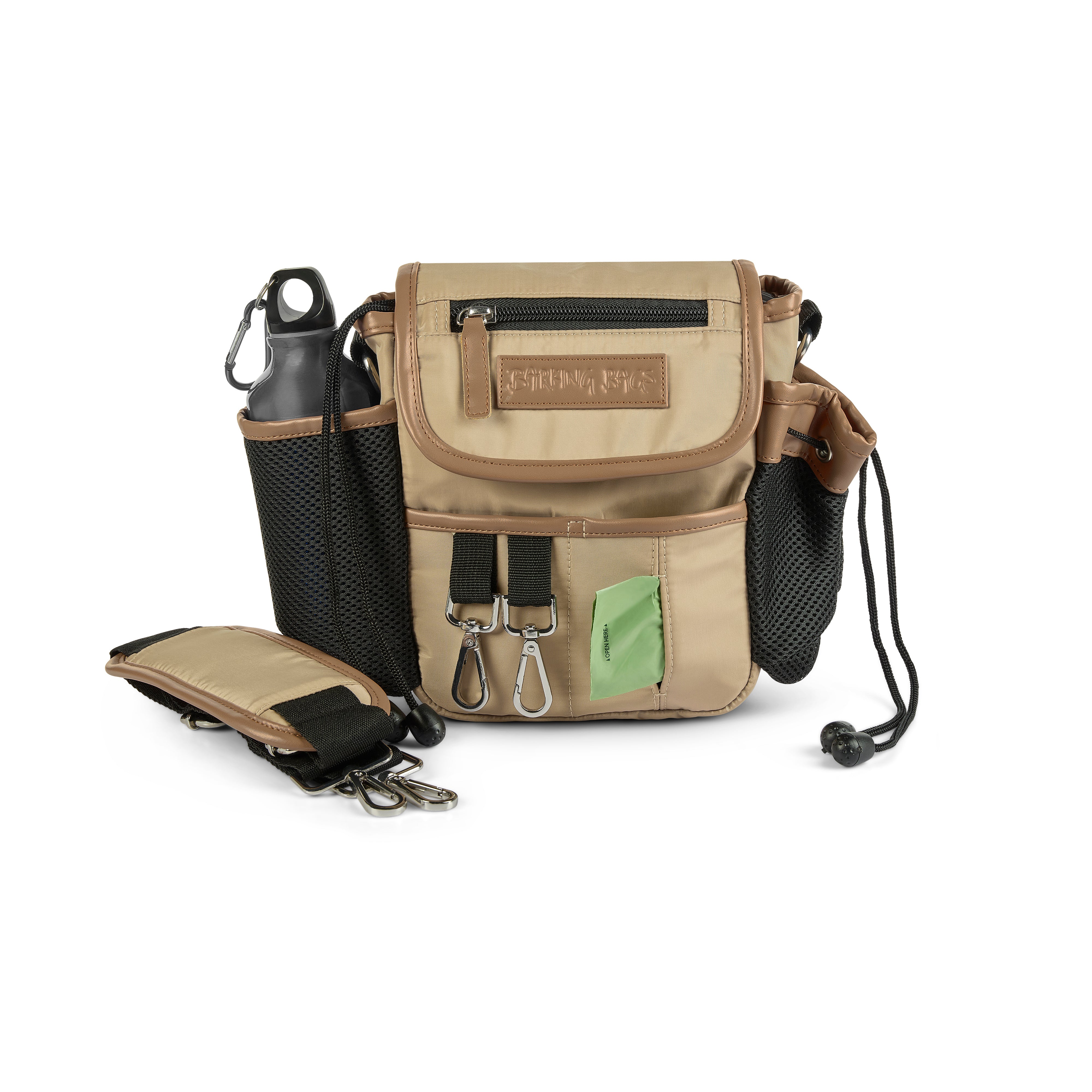
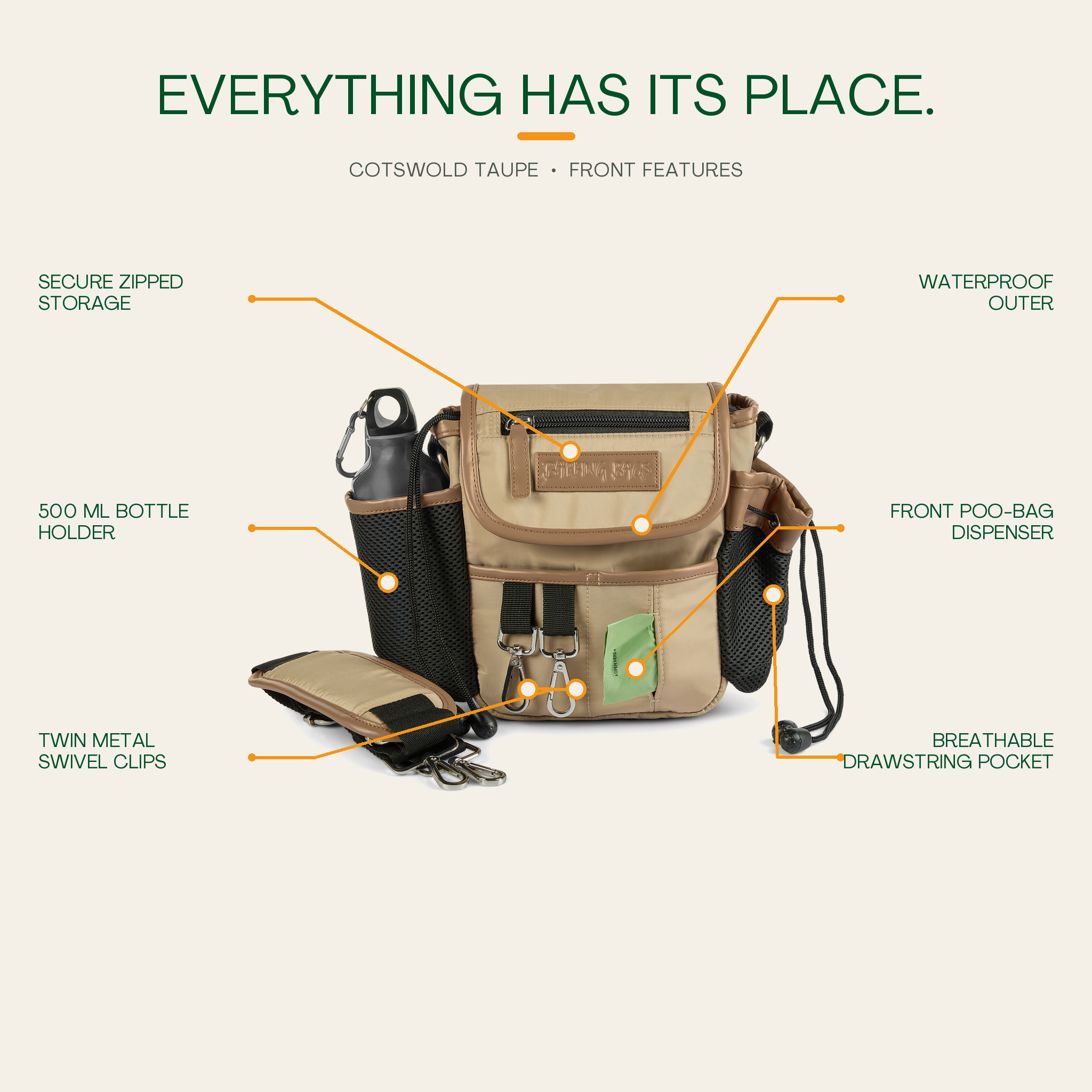
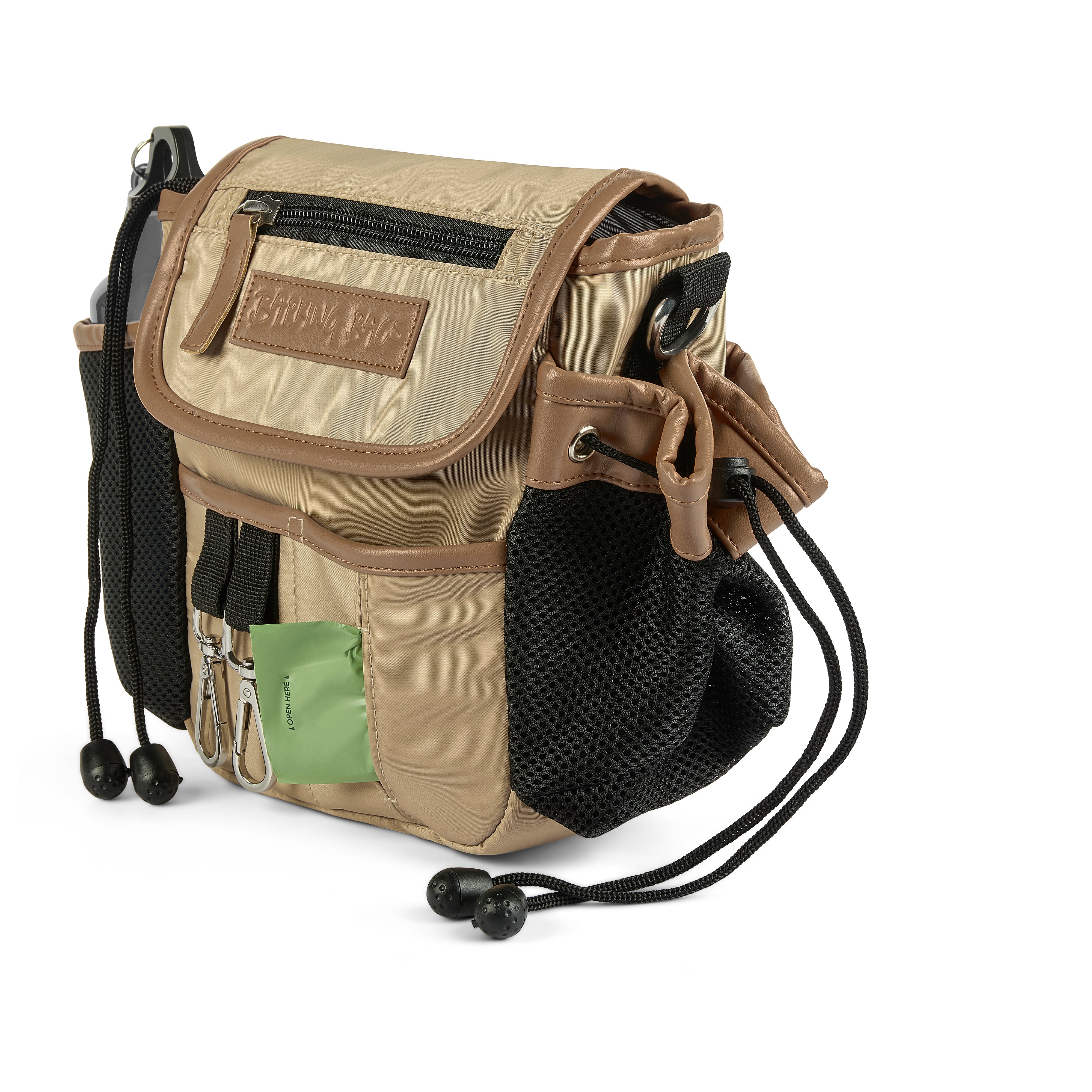
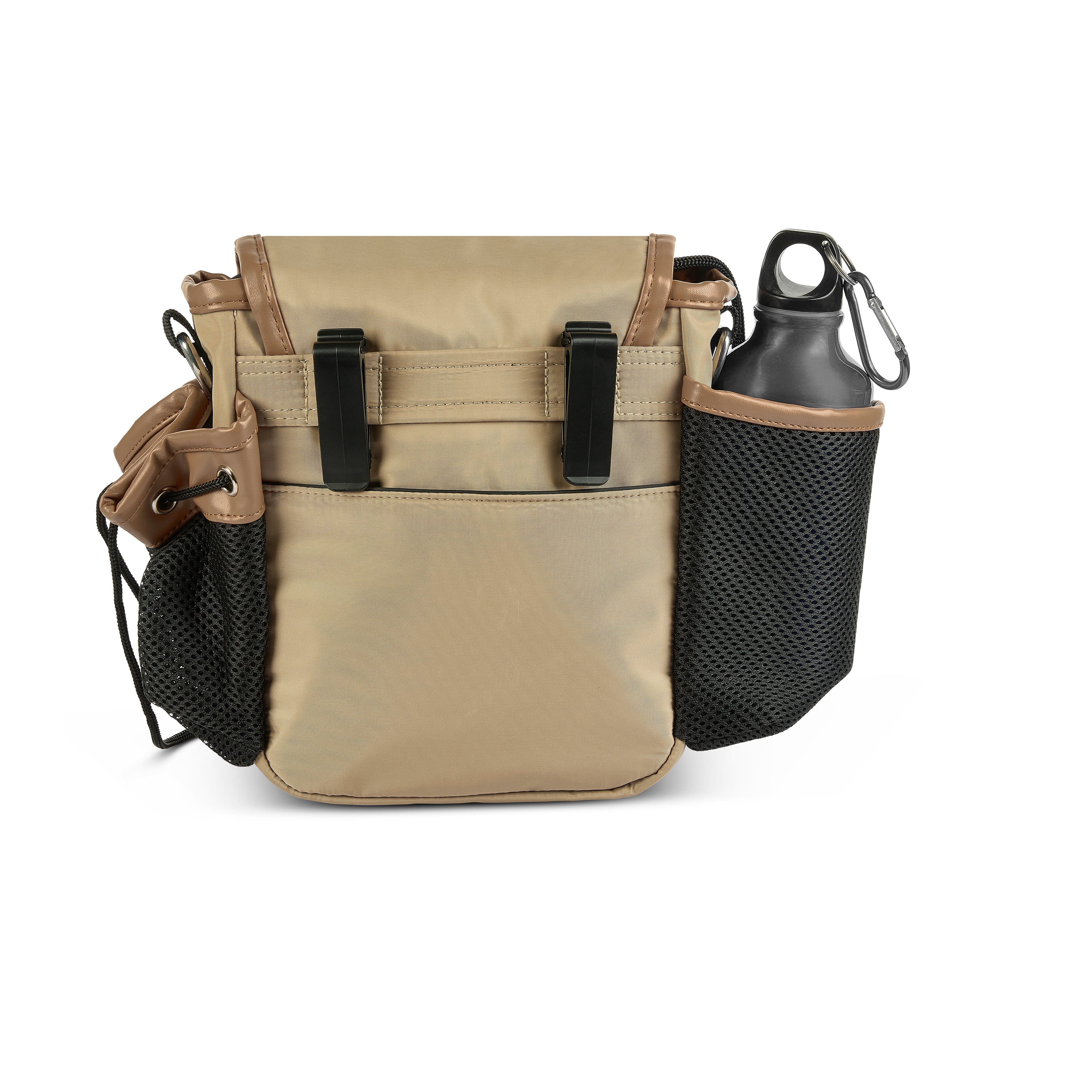
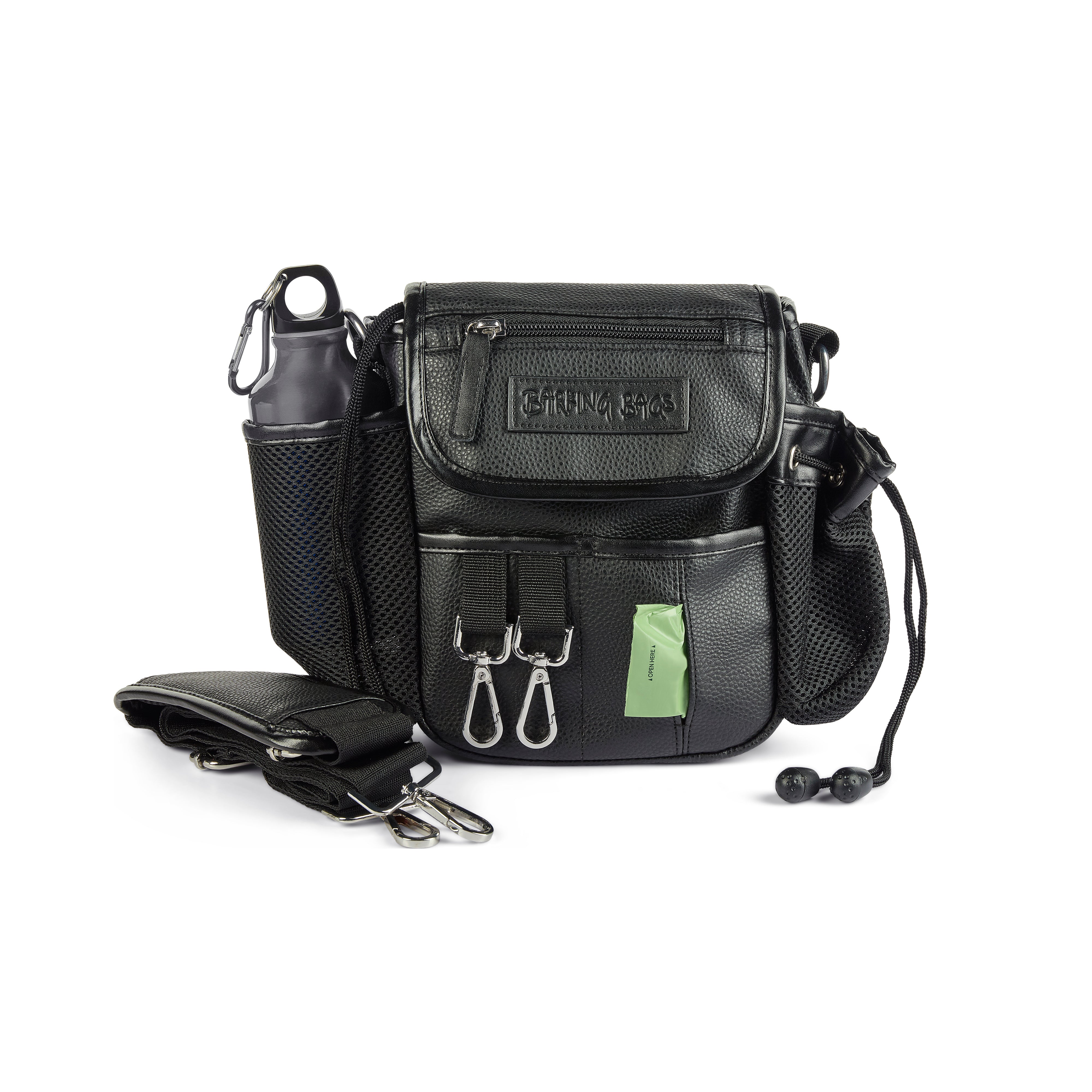
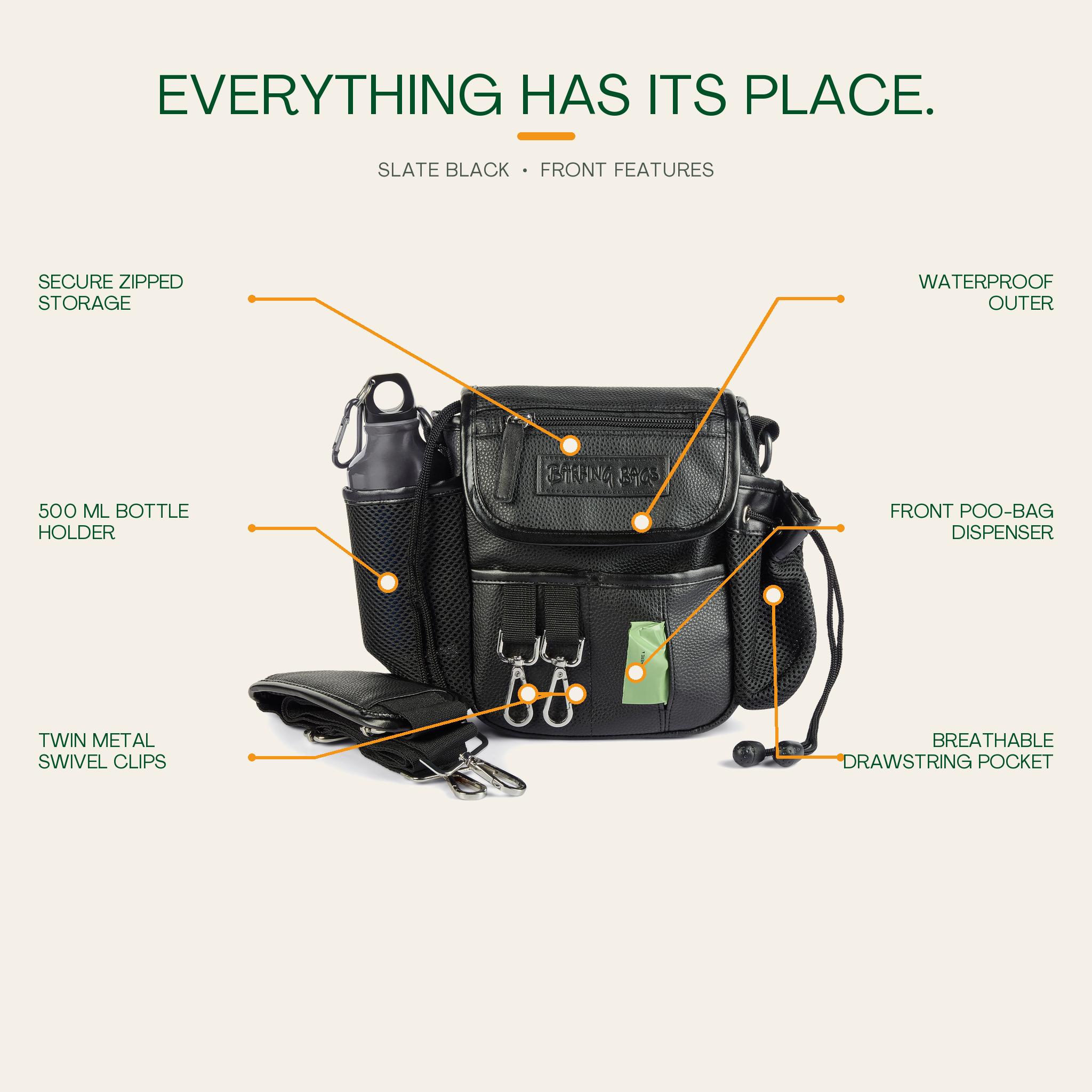
A purpose-designed dog walking bag keeps the essentials where you expect them to be. Treats, poo bags, phone, keys and lead accessories can all have their own place, which means less rummaging and fewer awkward pauses. You are not taking the bag off your shoulders to find a roll of bags at the worst possible moment.
A backpack makes more sense when the walk is longer, you are carrying water, extra layers, dog toys, lunch, or gear for more than one dog. It gives you more room and often spreads weight well across both shoulders. The trade-off is access. Most backpacks are not built around the rhythm of dog walking, so the items you need most often can end up tucked away behind everything else.
Where a backpack gets it right
Backpacks are popular for good reason. They are familiar, roomy and useful when the walk turns into more of an outing. If you spend hours outdoors, travel to walking spots by car, or combine dog walks with errands, a backpack can handle the extra load.
They also suit people who prefer everything on their back and out of the way. If you dislike anything worn crossbody, or you carry bulky items such as bottles, towels or spare leads, a backpack may feel more practical at first.
For professional dog walkers, a backpack can also help when carrying supplies for multiple dogs. If you need spare equipment, paperwork, cleaning bits for the car, or weather gear, that extra capacity is useful.
Still, the question is not whether backpacks are useful. They are. It is whether they are the best format for the specific stop-start routine of dog walking. Often, they are more bag than you need and less convenient than you want.
Why a dedicated dog walking bag often feels easier
A dog walking bag is designed around repeat actions. You reach for treats several times on one walk. You pull out poo bags quickly. You check your phone, tuck away keys, maybe carry a ball, sanitiser, whistle or clicker. Those are not occasional tasks. They are the routine.
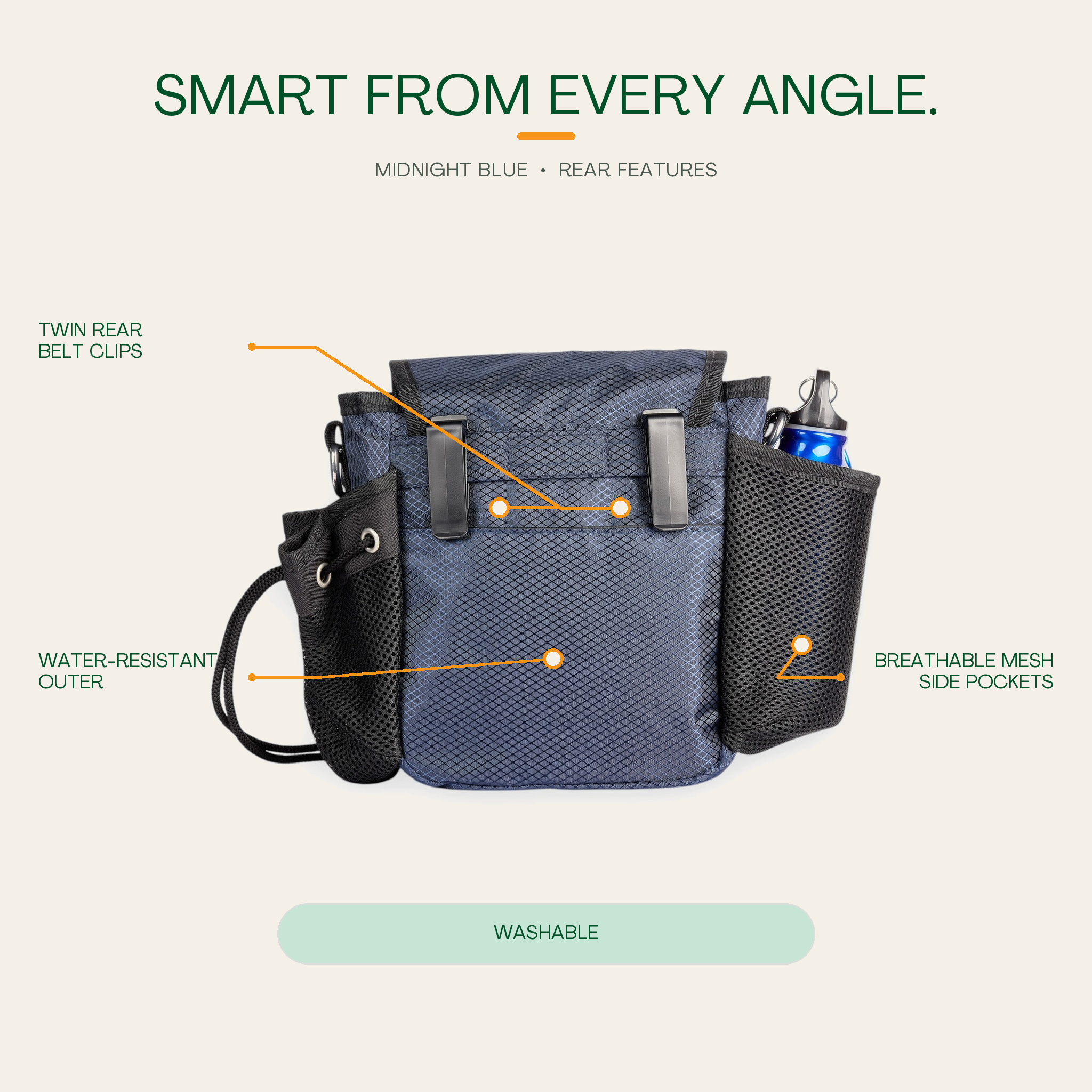
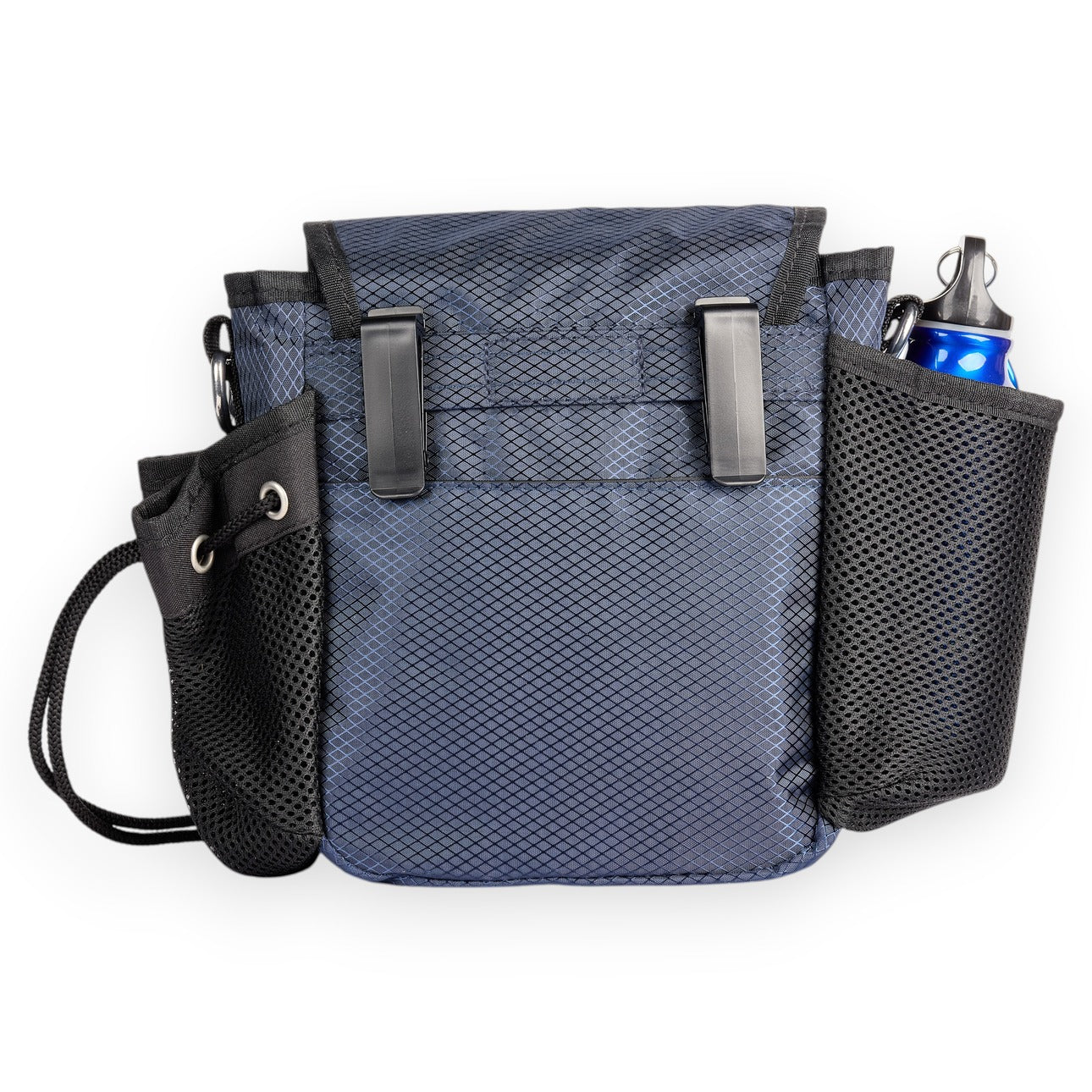
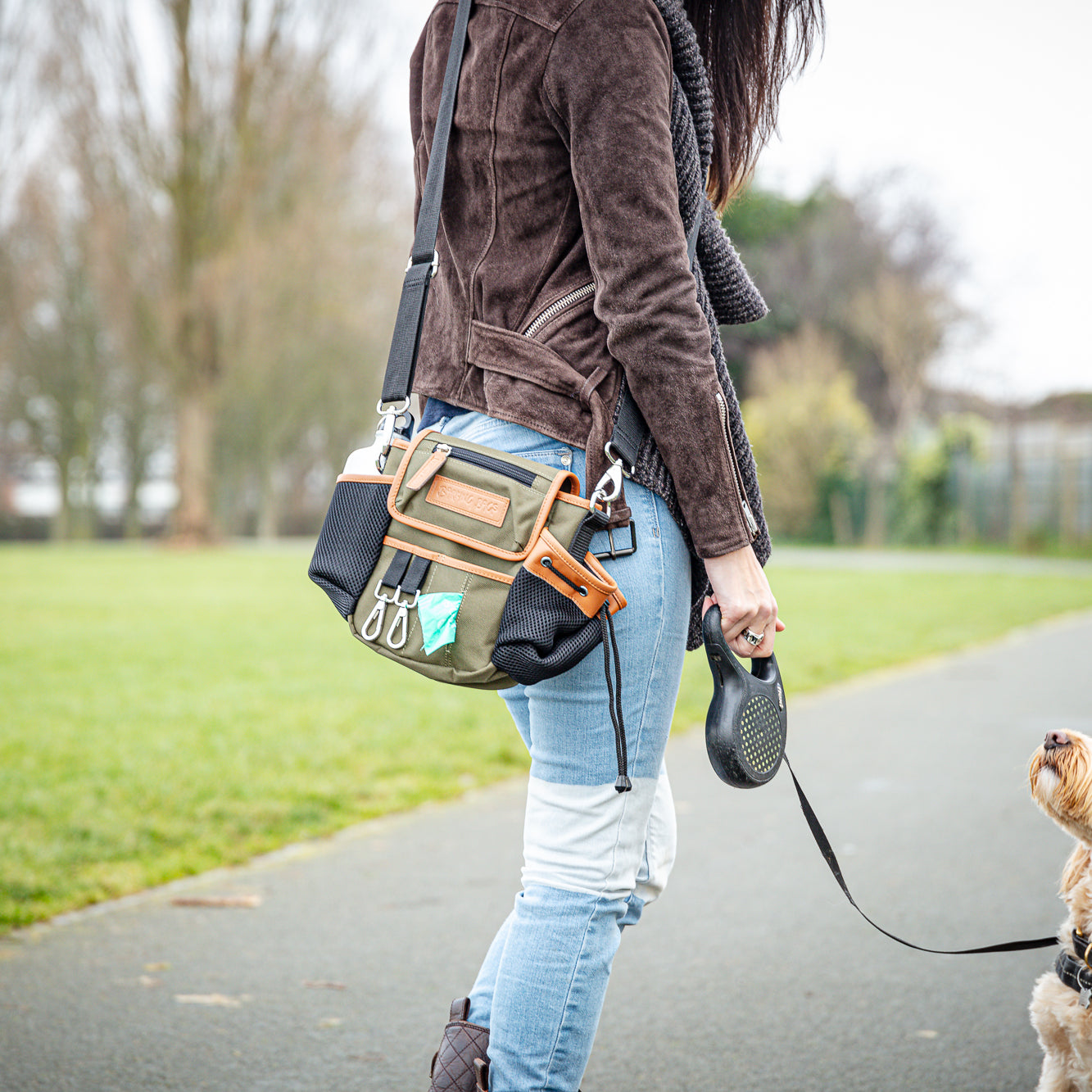
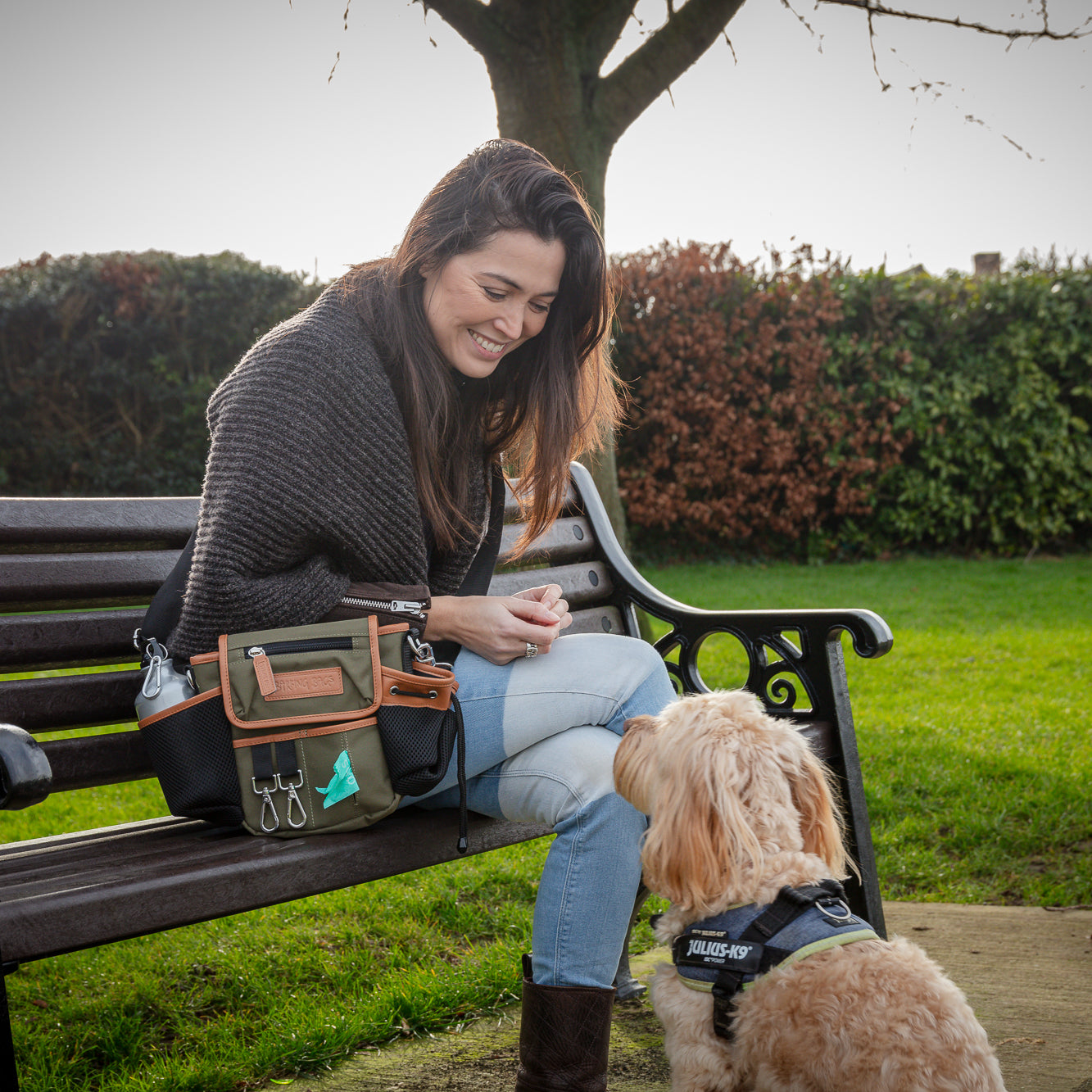
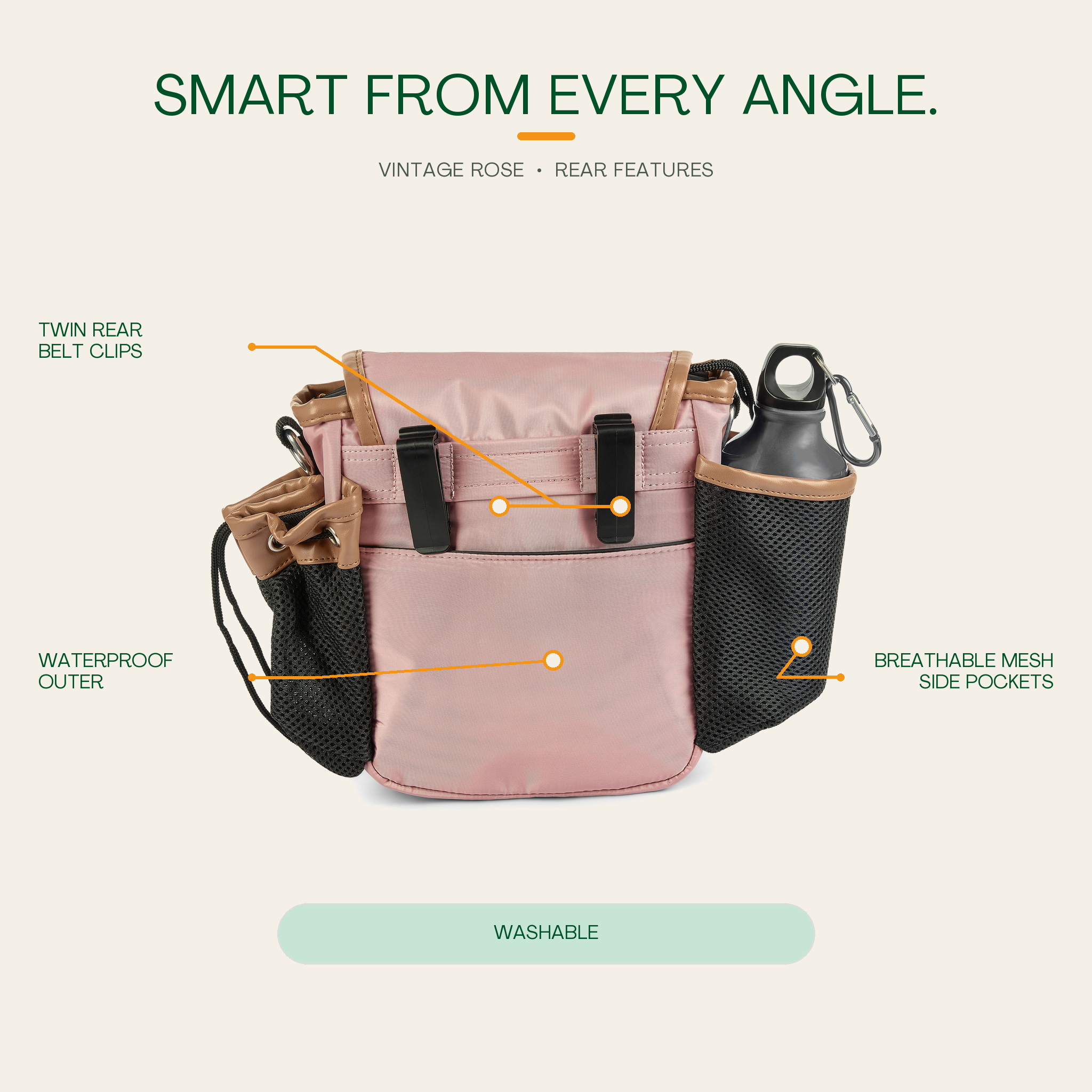
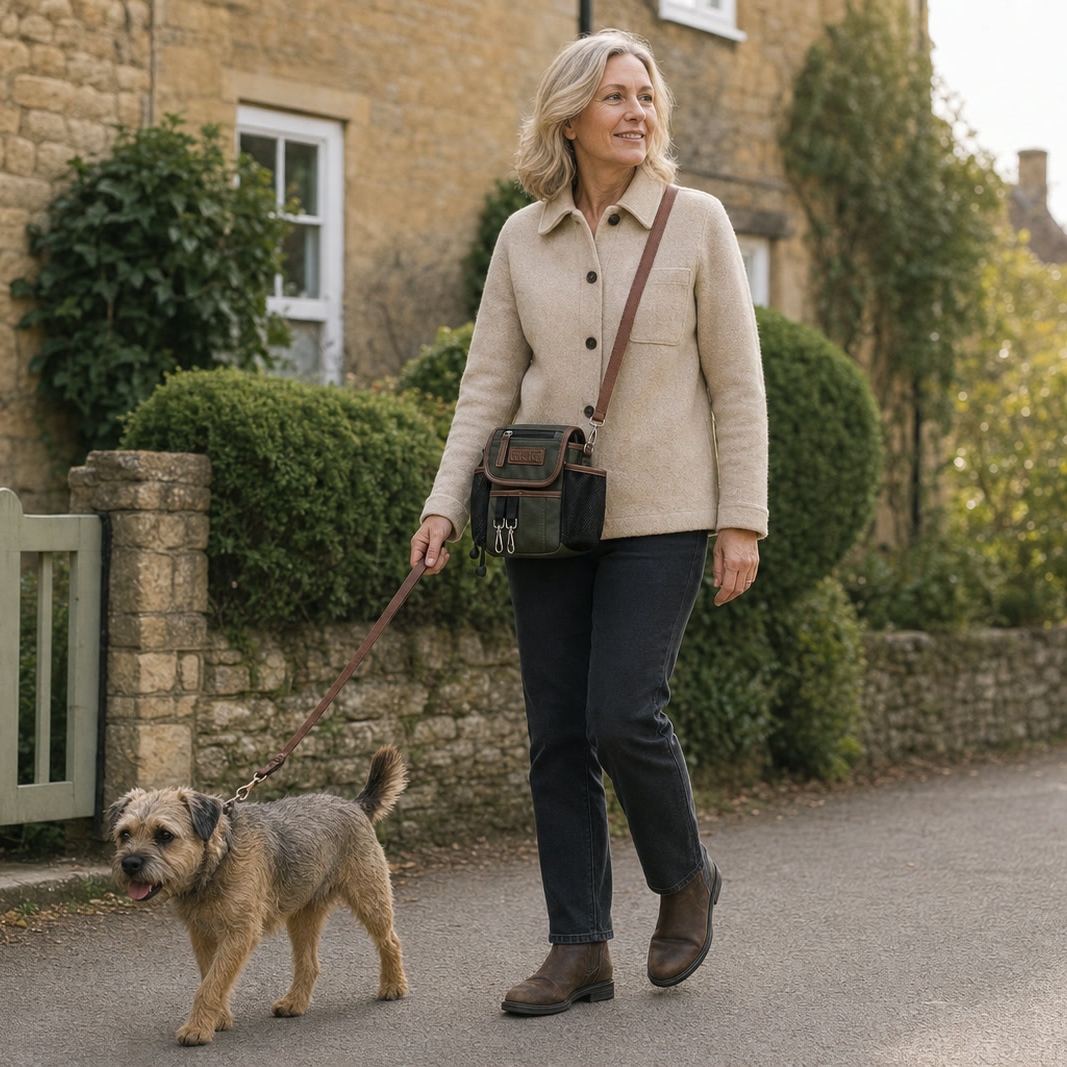
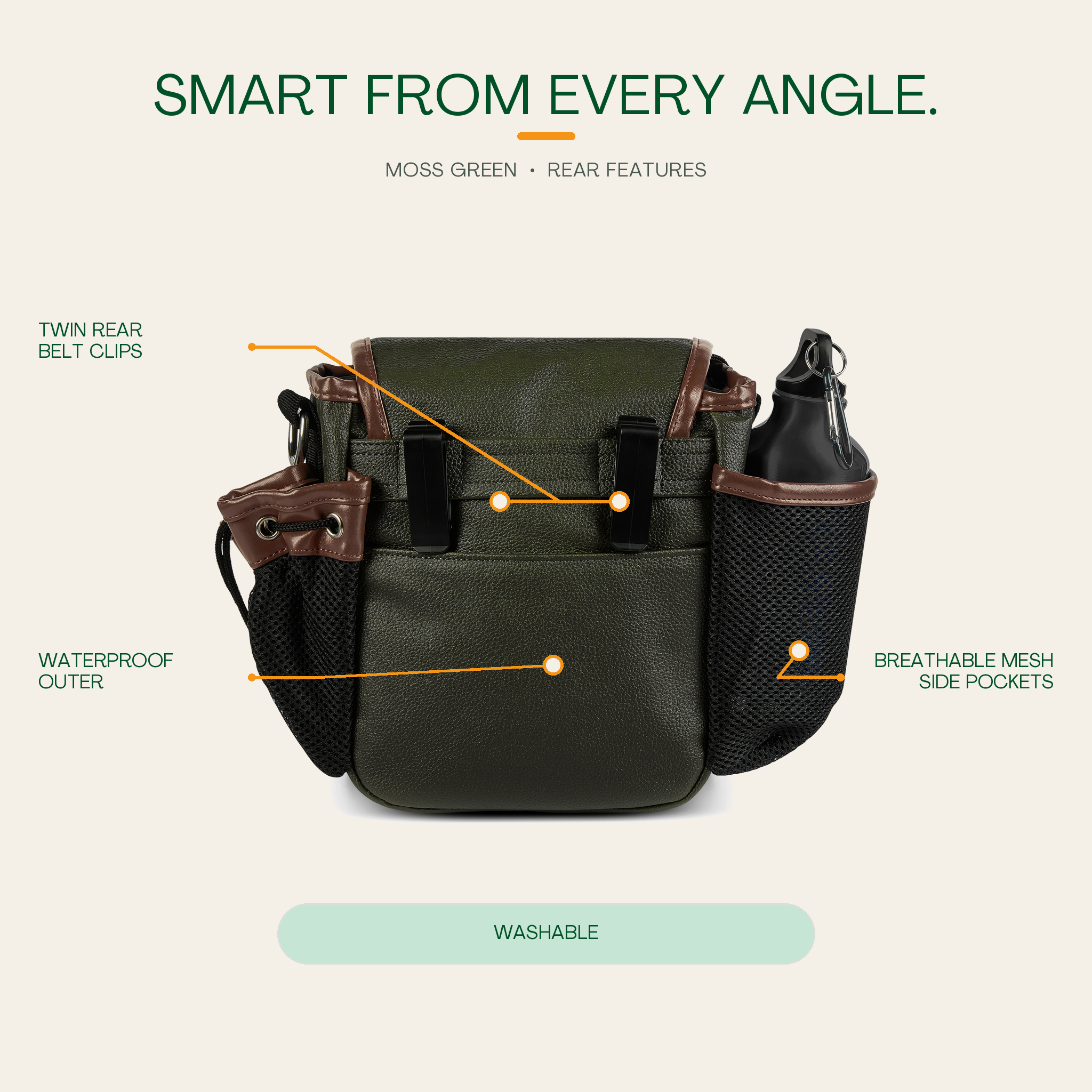
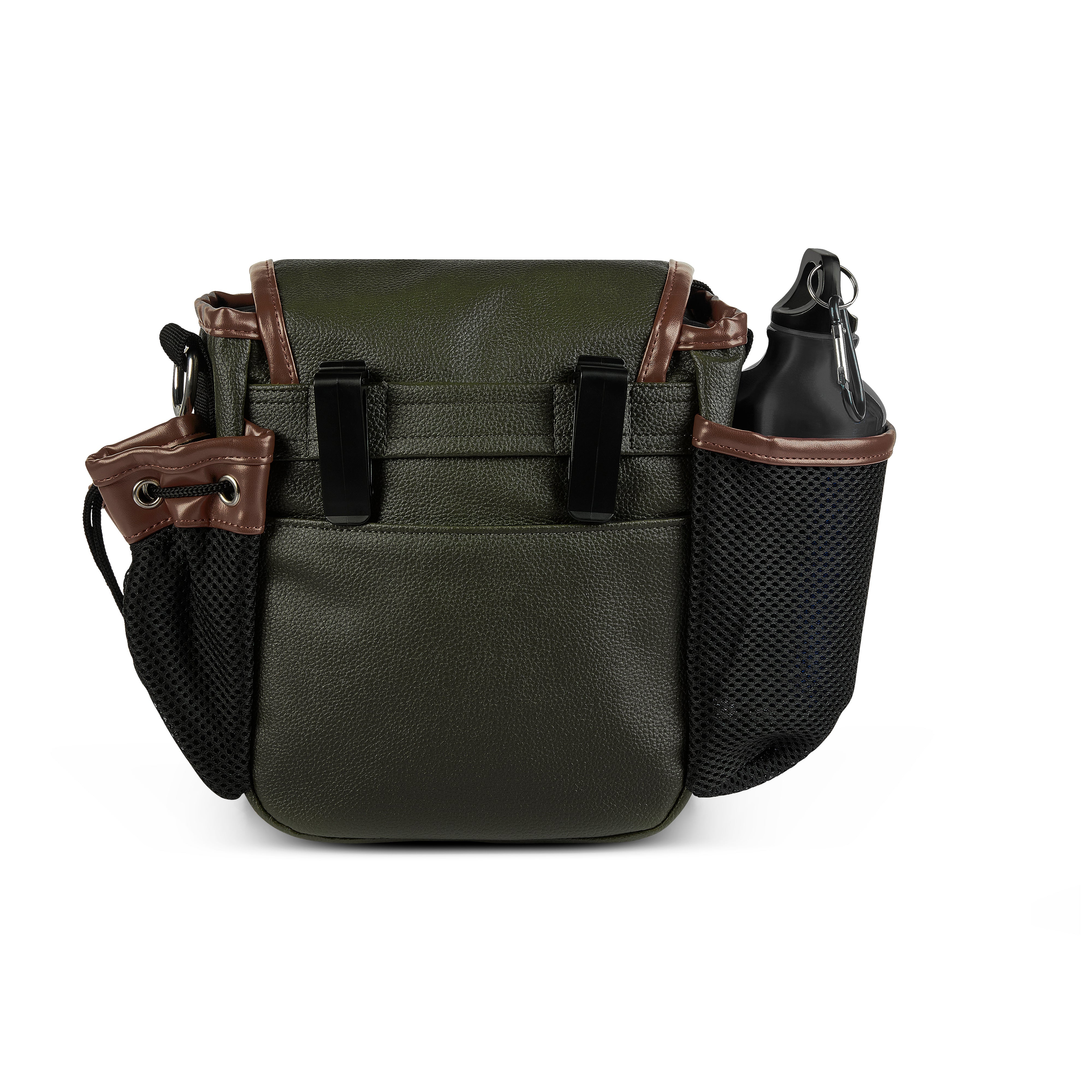
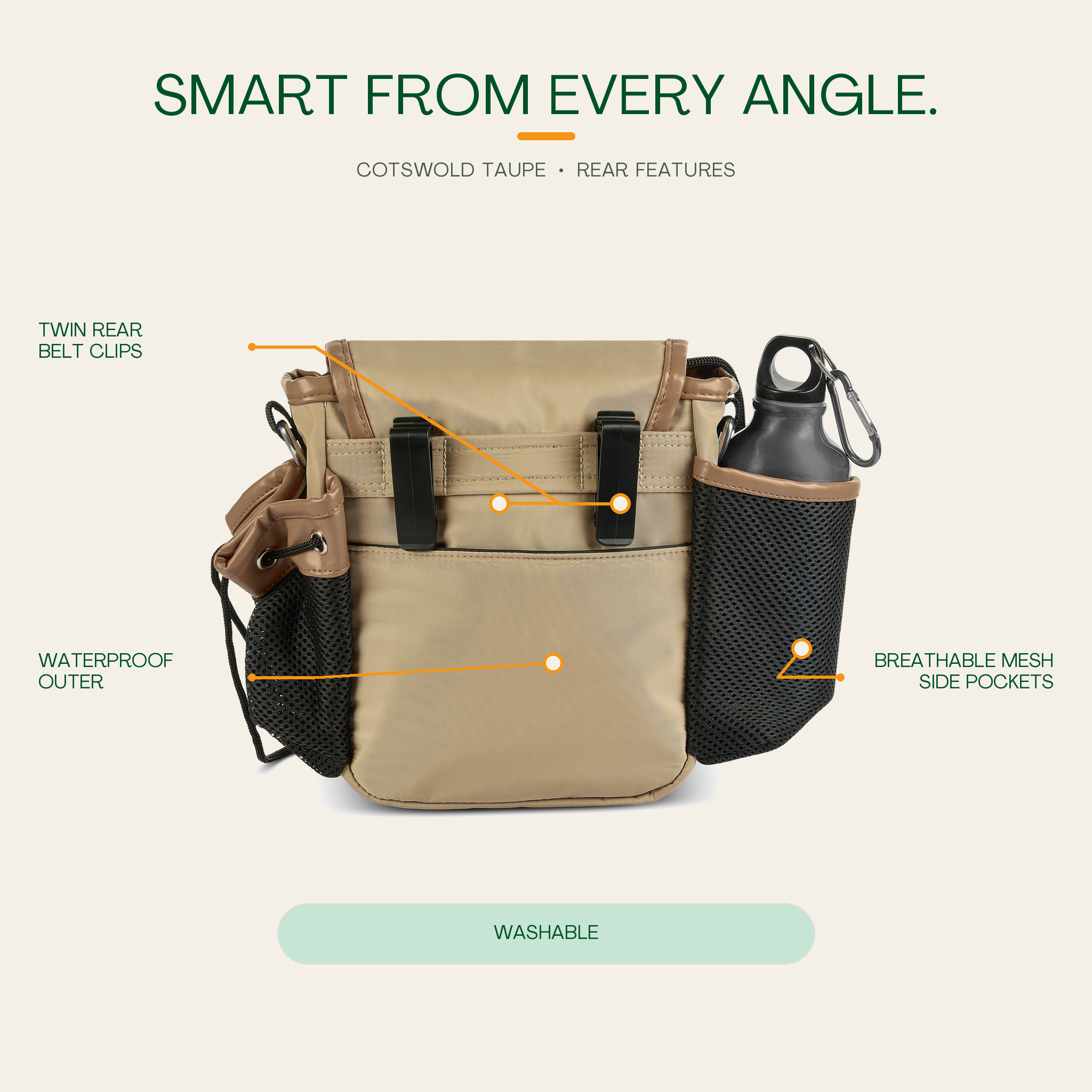
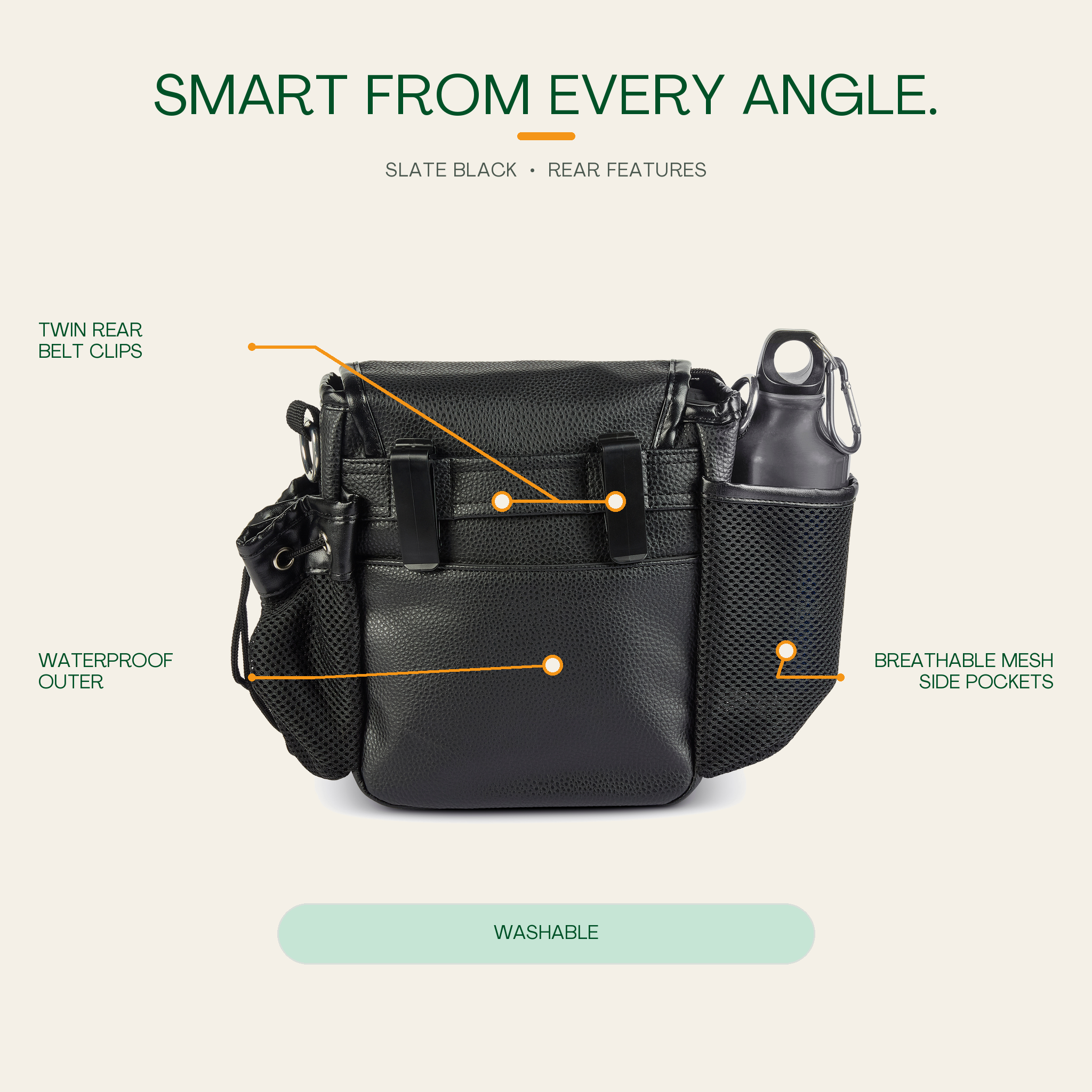
That is why a dedicated dog walking bag often feels more natural than a backpack. It sits where you can access it, usually without taking it off. Compartments matter here. Instead of one large space that swallows everything, you get a more organised setup that matches the way dog owners actually move.
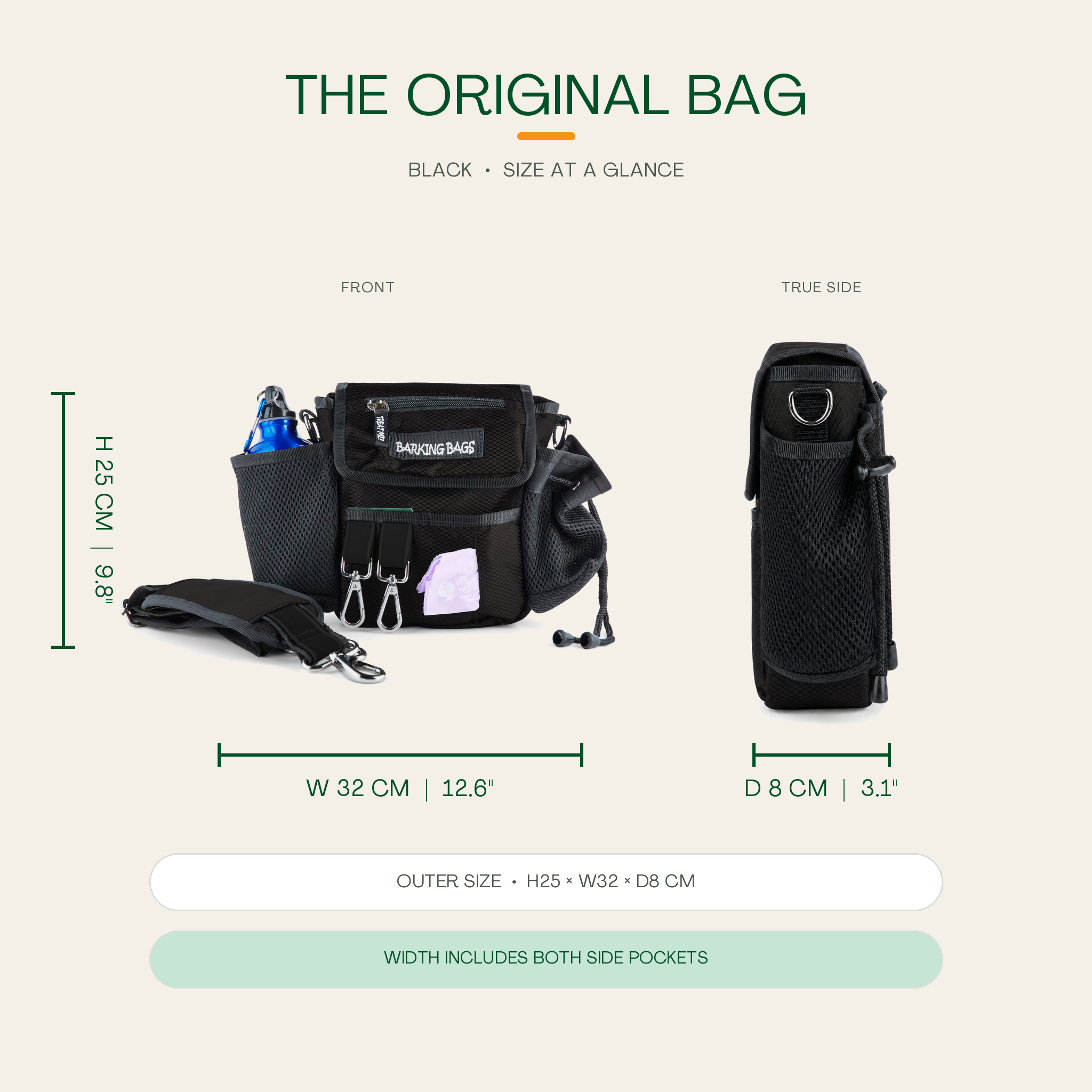
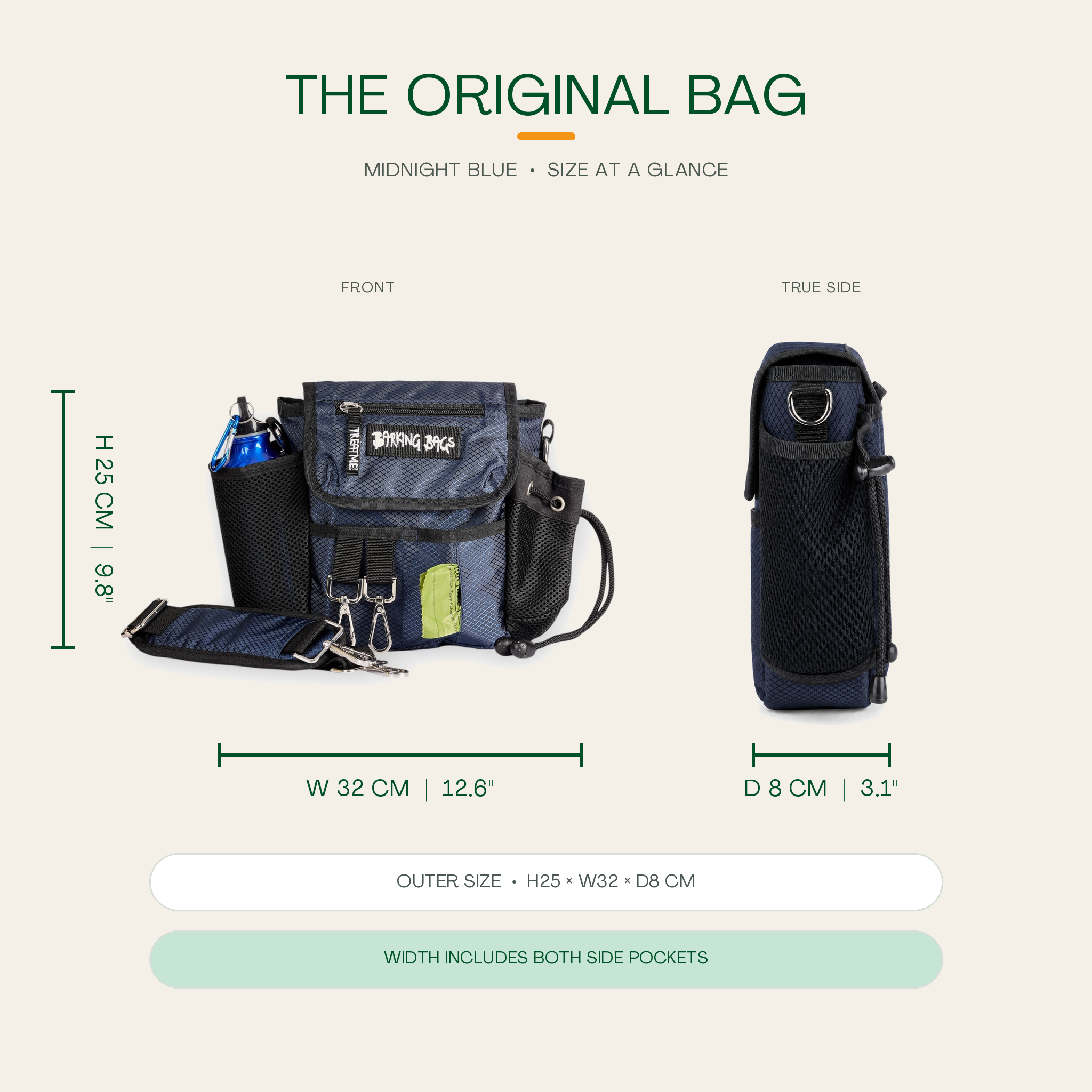
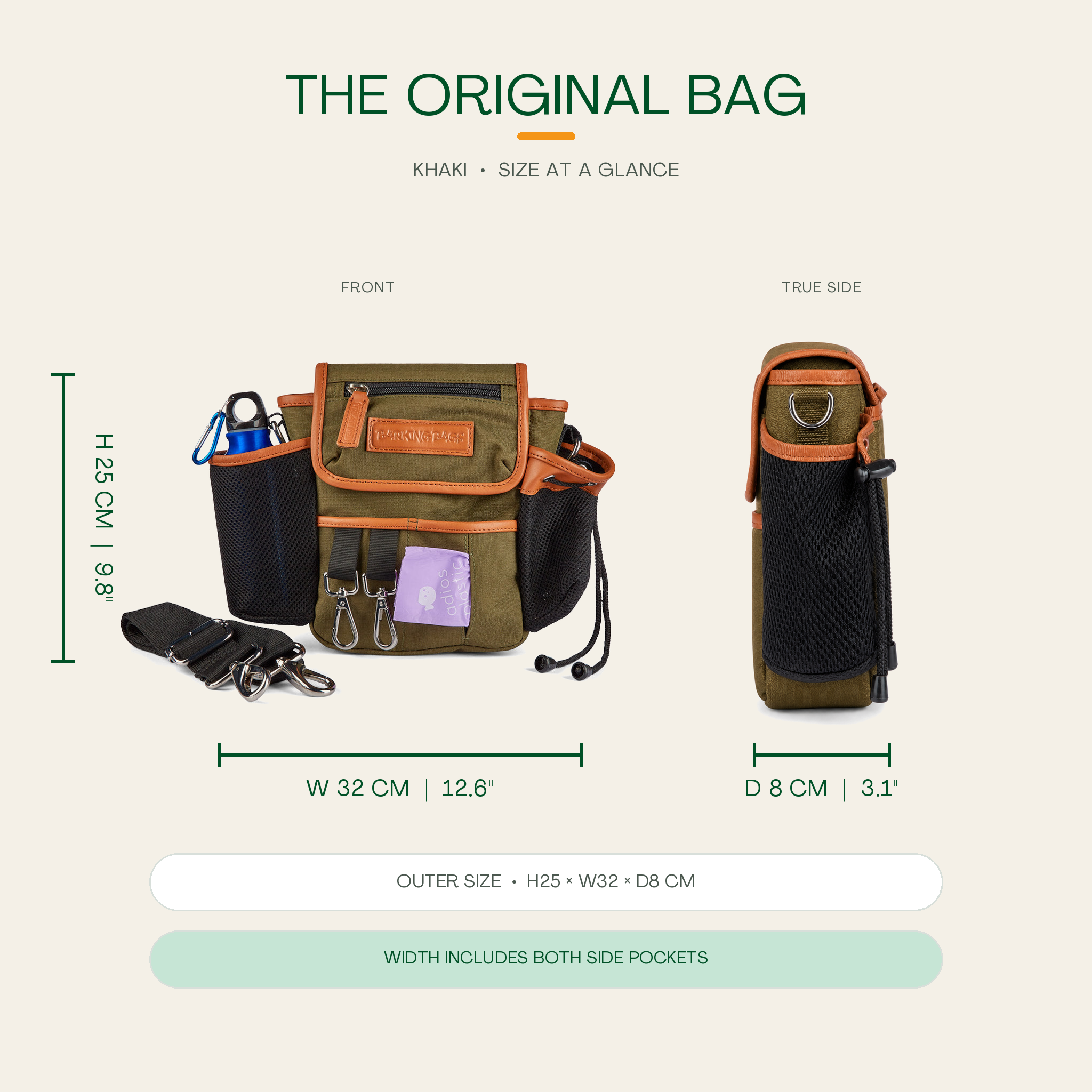
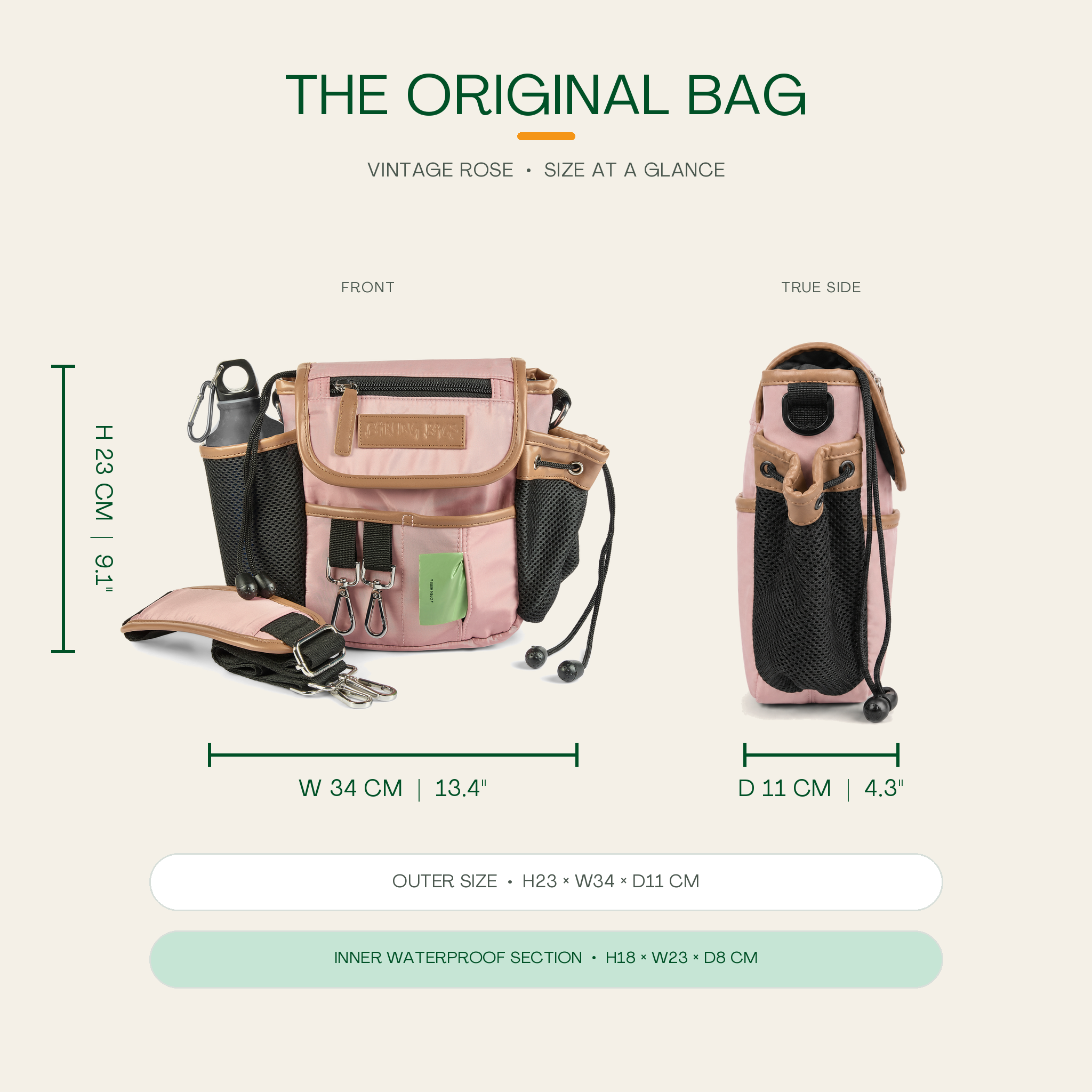
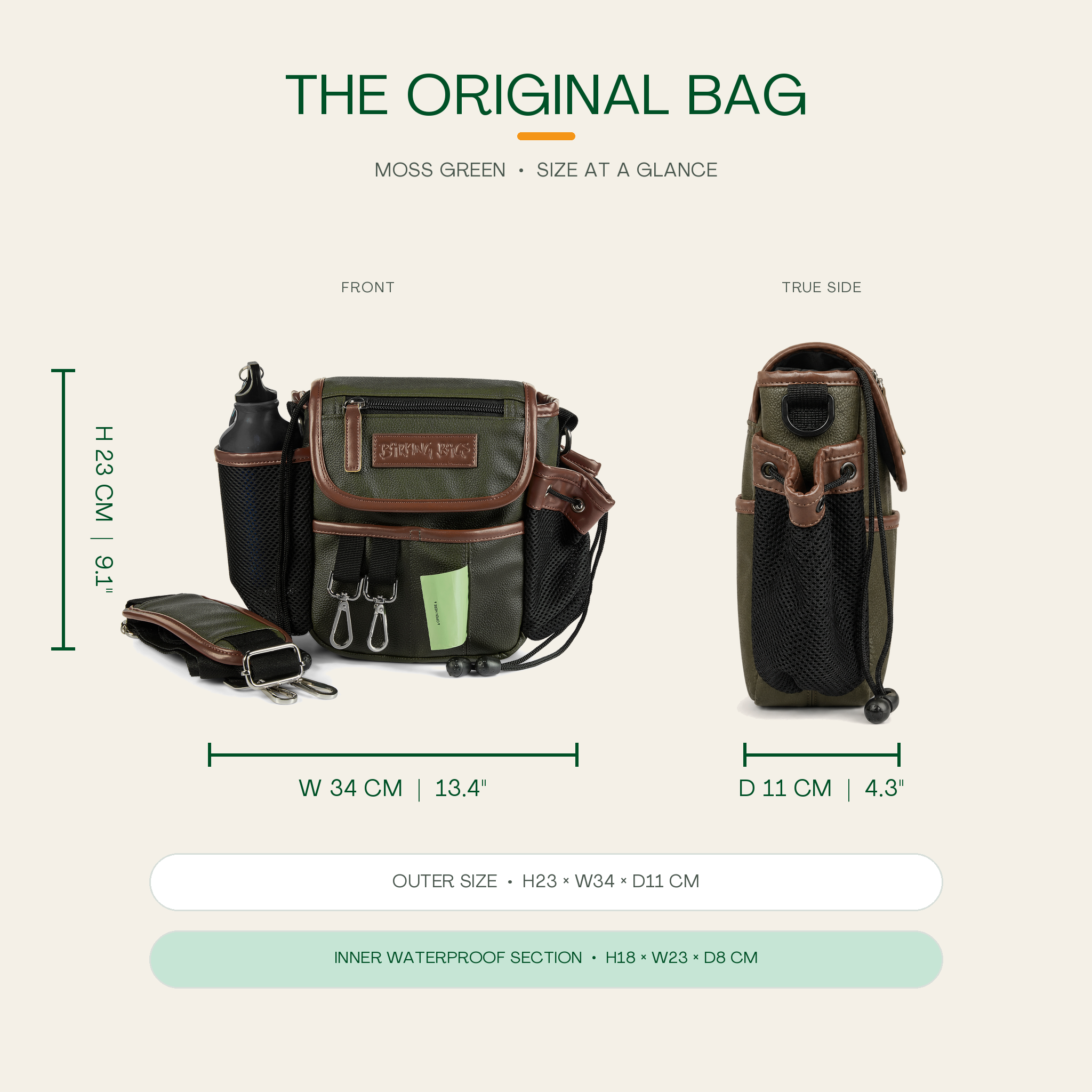
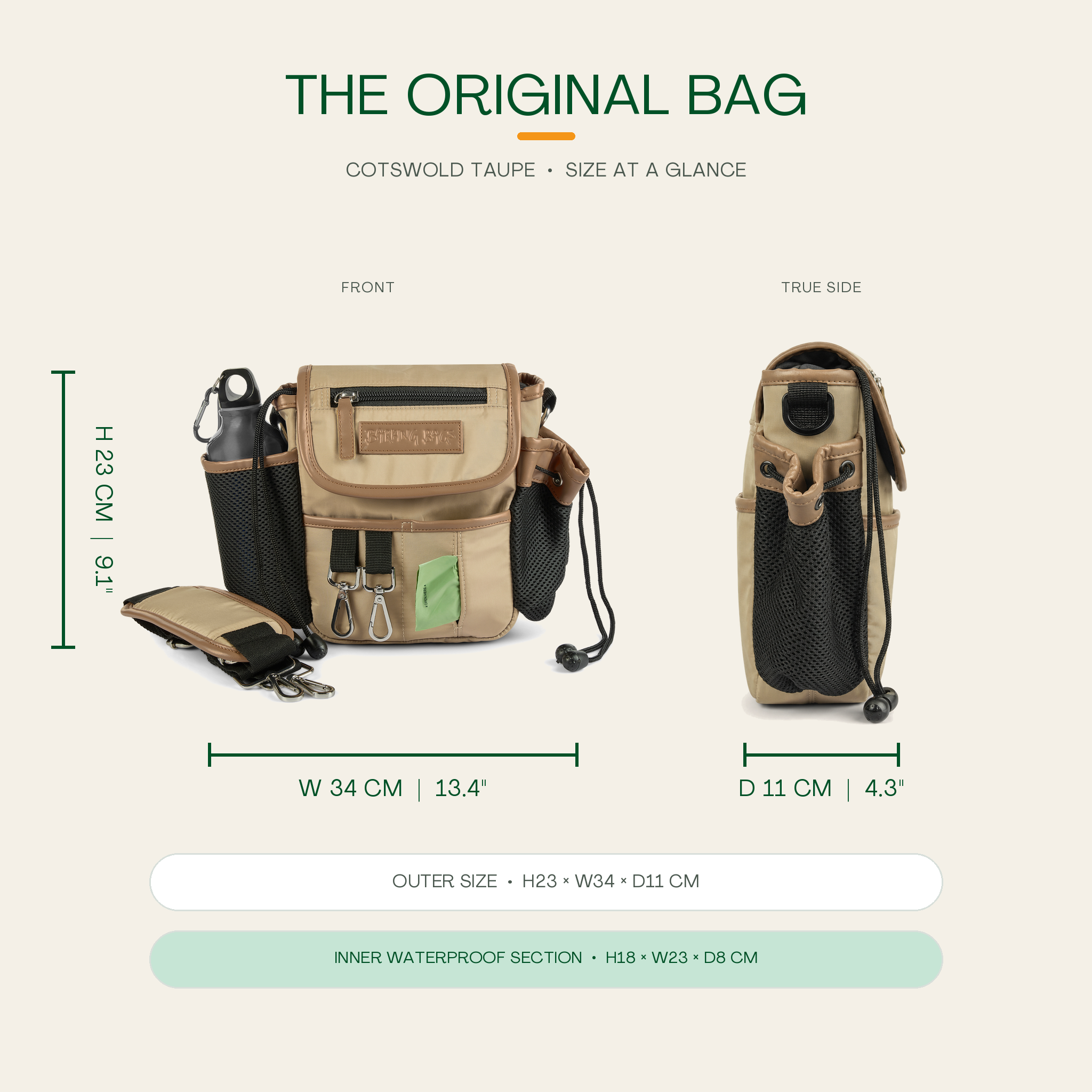
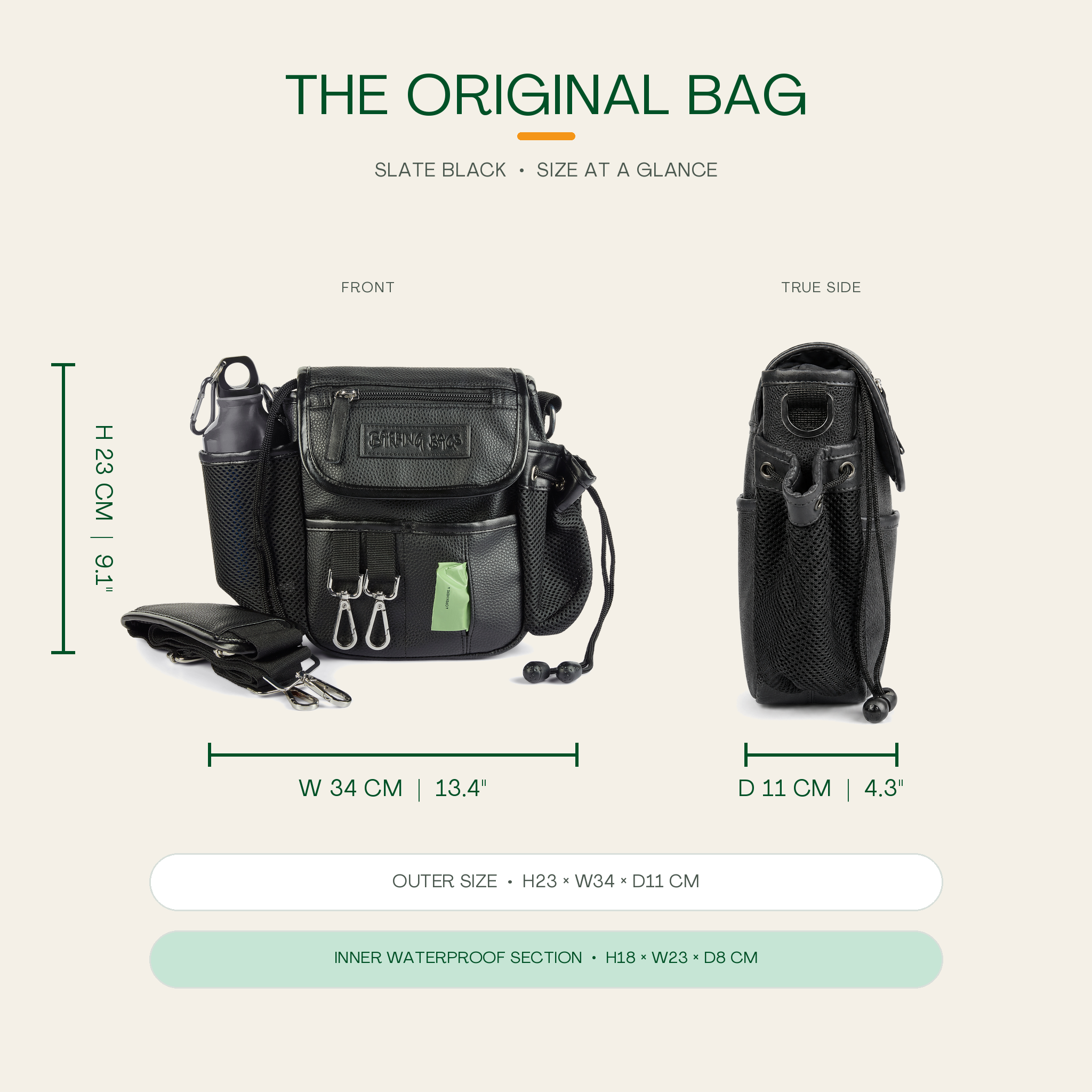
There is also the question of size. Many people do not want to carry a full backpack just to hold five or six essentials. A smaller, purpose-built bag can feel lighter, neater and better suited to daily use. It is not about carrying less for the sake of it. It is about carrying the right things without bulk.
Access and organisation matter more than you think
The biggest difference in the dog walking bag vs backpack debate is not storage. It is speed.
If your dog pulls towards another dog, spots a squirrel, or needs a quick reward during training, you do not want to stop and dig. The easier it is to access treats or waste bags, the smoother the walk feels. A backpack can interrupt the flow because it usually requires both hands, a shoulder shrug, or setting the bag down.
That may sound minor, but it changes the experience. Dog walking is active and often unpredictable. Good storage should support that, not slow you down.
Organisation matters for personal items too. Many owners start out using whatever bag they already own, only to discover that dog treats and lip balm are not ideal pocket companions. A dedicated walking bag helps keep dog gear separate from your everyday bits, while still carrying both in one place.
Comfort is not just about weight
People often assume backpacks are always more comfortable because they distribute weight across two shoulders. Sometimes that is true, especially for long walks with heavier loads. But comfort is also about movement, fit and how often you need to interact with the bag.
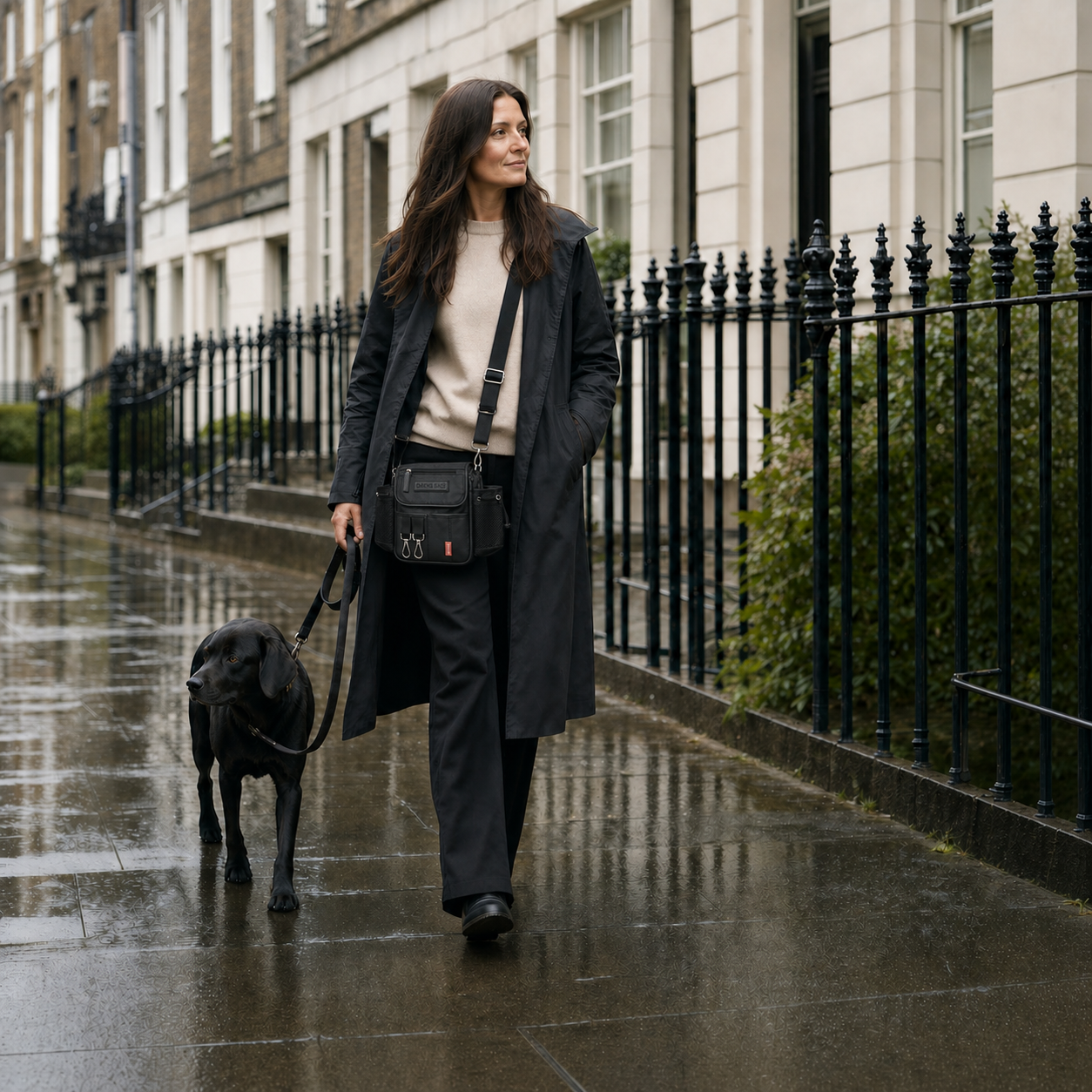
A lightweight dog walking bag can be more comfortable than a half-empty backpack simply because it is less bulky and easier to wear for shorter periods. If the bag sits close to the body and keeps essentials accessible, it can feel less intrusive on a standard walk.
On the other hand, if you carry lots of water, multiple leads, spare clothing or kit for several dogs, a backpack may win on comfort because the load is heavier and better balanced. This is one of those situations where it genuinely depends on your routine.
The smartest choice is not the one with the most straps. It is the one that matches the amount you carry most days.
Style still counts on a daily walk
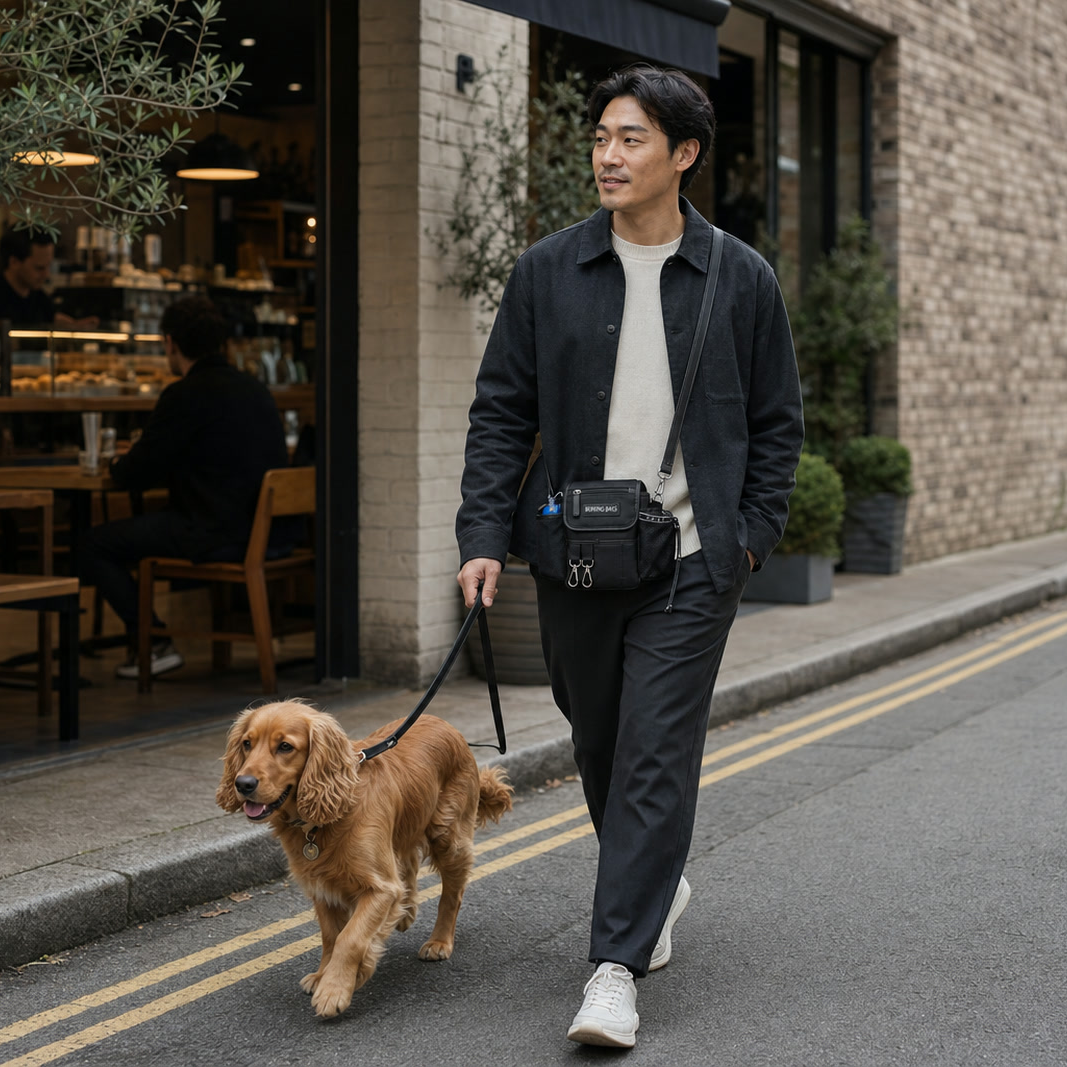
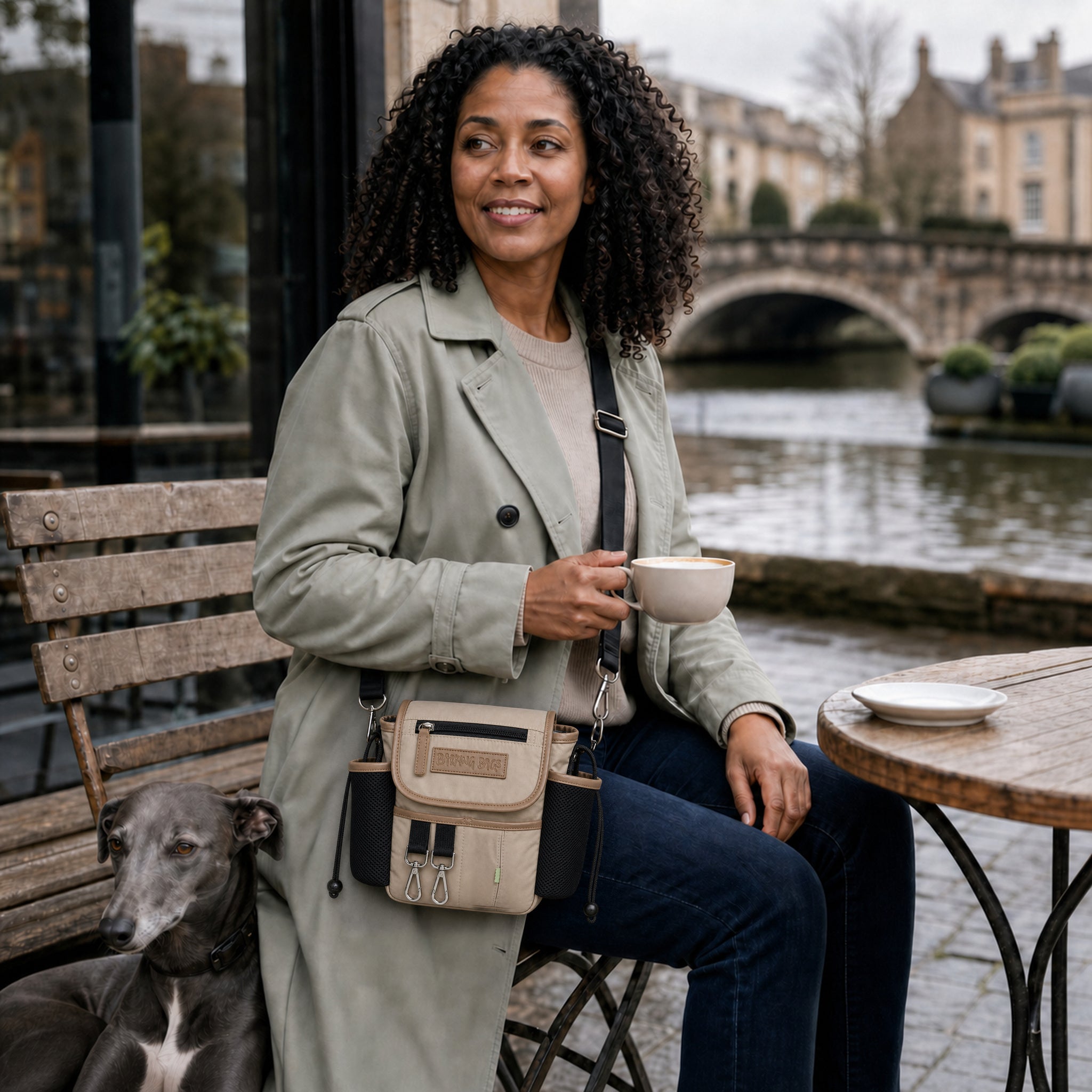
Dog walking gear gets used constantly, so it should work with your day rather than feel like an afterthought. That matters if you walk before work, pop to the shops afterwards, meet friends for coffee, or simply want accessories that look considered rather than purely functional.
Backpacks can sometimes look too large or too outdoorsy for everyday urban use, particularly if you only need a few essentials. A well-designed dog walking bag tends to feel more versatile. It can look neat, practical and purpose-built without screaming hiking trip.
For many dog owners, that balance is part of the appeal. You want something made for muddy paws and real life, but you do not want to compromise on style every single day.
Which option suits different types of dog owner?
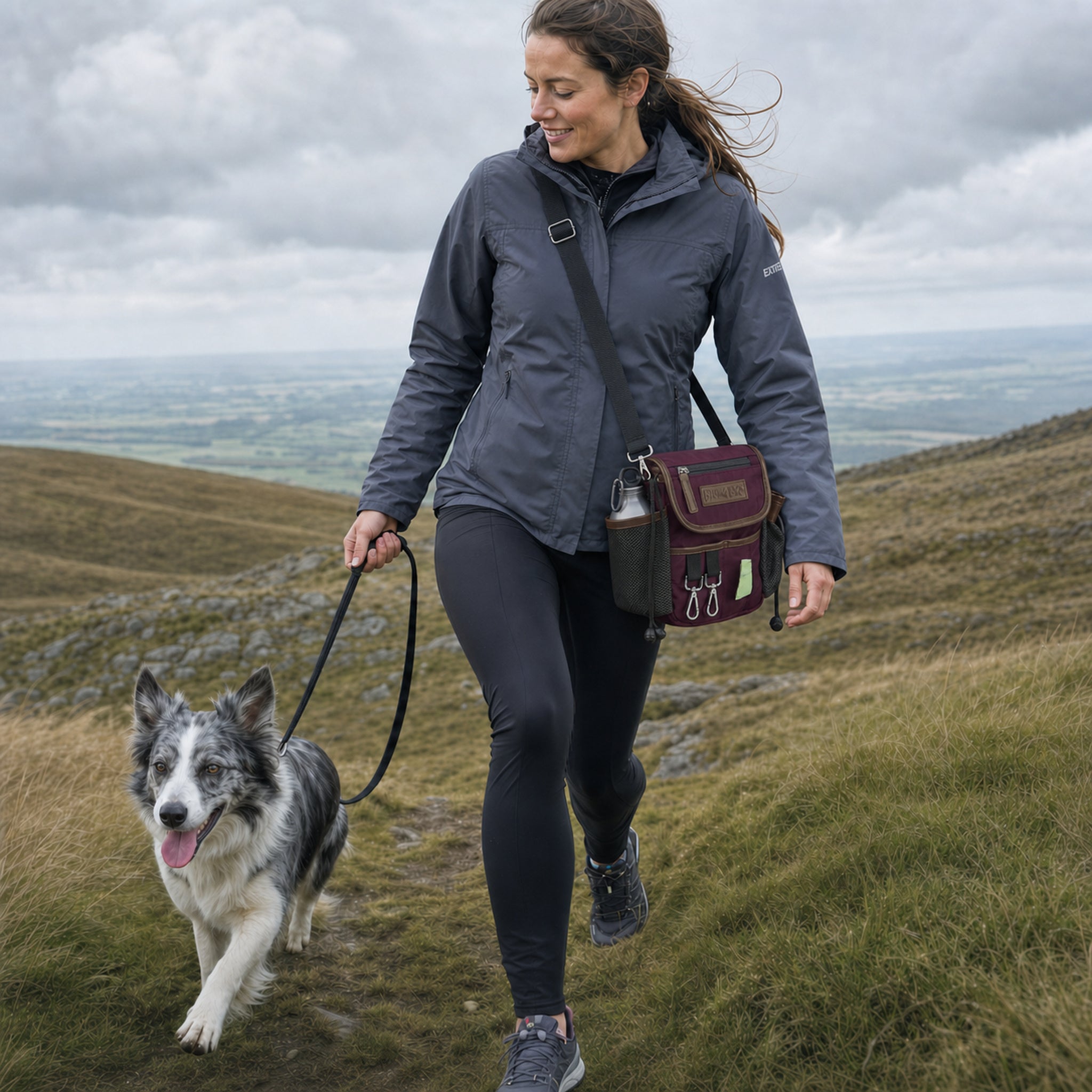
If you are a daily dog owner doing regular local walks, a dog walking bag is often the easier fit. It keeps your routine tidy, cuts down the scramble for essentials and feels proportionate to what you actually carry.
If you are training your dog, fast access becomes even more valuable. Treats, clickers and small tools need to be ready in seconds, not hidden under a jumper in the bottom of a backpack.
If you are a professional walker or managing more than one dog, the answer may be more mixed. Some walkers prefer a backpack for capacity, especially on longer days. Others find a dedicated dog walking bag more efficient for the items they use constantly, sometimes alongside extra storage kept elsewhere.
If you love long countryside walks, beach days or weekend adventures, a backpack can be the better choice when you need layers, snacks and extra water. But even then, some people still prefer a dedicated dog walking bag for shorter outings and save the backpack for bigger trips.
The real question to ask before you buy
Rather than asking which is better in general, ask what annoys you most on a walk.
If the problem is not enough space, a backpack may solve it. If the problem is clutter, slow access, messy pockets and carrying the wrong kind of bag, a dedicated dog walking bag is likely the better answer.
That is why purpose-built design matters. The best dog walking accessories are not just smaller versions of ordinary bags. They are built around how dog owners actually walk, train, reward, clean up and carry on.
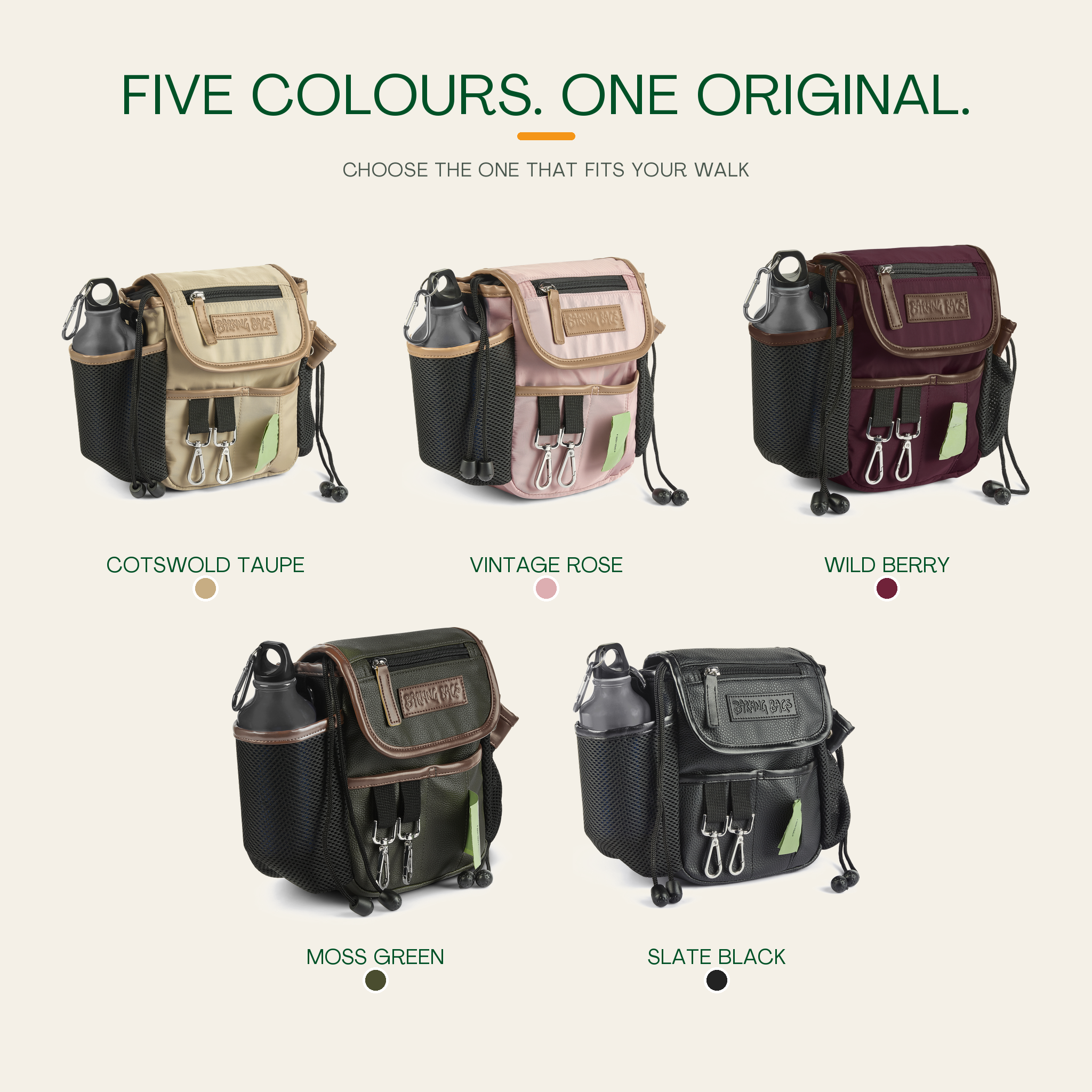
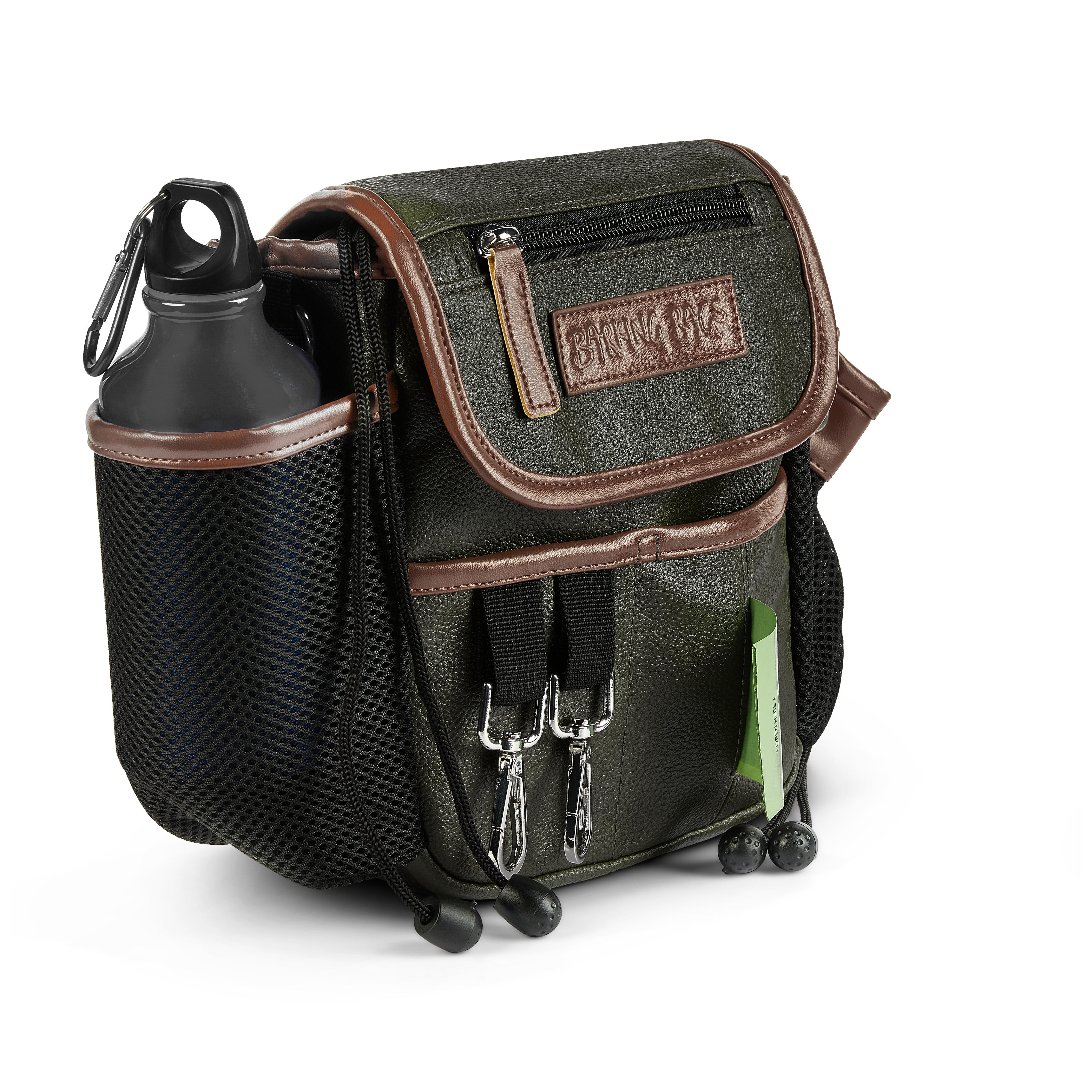
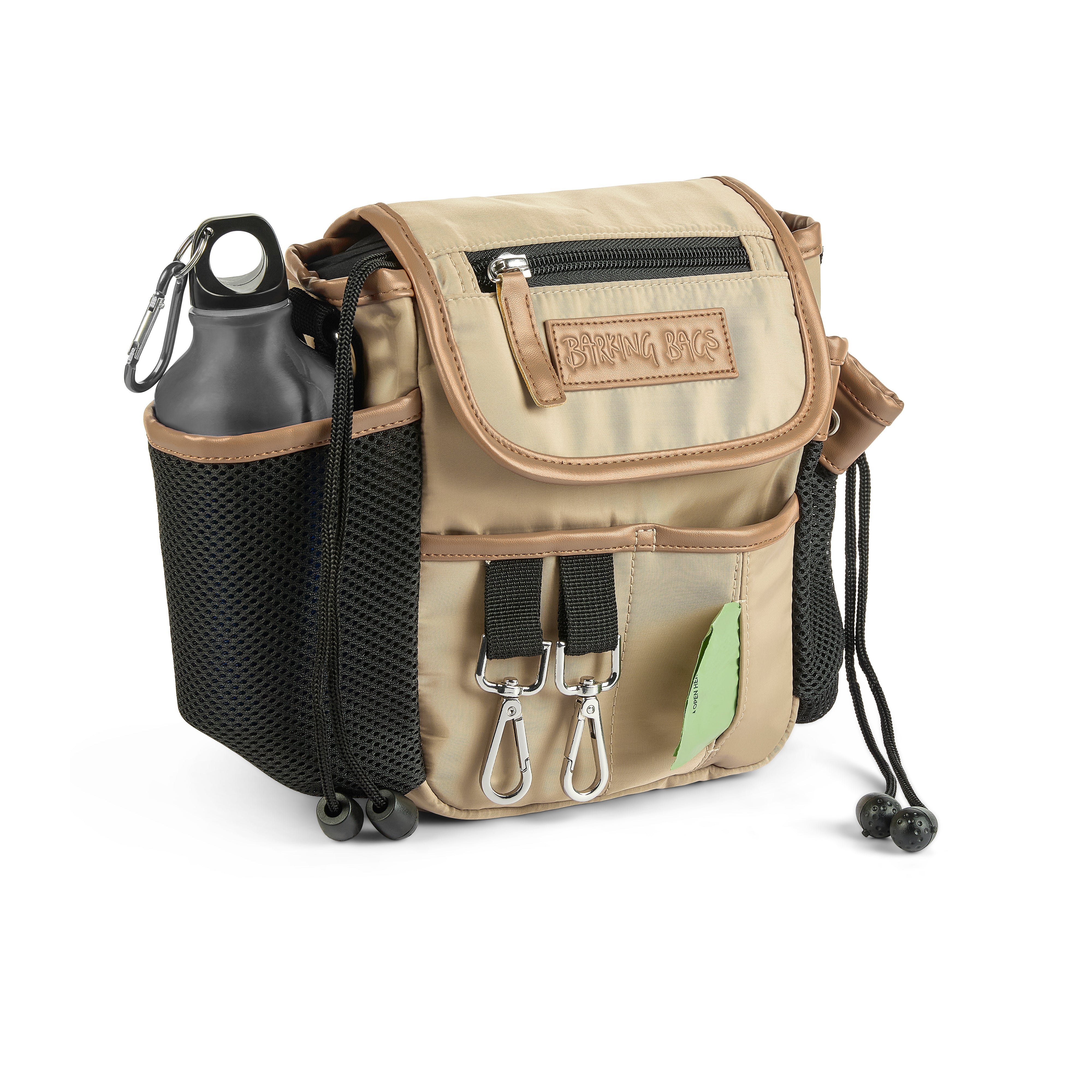
For many owners, that is exactly why a specialist option feels like such an upgrade. Brands such as Barking Bags have focused on this category for a reason - once you use a bag designed specifically for dog walks, it is hard to go back to making a generic bag do a very specific job.
If your current setup leaves you juggling leads, treats, poo bags and personal bits with no proper system, trust the friction. Your walk is telling you what needs to change. Choose the bag that makes everyday dog walking feel simpler, quicker and more put together.