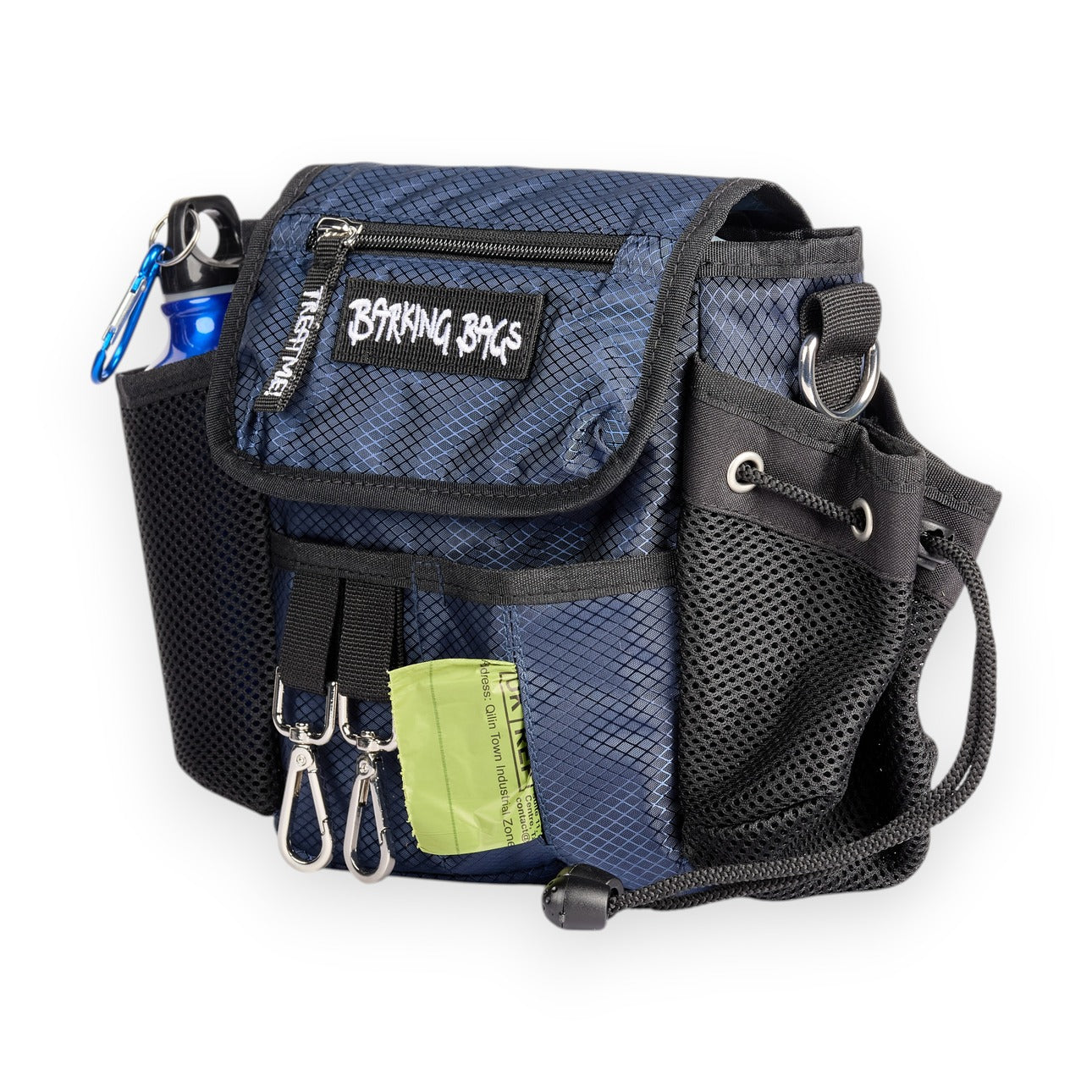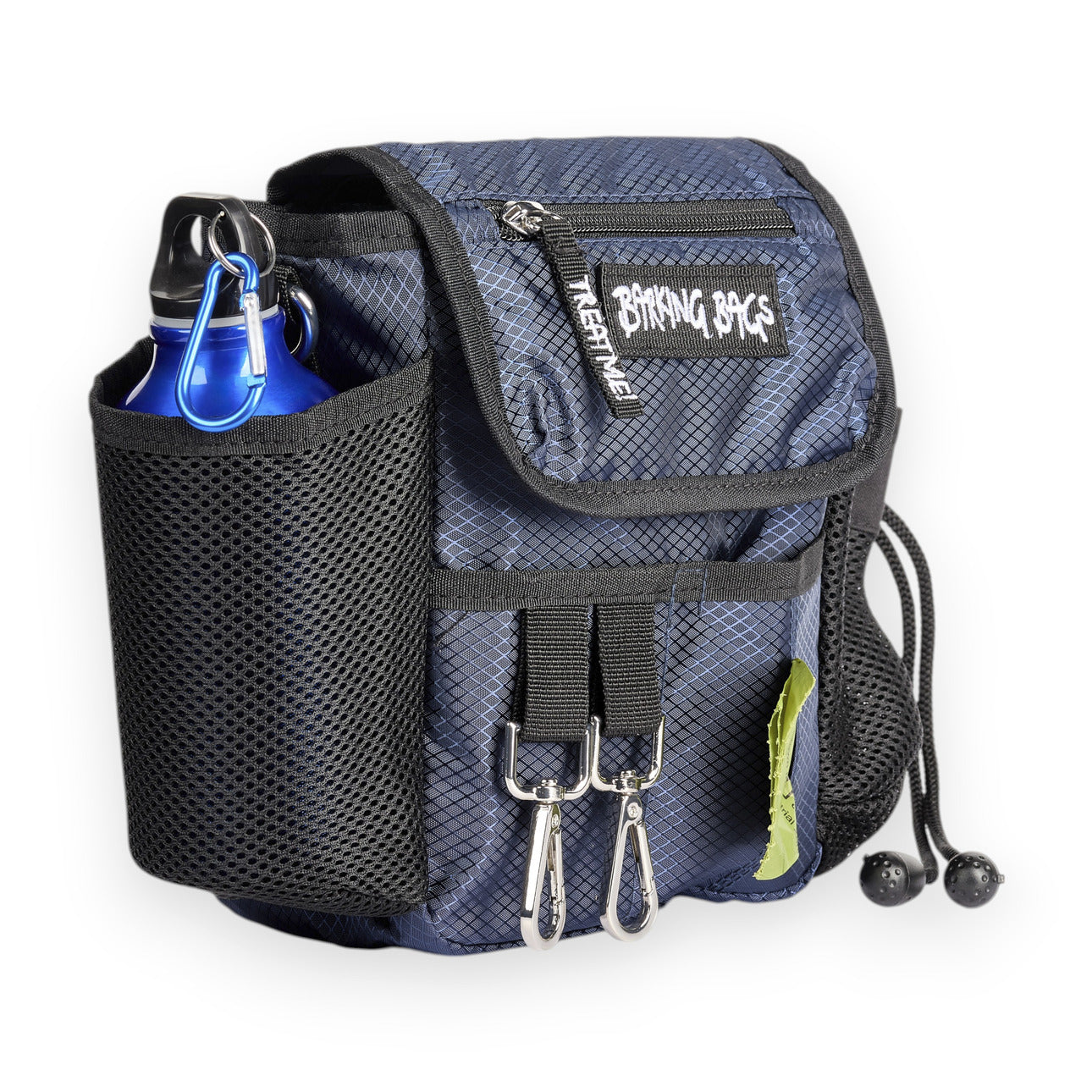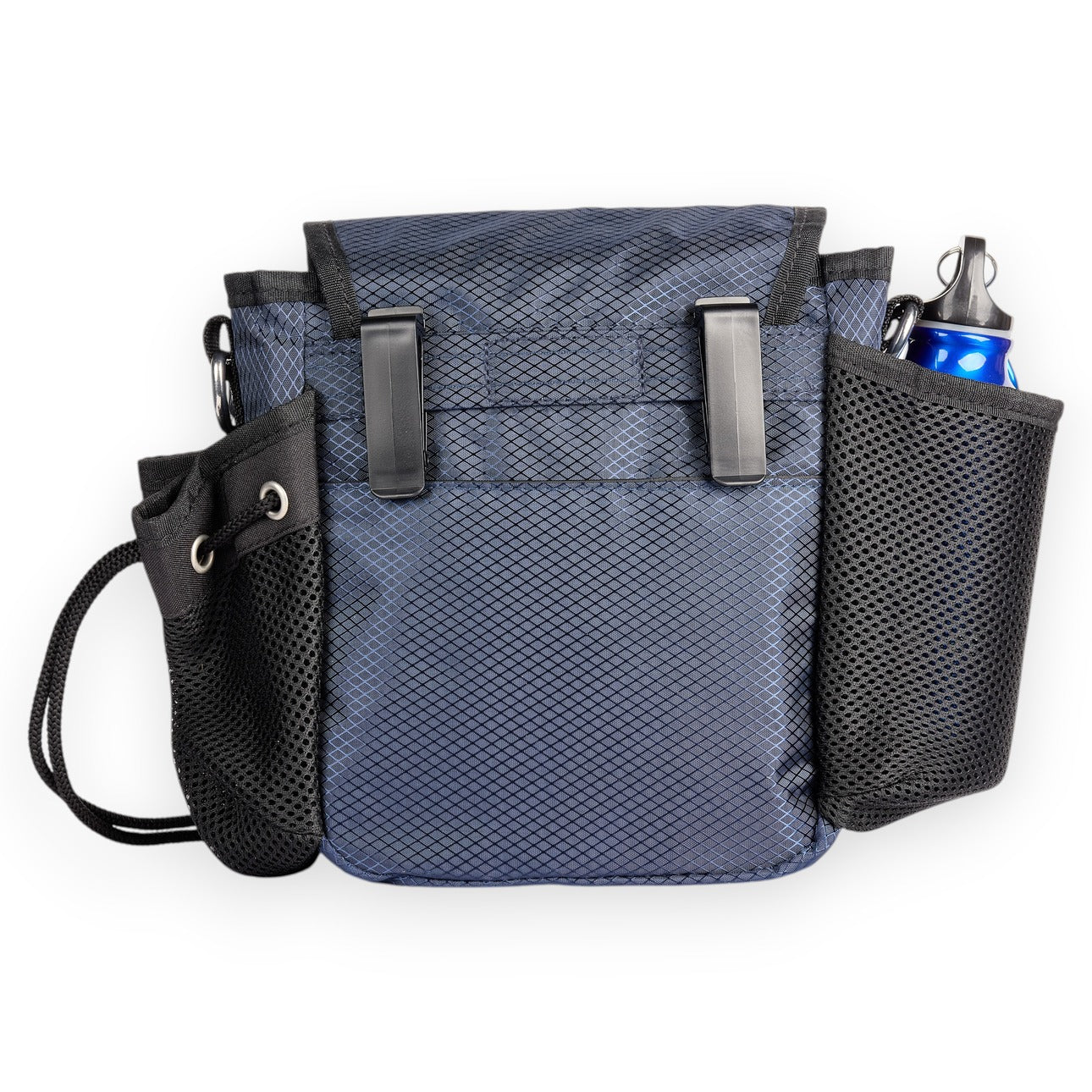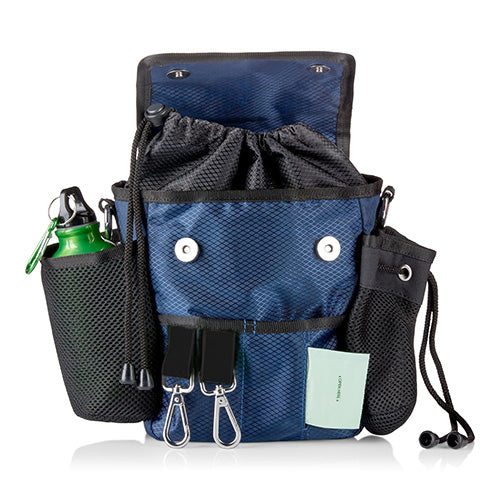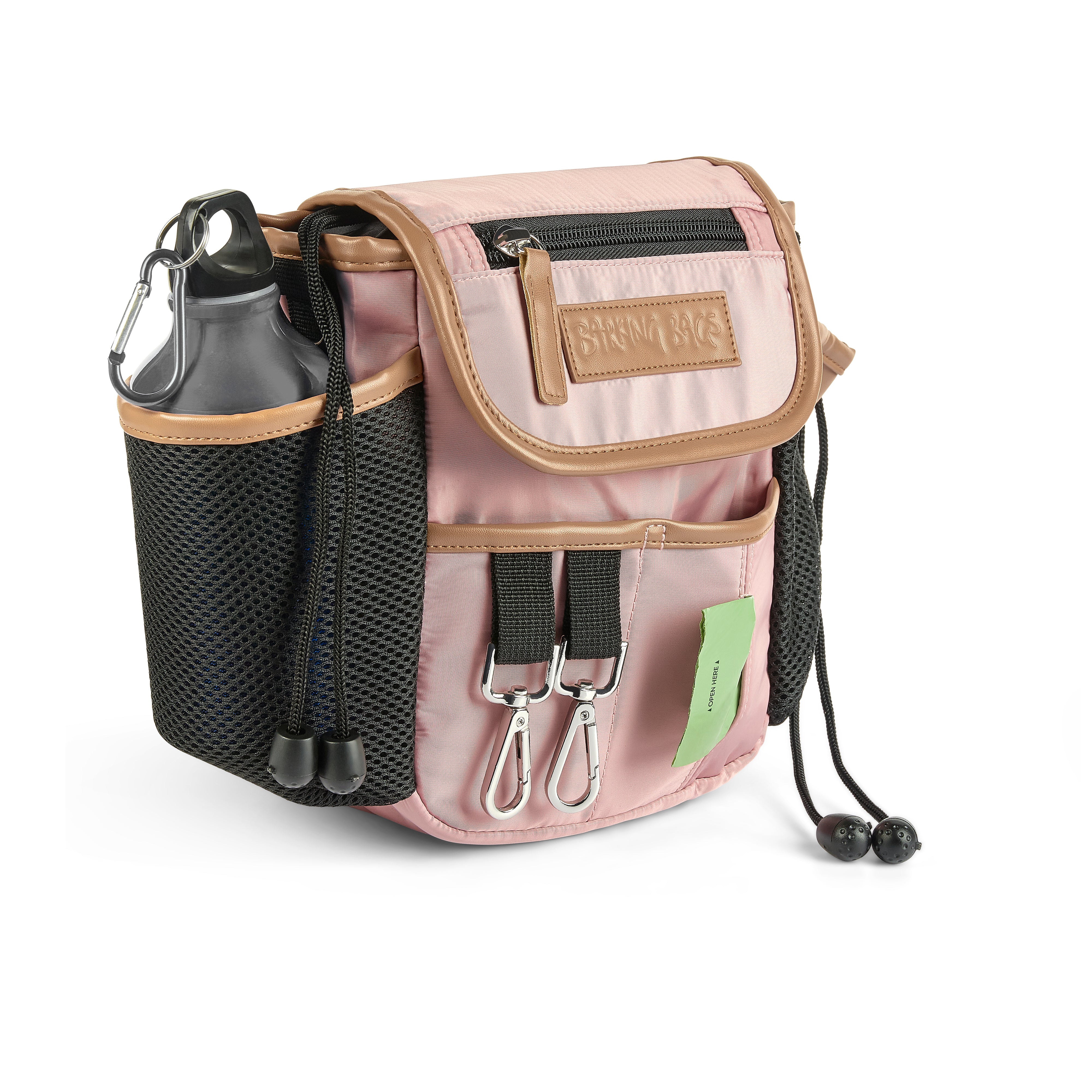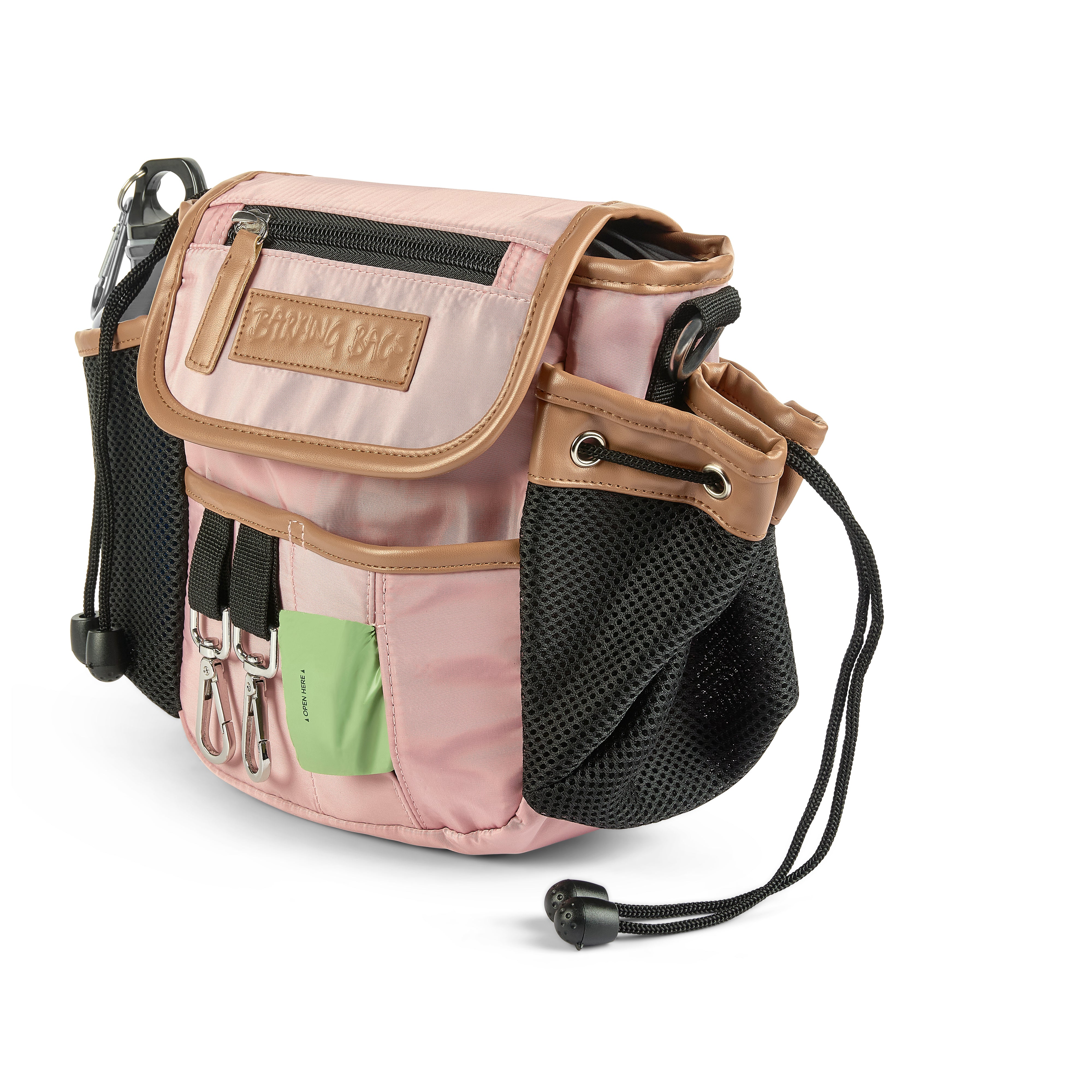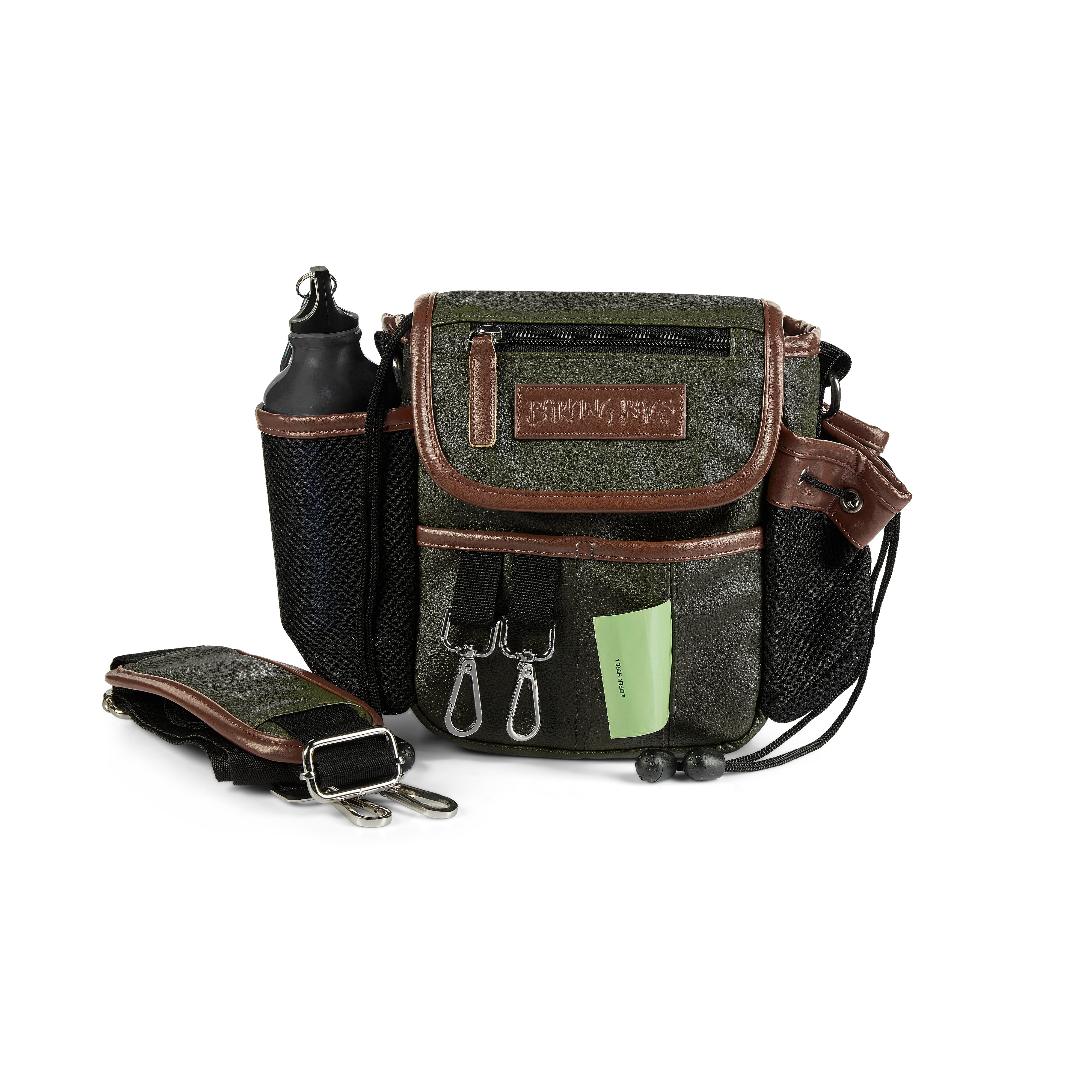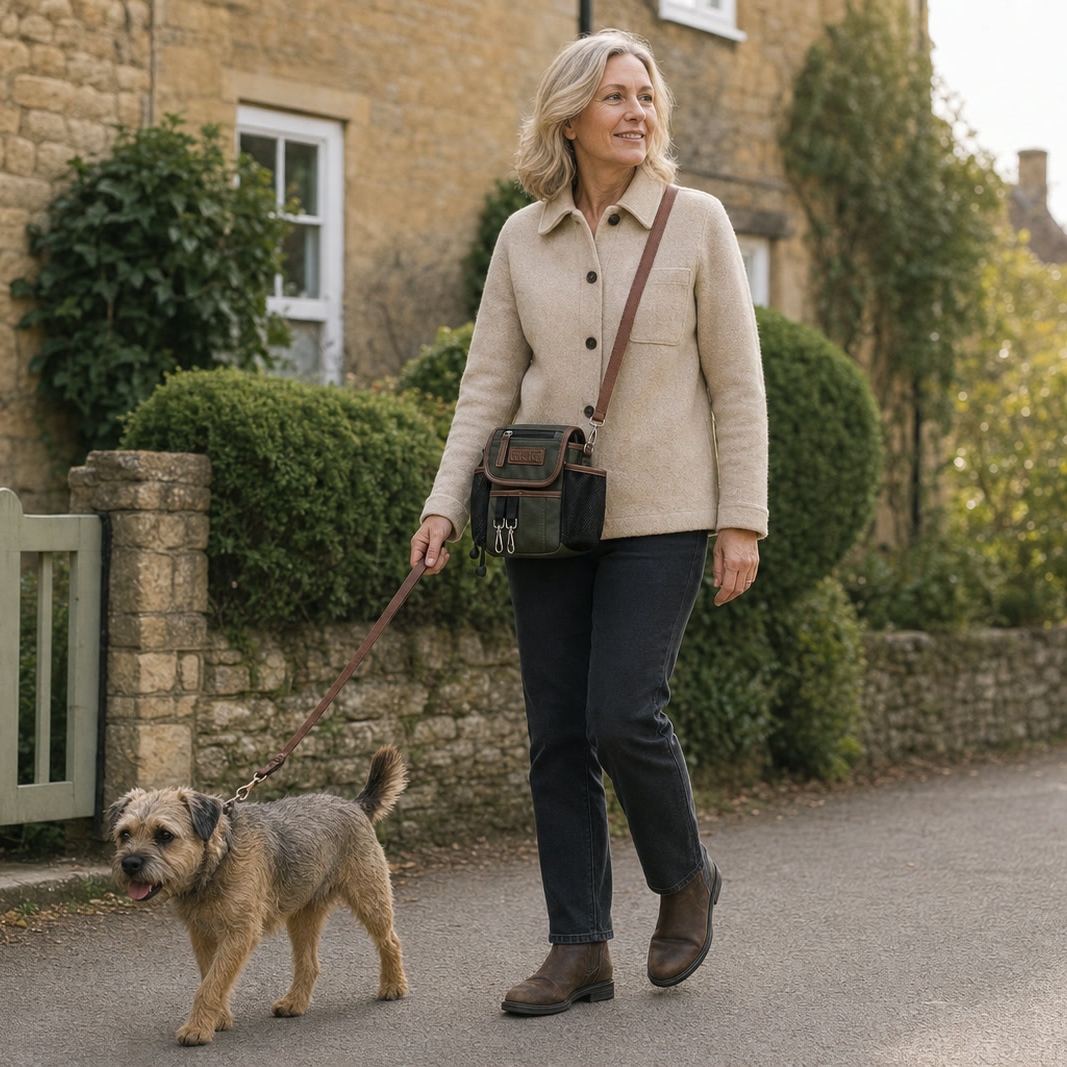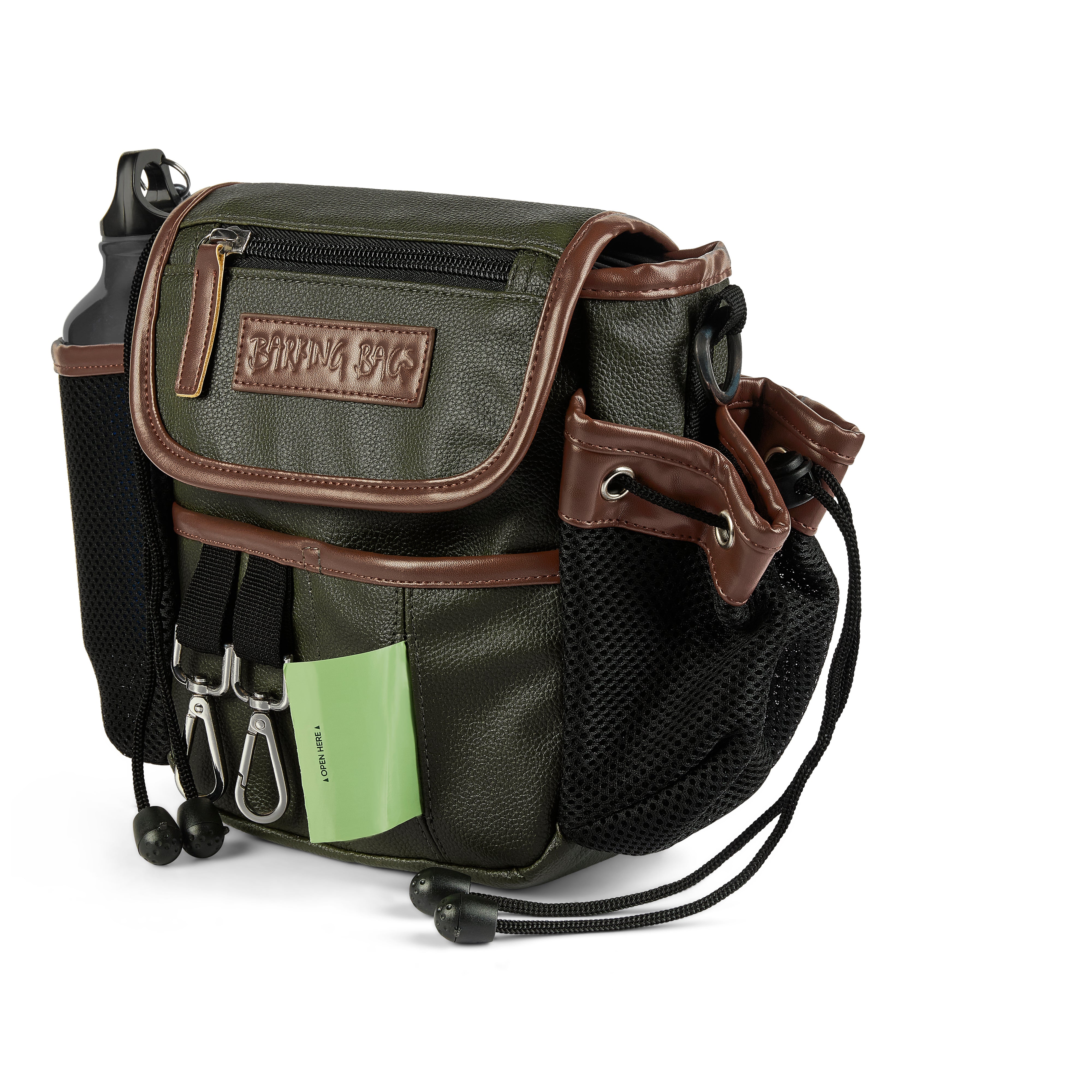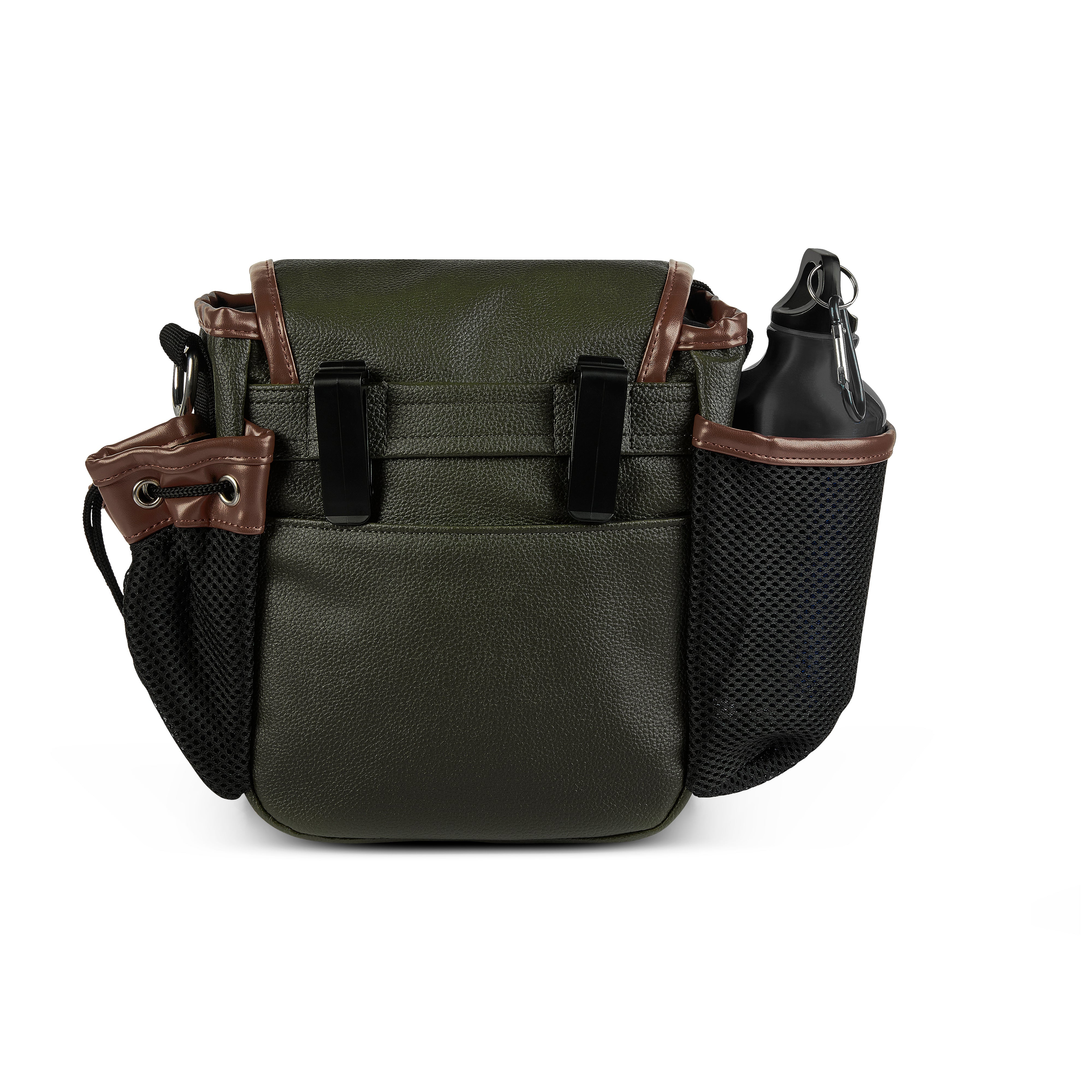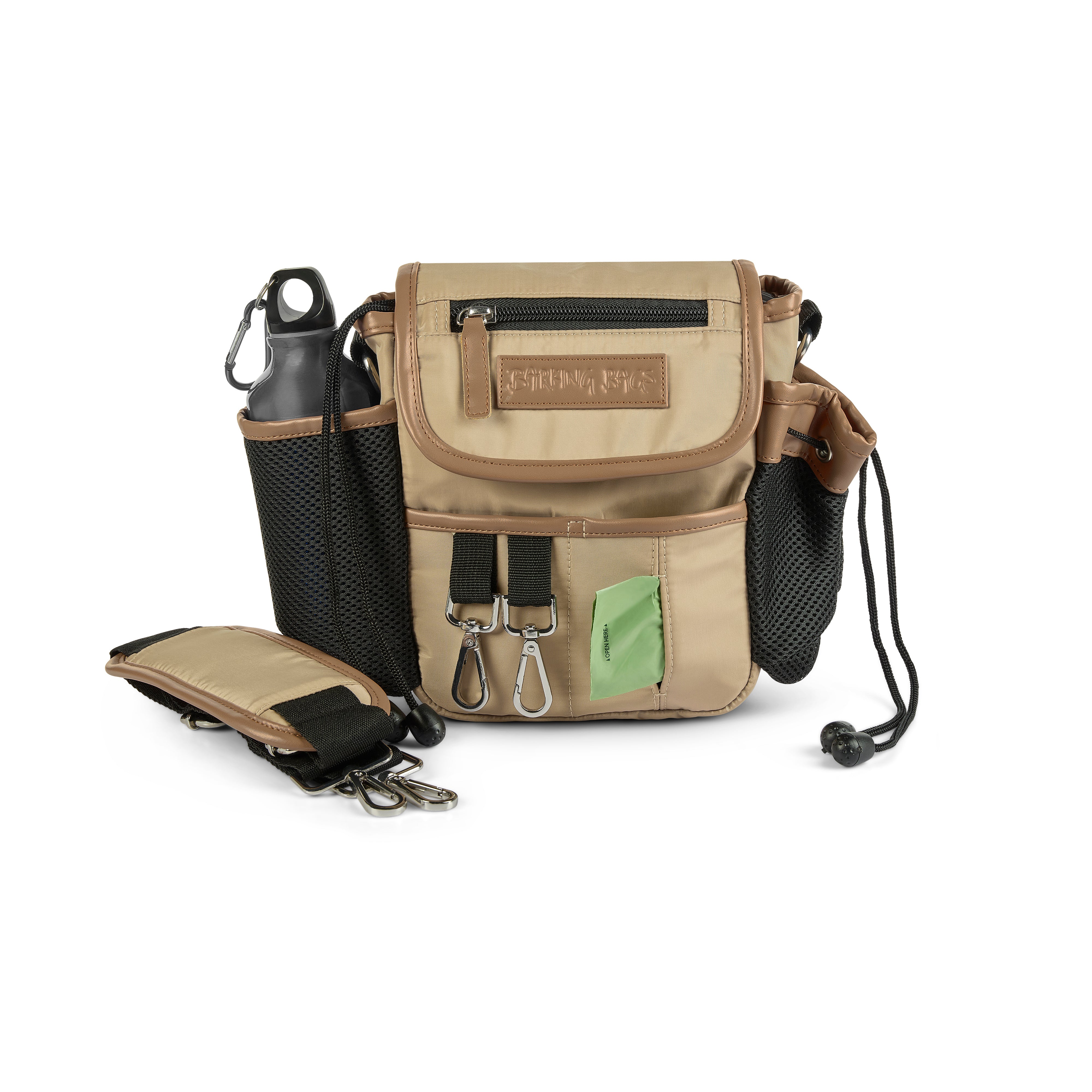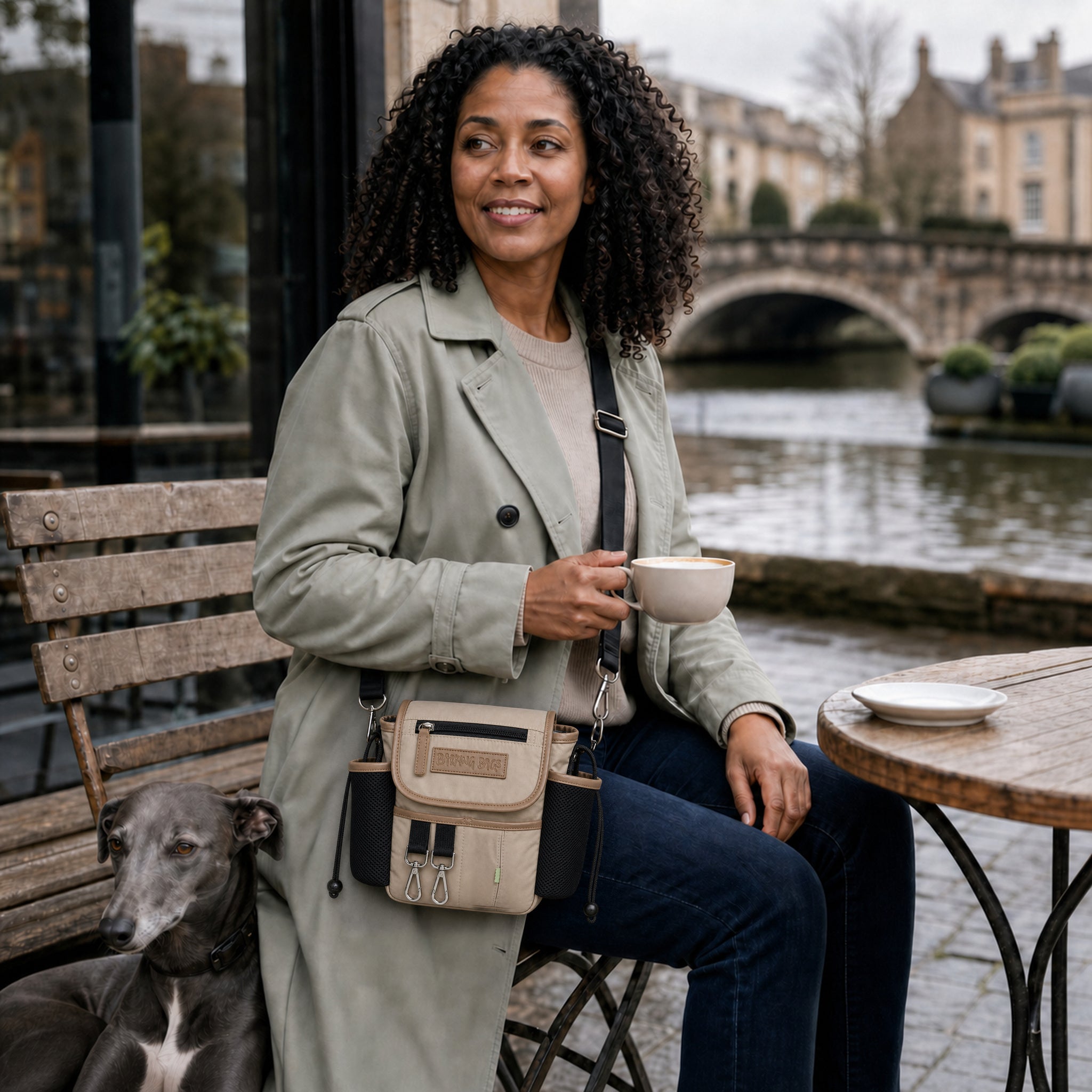

A dog walk usually starts the same way - one hand on the lead, one eye on the clock, and a quick pat of your pockets to check you have everything. Then, halfway down the road, you realise the treats are in yesterday’s coat, the poo bags are nowhere to be found, and your keys are buried under dog biscuits. If you’ve ever wondered what to pack for dog walks, the answer is less about carrying more and more about carrying the right things in the right place.
The best dog walking setup should feel easy. You should be able to leave the house knowing your essentials are sorted, your hands are as free as possible, and nothing is rolling around loose at the bottom of a handbag that was never designed for muddy paws and daily walks.
What to pack for dog walks: the daily essentials
For most UK dog owners, the everyday list is fairly simple. You need poo bags, treats, a lead, your phone, keys, and somewhere to keep it all organised. If your dog is walked daily, these are the non-negotiables that make the difference between a smooth routine and a mildly chaotic one.
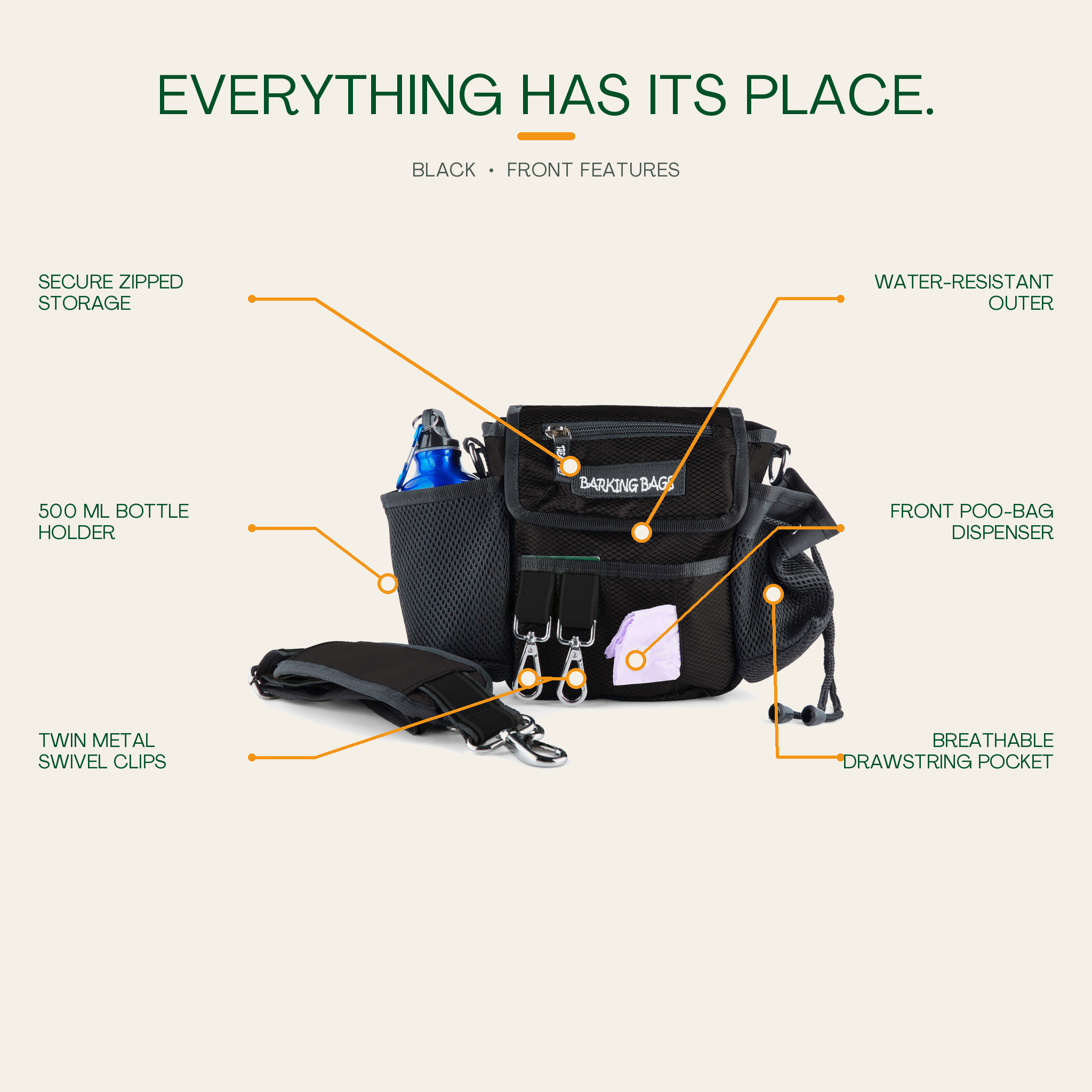
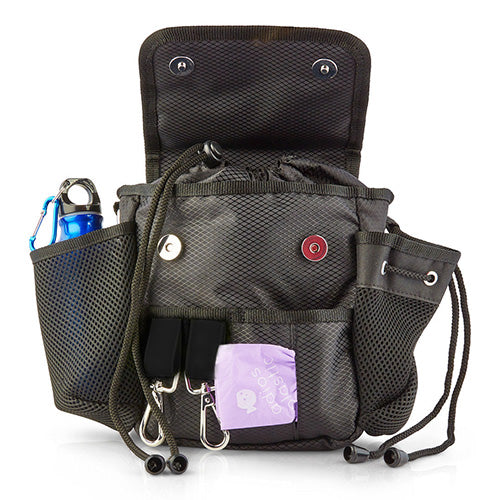
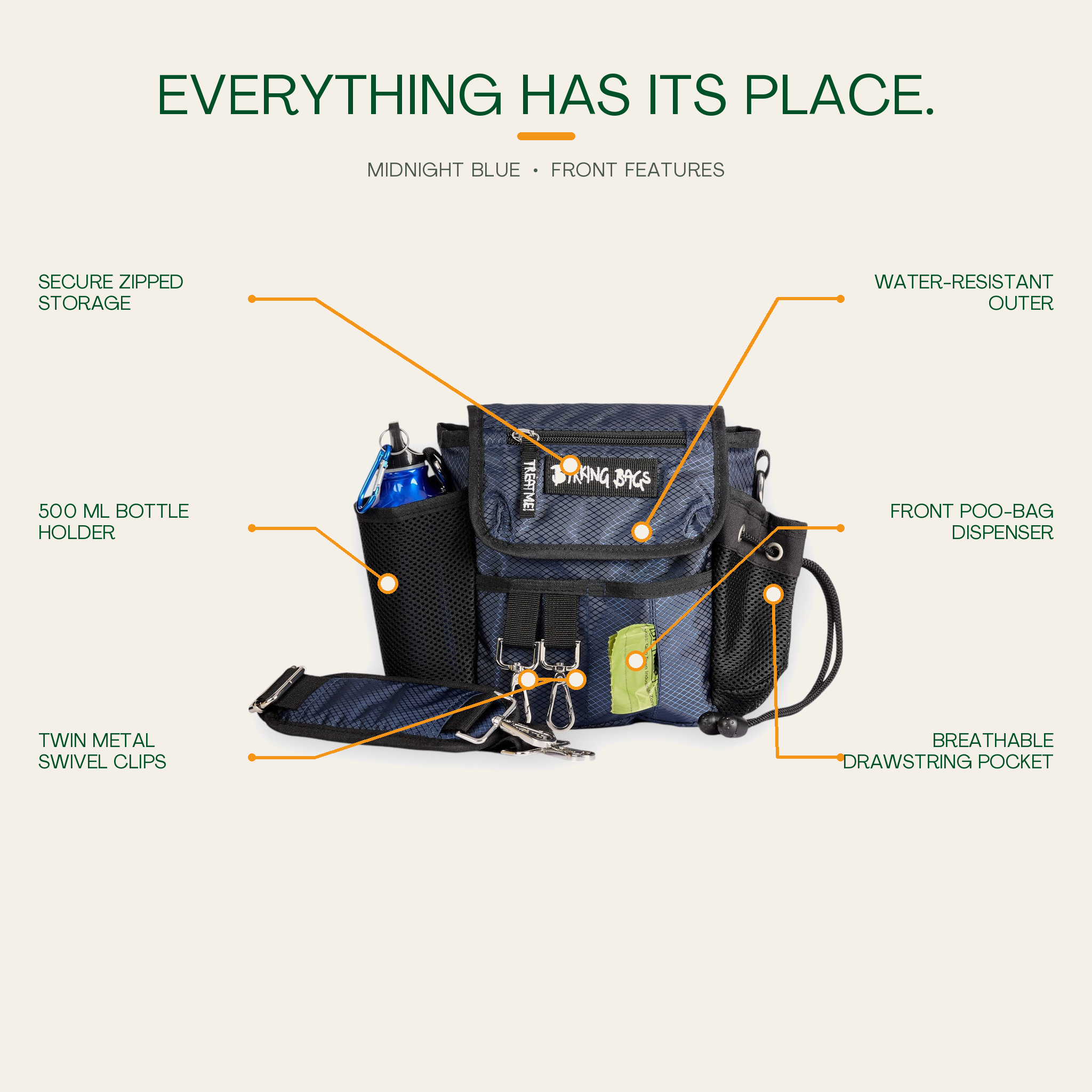
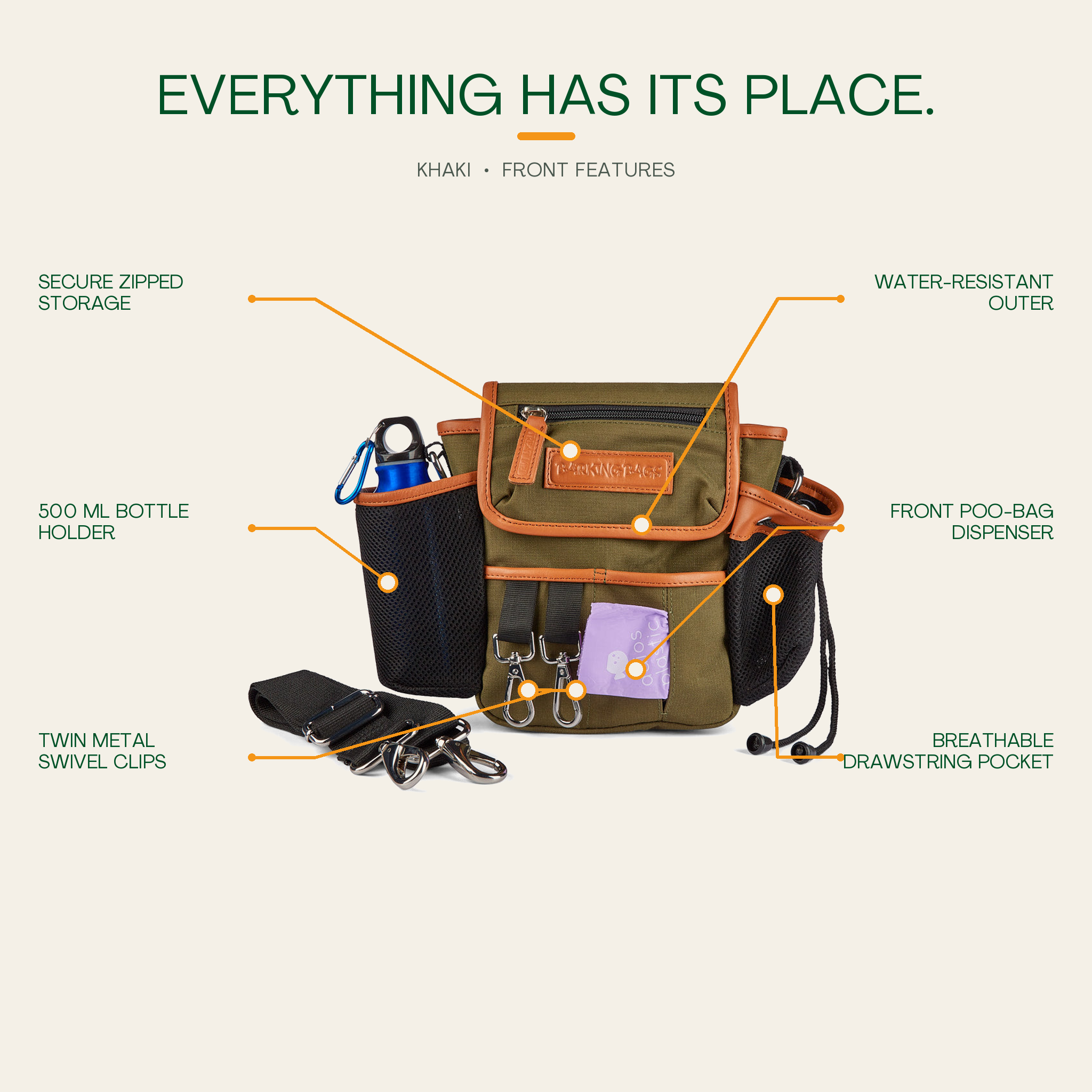
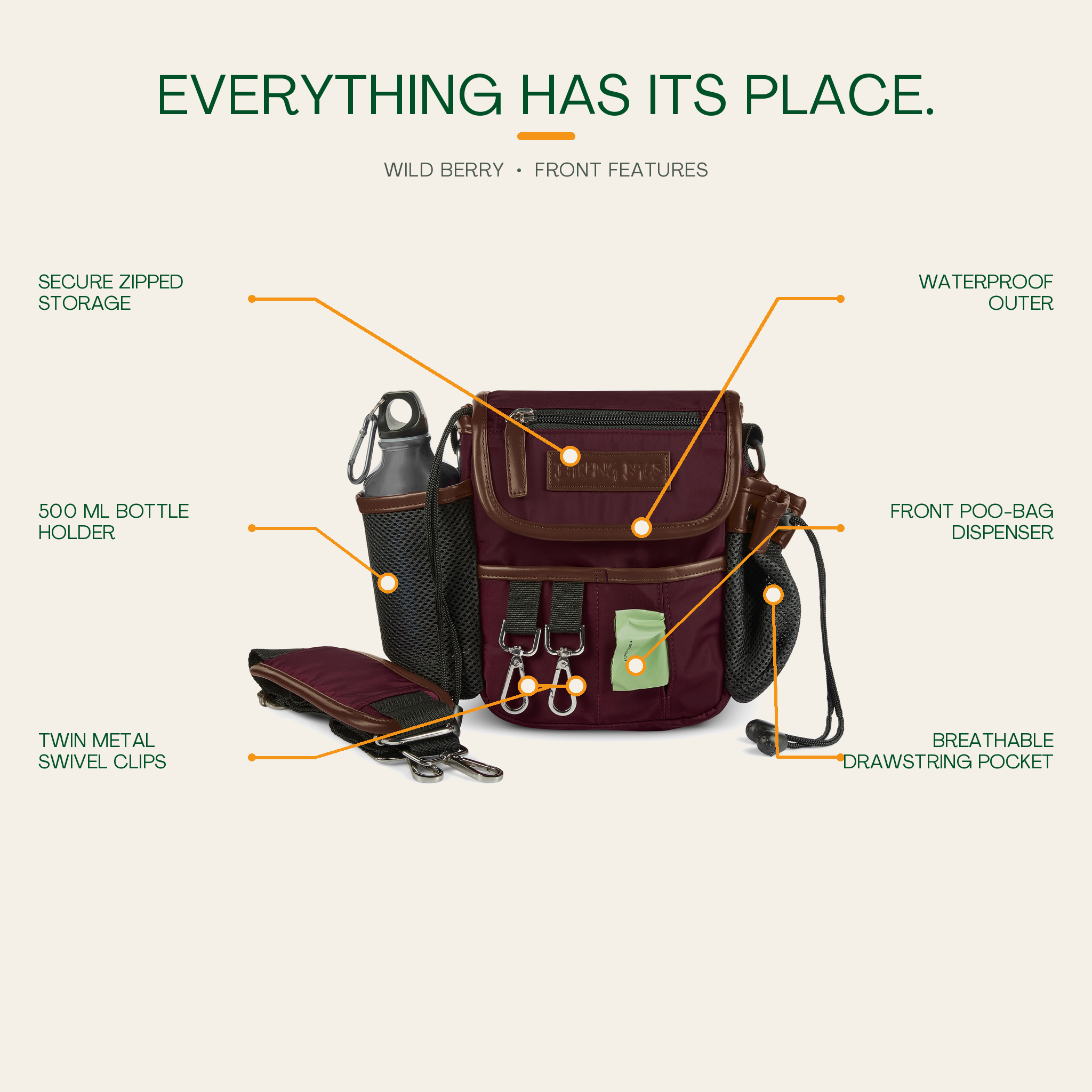
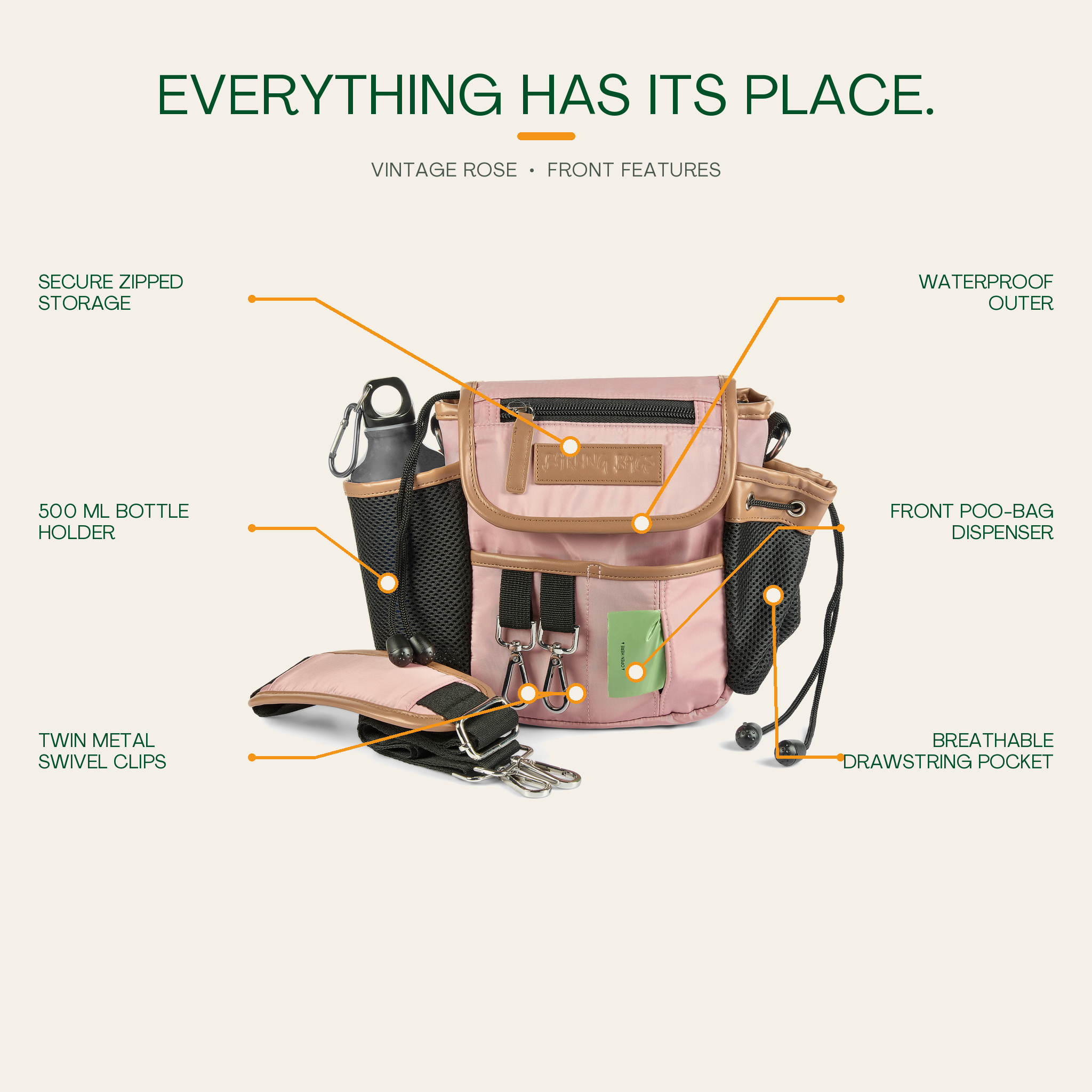
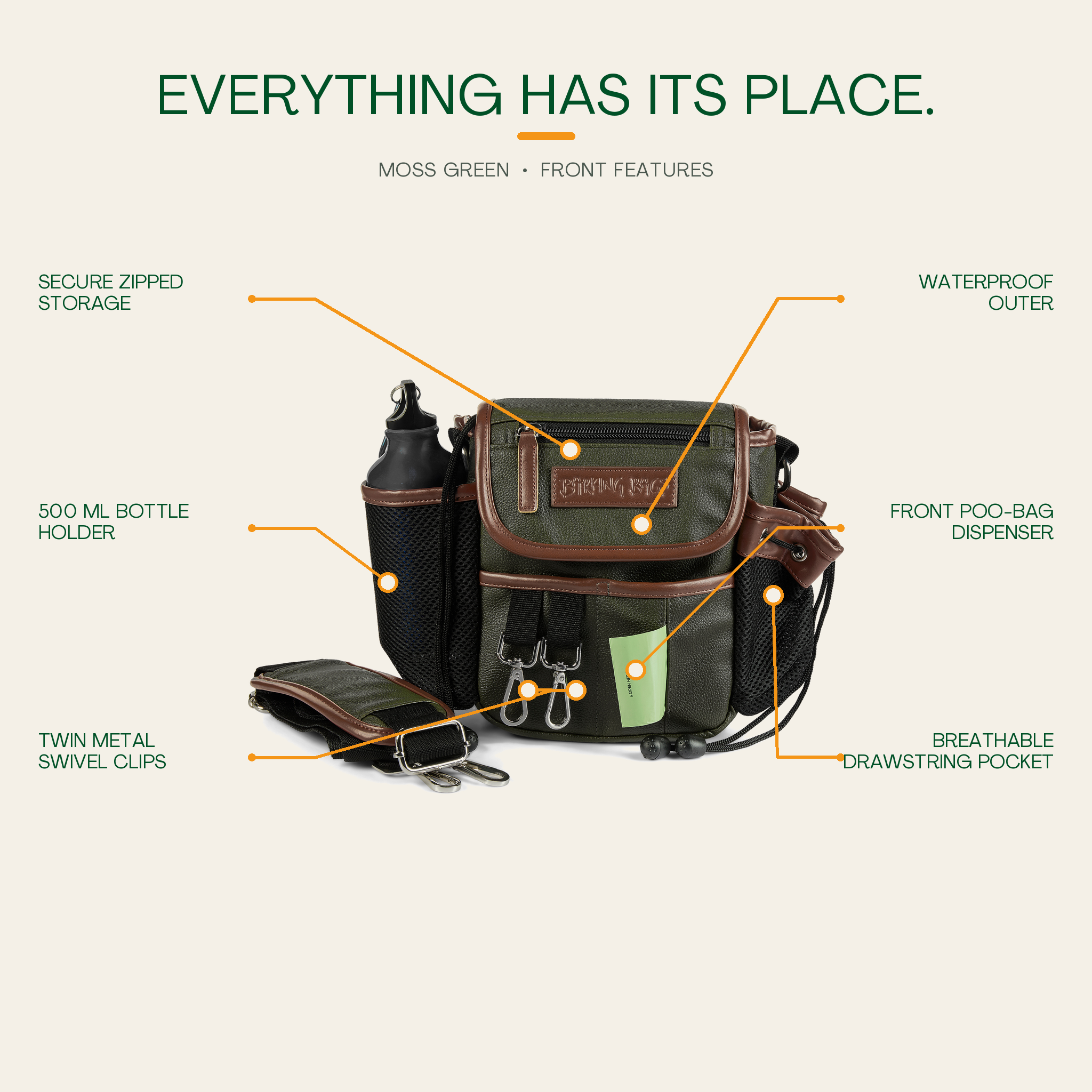
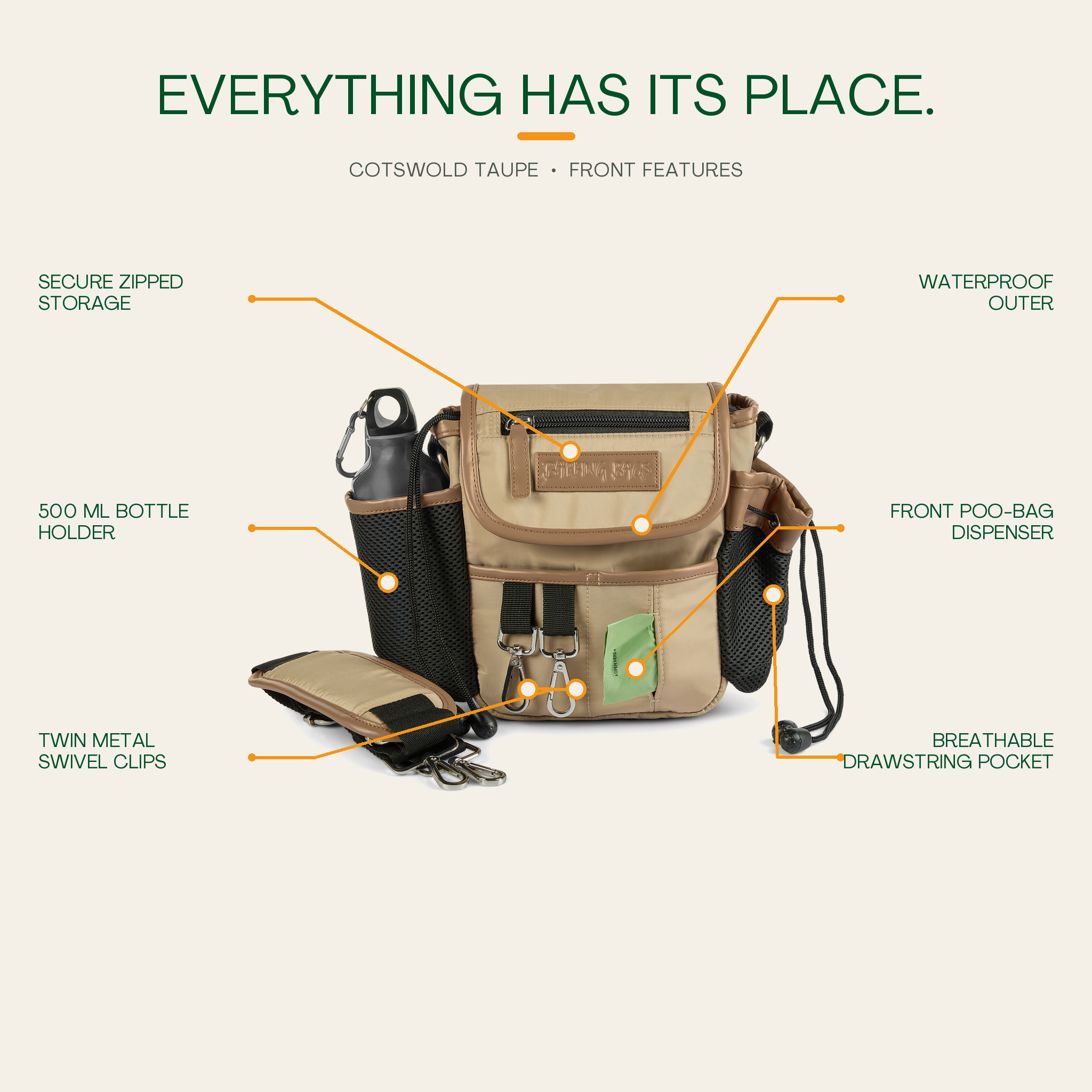
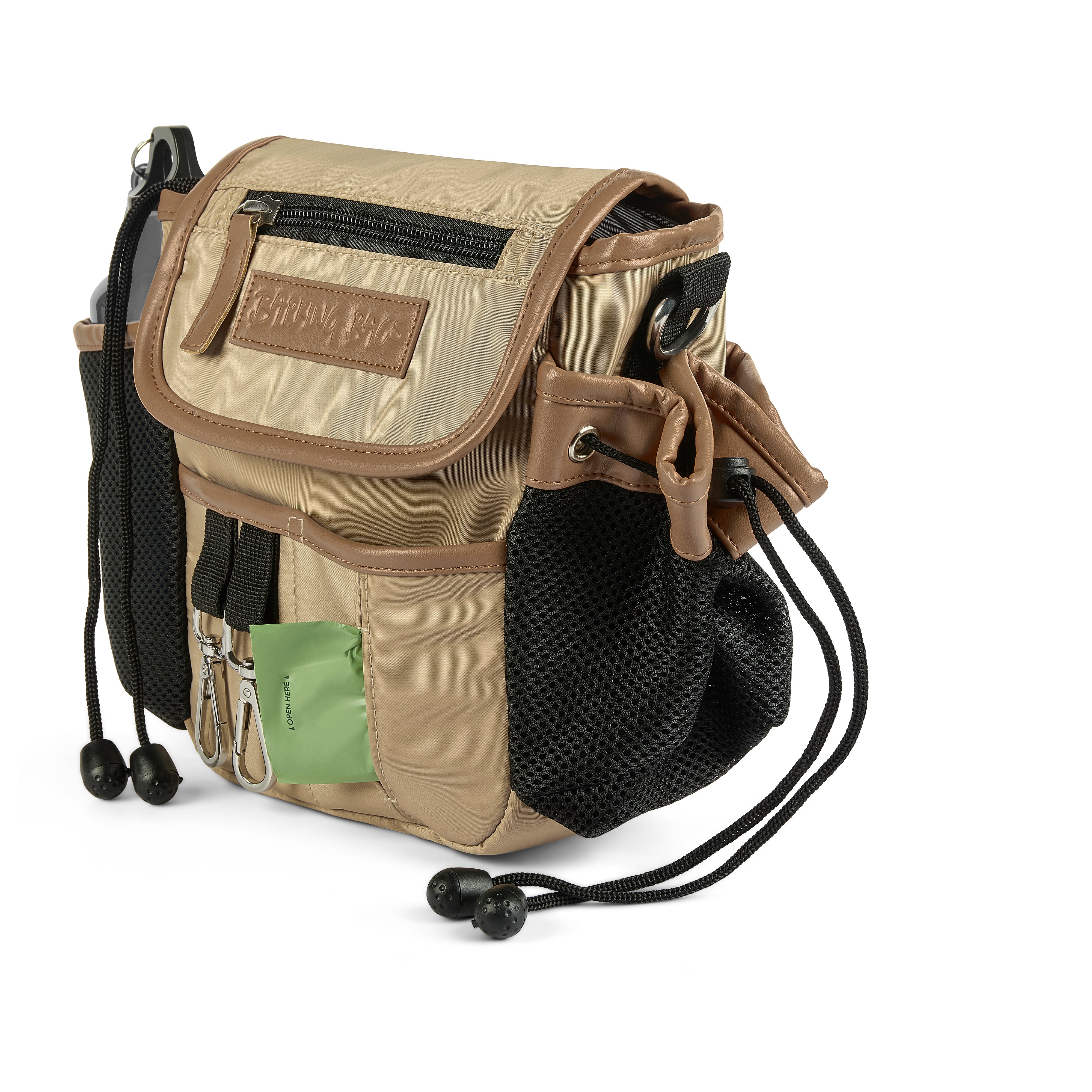
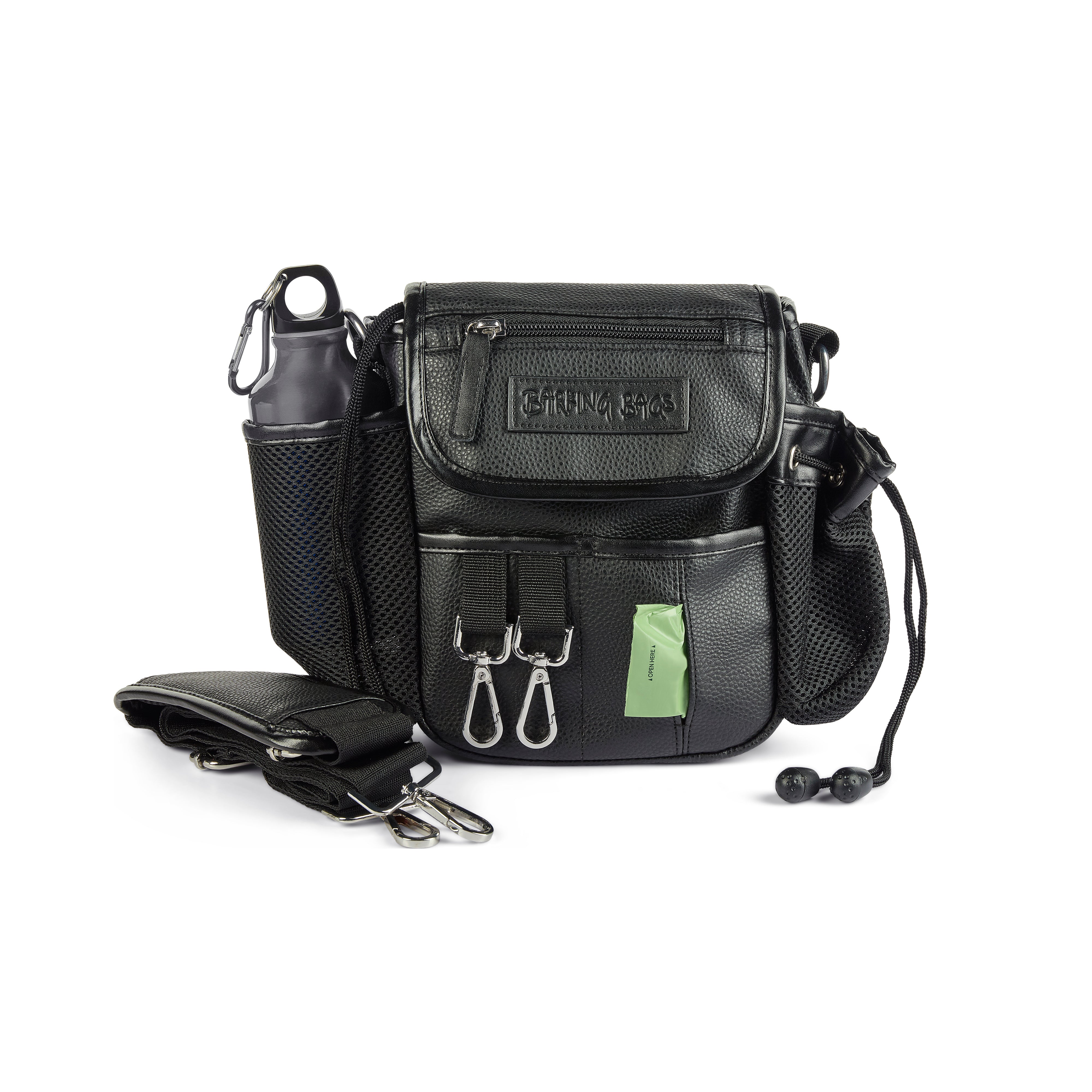
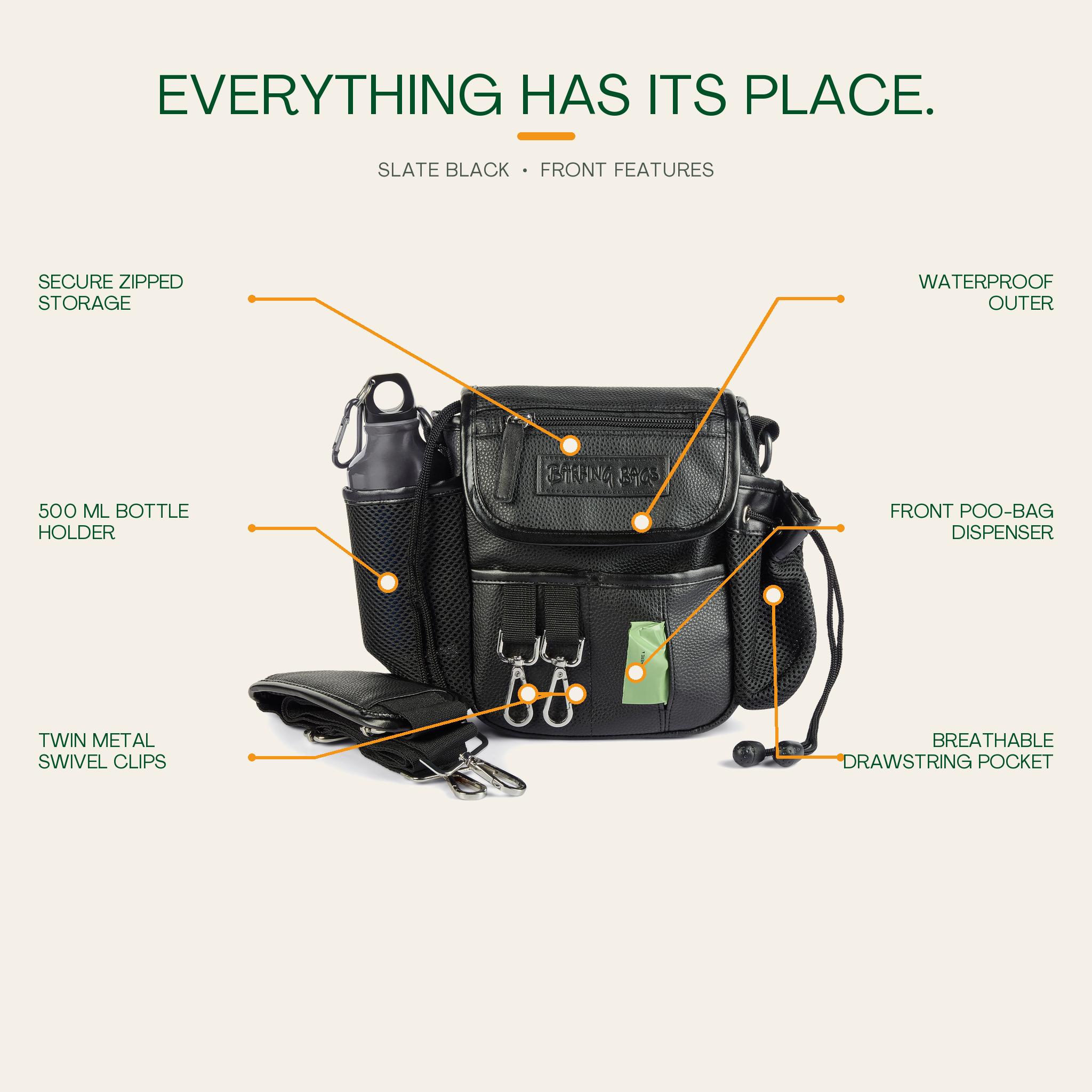
Poo bags come first for obvious reasons. Even if your route has plenty of bins, you do not want to be caught short. It is worth carrying more than you think you will need, especially if you walk more than one dog or your route is longer than usual. A dedicated dispenser or easy-access compartment helps here because fumbling for a loose roll in the rain is nobody’s idea of efficient.
Treats are just as useful, even if your dog is not formally training. They help with recall, rewarding calm behaviour around other dogs, and keeping your dog focused when distractions appear. The practical choice is a separate, wipe-clean section or treat pouch rather than dropping them into the same pocket as your keys. Nobody wants a handful of fluff-covered chicken.
Your lead or slip lead is another obvious essential, but it is worth thinking about backup. If you use a long line for training or a different lead for road walking, your bag should have space to carry whichever option fits the route. This is where organisation matters. A dedicated dog walking bag is not just about style - it stops leads, treats, and personal items becoming one tangled mess.
Phone and keys usually get treated as an afterthought, but they need their own secure place. You are probably using your phone for maps, torchlight in winter, emergency calls, or the occasional photo of your dog looking suspiciously photogenic in a muddy field. A zipped section makes more sense than an open tote or coat pocket, especially if you bend down often or walk briskly.
The extras that depend on your dog
Not every walk needs the same kit. A quick toilet break around the block and a weekend adventure across the countryside are two very different outings. Knowing what to pack for dog walks also means knowing when to scale up.
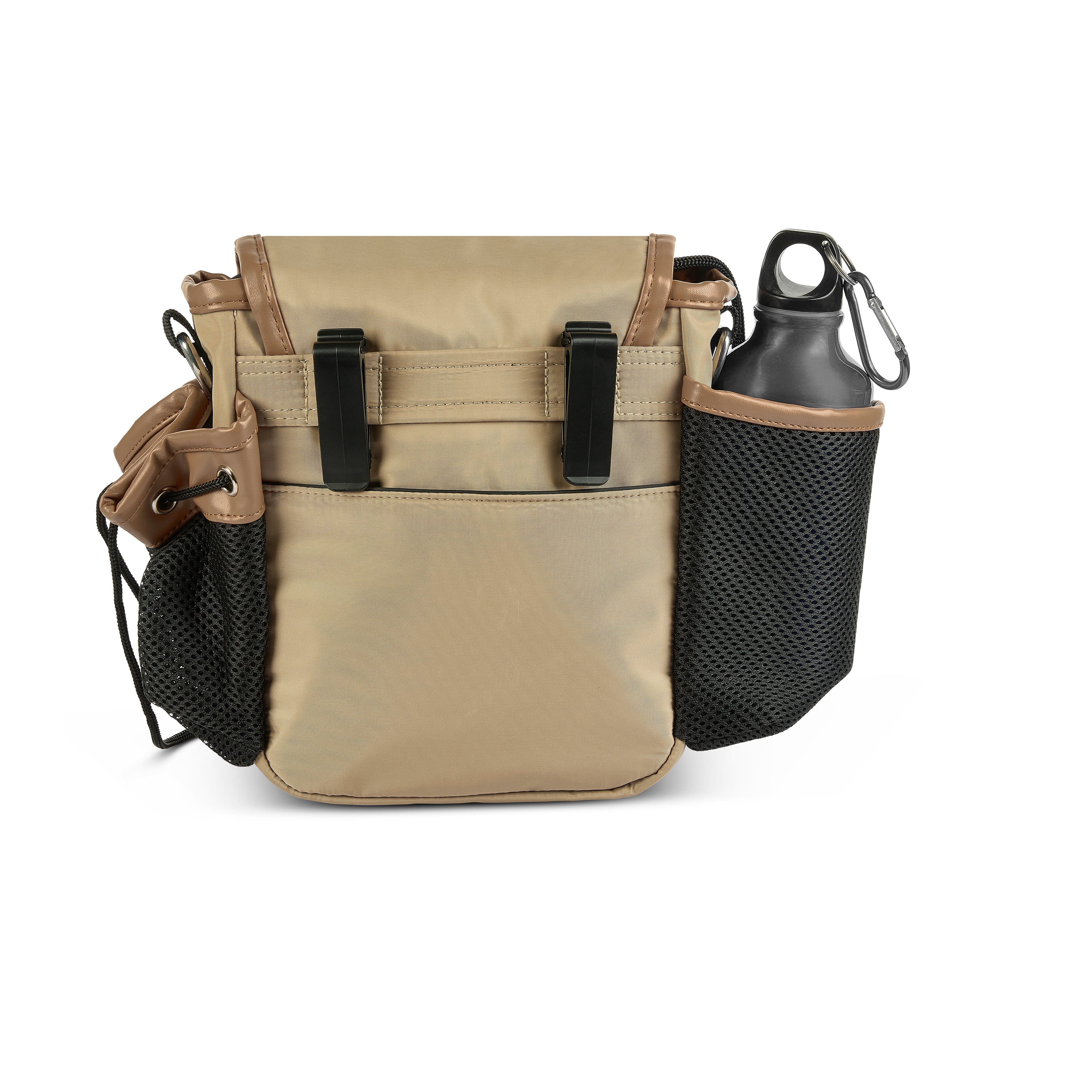
Water is one of the most common extras, particularly in warmer weather or on longer routes. Some dogs are happy to wait until they get home, while others need regular drinks. A small bottle and collapsible bowl are usually enough for one dog on a standard walk. If you are out for longer, carrying more water is the safer option, especially if your route has little shade.
For puppies, senior dogs, and dogs in training, you may need to carry more treats than usual, plus a toy or training aid. Puppies often need rewards little and often, and older dogs may need a slower pace and more comfort-focused planning. If your dog wears a coat in winter or uses any walking support gear, that needs factoring in too.
Some owners like to carry a small towel for muddy paws, and honestly, it can save your car seats and hallway floor. In the UK, where dry footpaths can turn boggy without much warning, a compact microfibre towel earns its place quickly. Paw wipes can also be useful, but they are more of a bonus than a must-have for most walks.
What to pack for longer dog walks and day trips
Once your walk stretches beyond the usual loop, your packing list changes. Longer walks need a little more thought, not because you need to pack for every possible scenario, but because being underprepared becomes much more inconvenient when home is an hour away.
For longer dog walks, start with extra water, extra poo bags, and extra treats. Those are the first things people run out of. A portable bowl is worth bringing even if your dog drinks neatly at home. Outdoors, they rarely do.
You may also want a small first aid basic. This does not need to be a full veterinary setup, but a few essentials for minor issues can be reassuring if you are walking in woodland, fields, or more remote areas. Think practical, not excessive.
If the weather is changeable, which is standard rather than exceptional in Britain, it helps to pack with the forecast in mind but not trust it completely. A lightweight waterproof, spare layer, or small towel can all justify their space depending on the season. The same goes for a torch or reflective accessory in autumn and winter, when even afternoon walks can end in low light.
For dogs with specific needs, you may need medication, cooling accessories, or a little more food than usual. This is especially true if you are making a day of it. The point is not to overpack. It is to match your bag to the walk.
Why storage matters more than most people think
Most people do not struggle because they own the wrong items. They struggle because they have nowhere sensible to put them. That is why the real answer to what to pack for dog walks is tied closely to how you carry it.
Improvised storage works until it doesn’t. You start with treats in one pocket, keys in another, bags clipped somewhere random, and your phone in your hand. Then it rains, your dog spots a squirrel, and suddenly your entire system falls apart. Daily dog walking asks a lot from a bag. It needs to cope with food, mess, movement, weather, and your own essentials, all at once.
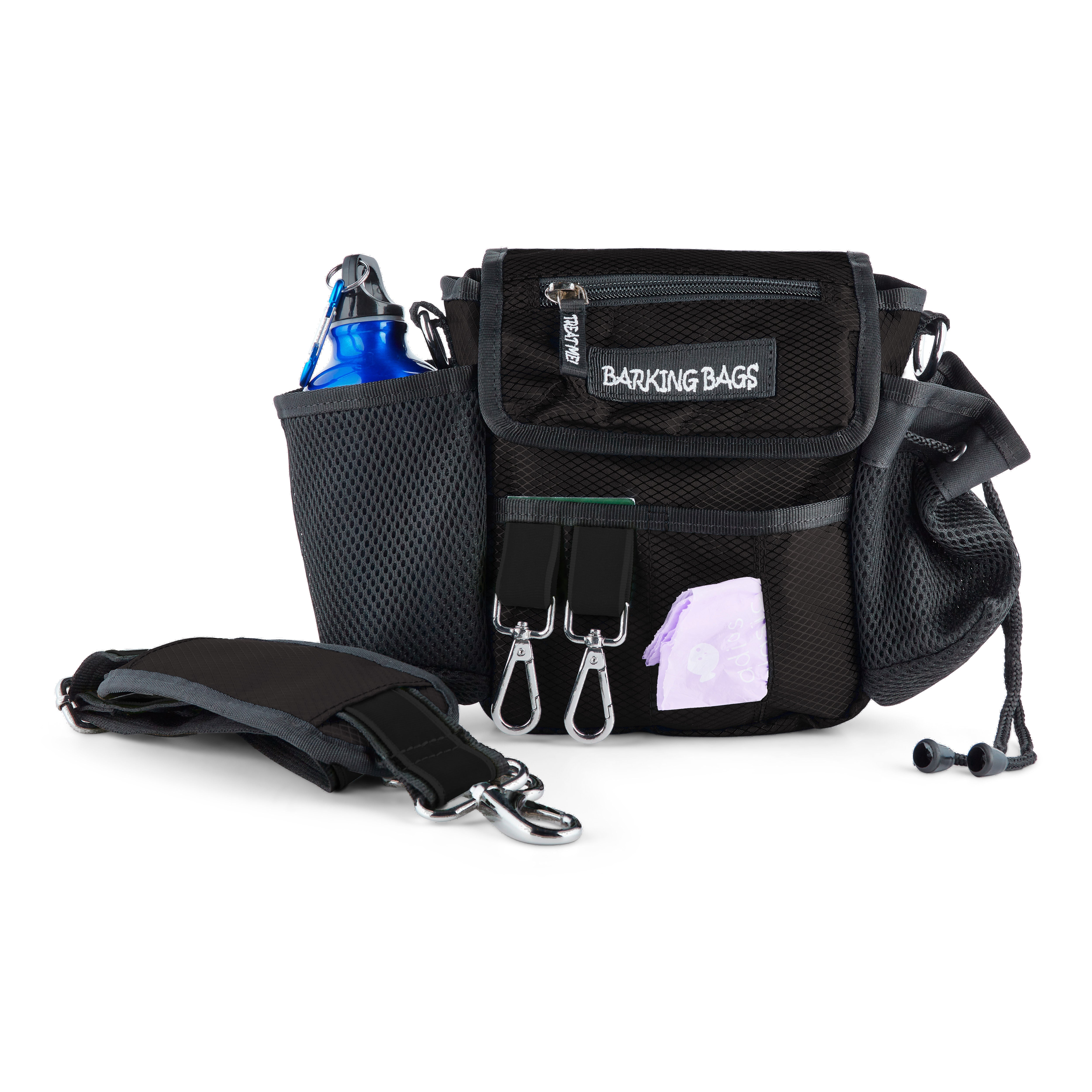
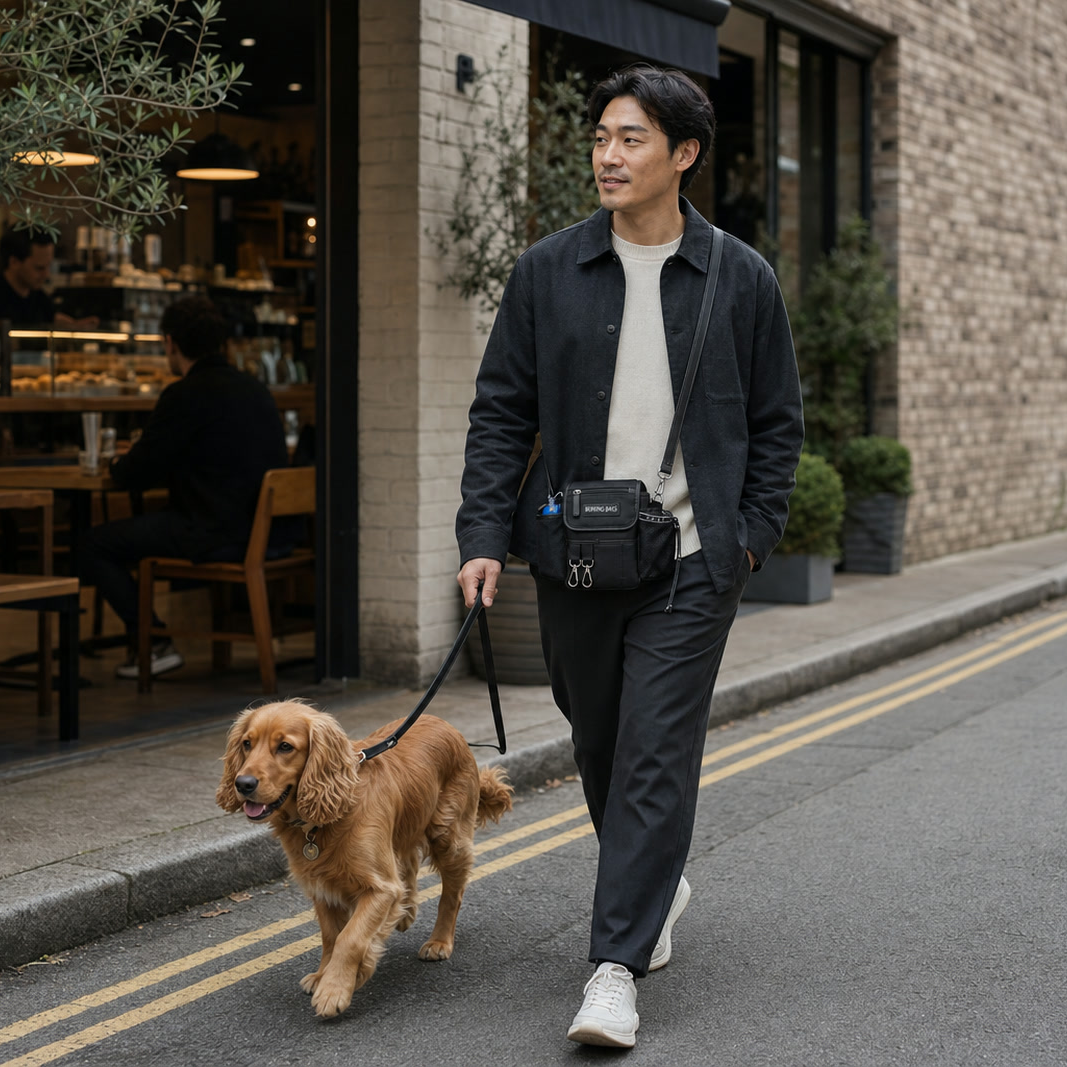
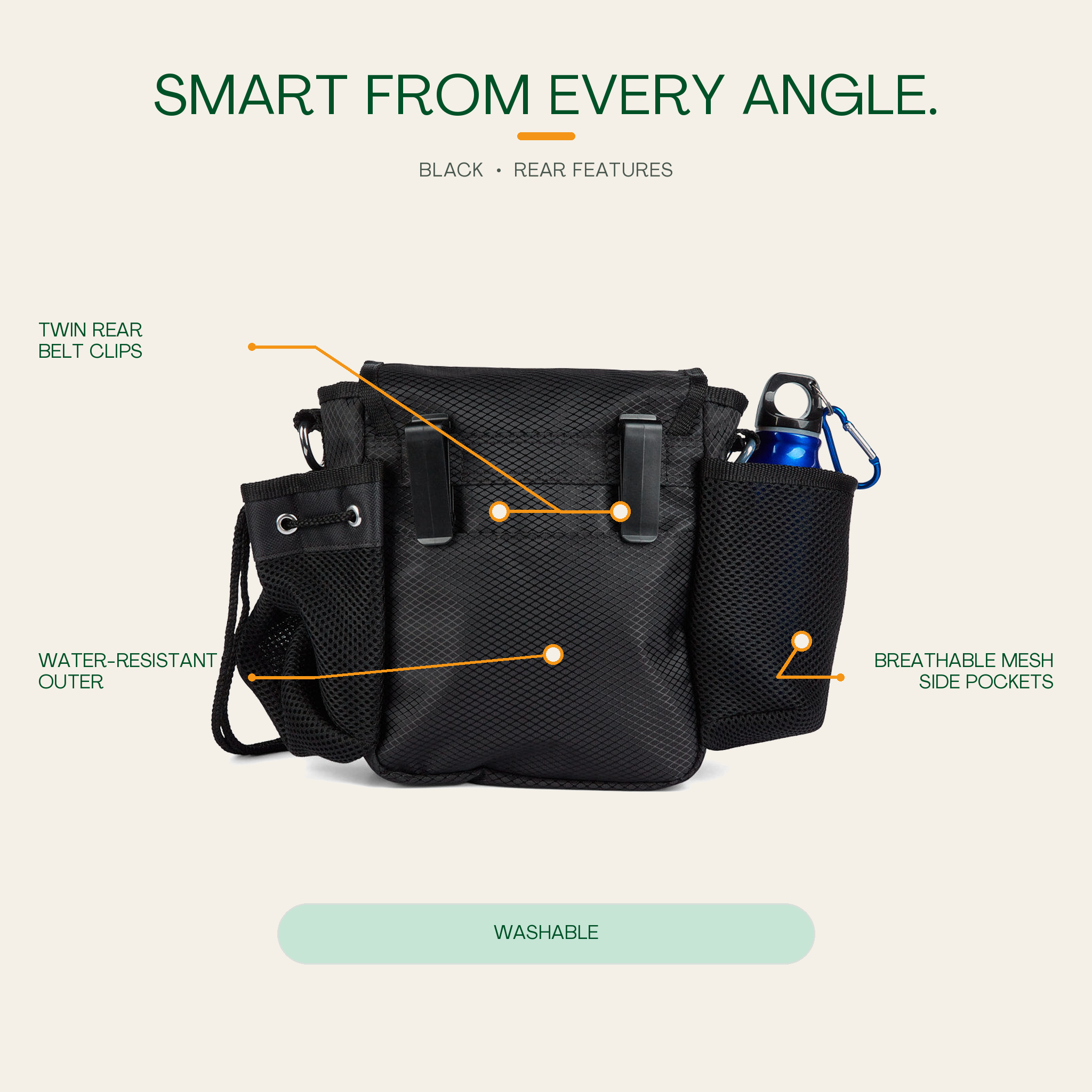
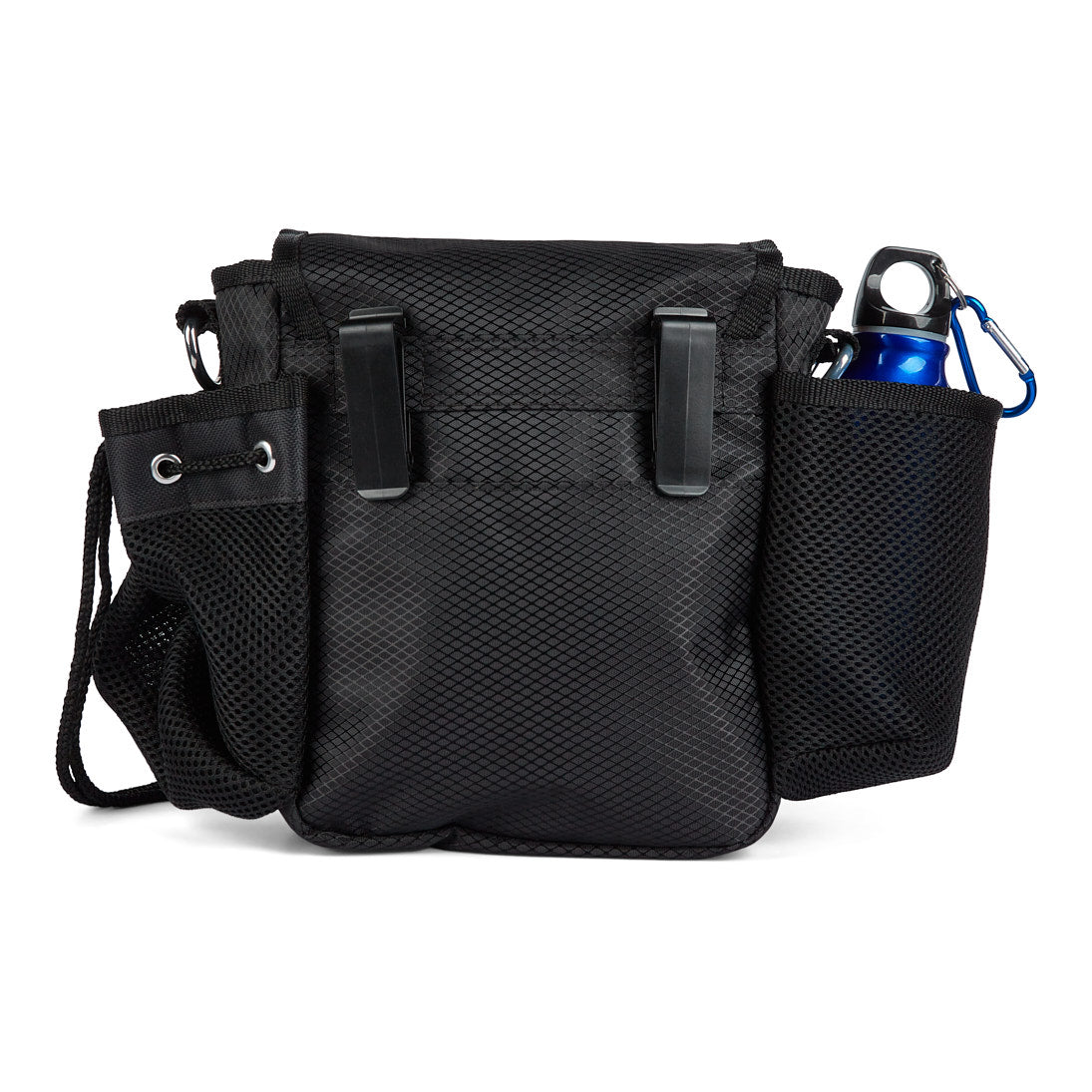
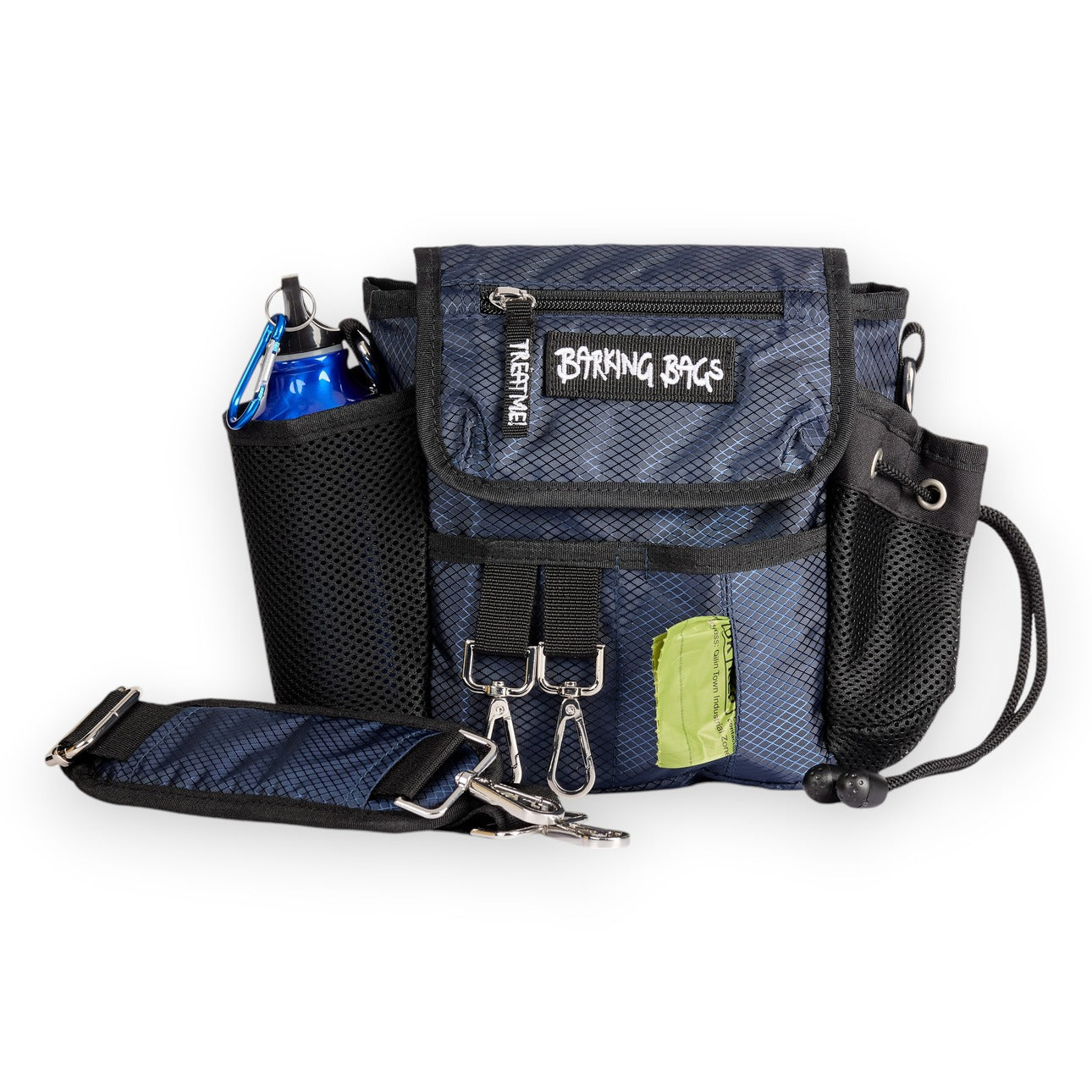
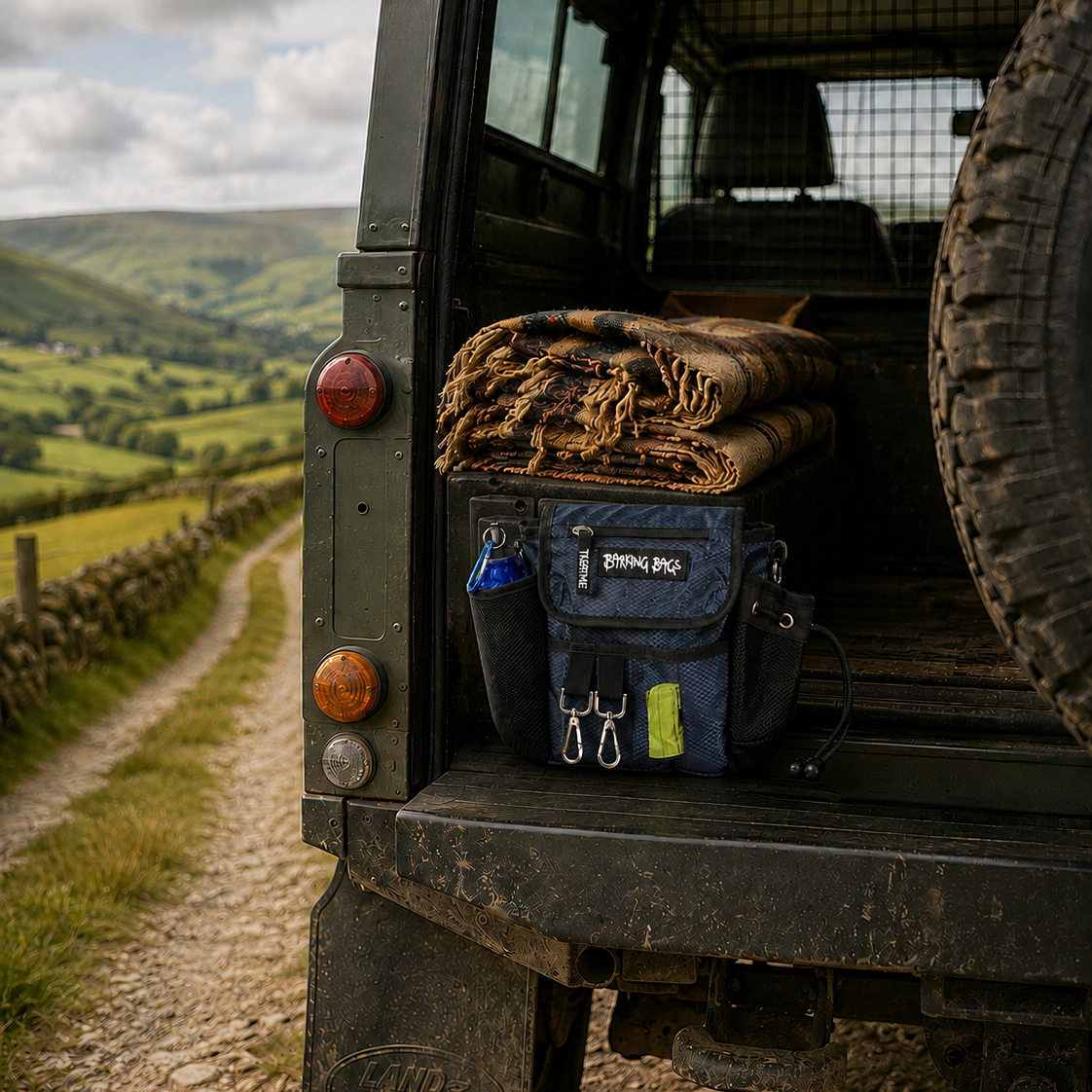
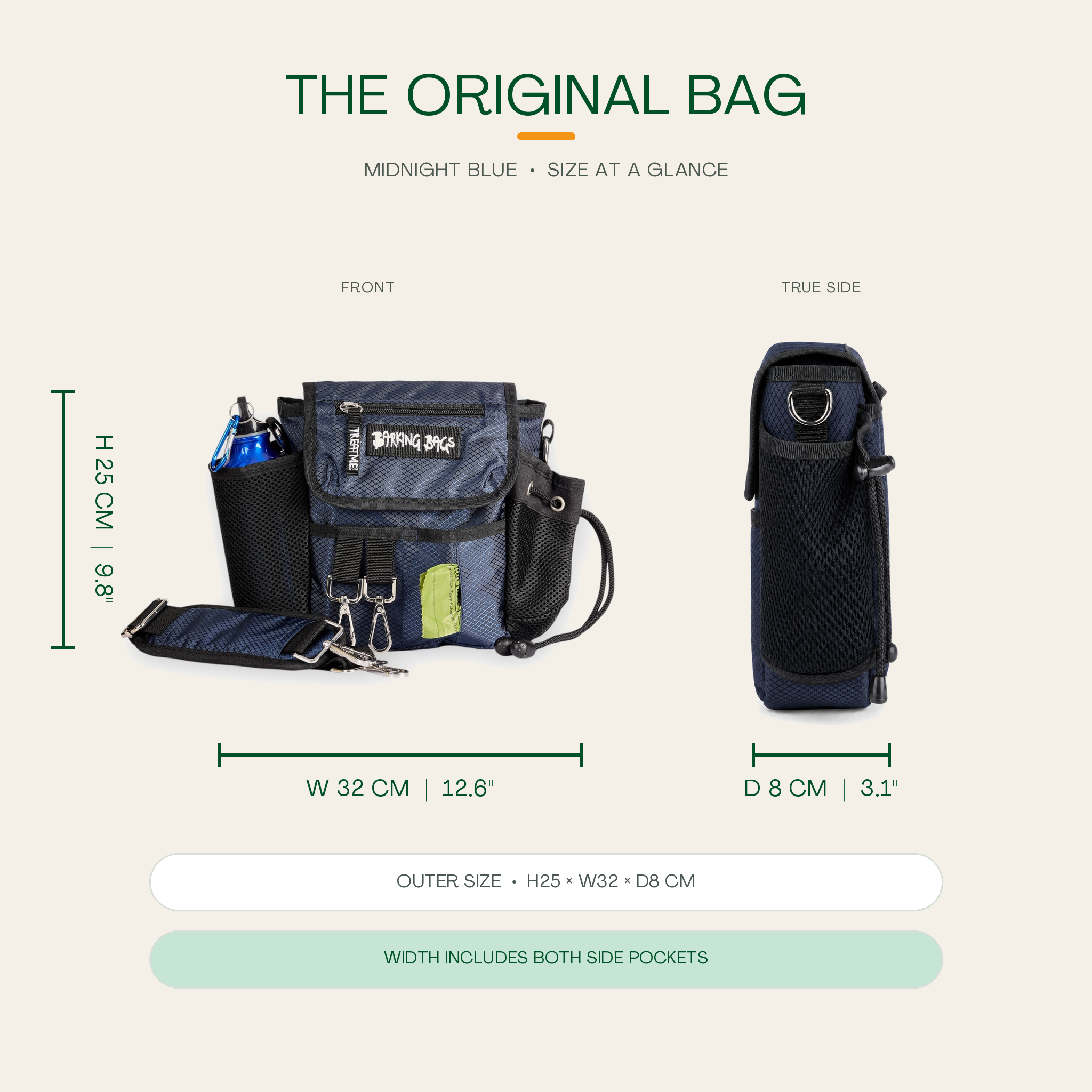
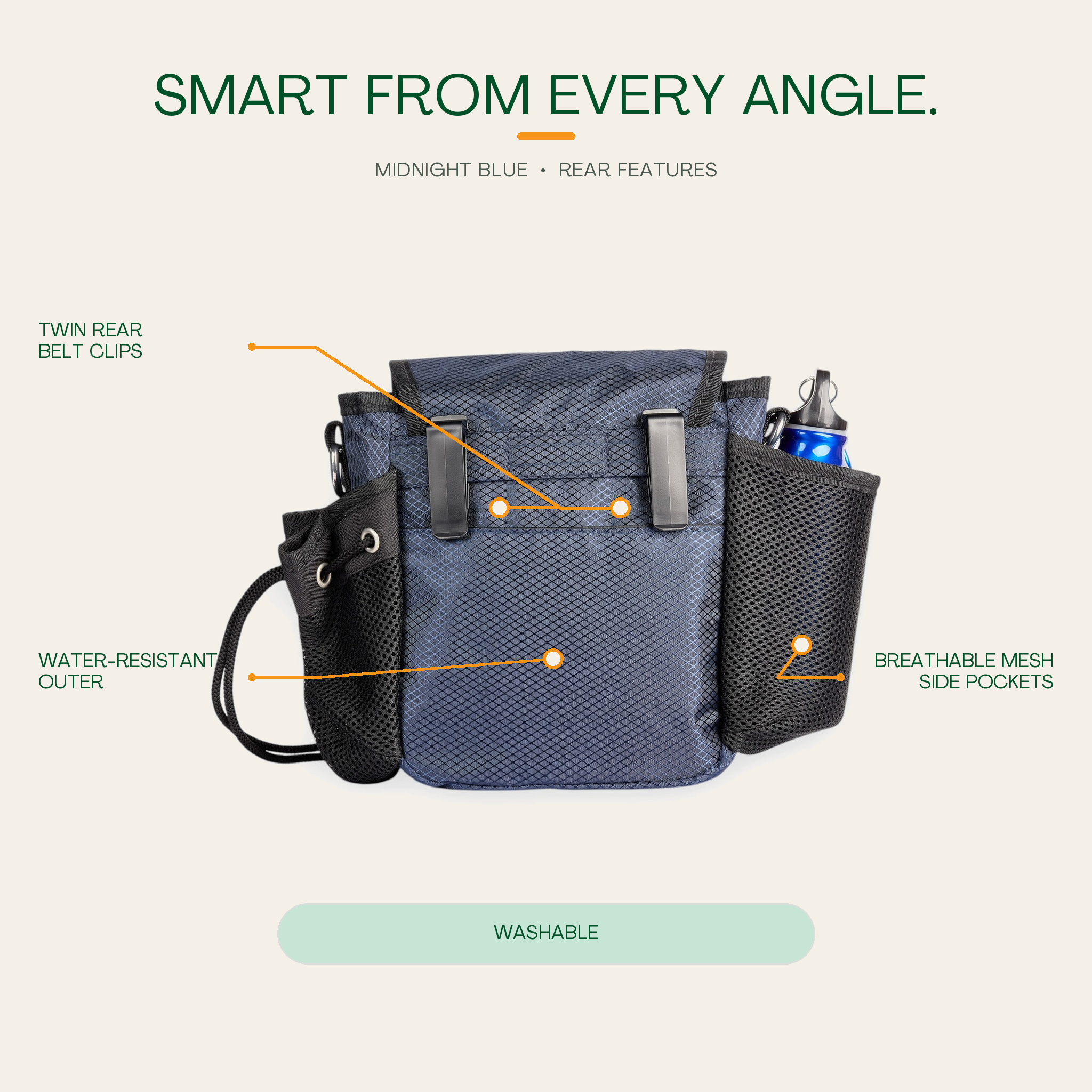
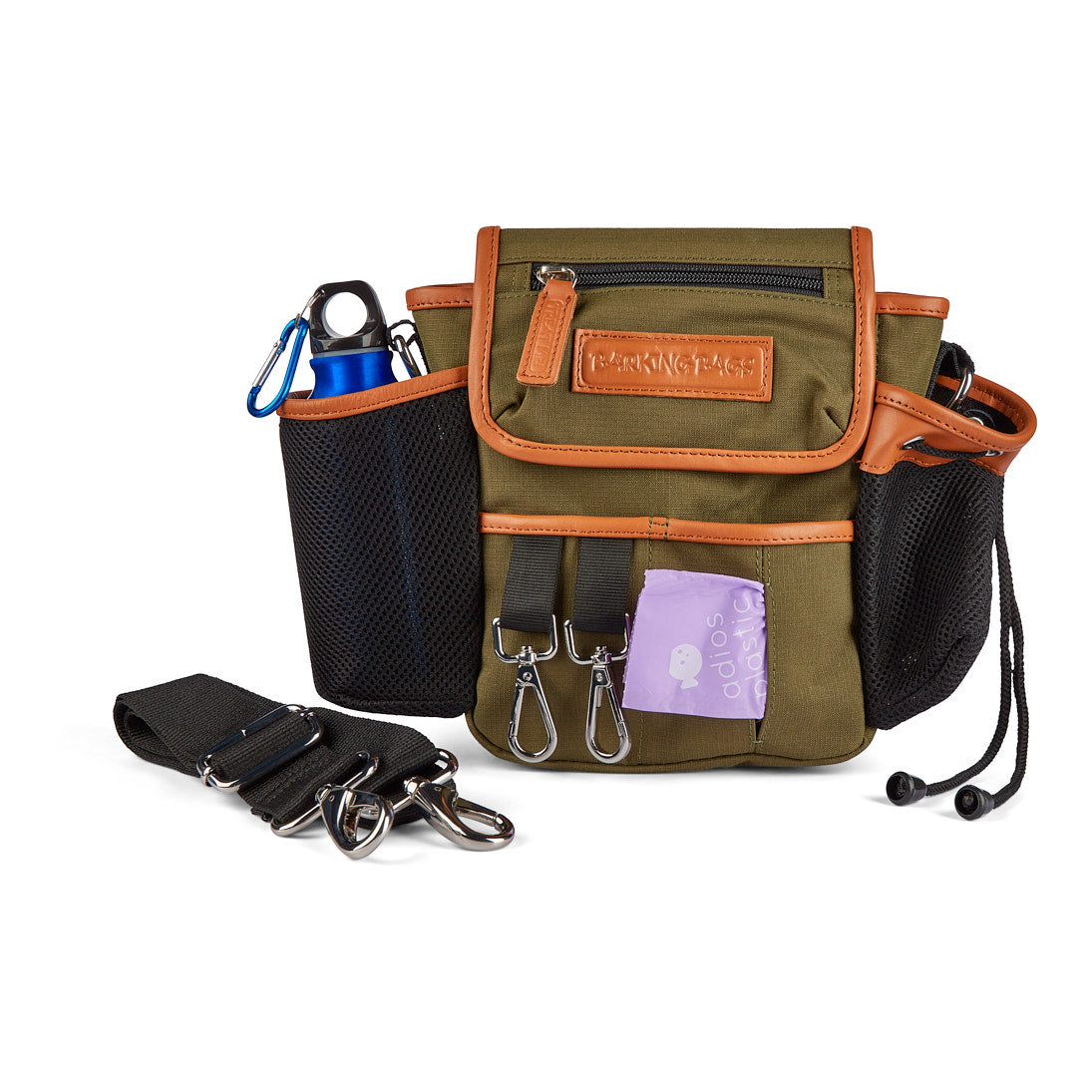
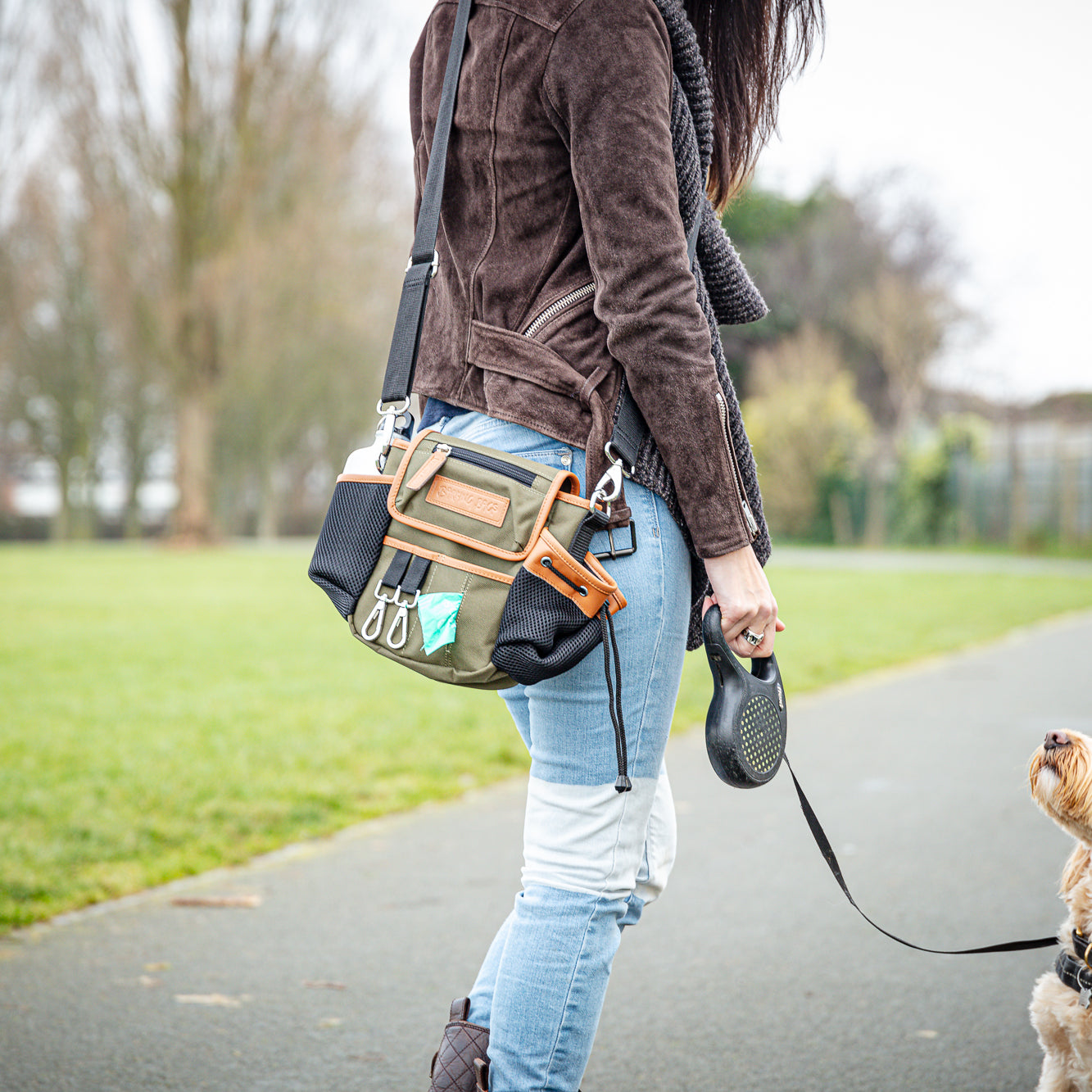
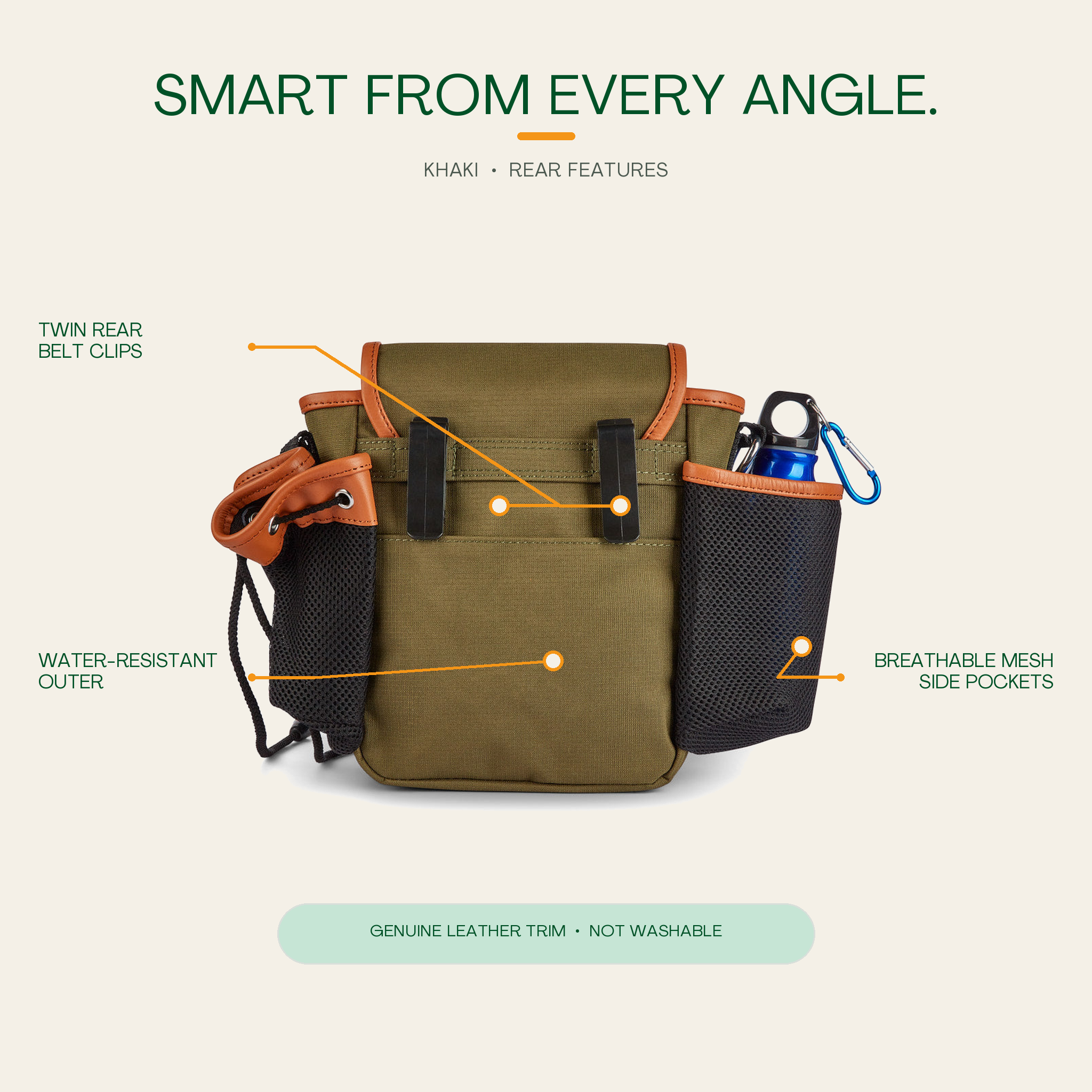
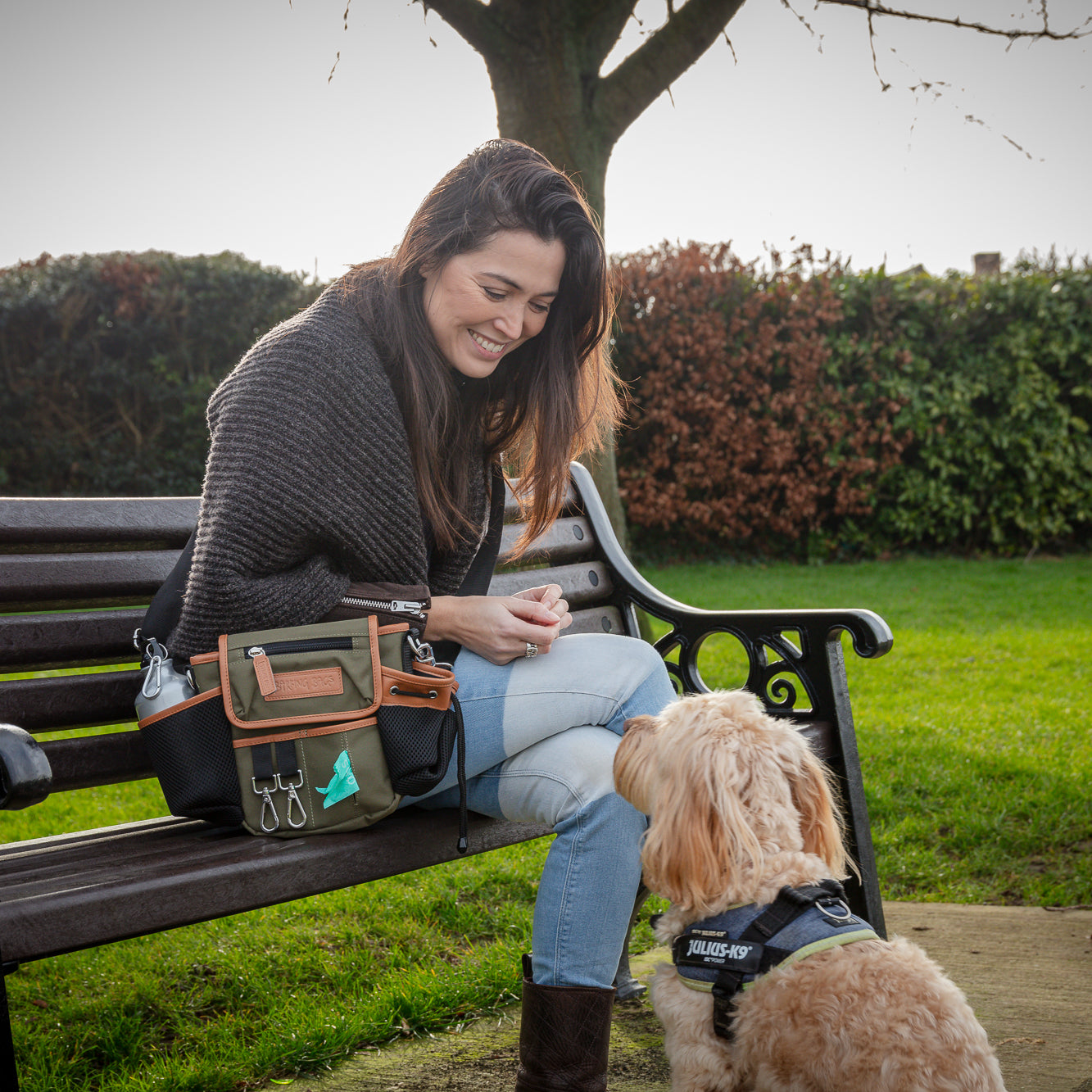
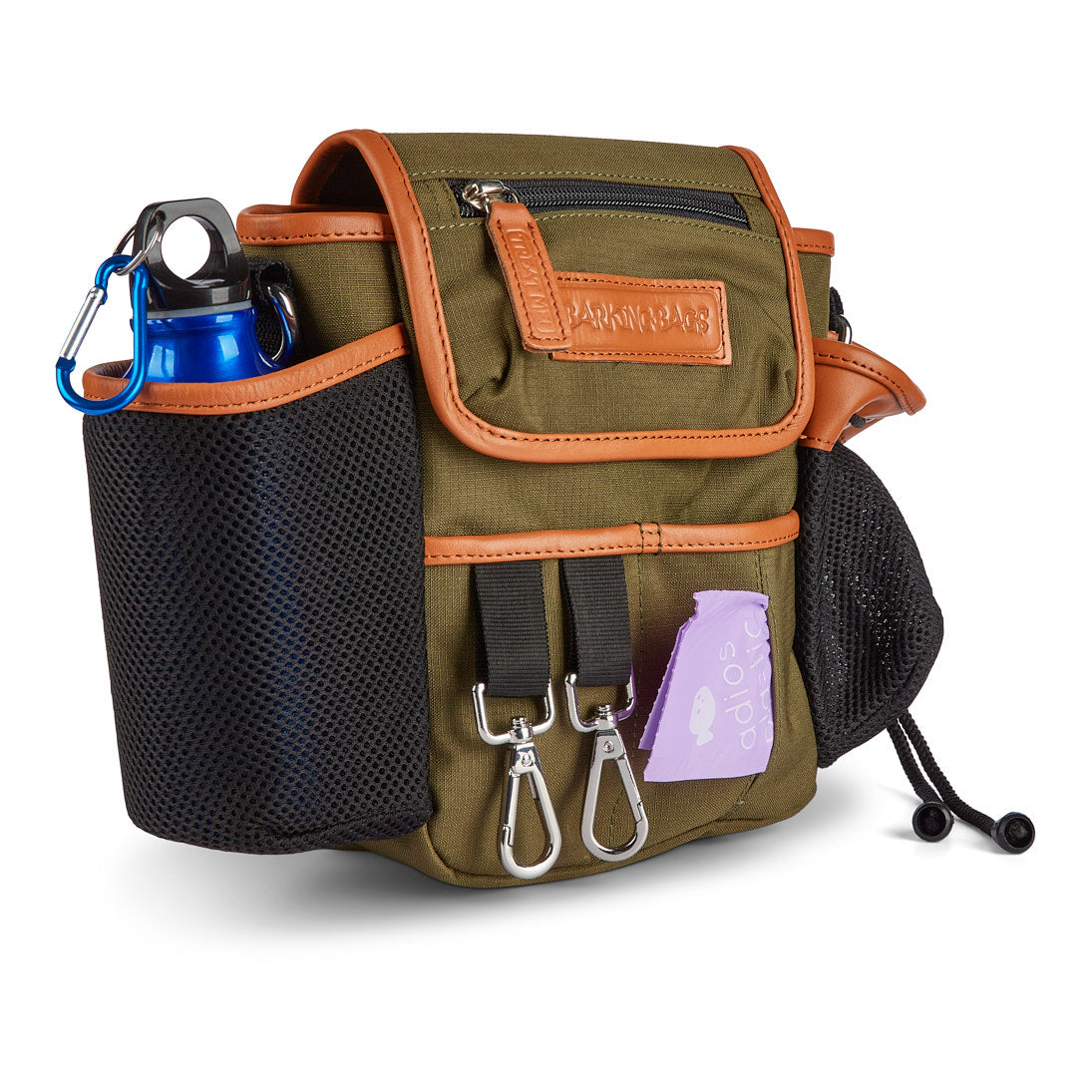
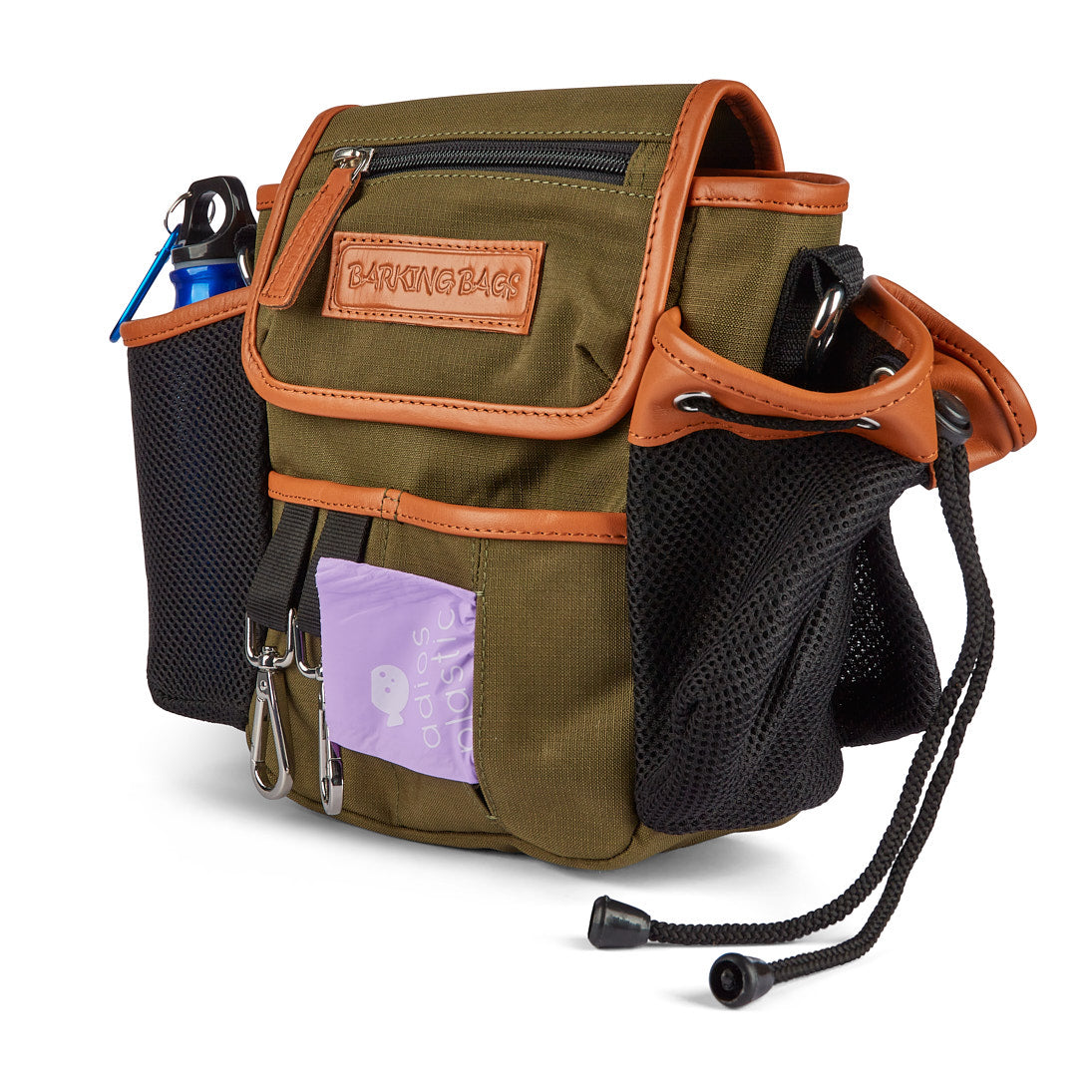
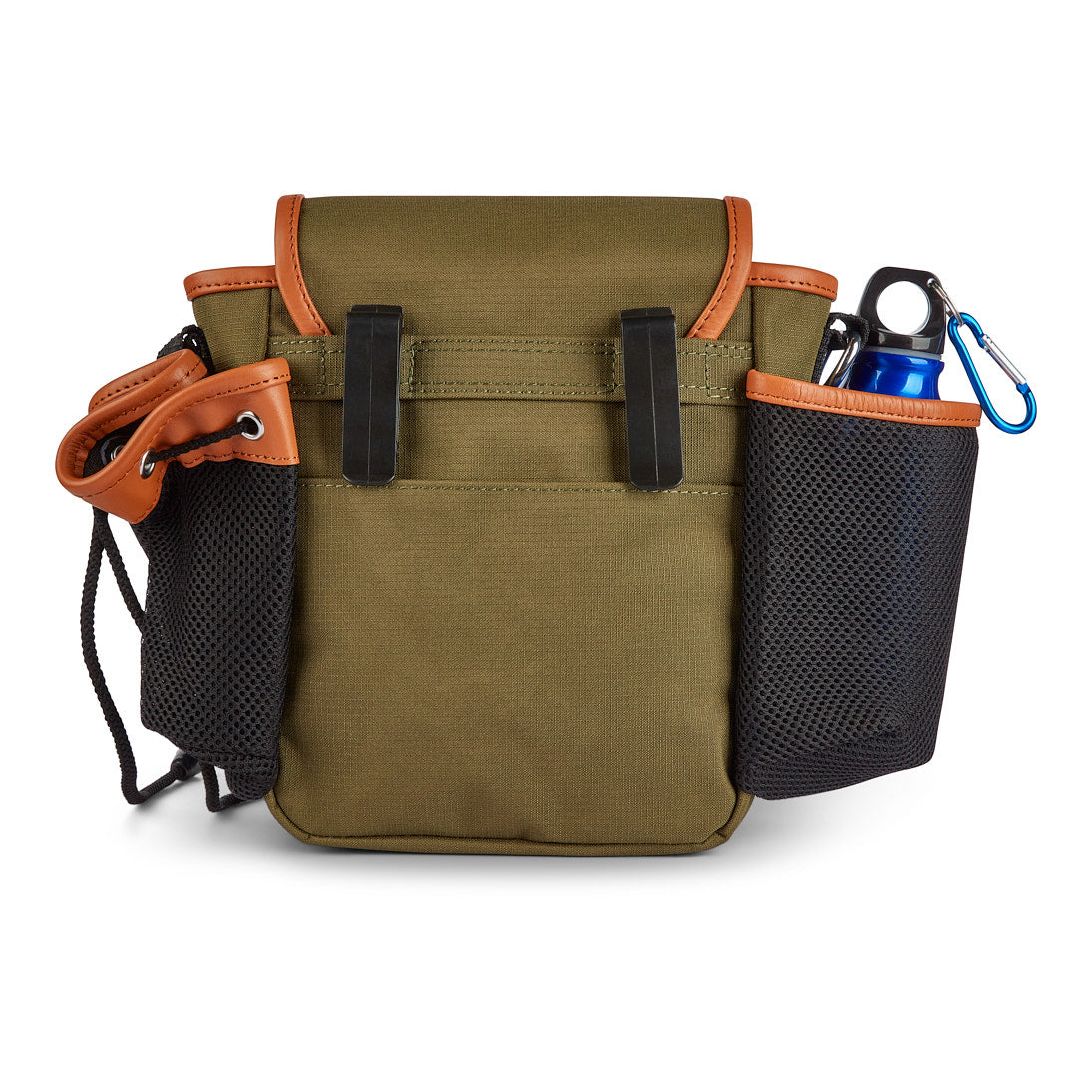
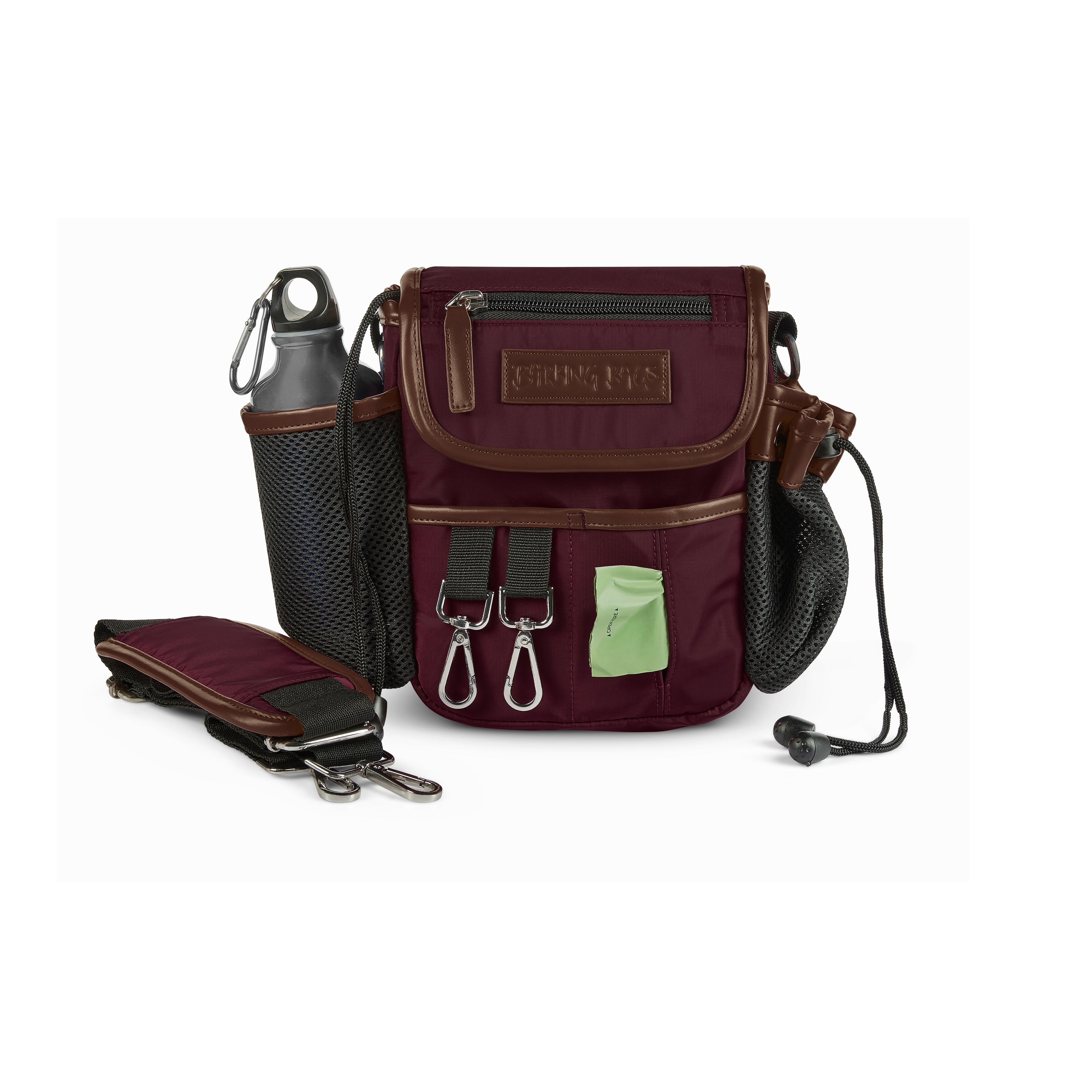
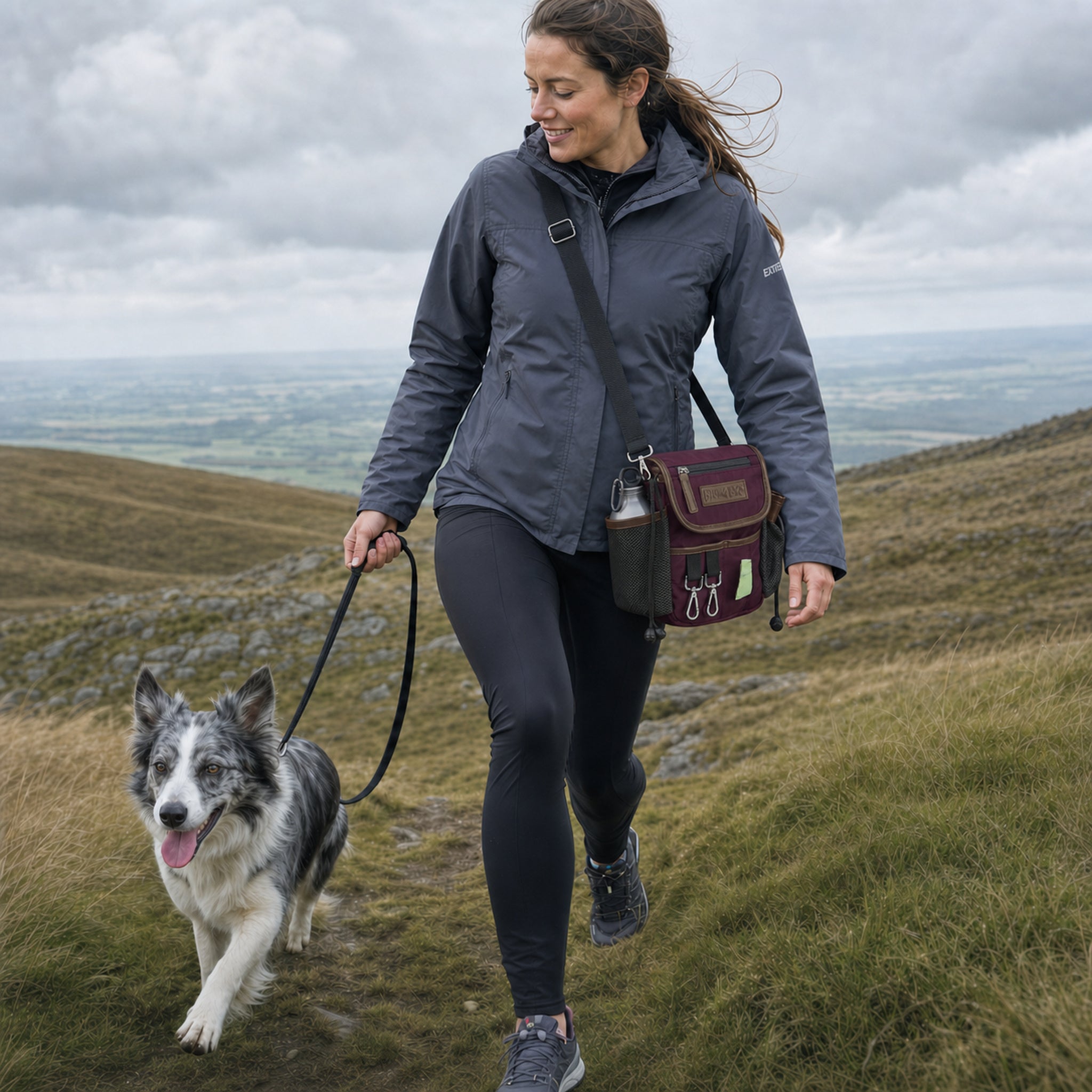
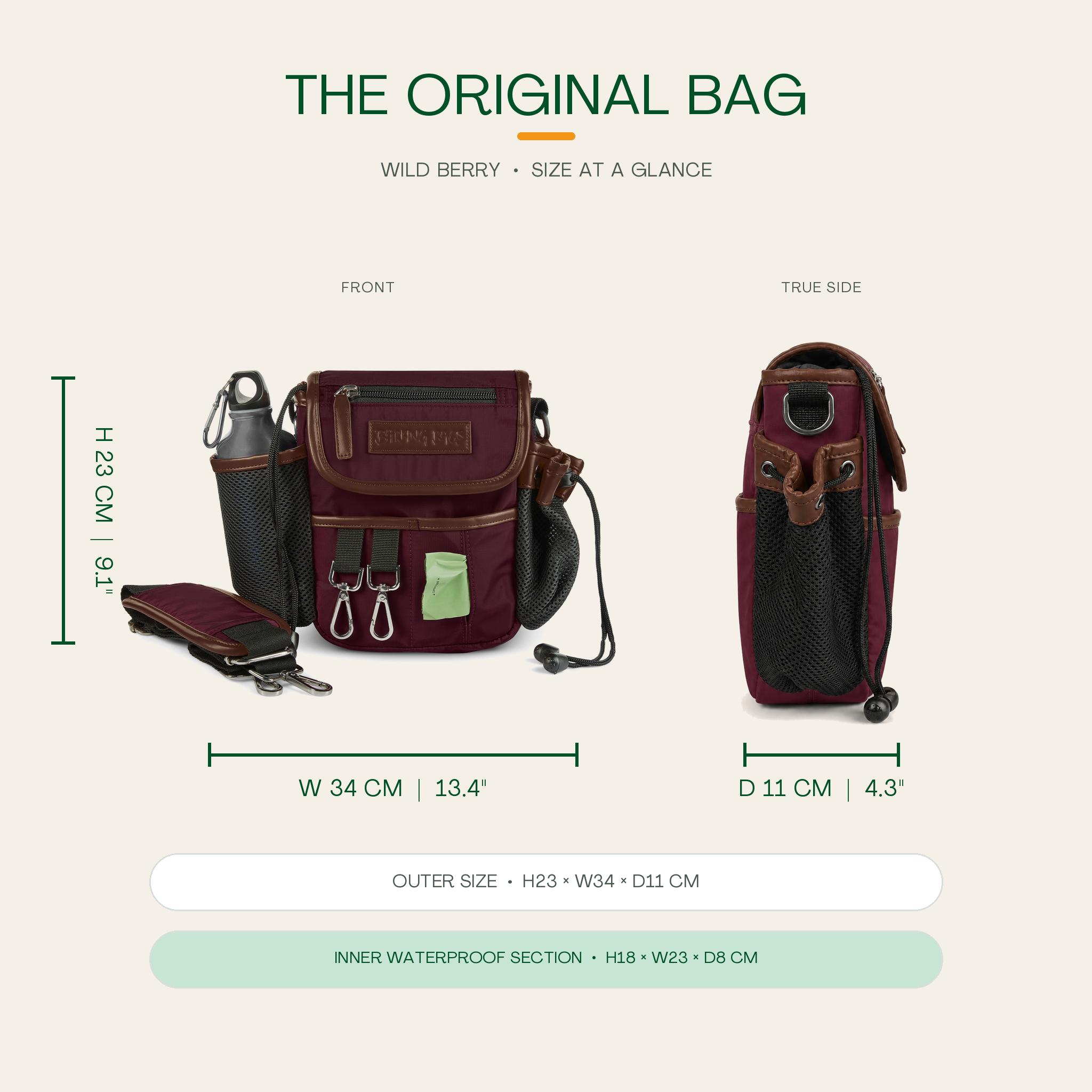
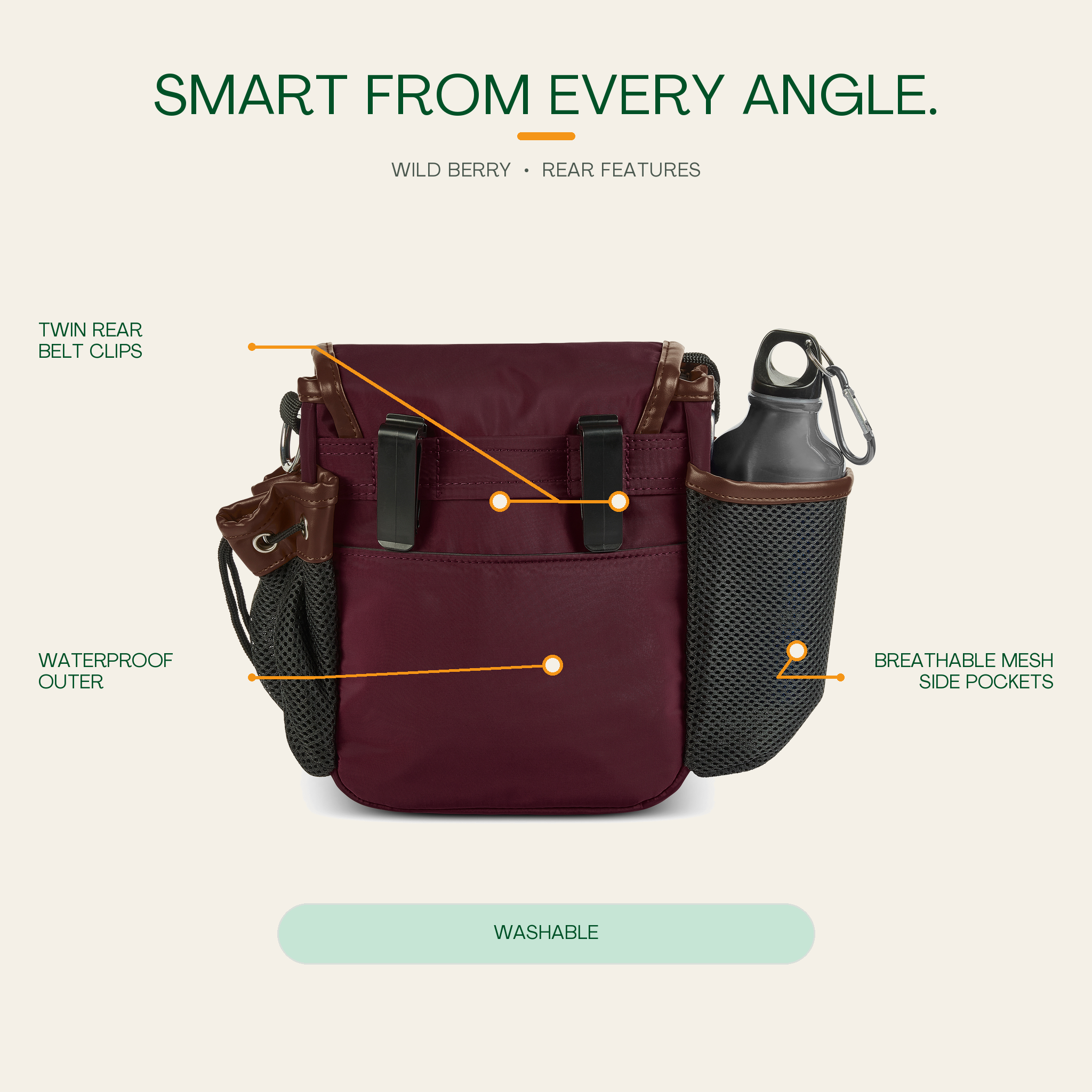
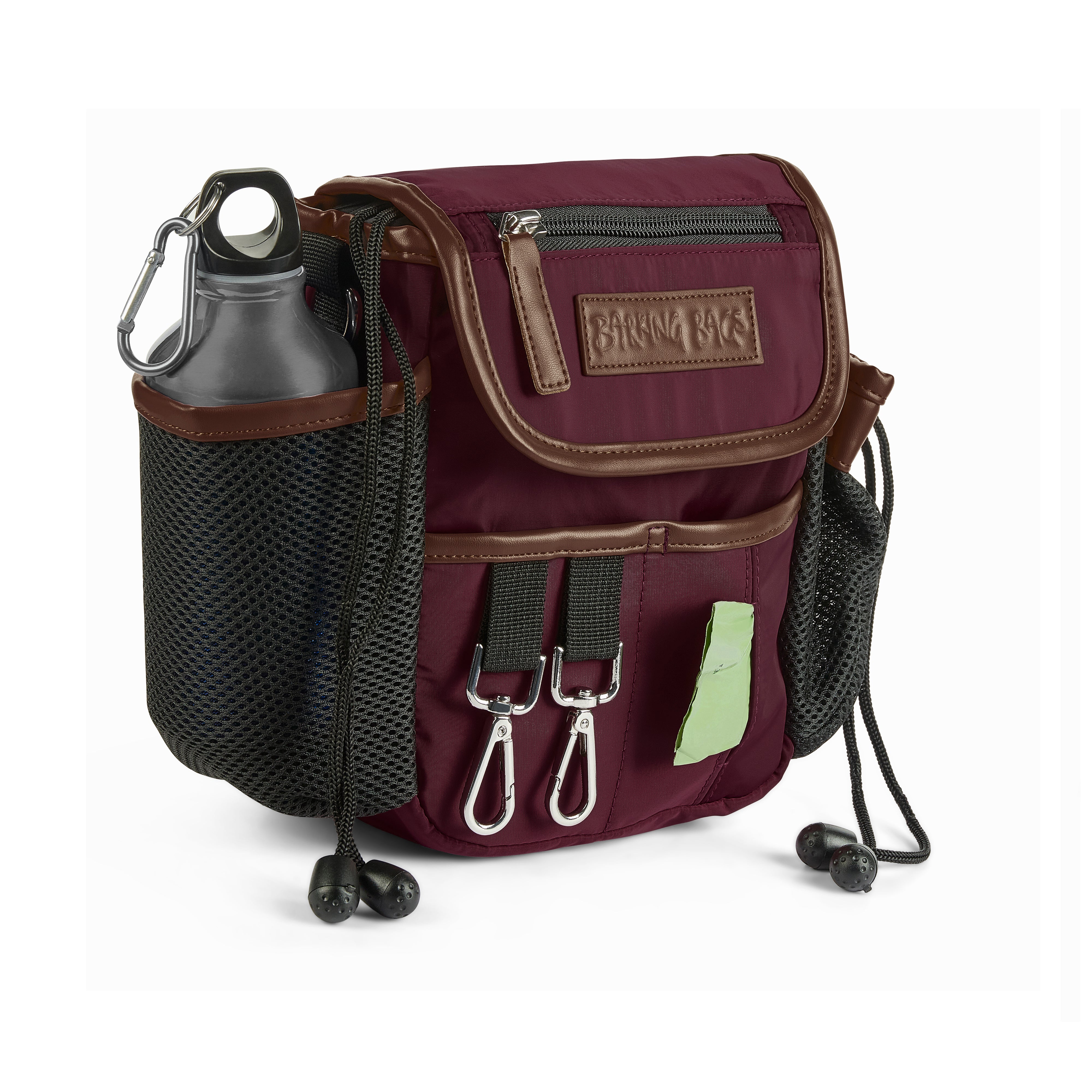
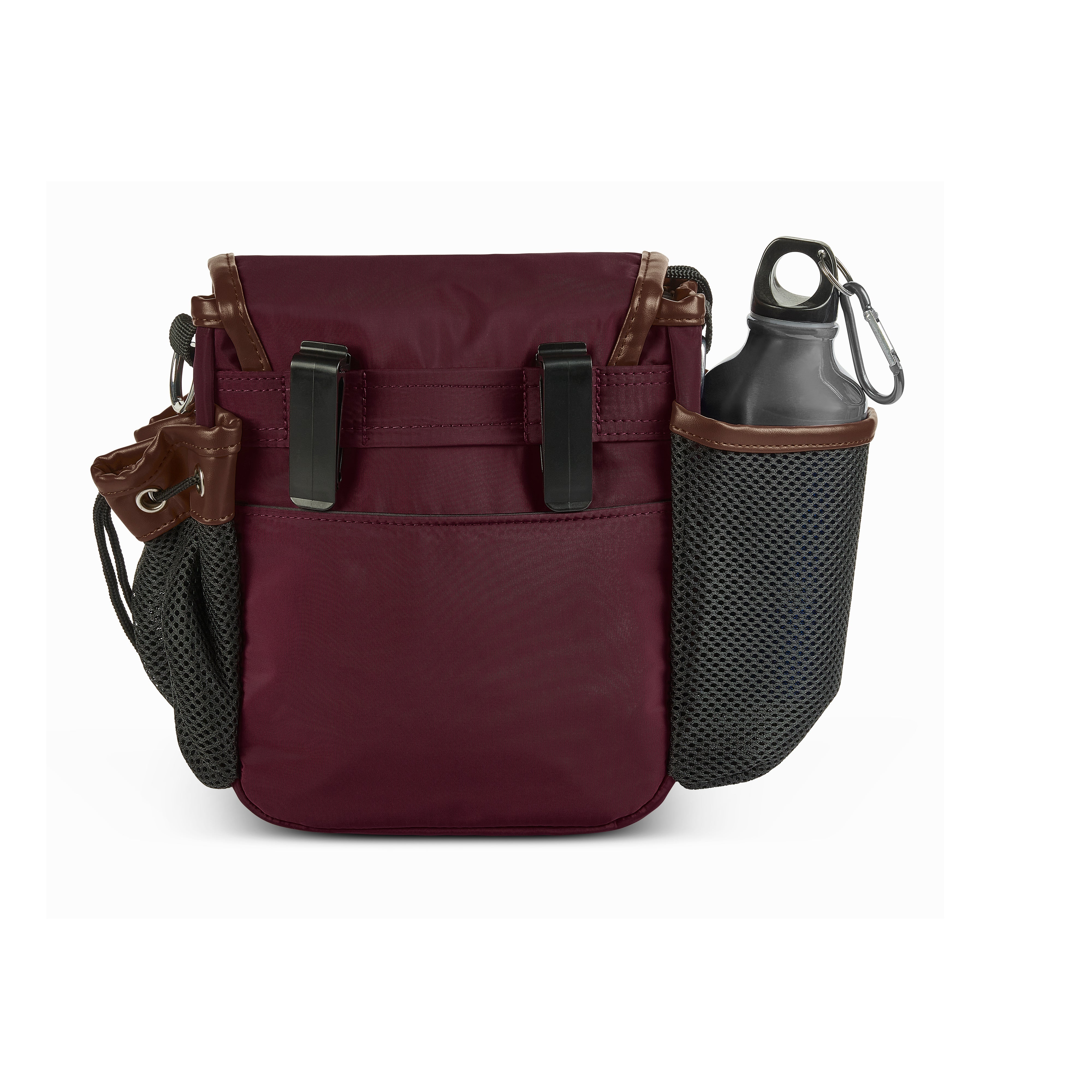
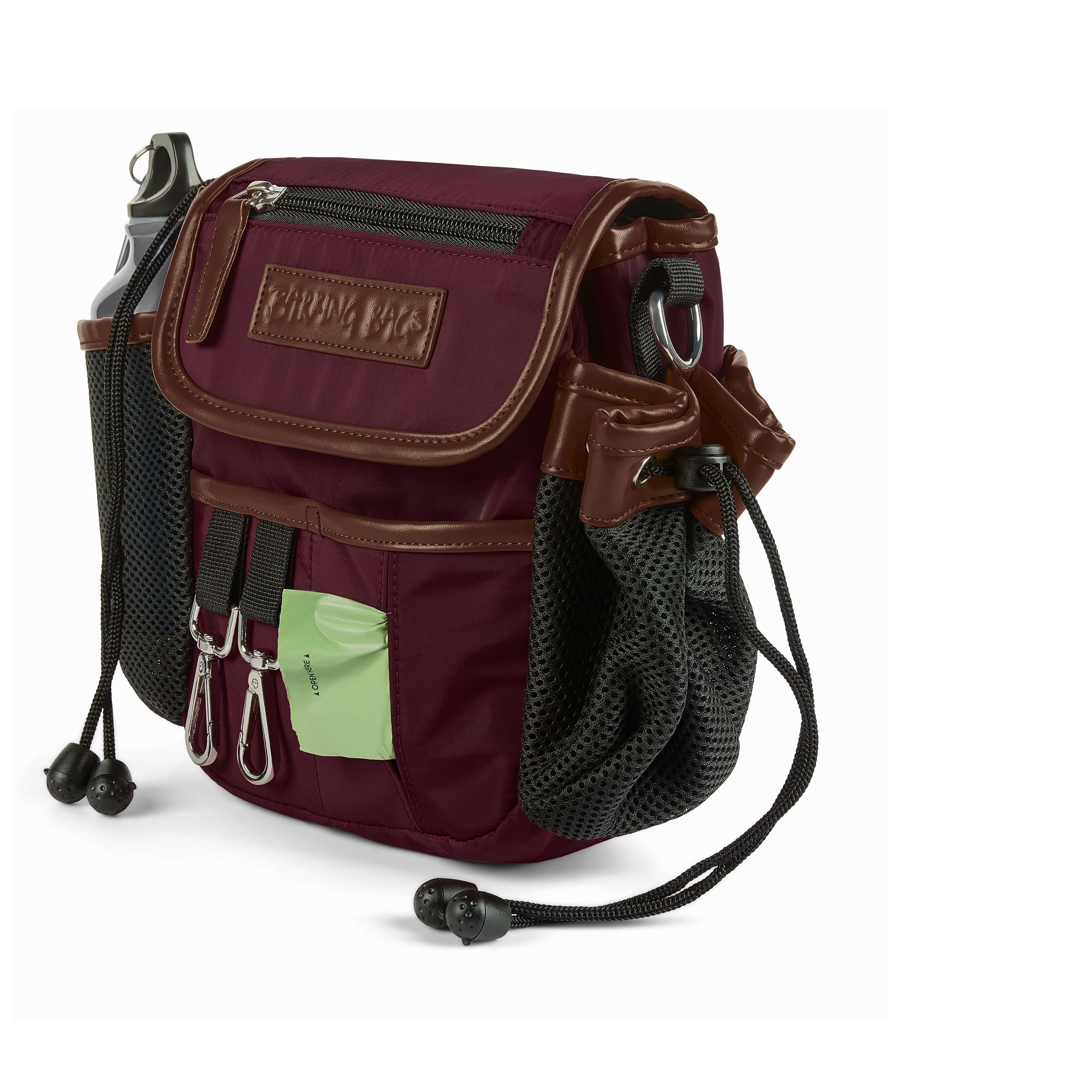
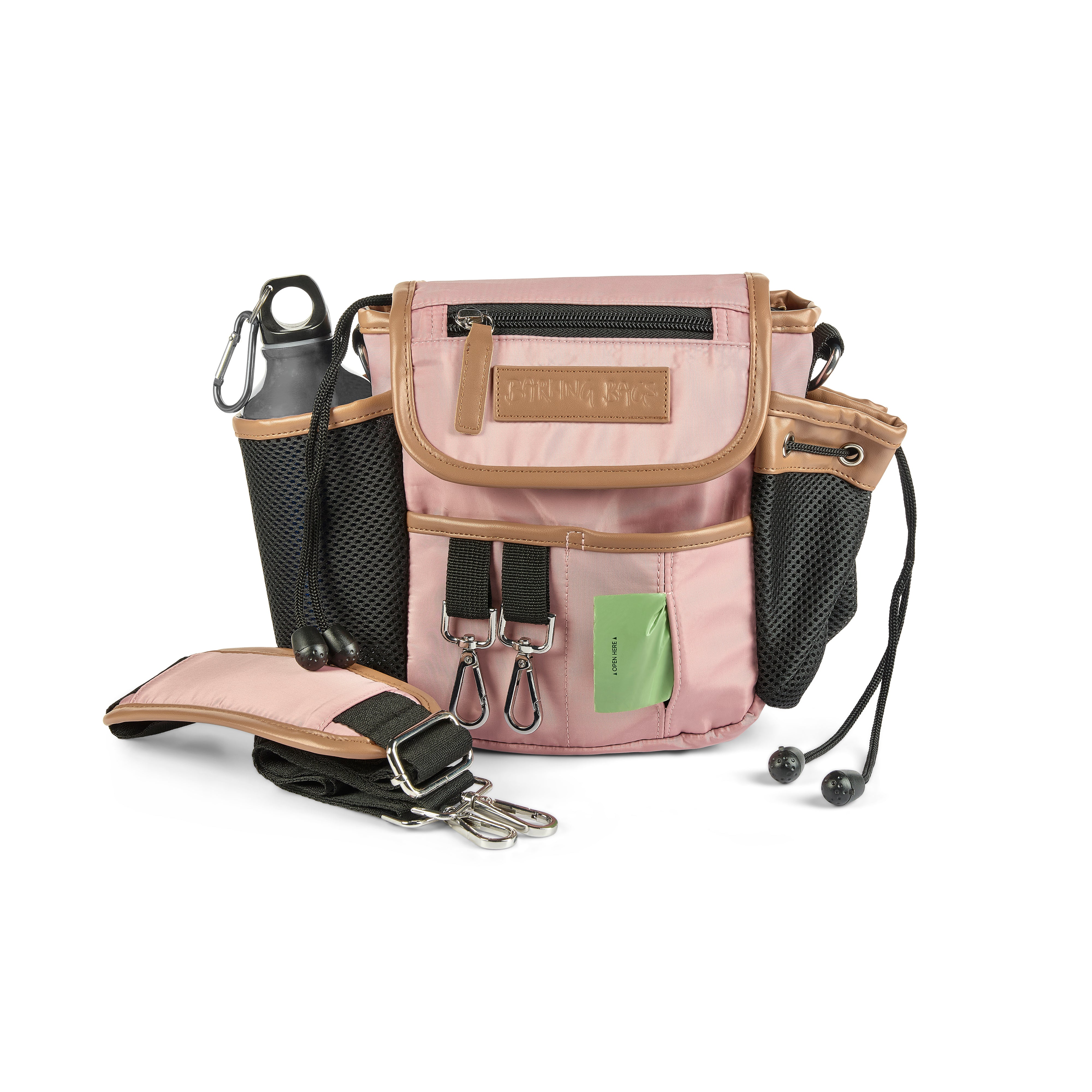
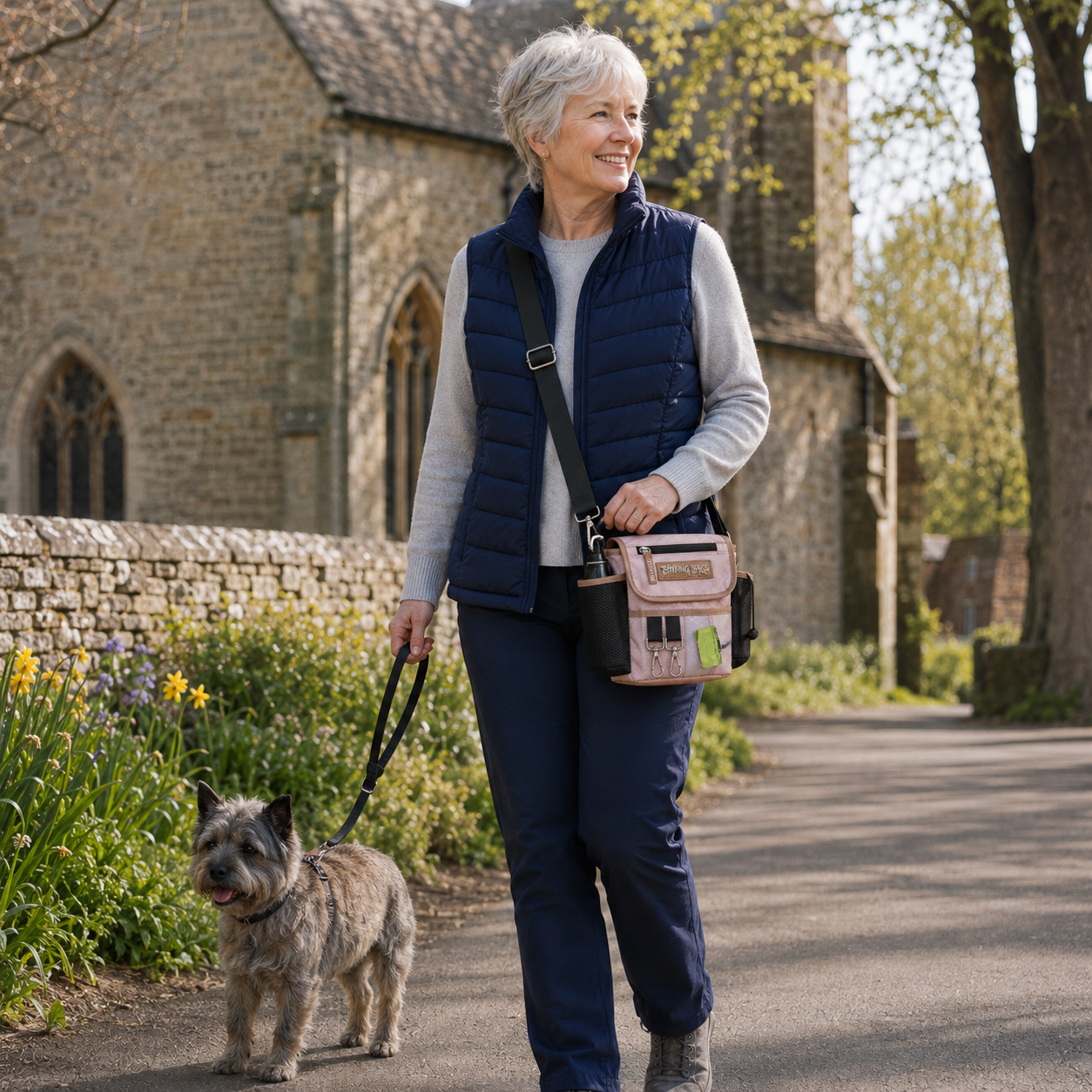
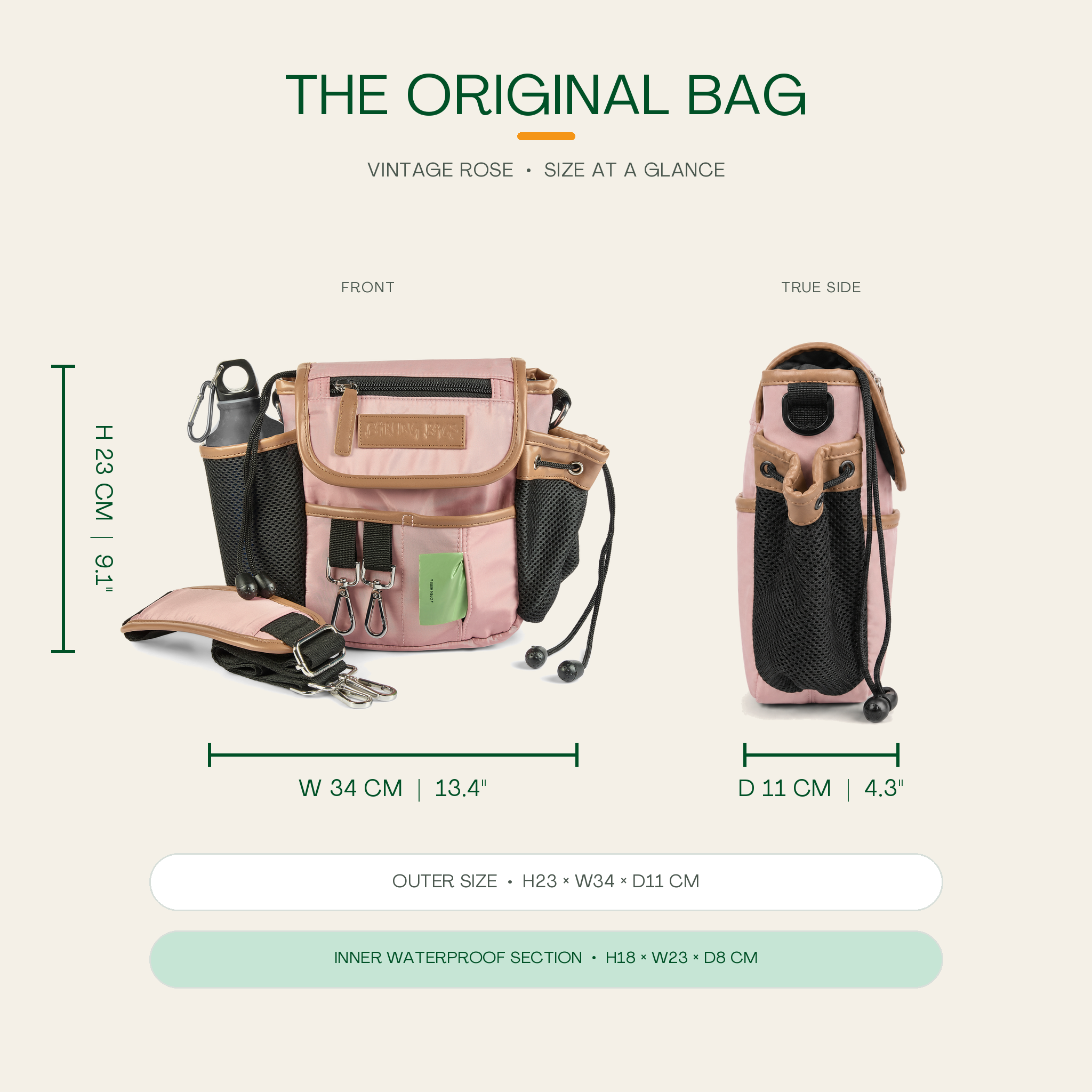
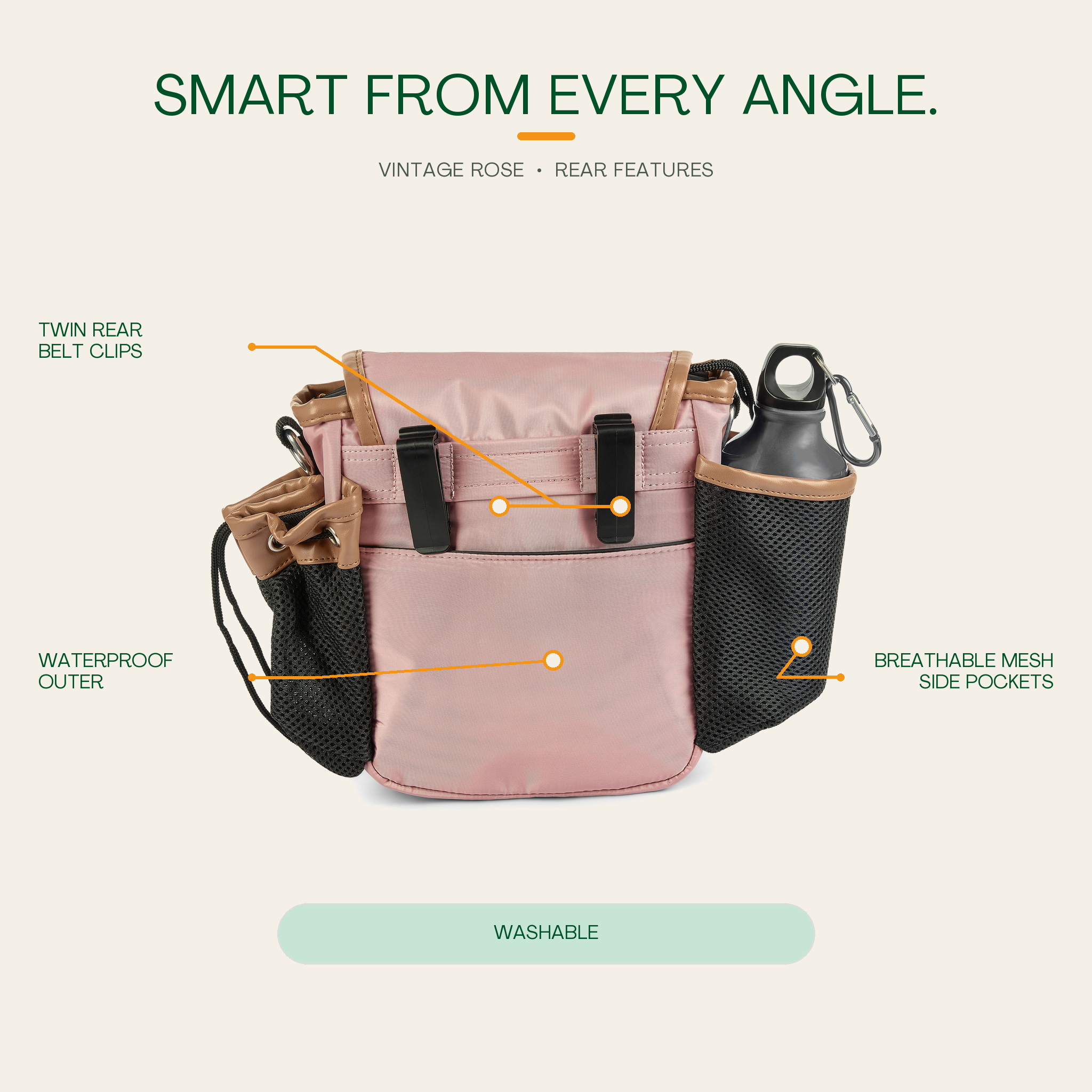
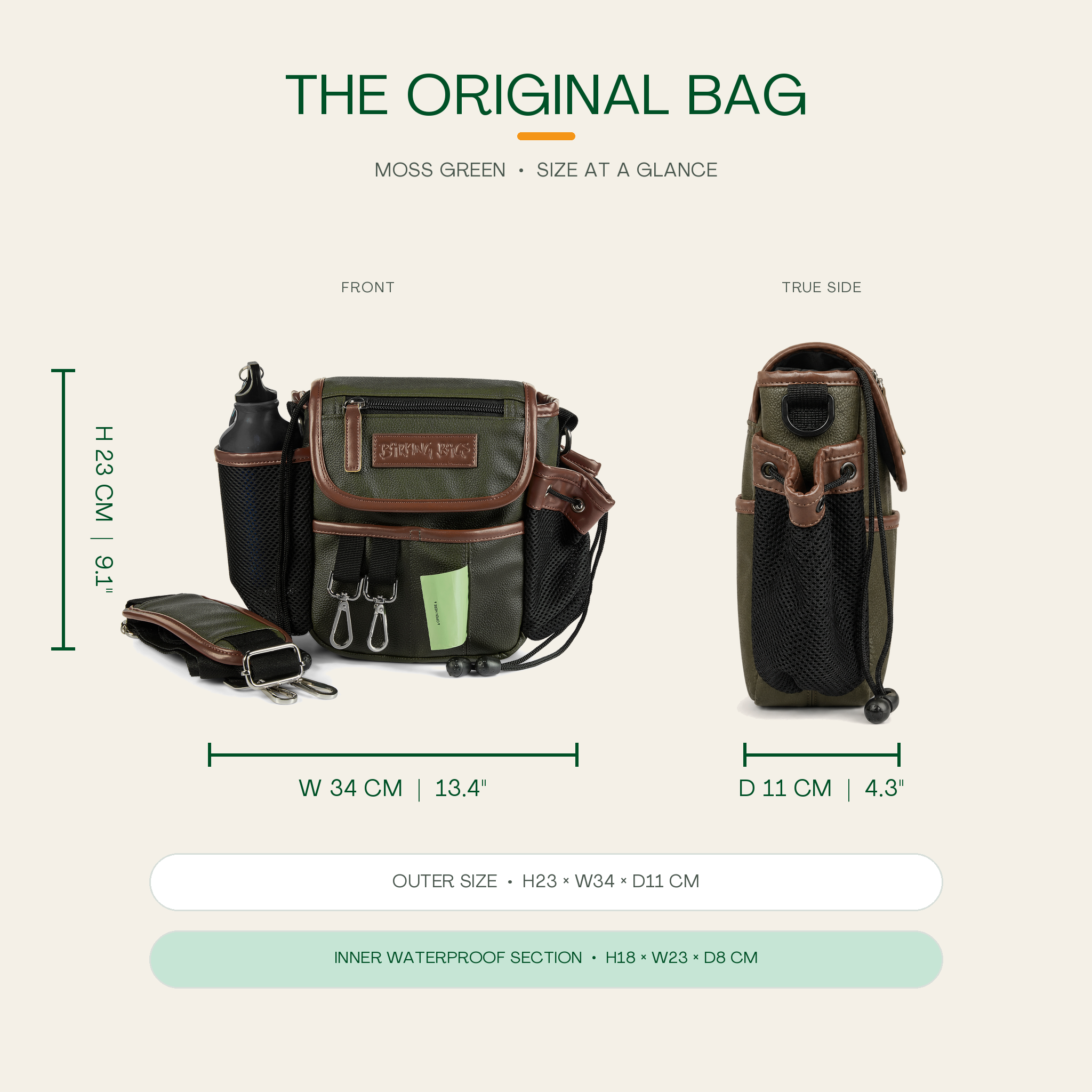
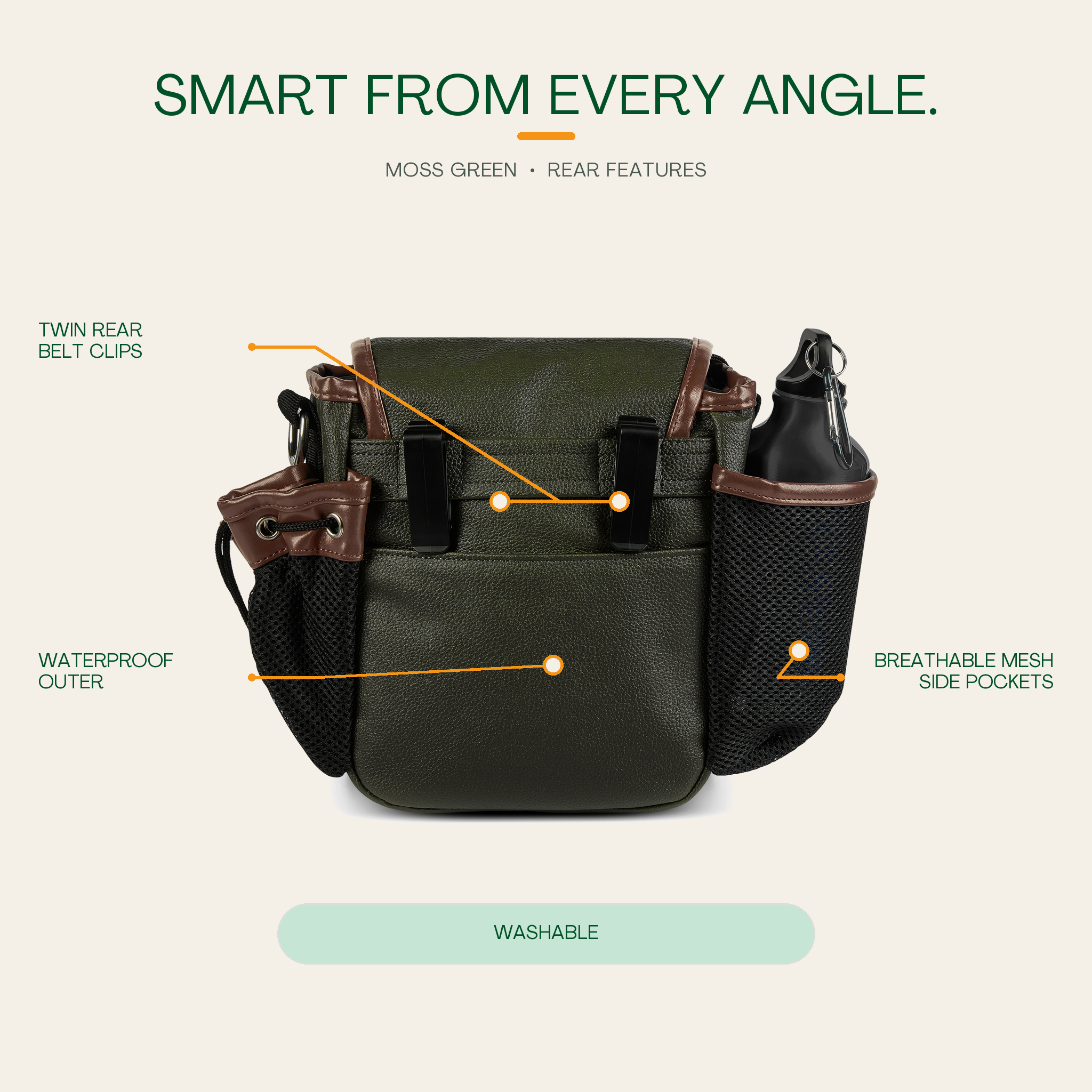
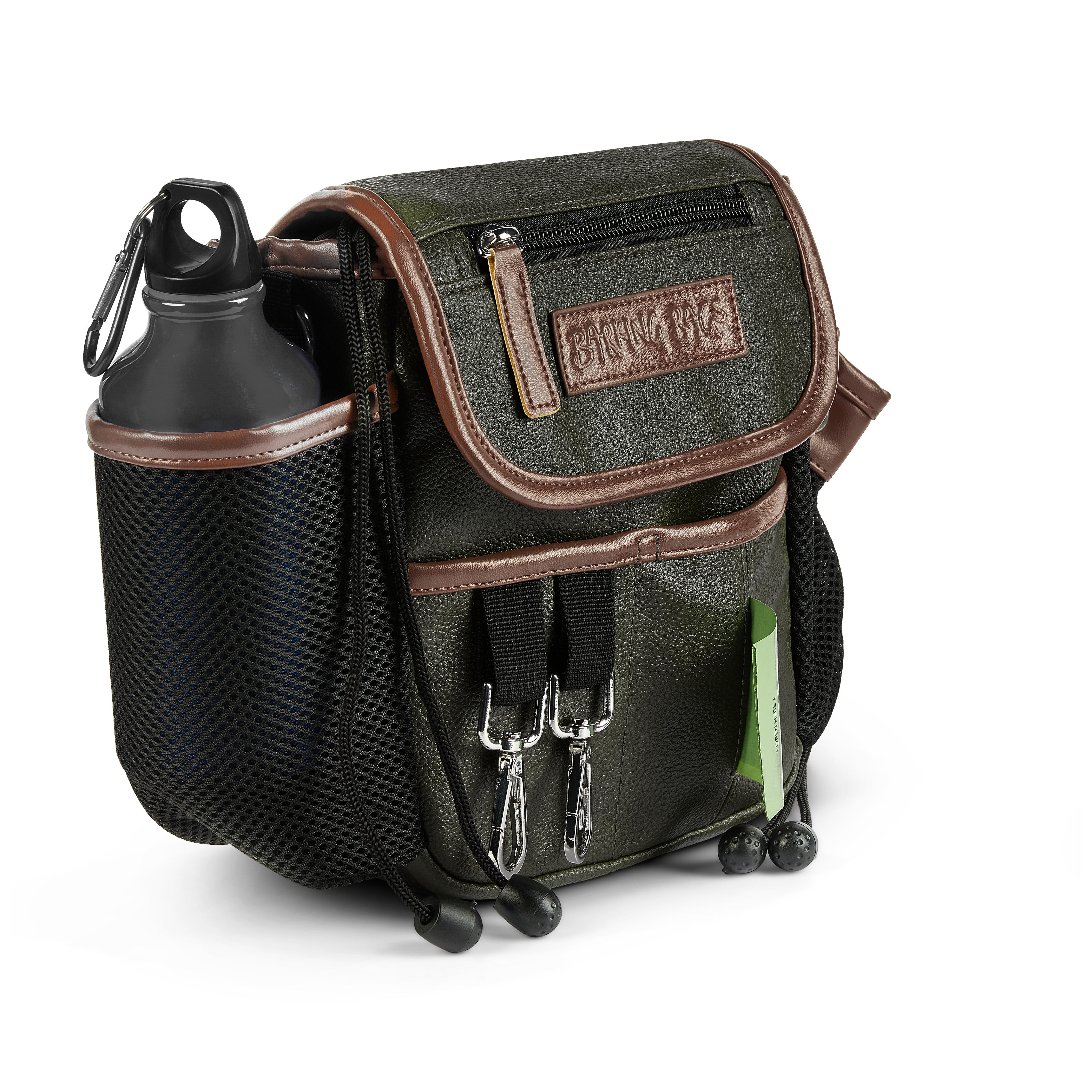
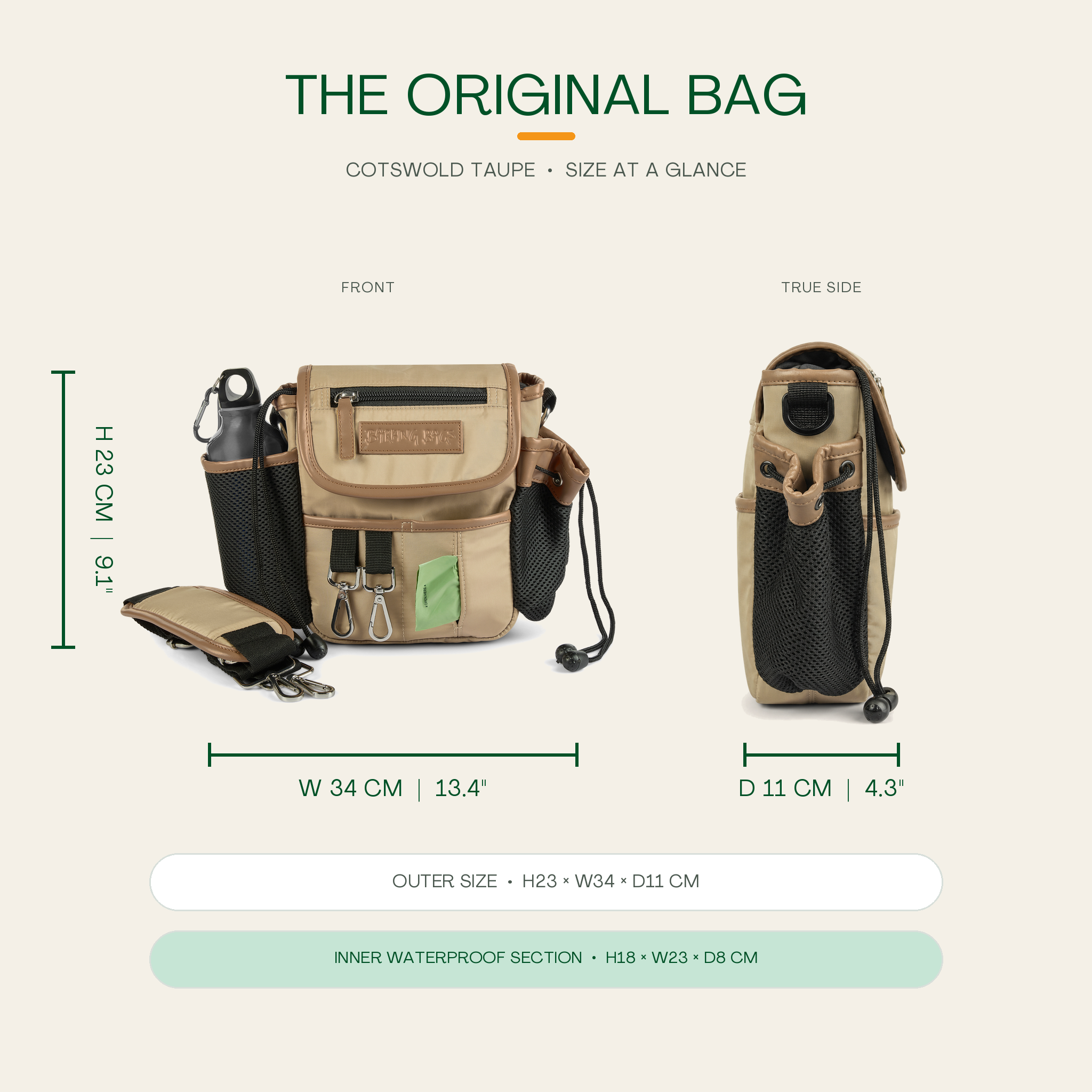
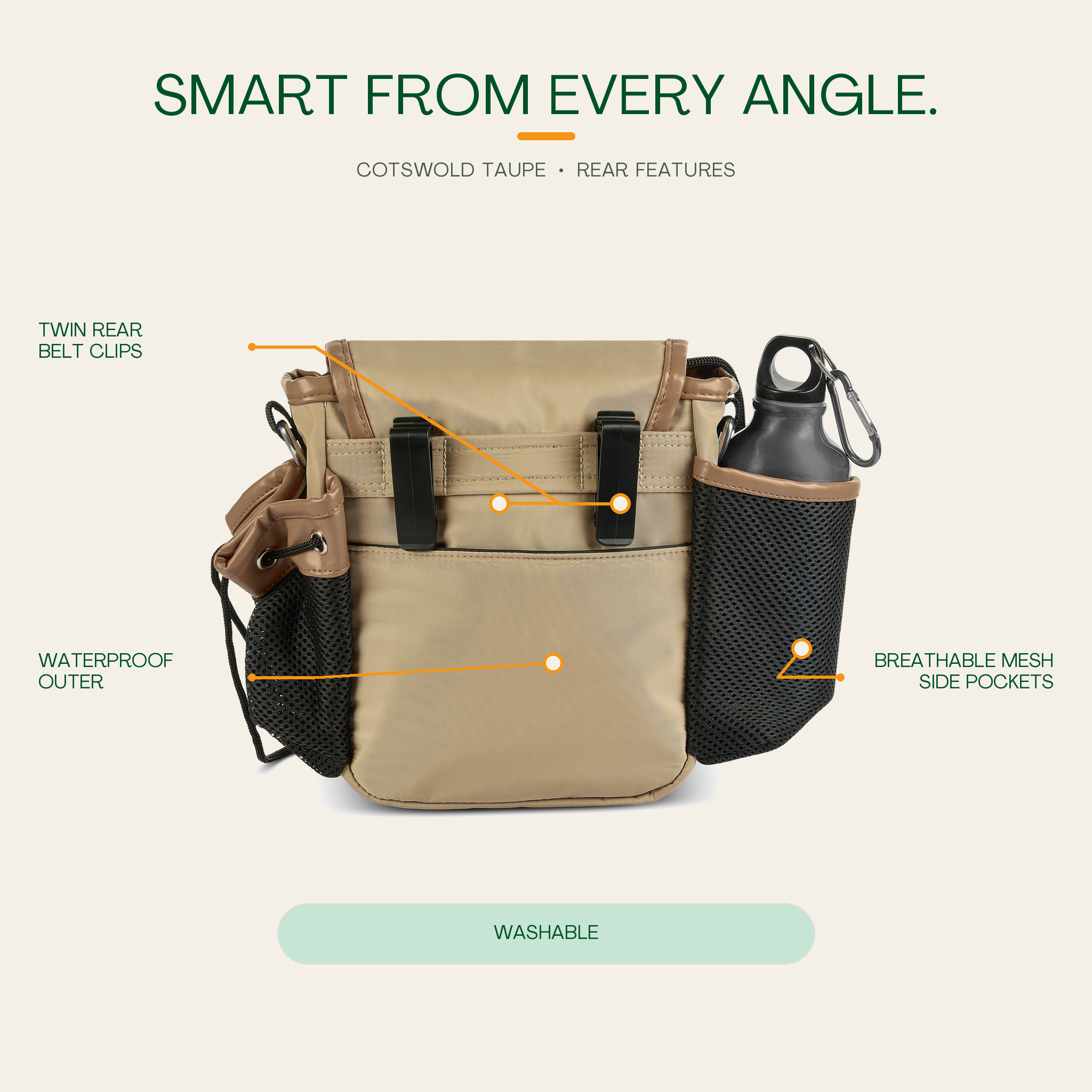
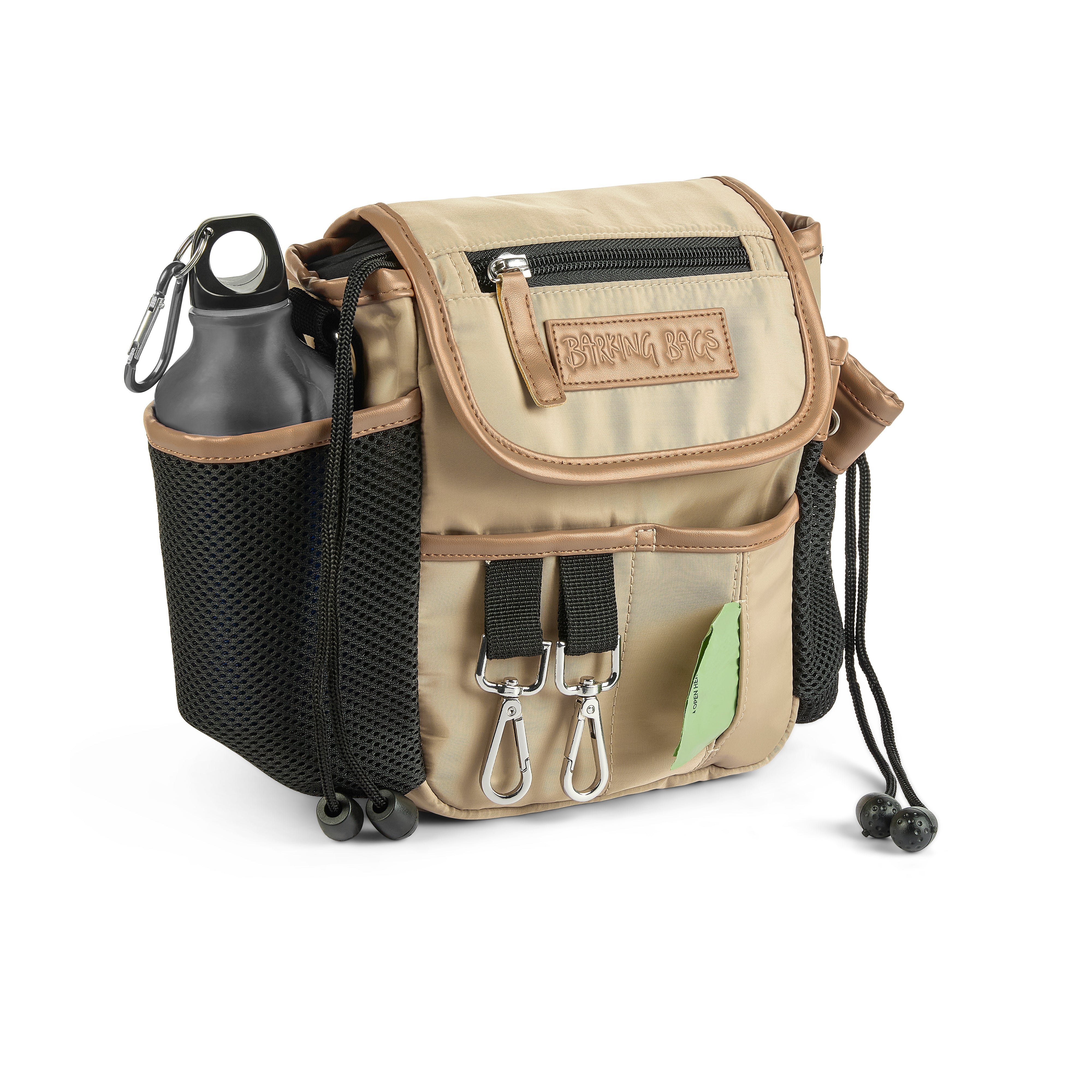
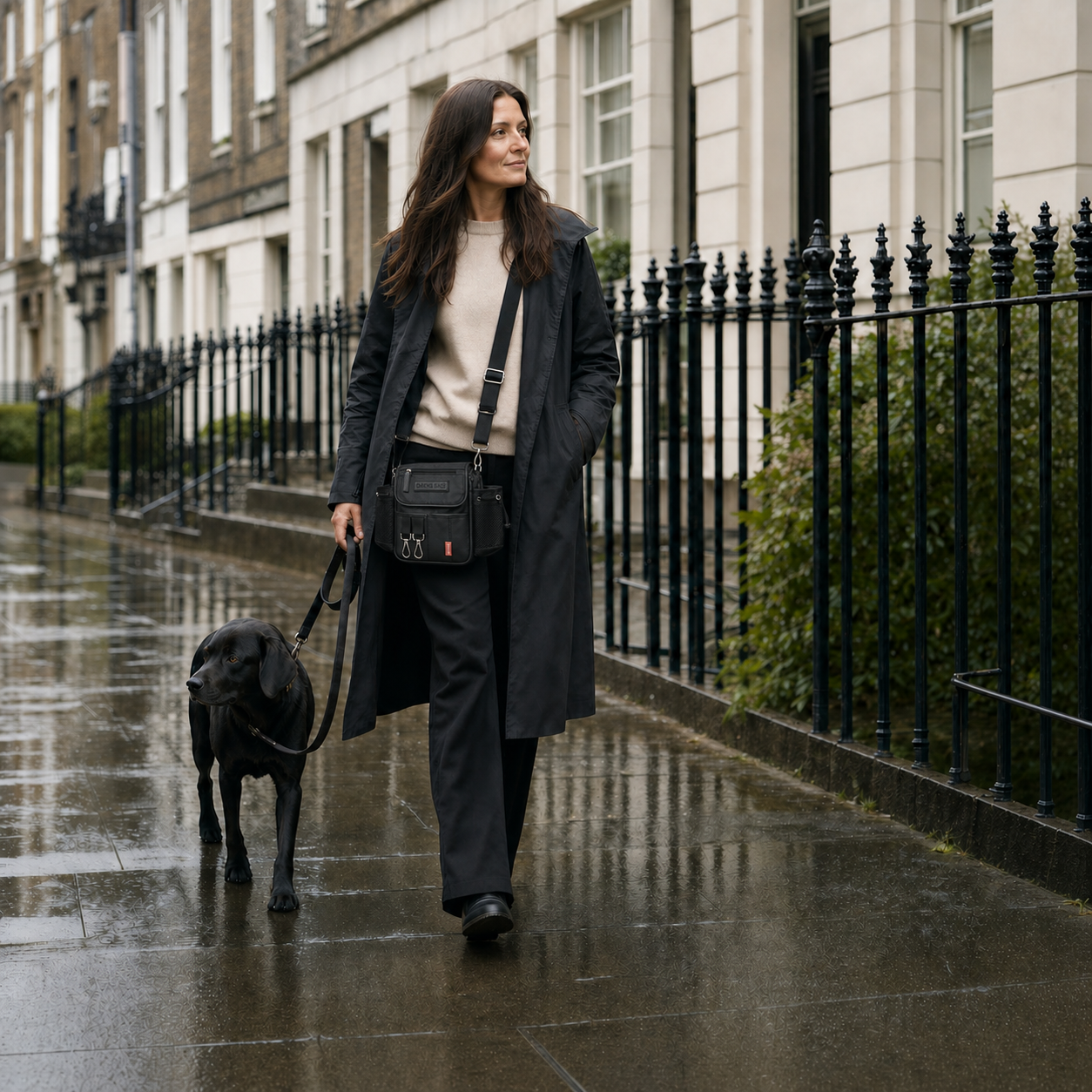
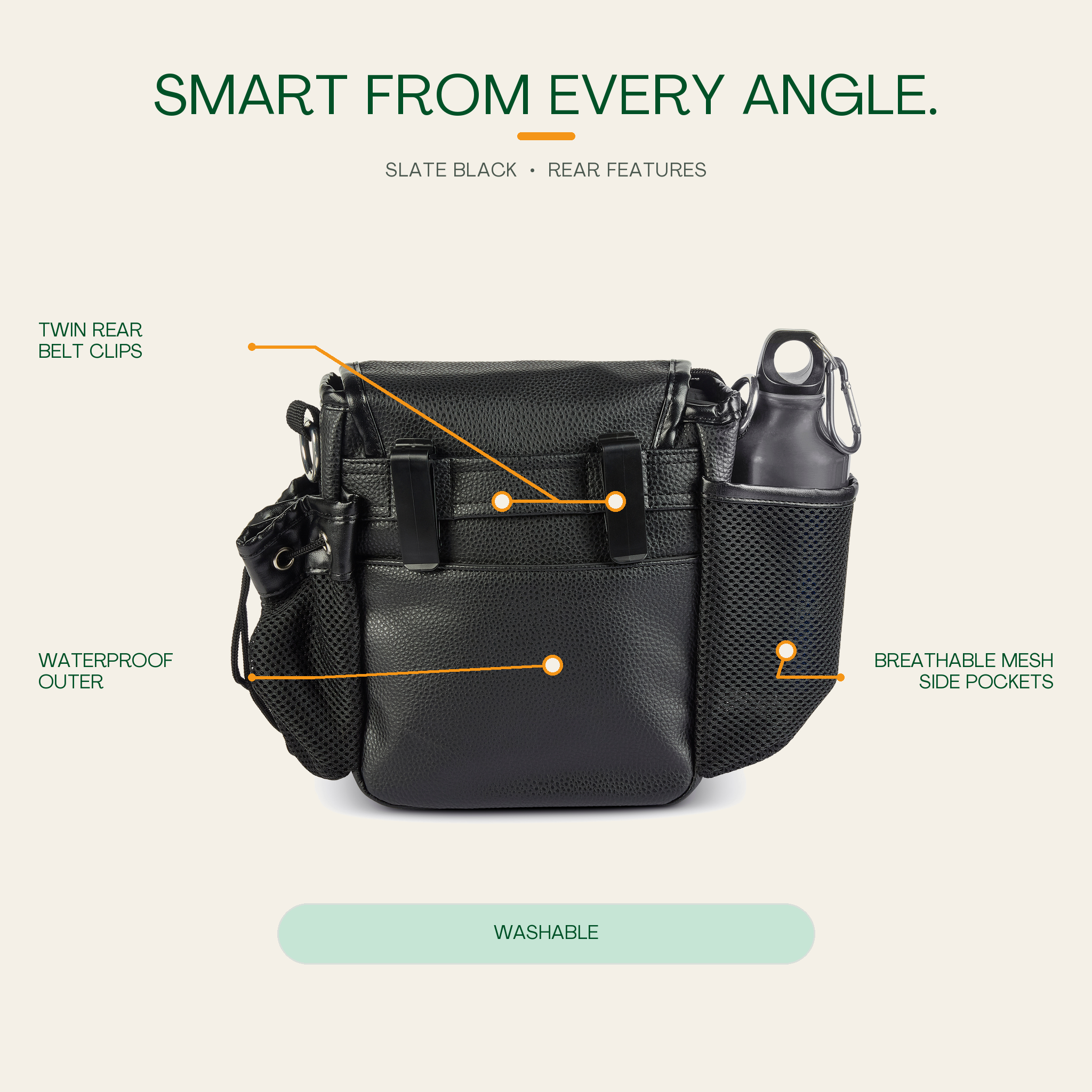
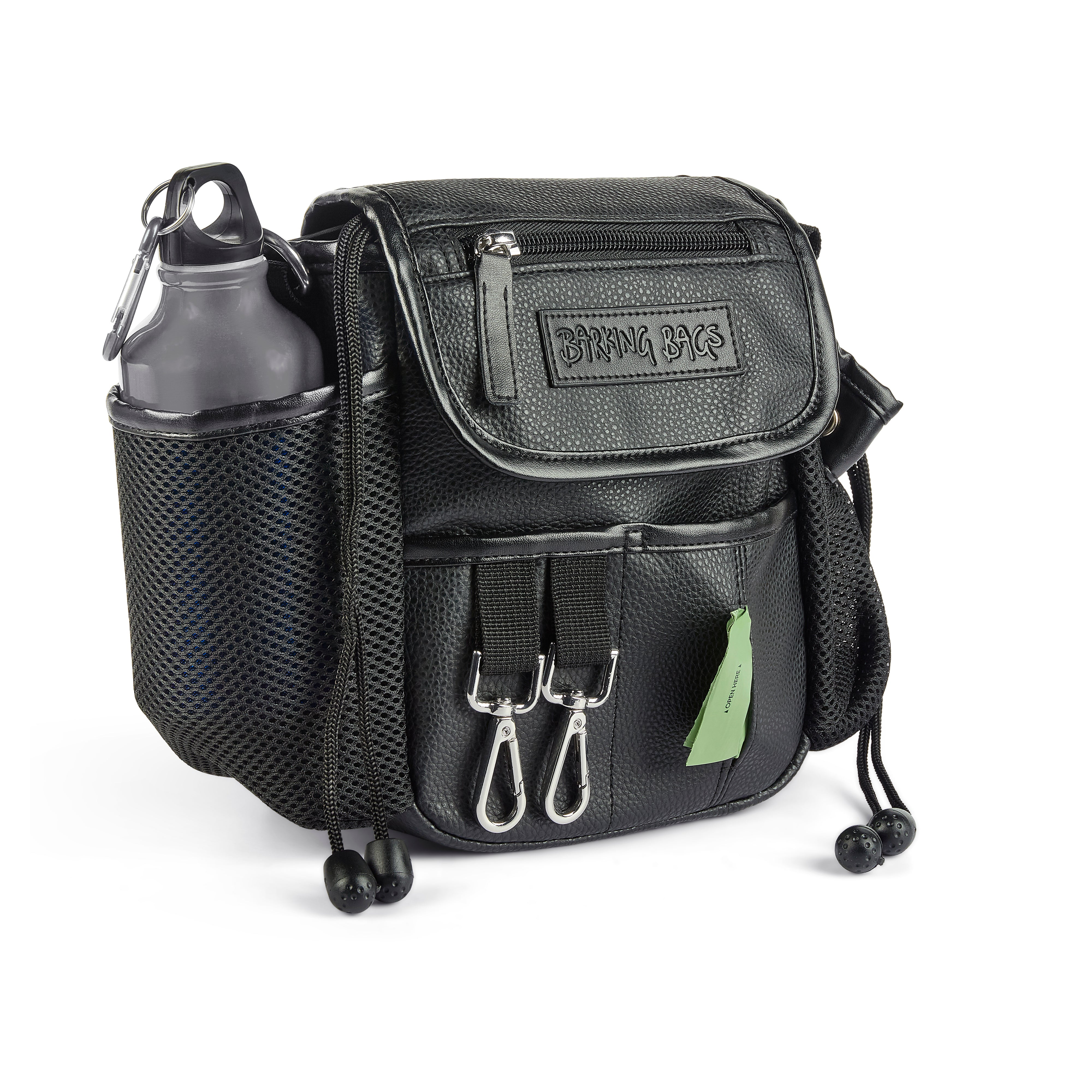
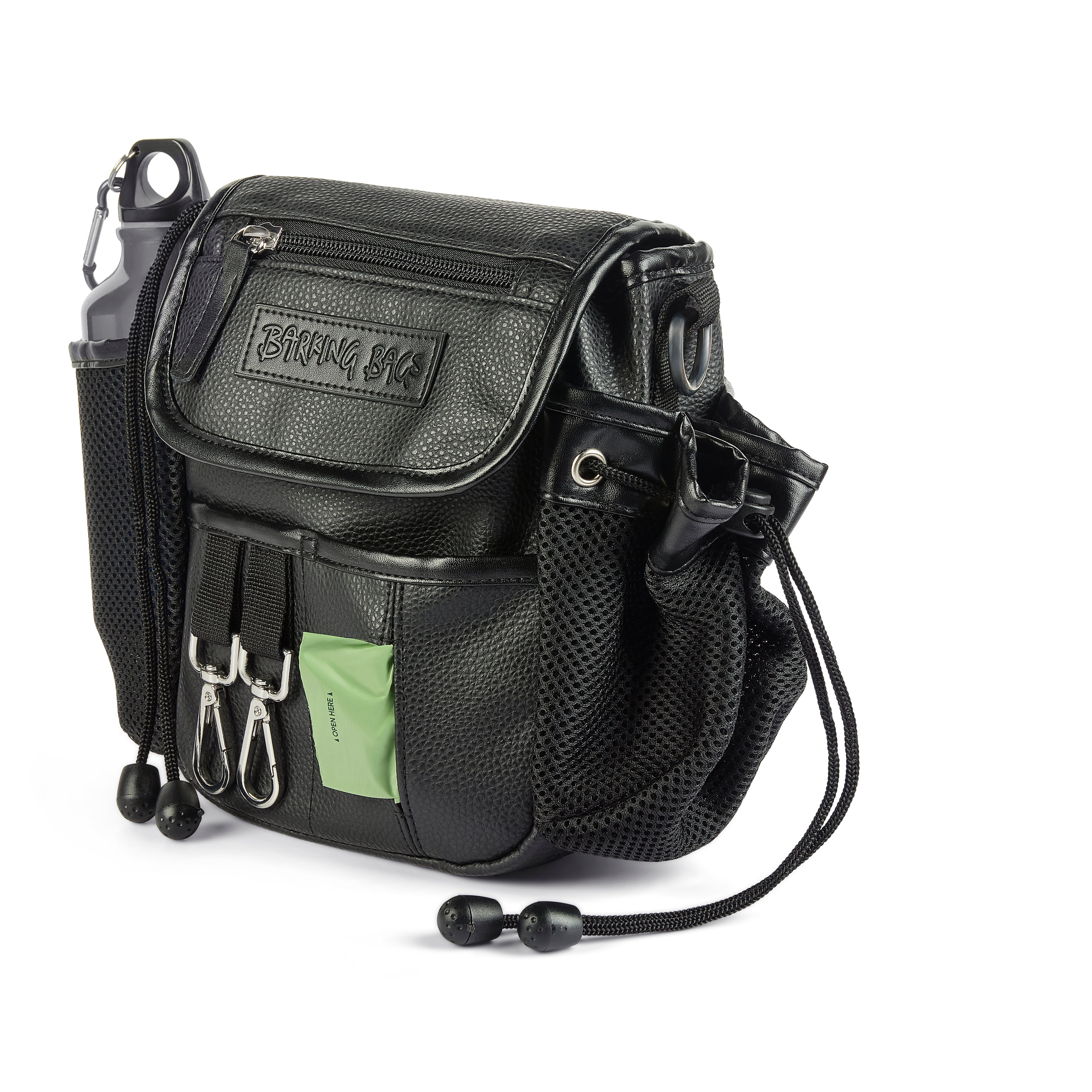
A purpose-designed setup makes the routine simpler because each item has a place. You can grab what you need quickly, keep dog items separate from personal ones, and avoid switching between different coats or handbags just to be properly equipped. That is exactly why dog walking bags have become such a go-to for owners who walk regularly. When the bag is built around the routine, you spend less time checking, repacking, and forgetting things.
How to avoid overpacking
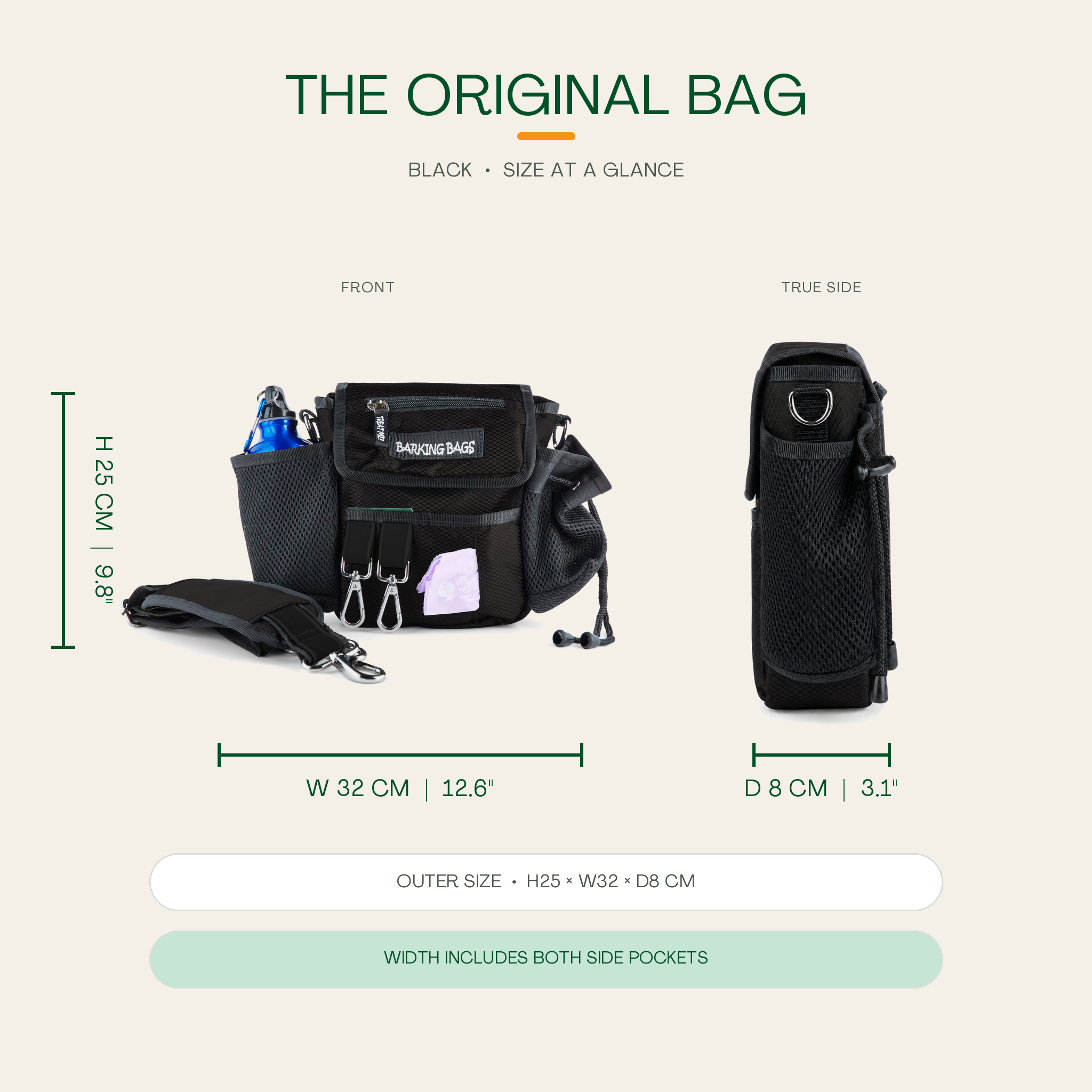
There is a fine line between prepared and overloaded. If your bag is too heavy or cluttered, you are less likely to use it properly, and essentials become harder to find. The goal is convenience, not carrying your entire house around the park.
Start with your fixed essentials and keep them in your bag all the time. That usually means poo bags, treats, lead, keys, and phone. Then add walk-specific extras based on distance, weather, and your dog’s needs. Water in summer makes sense. Three spare tennis balls for a ten-minute pavement stroll probably do not.
It also helps to reset your bag every few days. Empty out stale treats, replace used poo bag rolls, shake out crumbs, and check for anything unnecessary. A tidy bag is quicker to use and easier to trust when you are heading out the door.
A practical dog walk packing routine
The easiest routine is the one you can repeat without thinking. Keep your dog walking bag in the same place at home, stocked with the everyday basics, and top it up as needed rather than rebuilding it before every walk. That one change saves more hassle than any clever hack.
If more than one person walks the dog in your household, this matters even more. A shared, ready-to-go bag means everyone knows where the treats are, where the bags are, and what has already been packed. It removes the guesswork, which is often the part that causes forgotten items.
And if you walk professionally or handle multiple dogs, organisation stops being a nice extra and becomes part of doing the job well. Easy-access compartments, wipe-clean sections, and room for both dog gear and personal bits are not luxuries. They are what keep the day moving.
The right answer to what to pack for dog walks is not a giant checklist for every possible outing. It is a smart everyday setup that covers the basics, flexes when needed, and makes leaving the house feel easy. When your essentials are organised, the walk itself gets to be the main event - which is exactly how it should be.