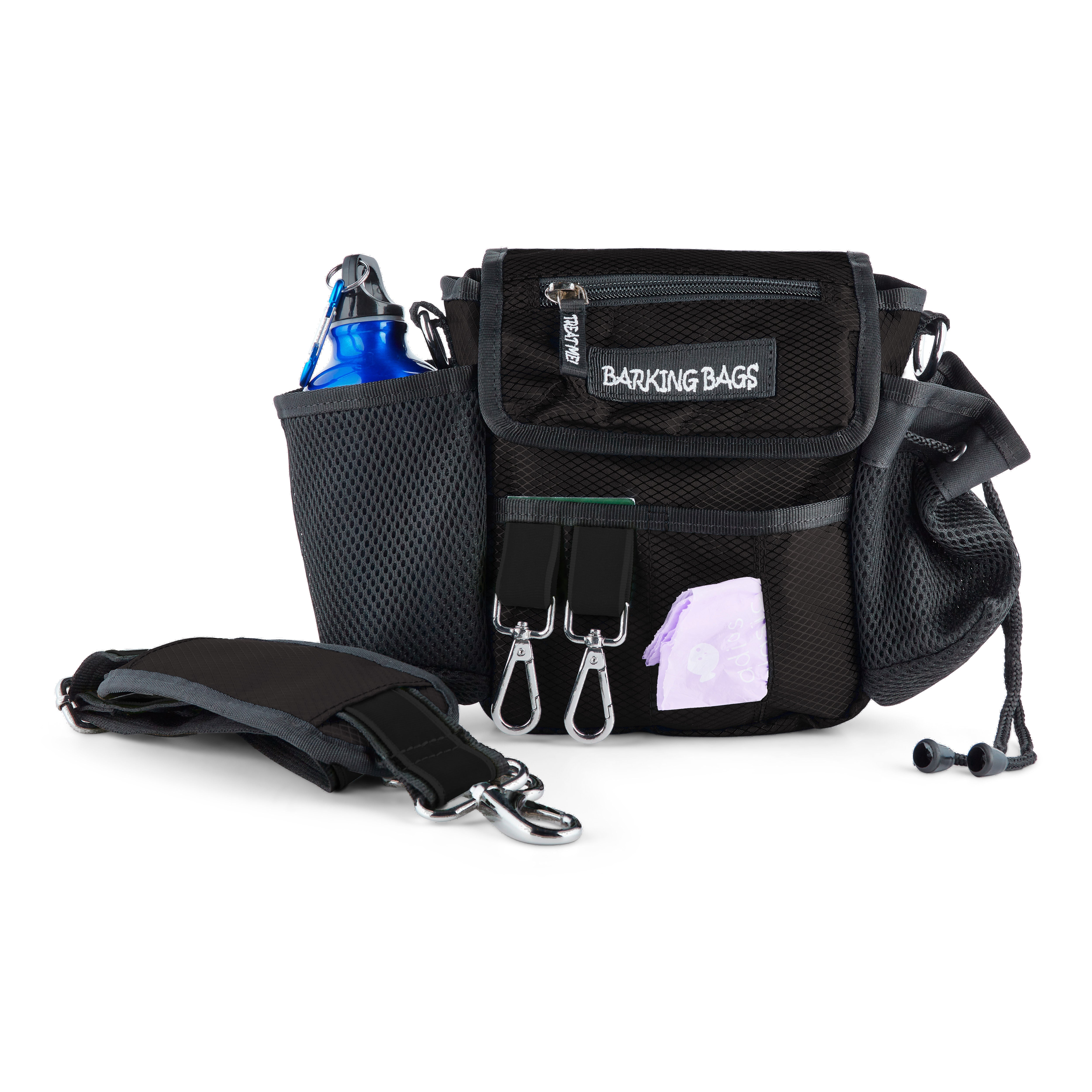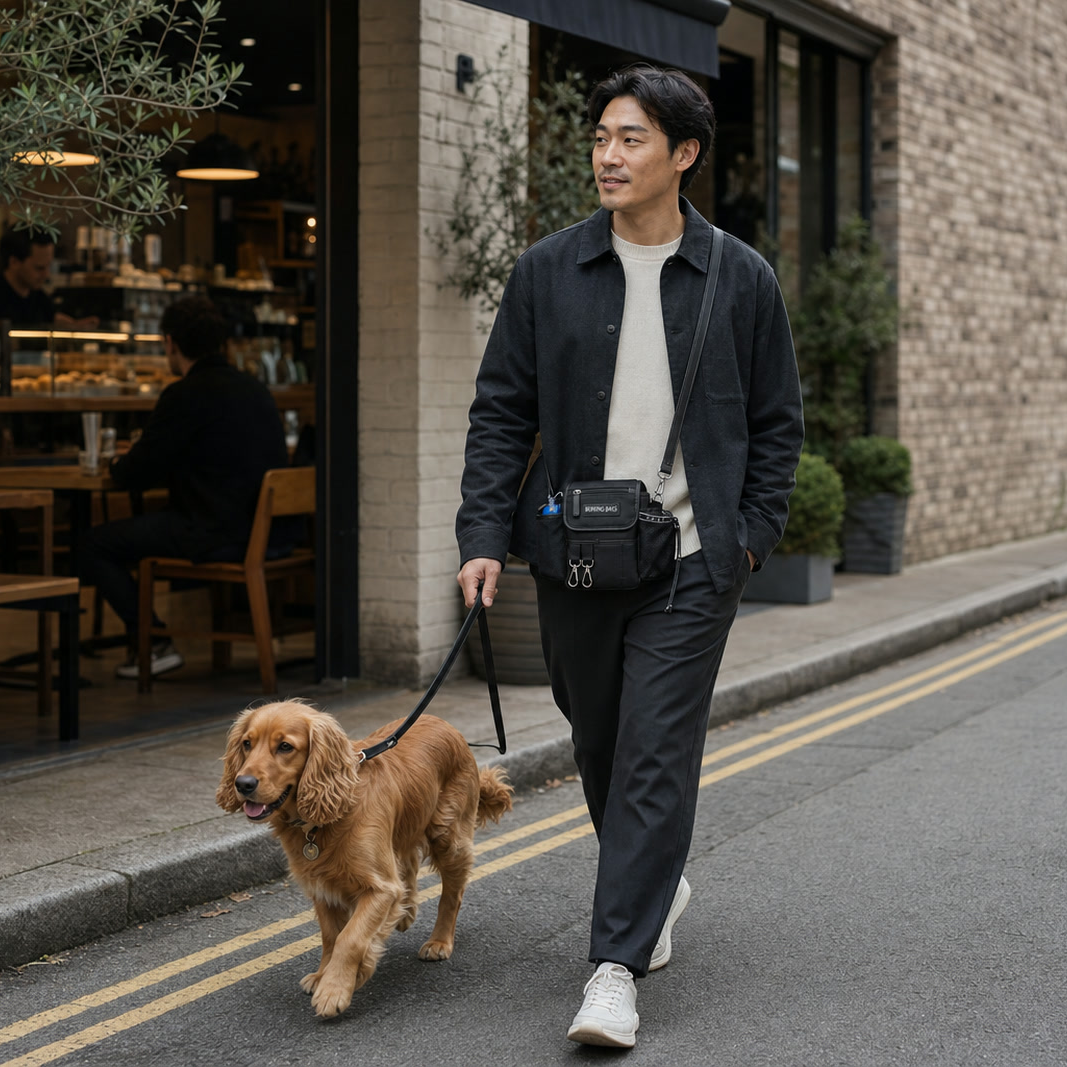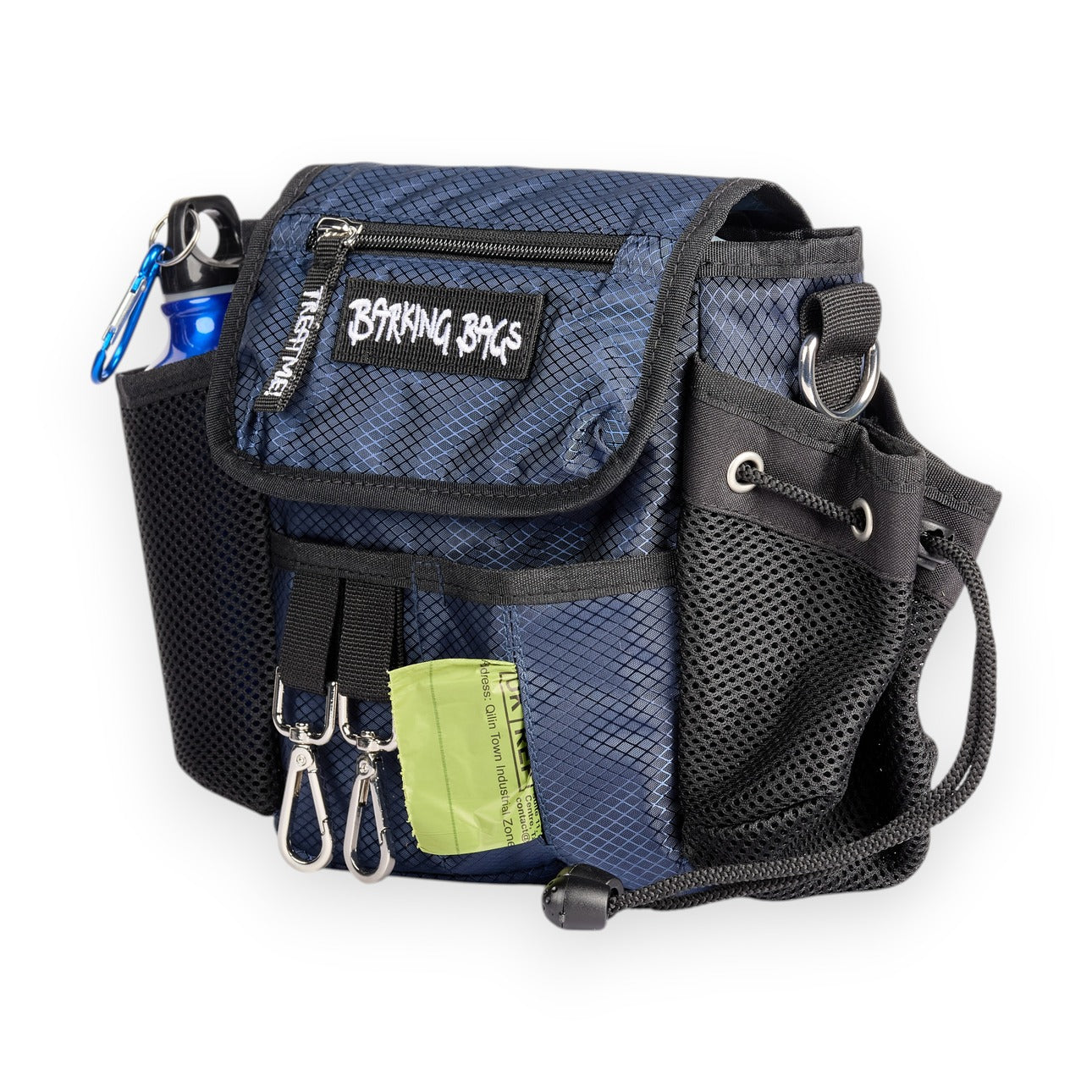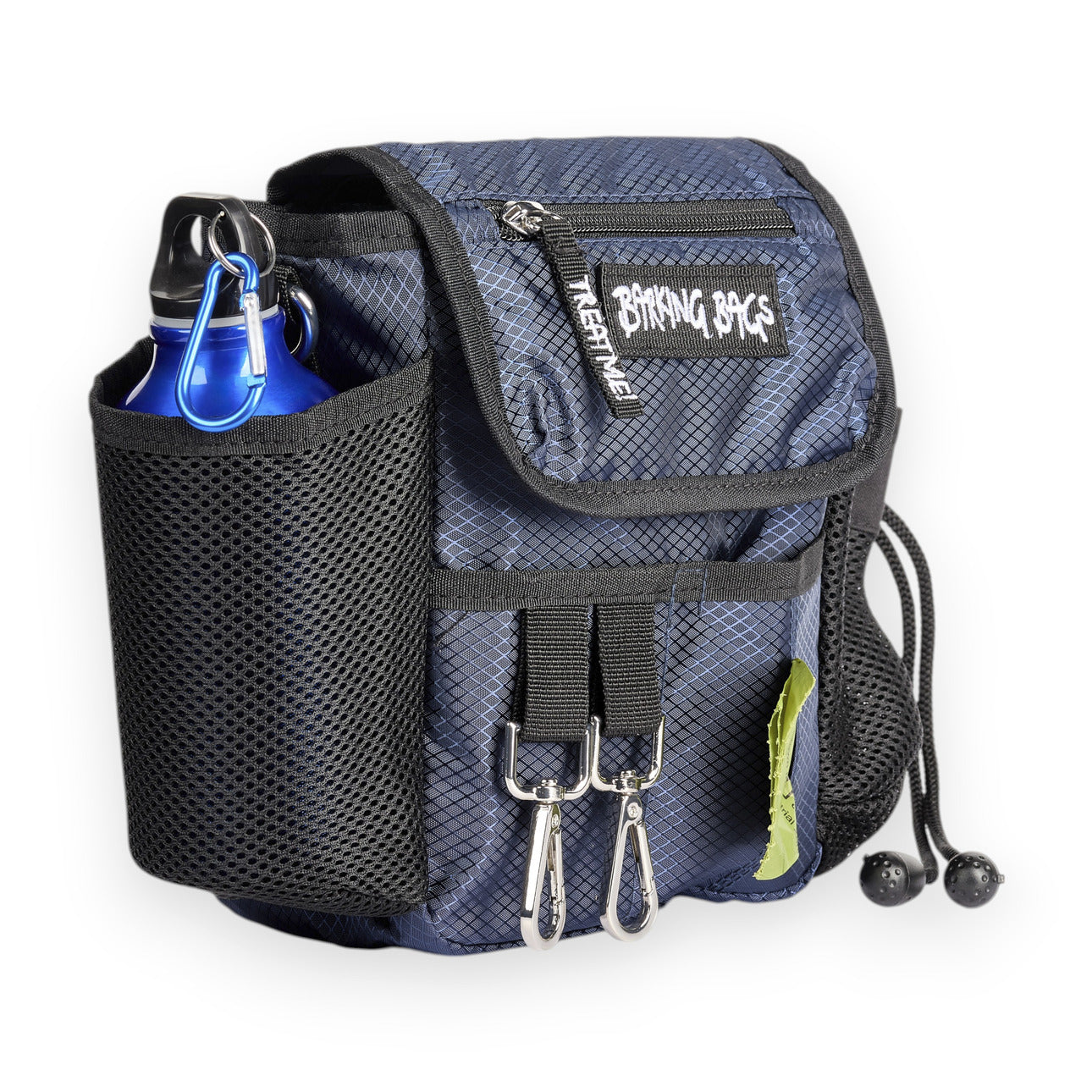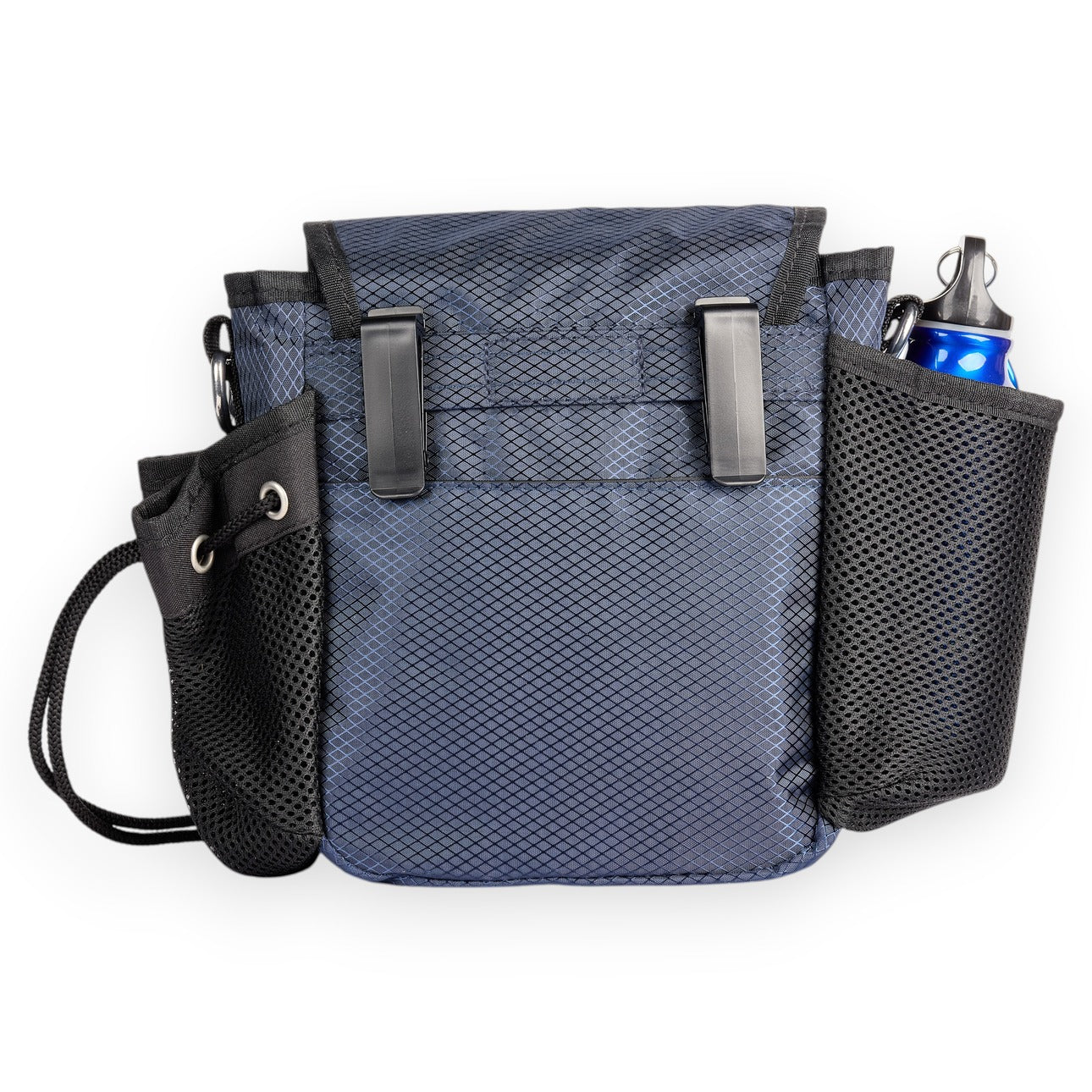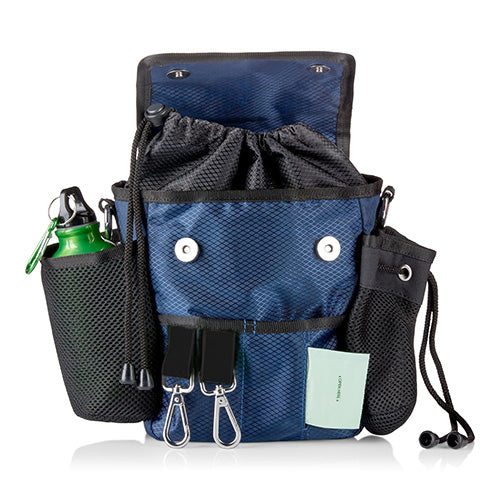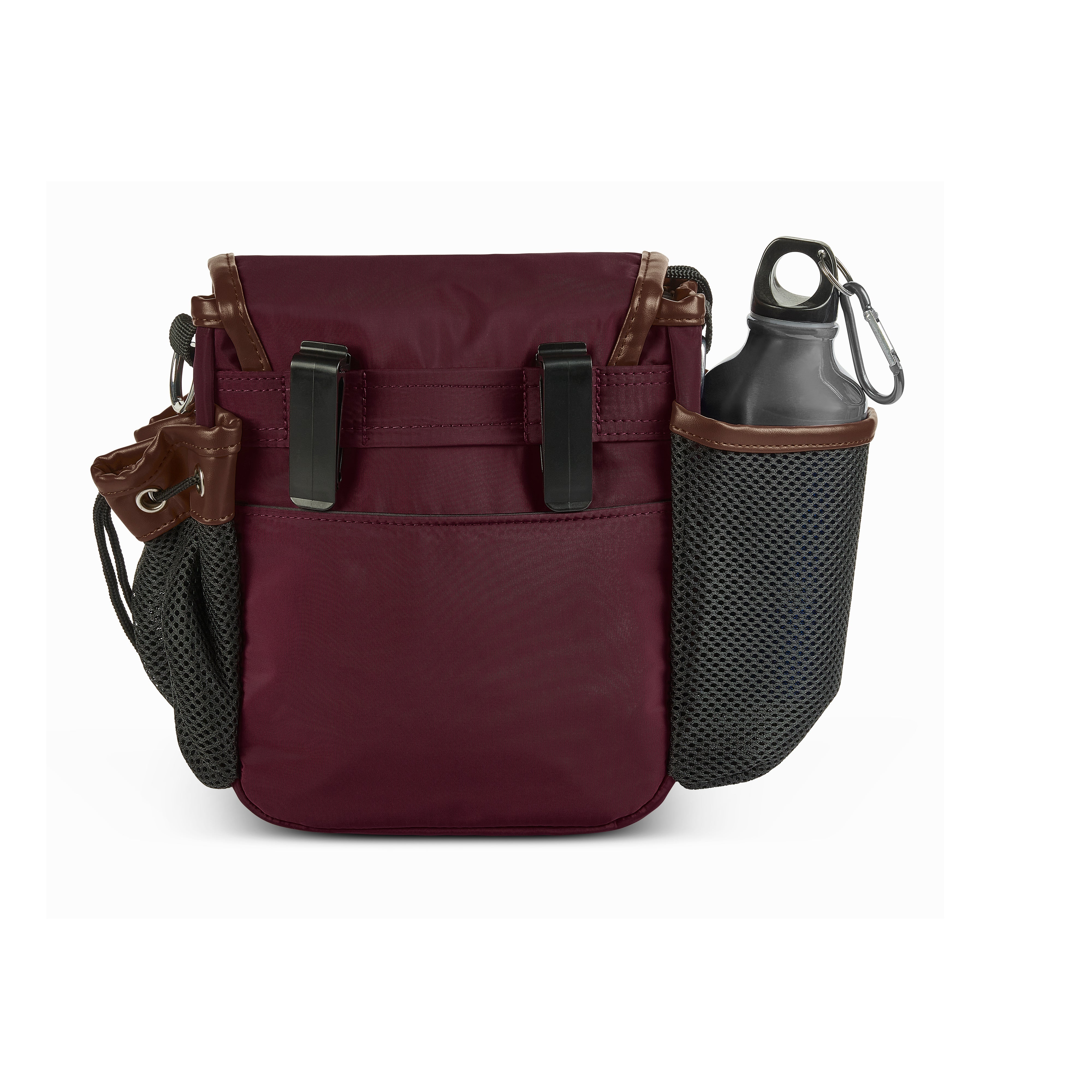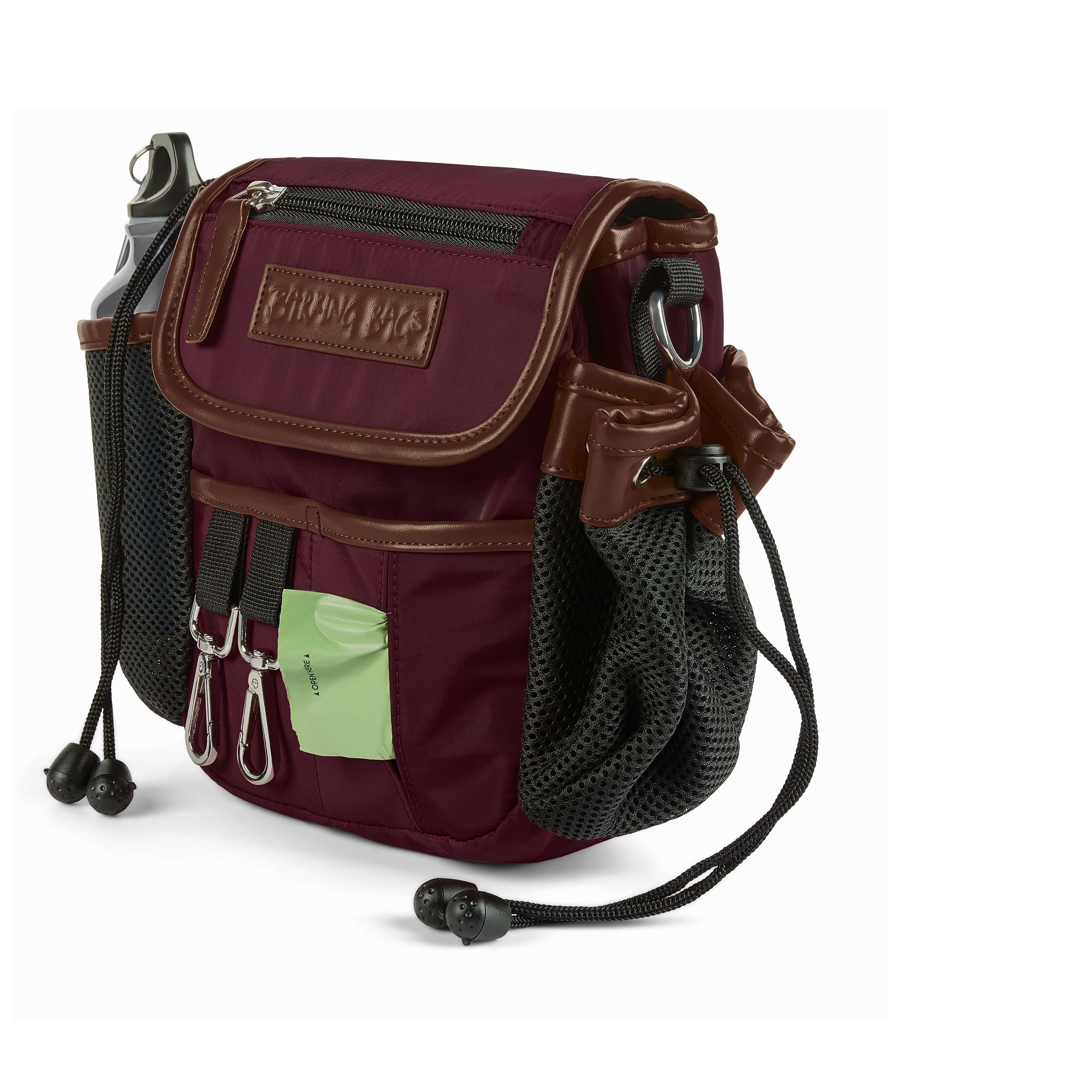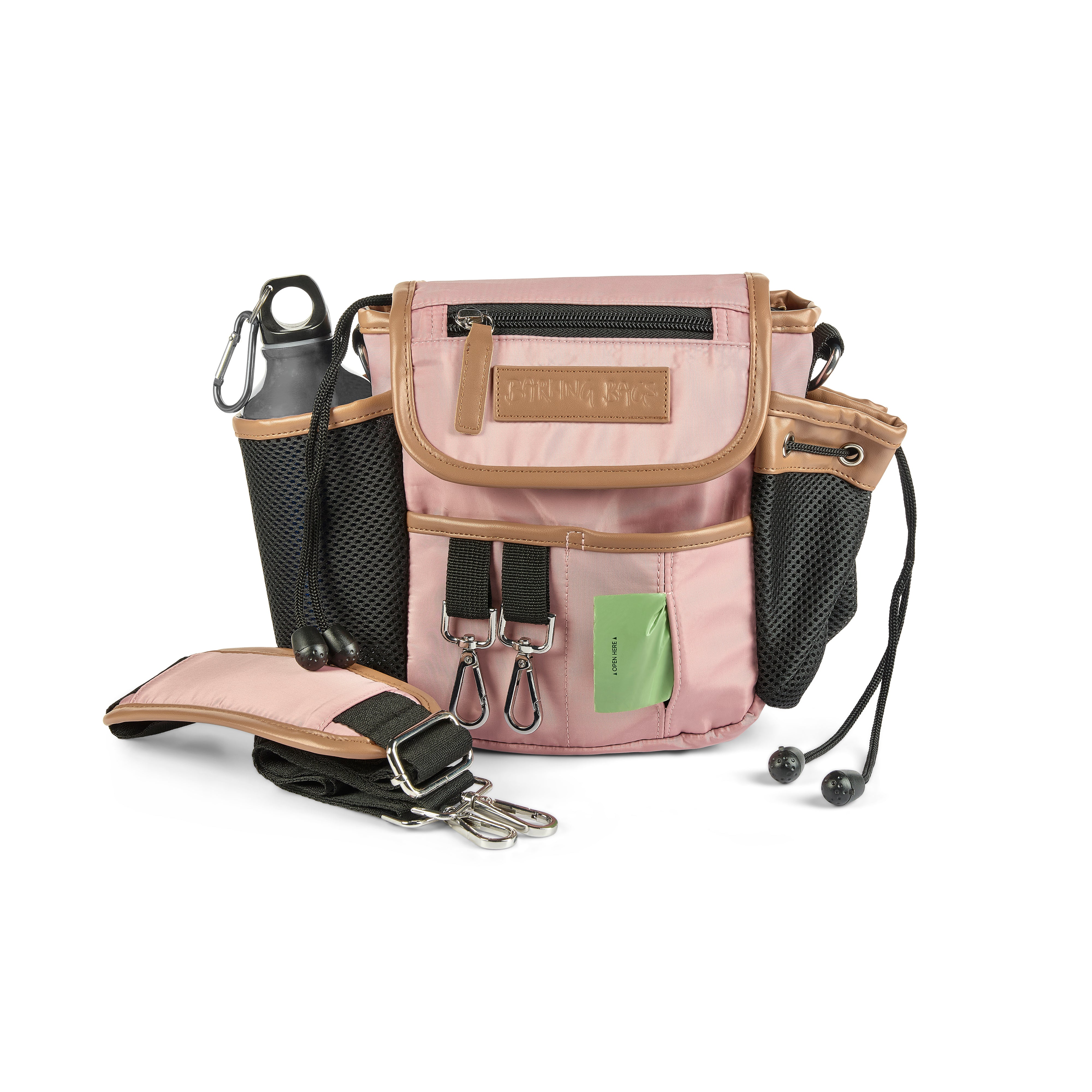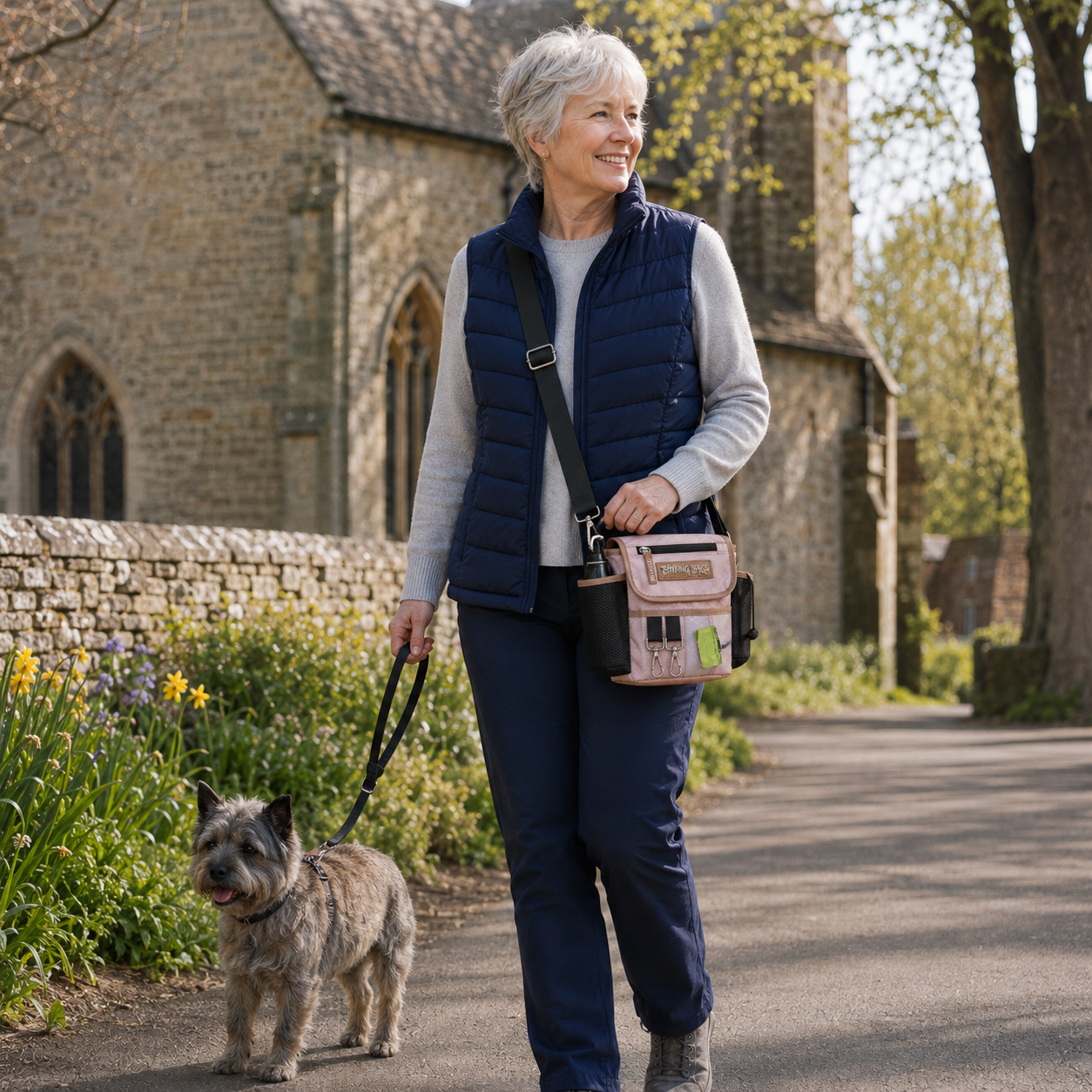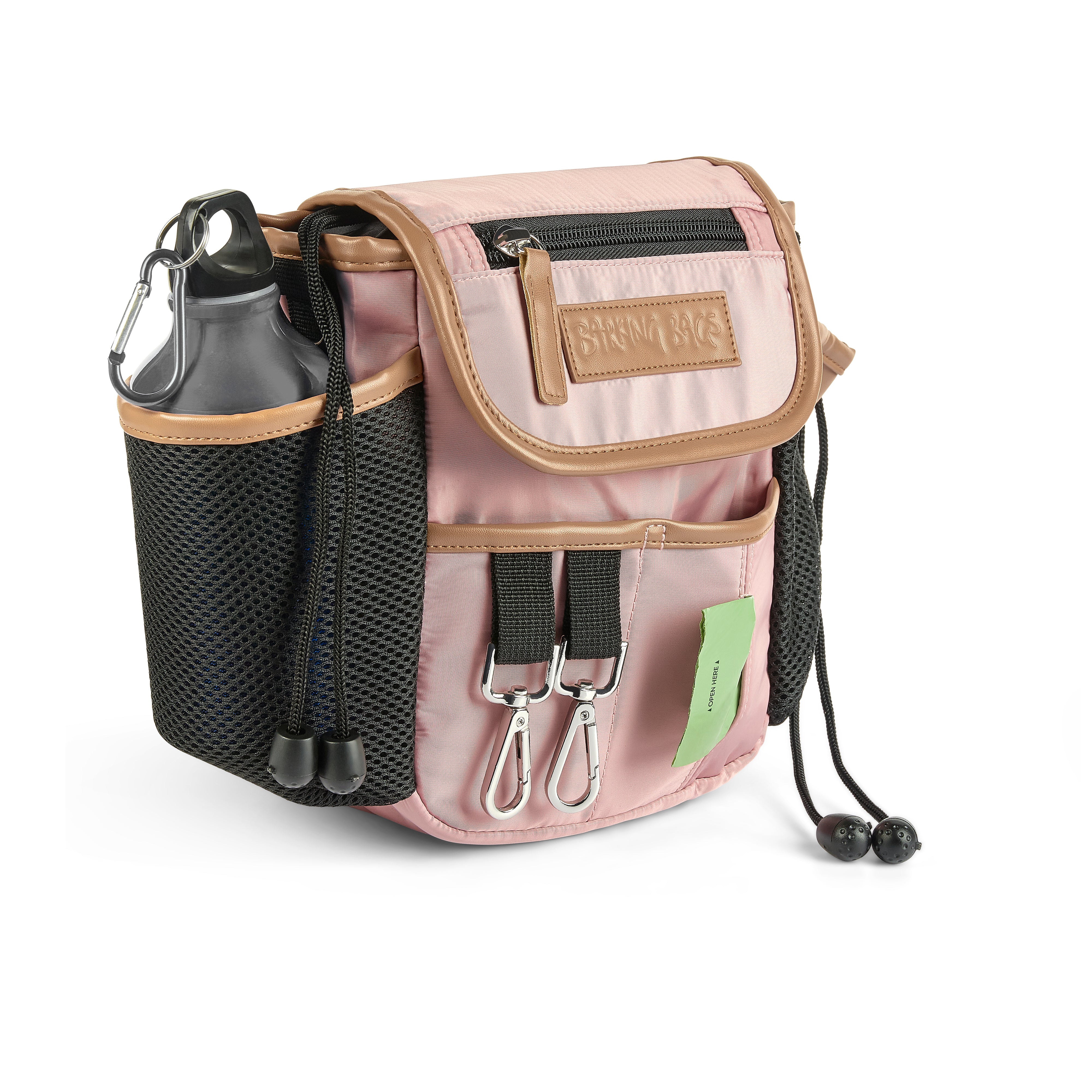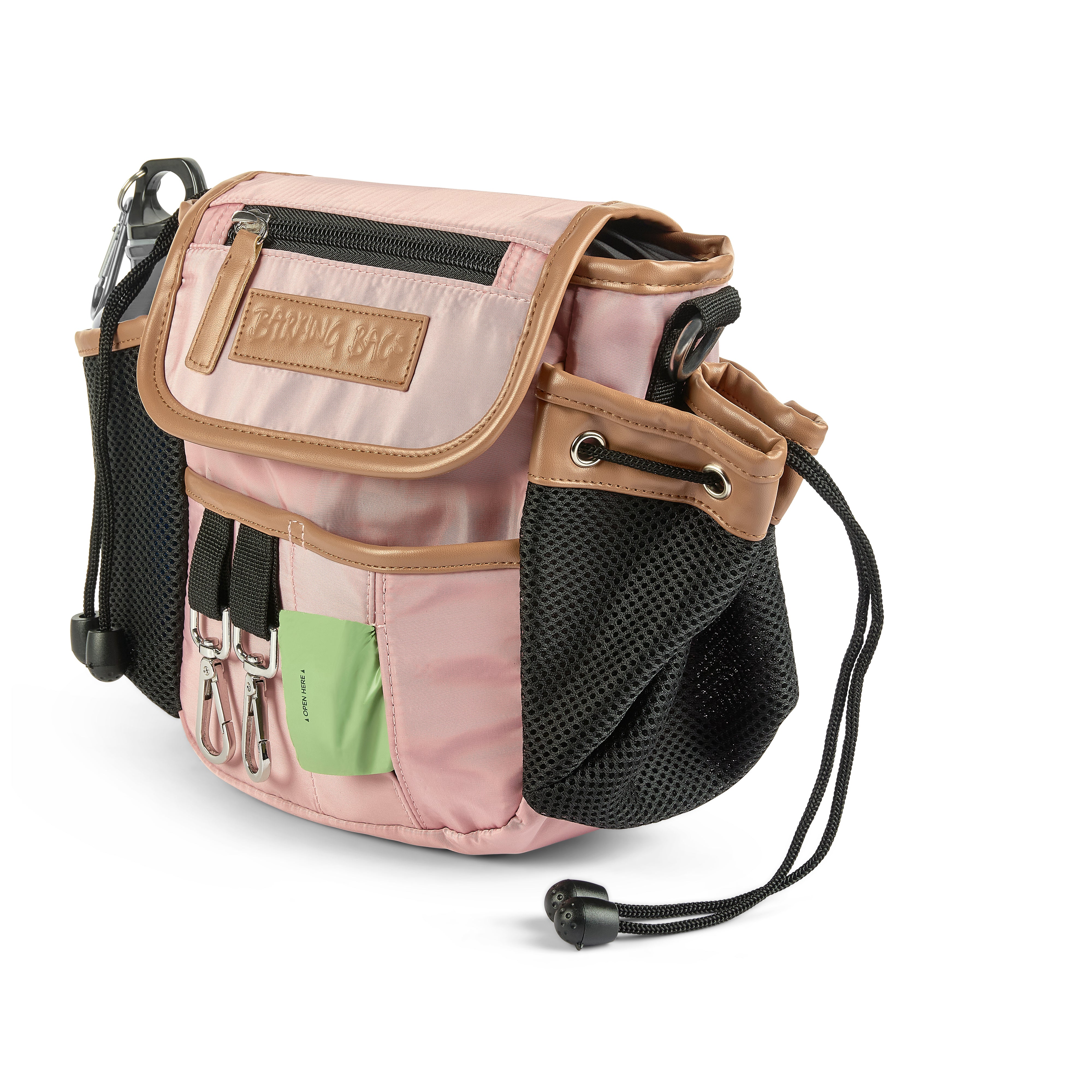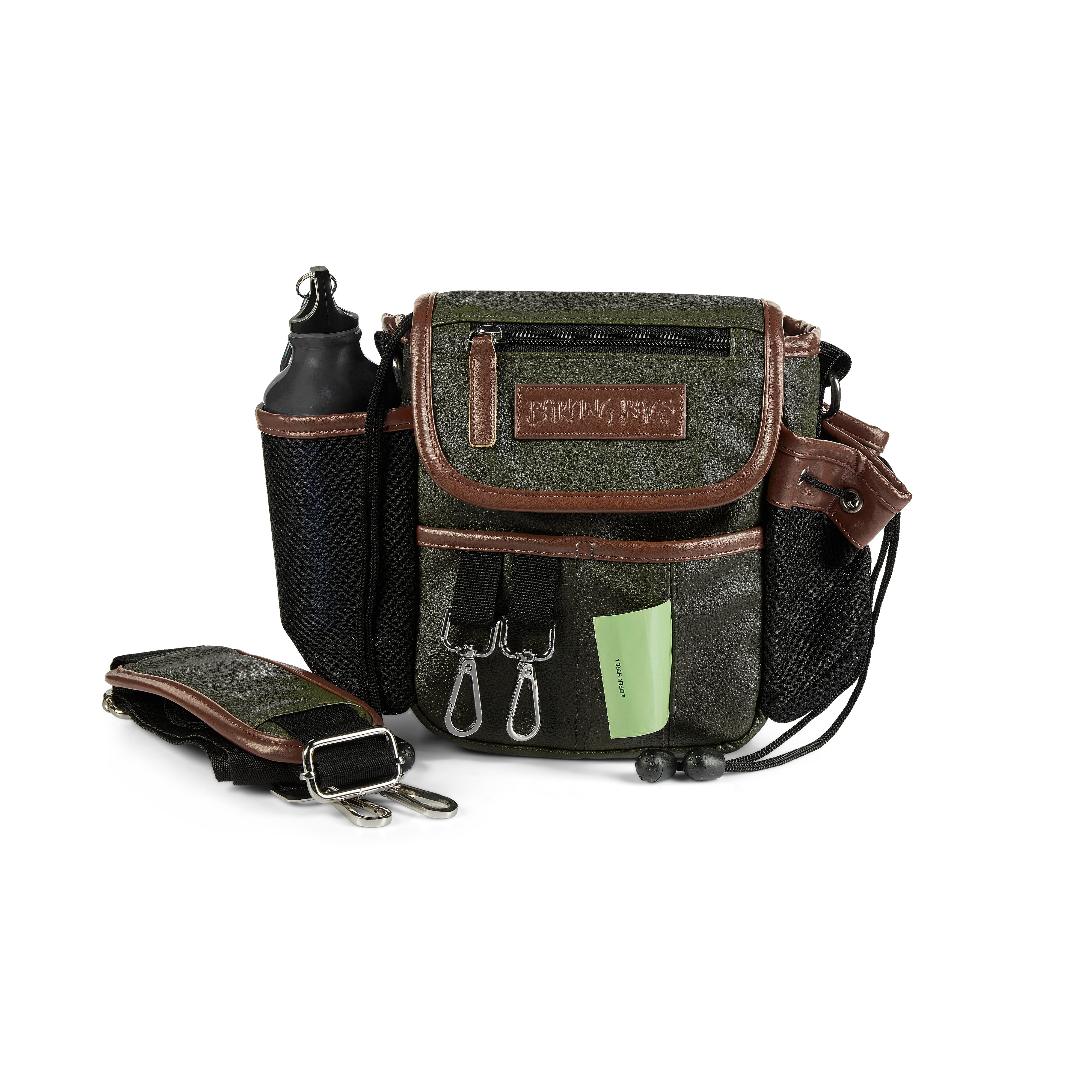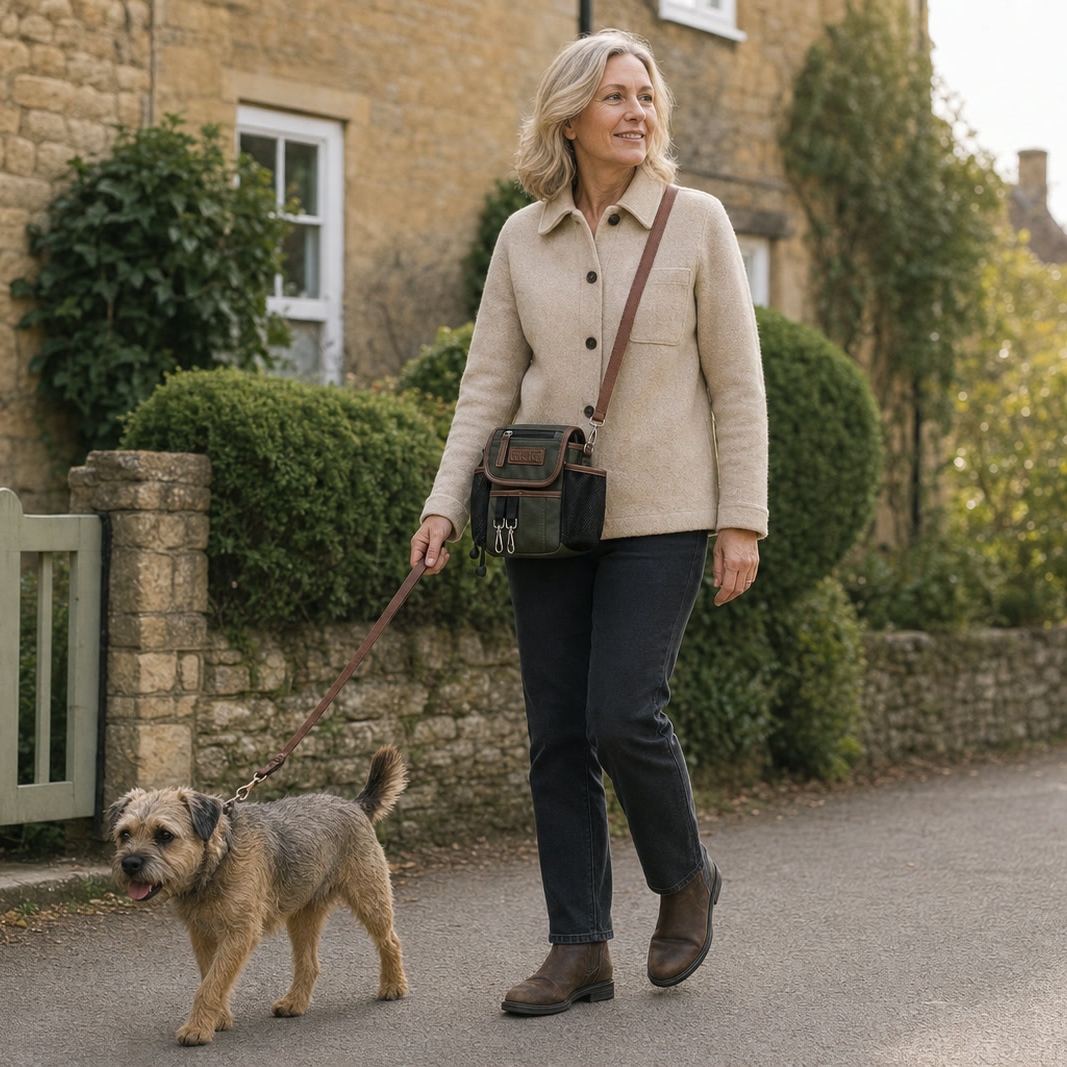

You only need to forget poo bags once, fumble for treats during a training moment, or realise your keys are mixed in with soggy tennis balls to ask the right question: what should a dog walking bag hold? A good walk feels easy because everything you need is exactly where it should be. That is the difference between stuffing bits into coat pockets and carrying a bag designed around the reality of dog walking.
The best dog walking bags do not need to hold everything you own. They need to hold the right things, in the right order, without making the walk bulky, messy or awkward. For most owners, that means balancing dog essentials, personal items and a few extras based on how long the walk is, where you are going and whether your dog needs training support on the go.
What should a dog walking bag hold for everyday walks?
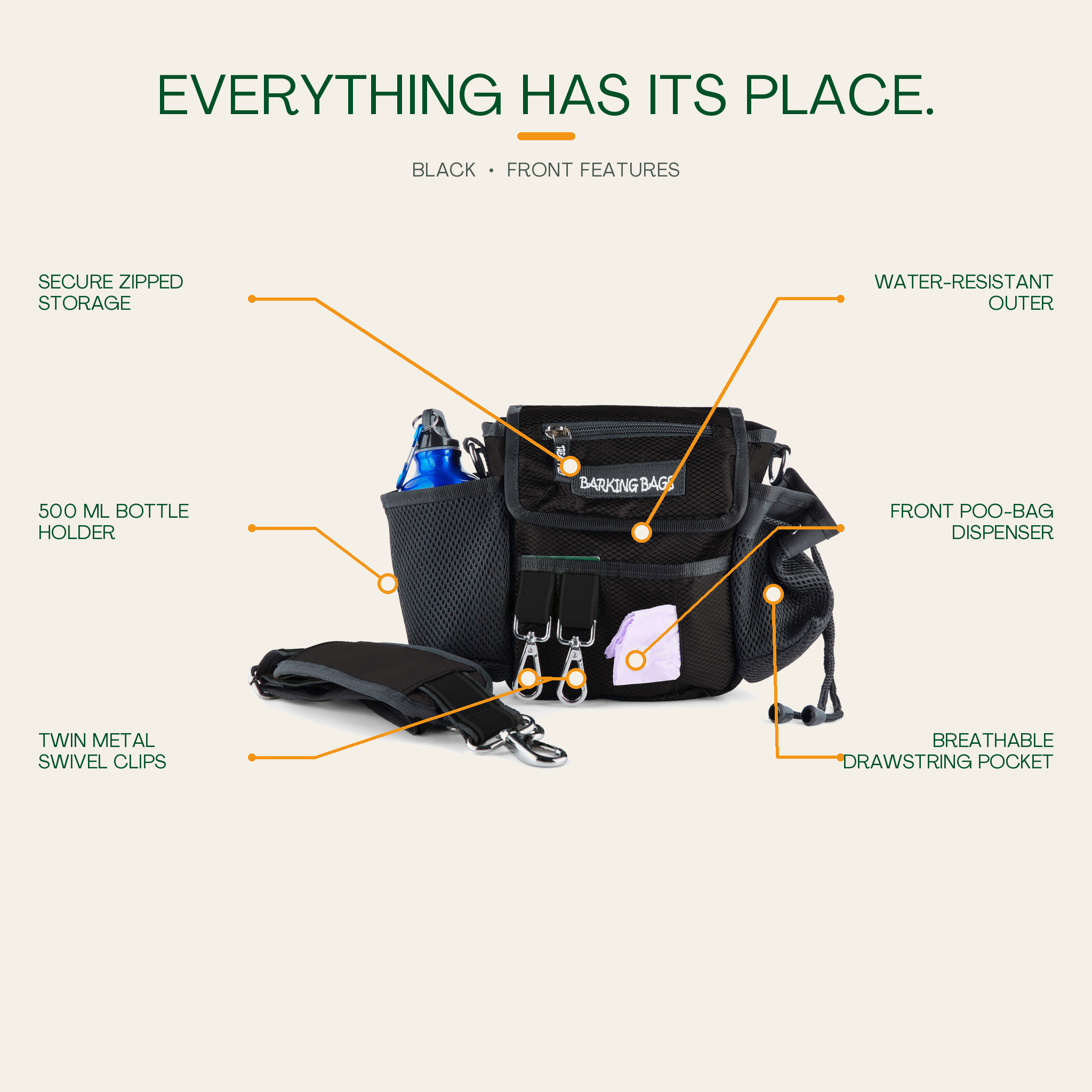
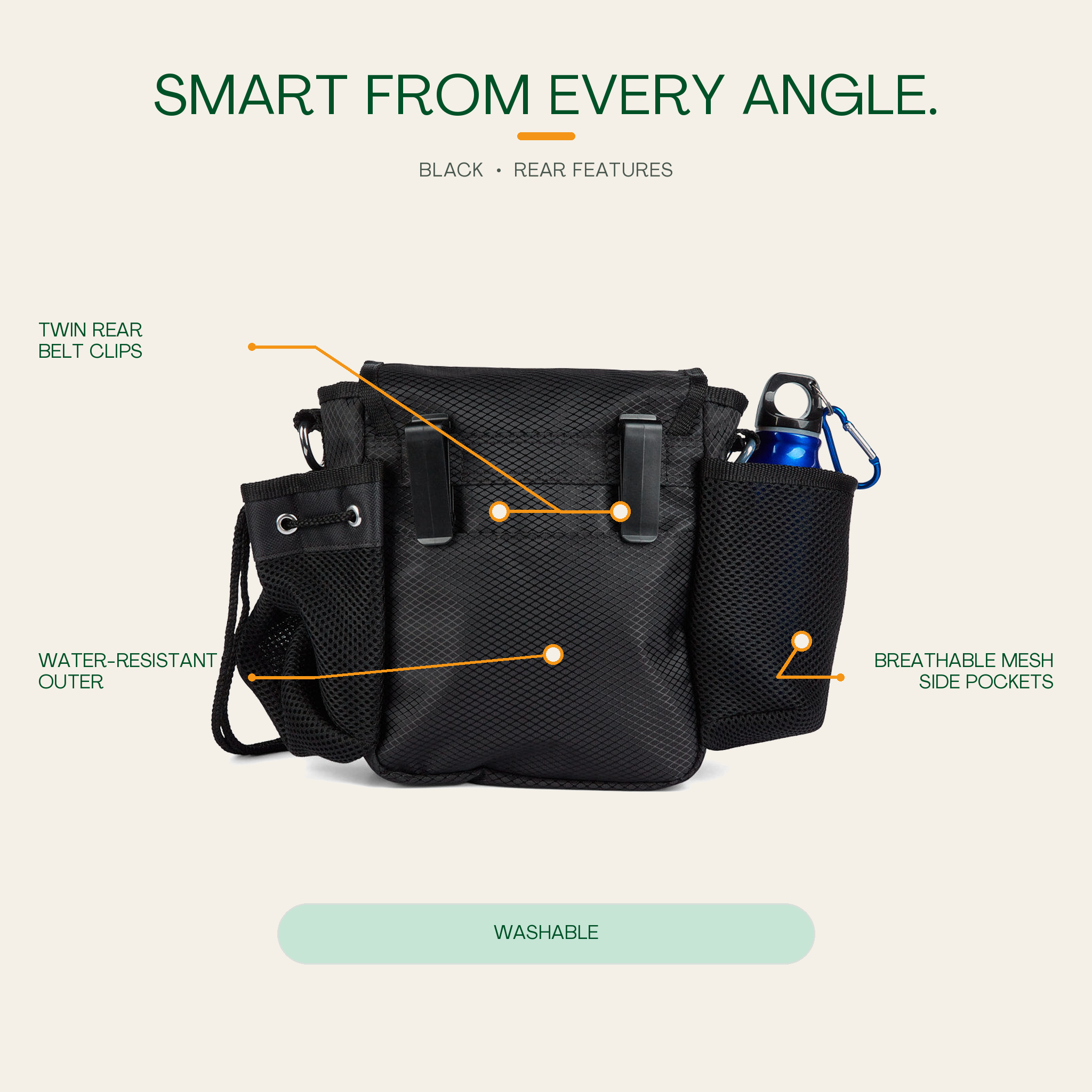
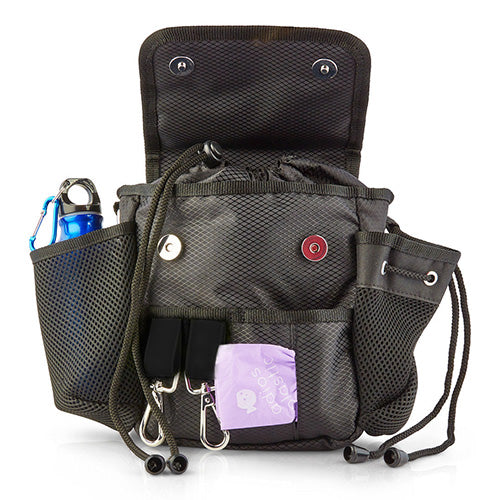
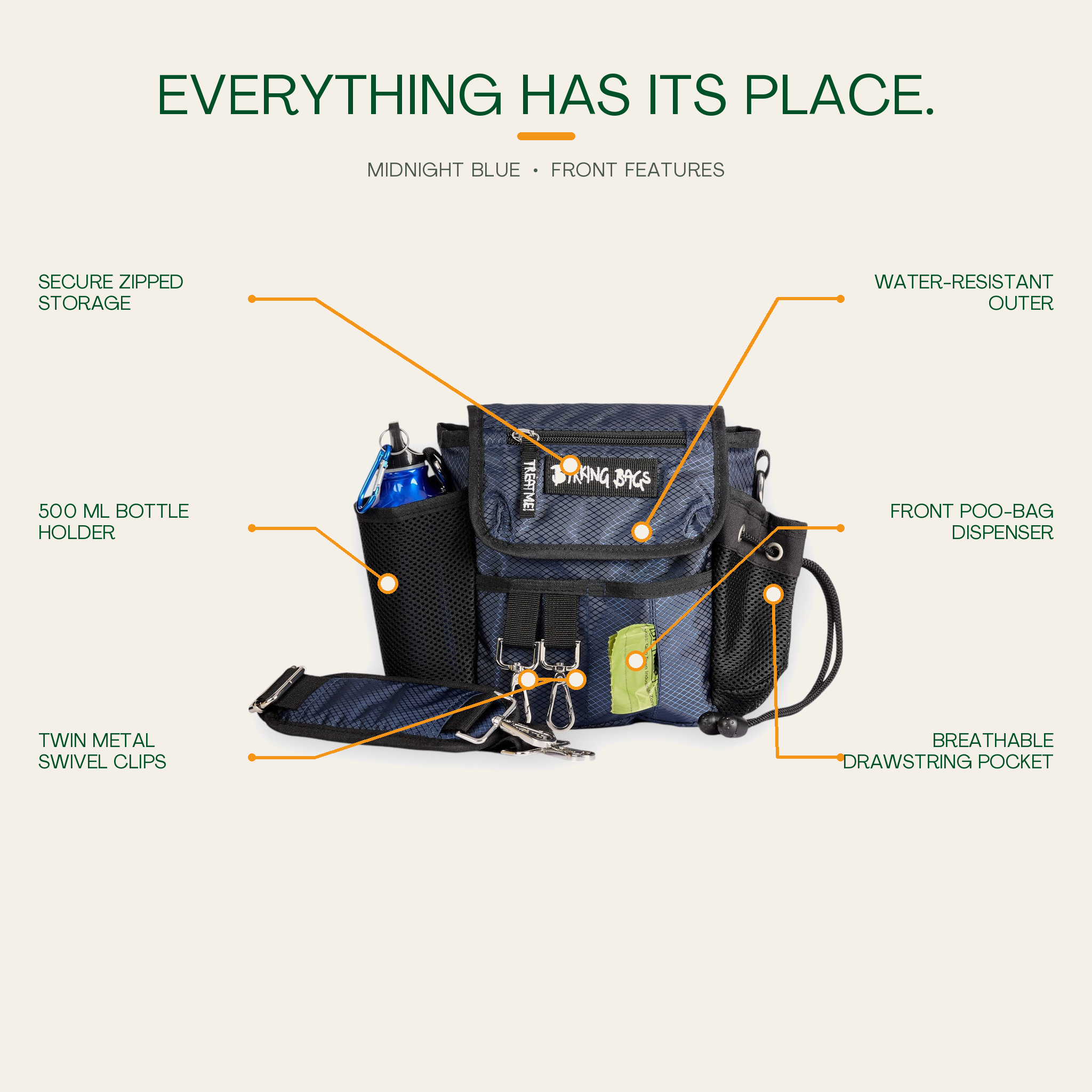
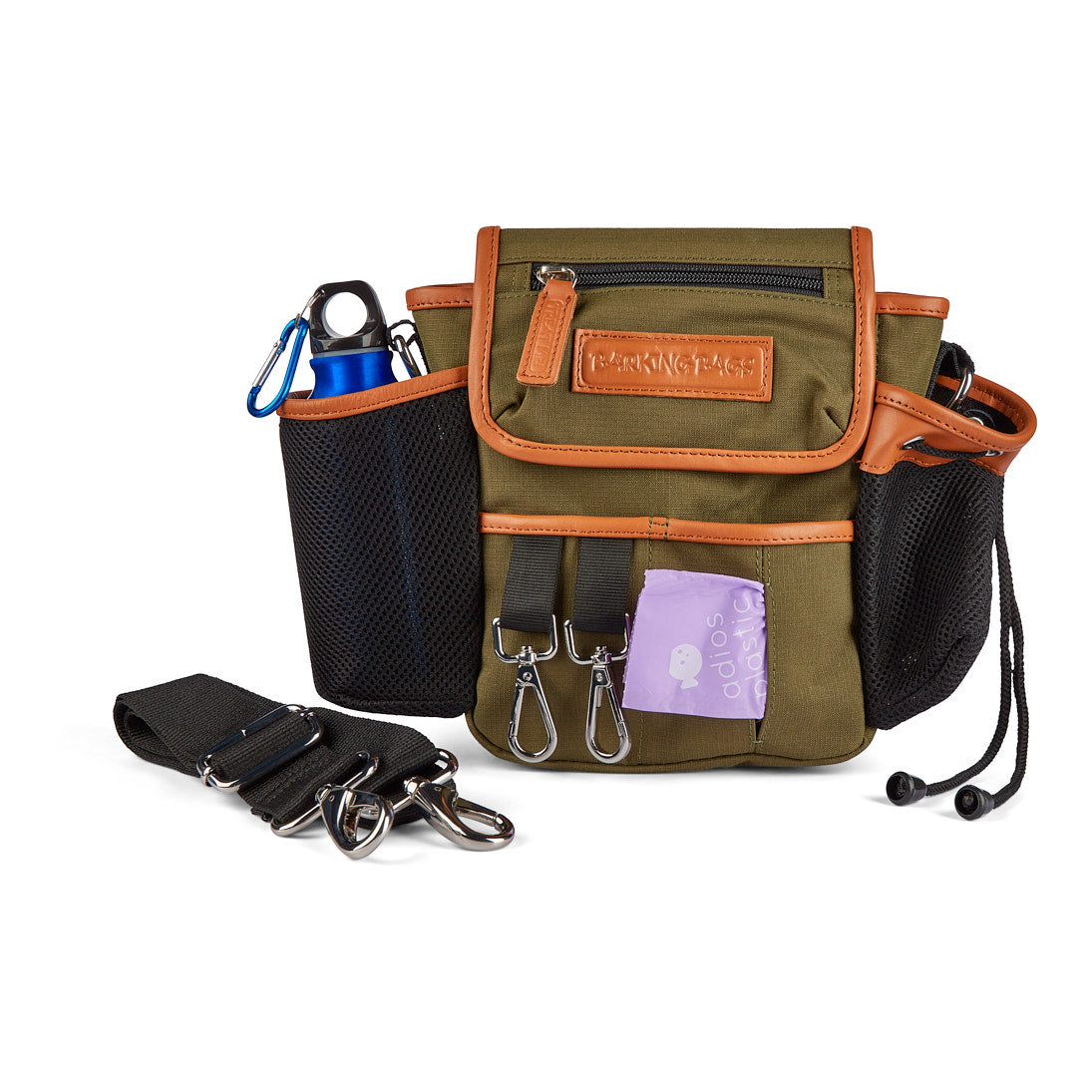
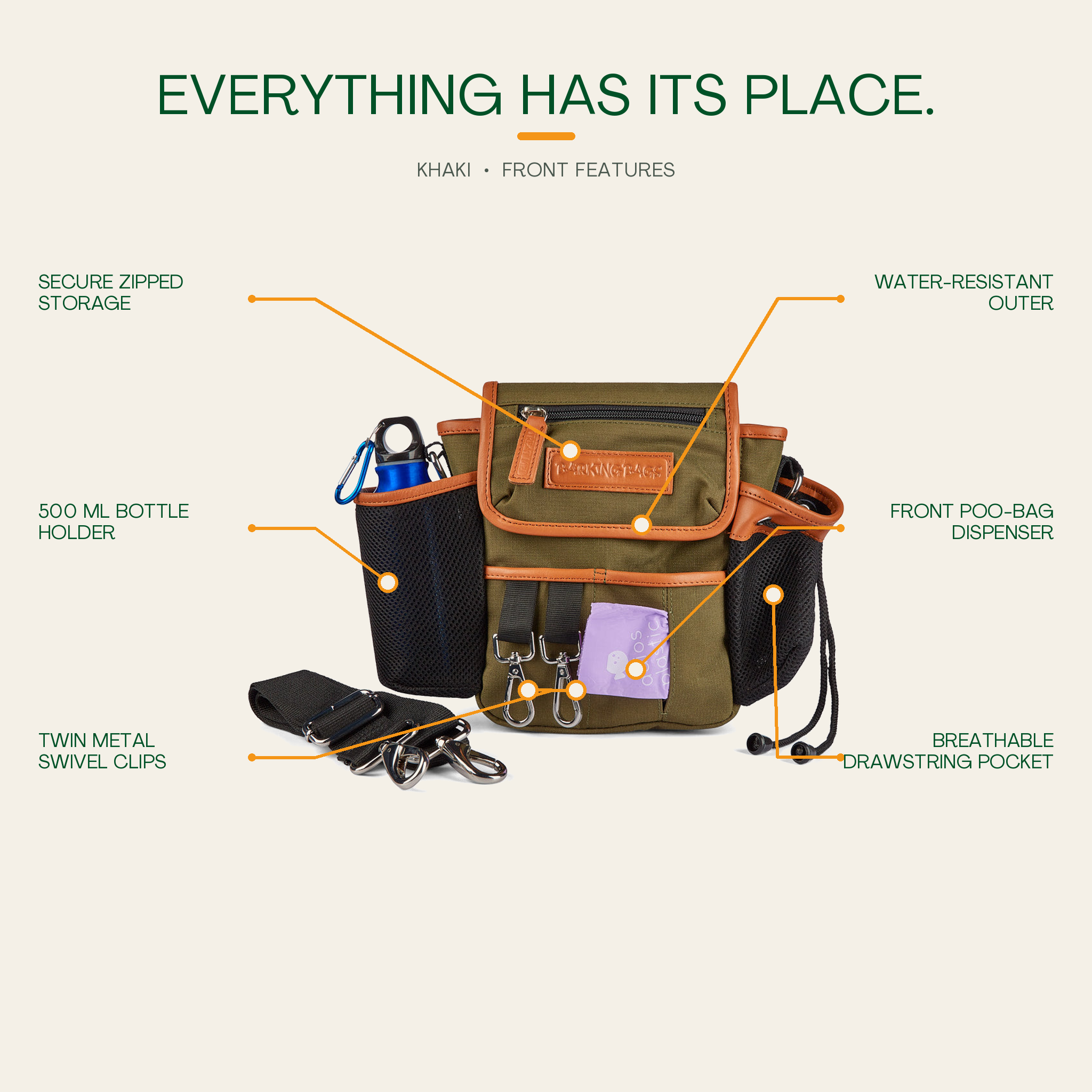
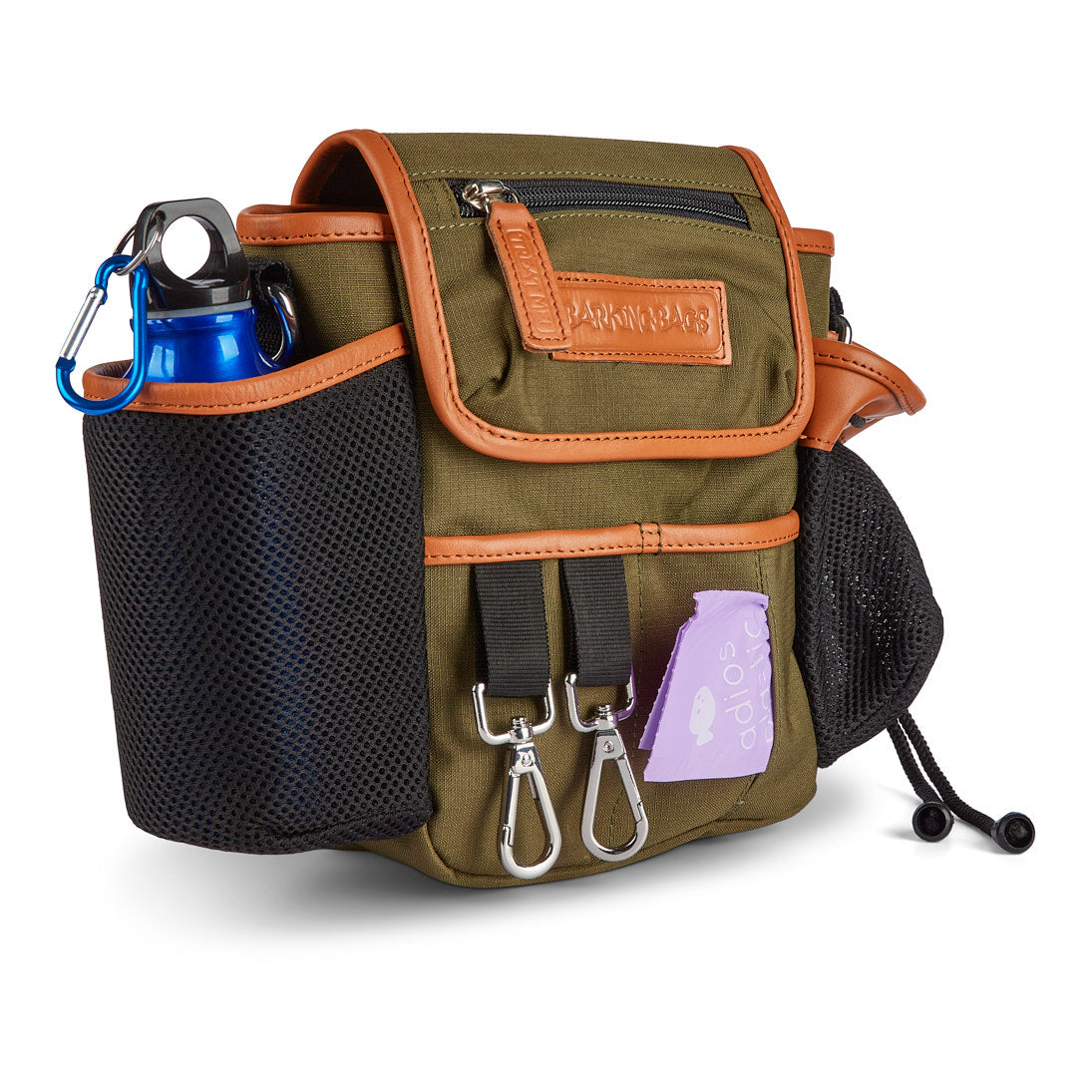
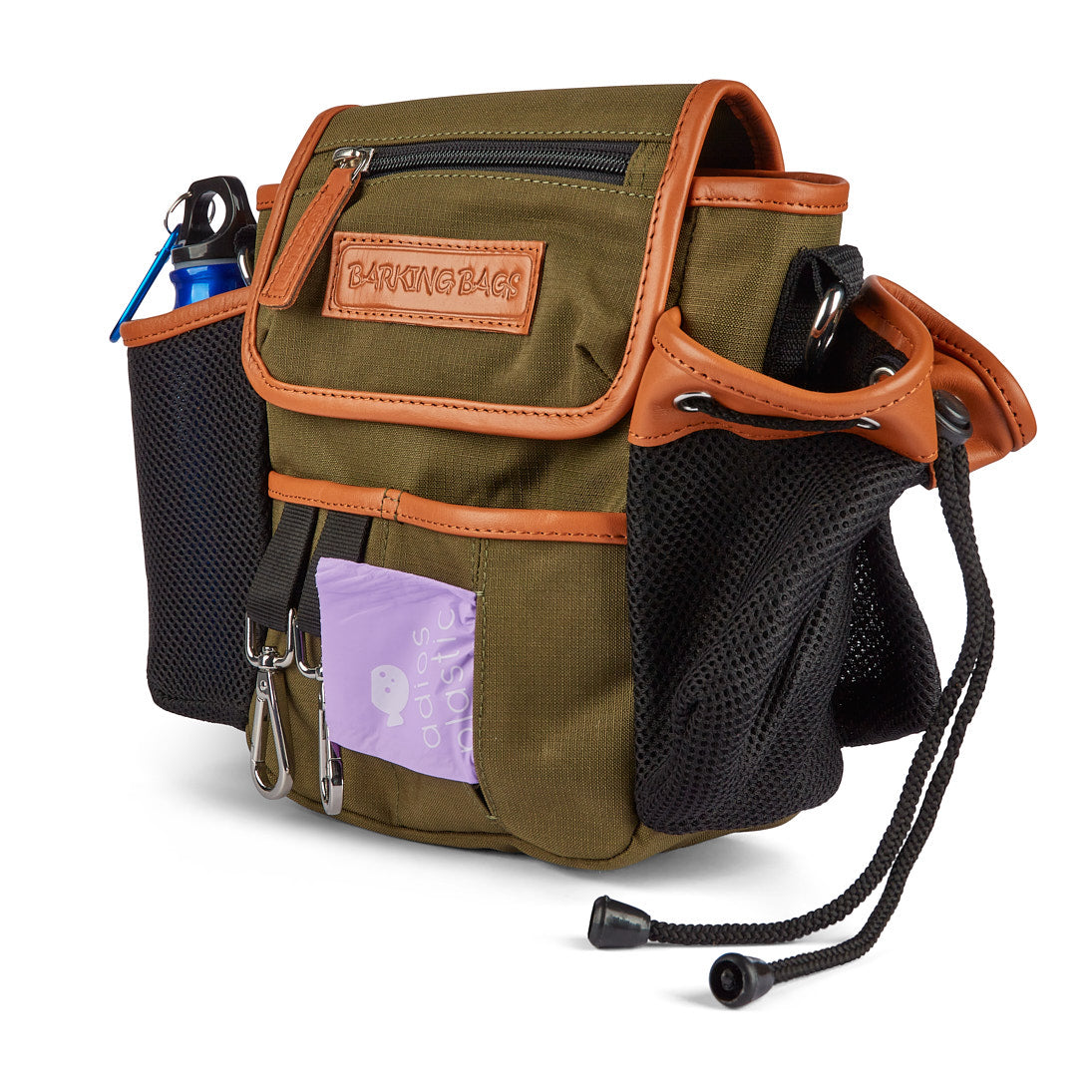
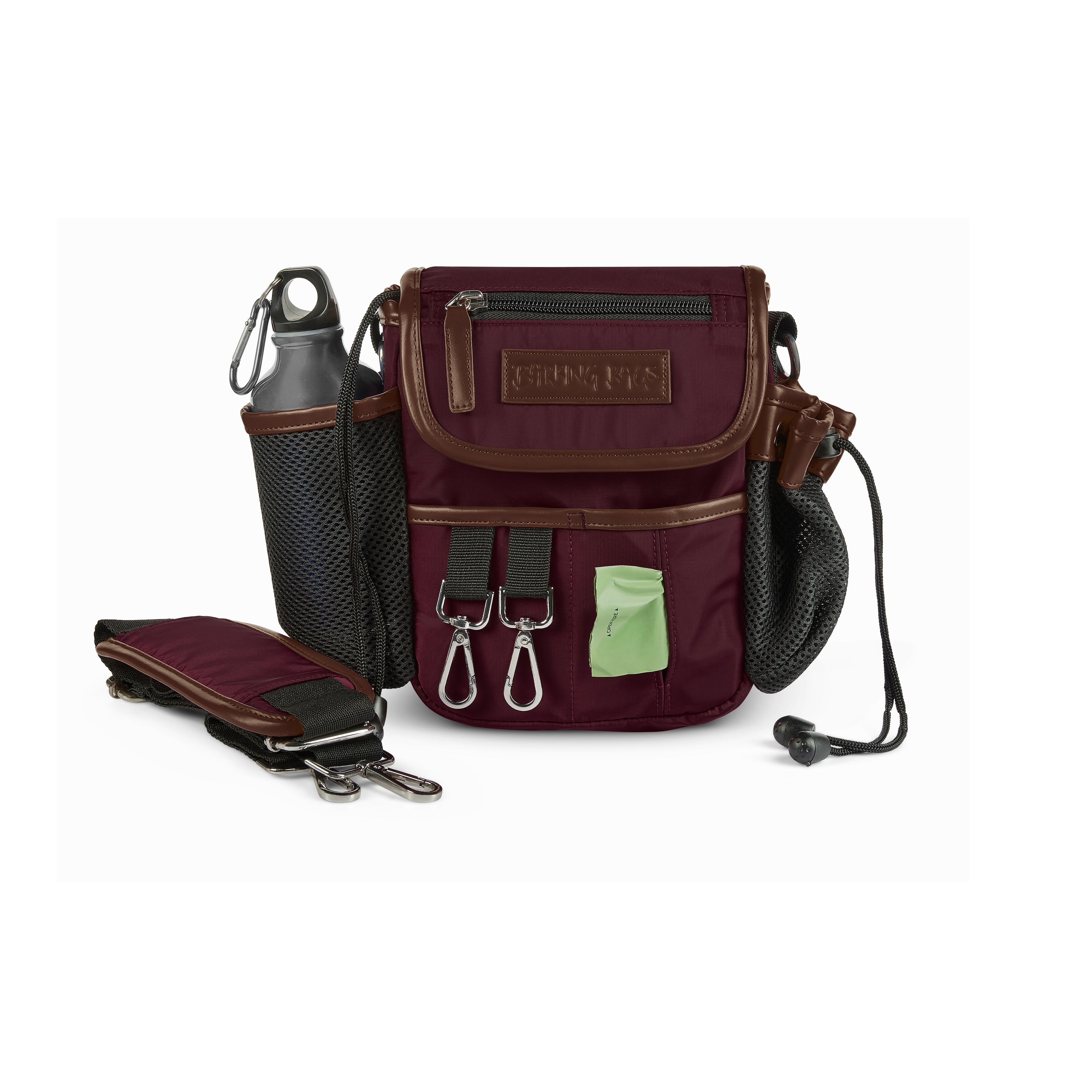
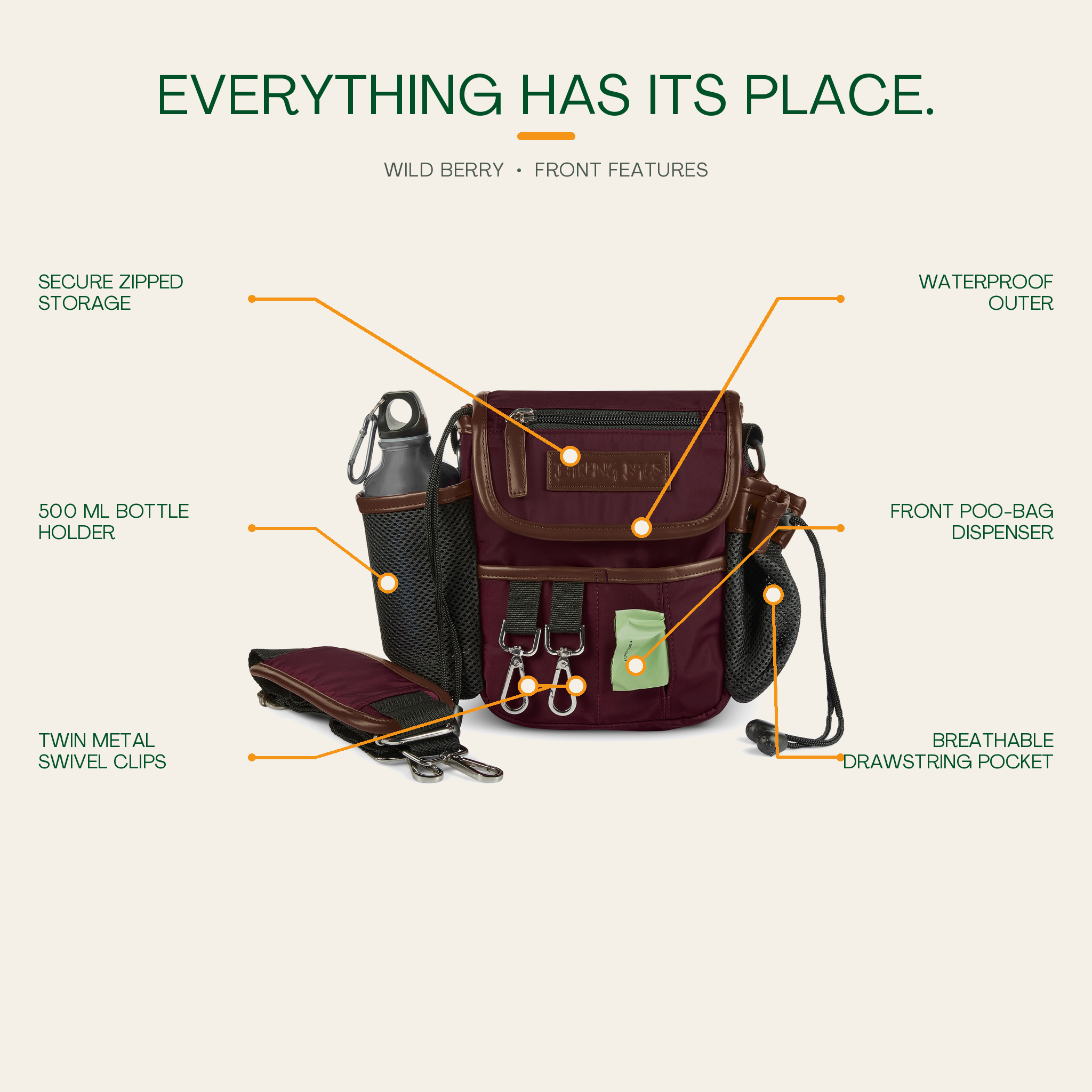
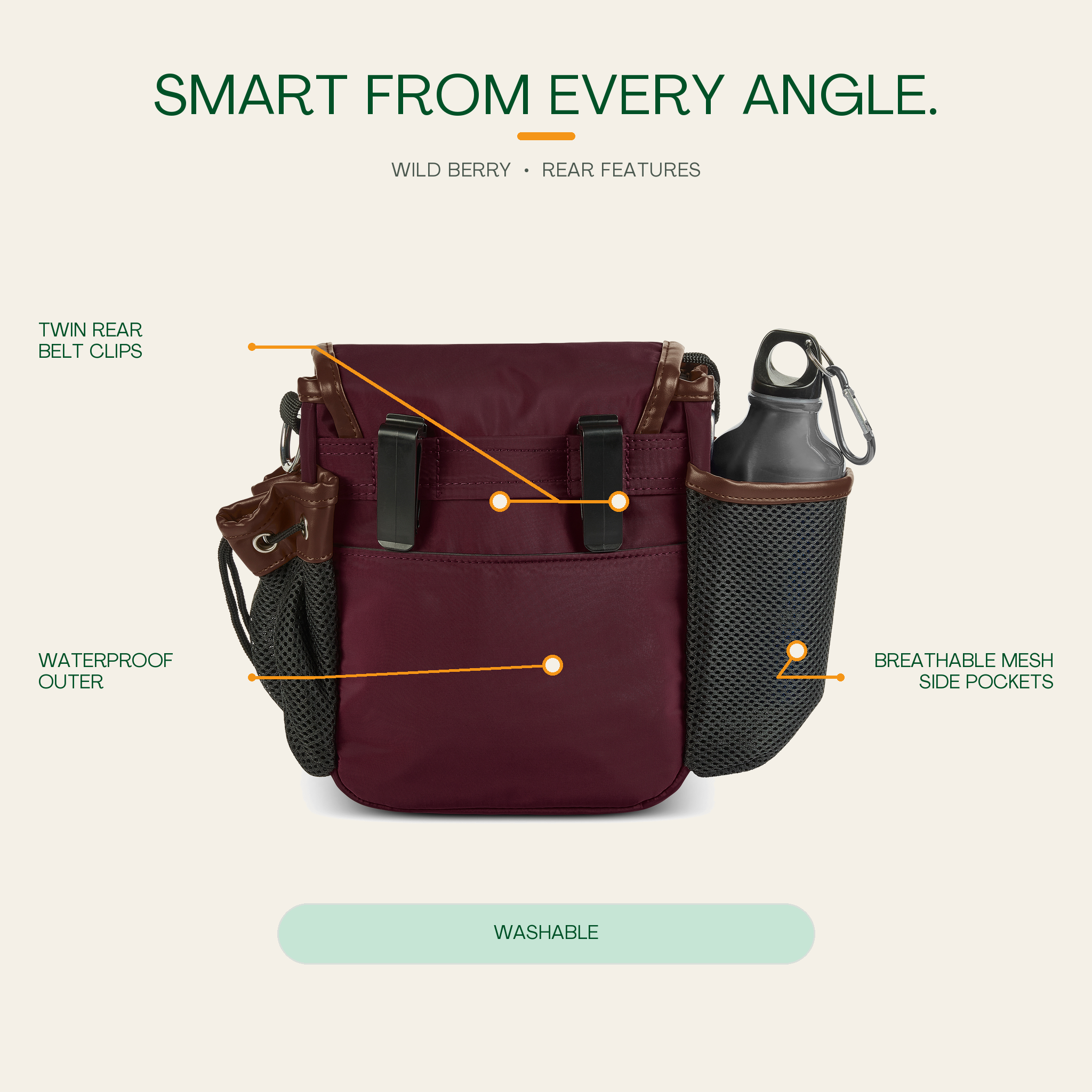
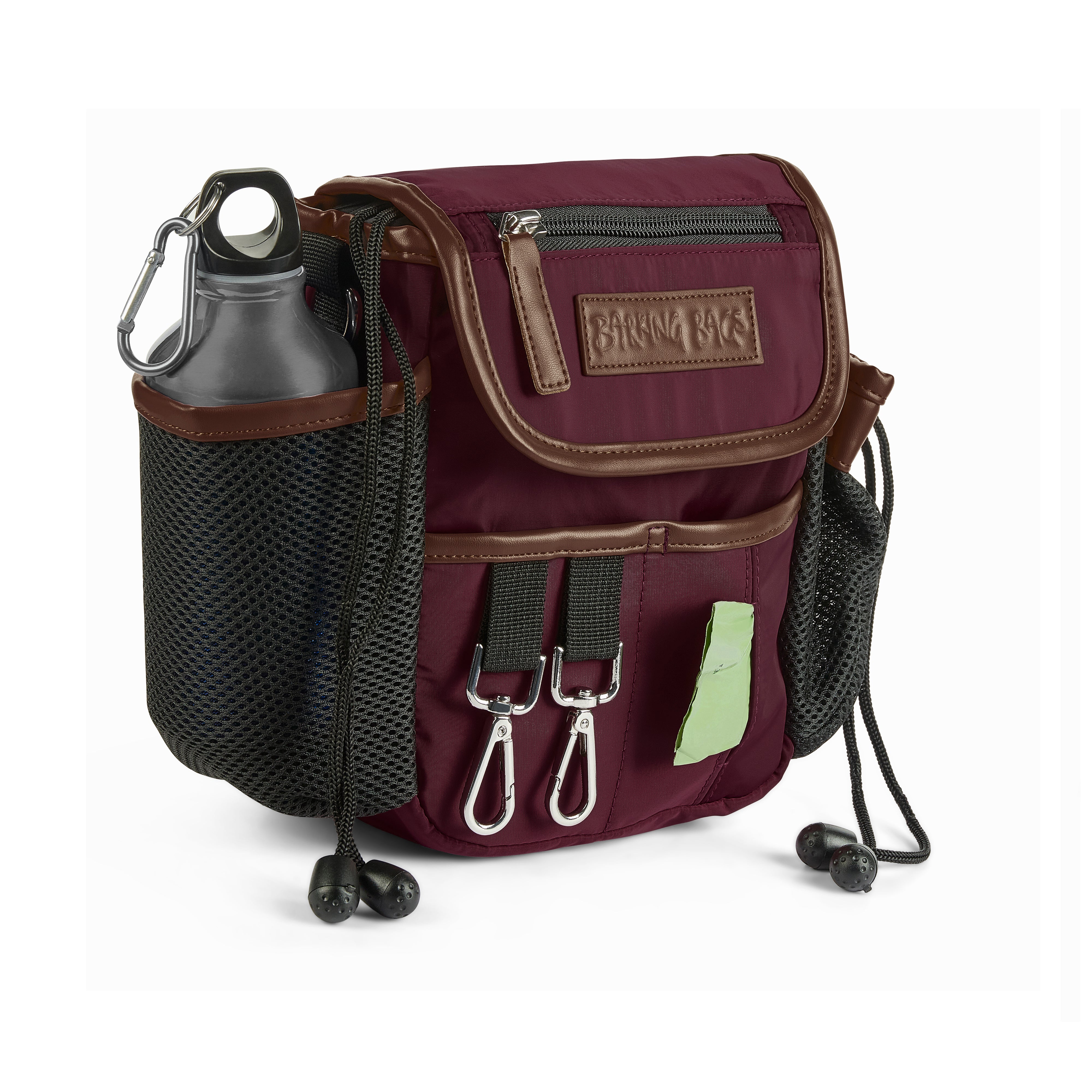
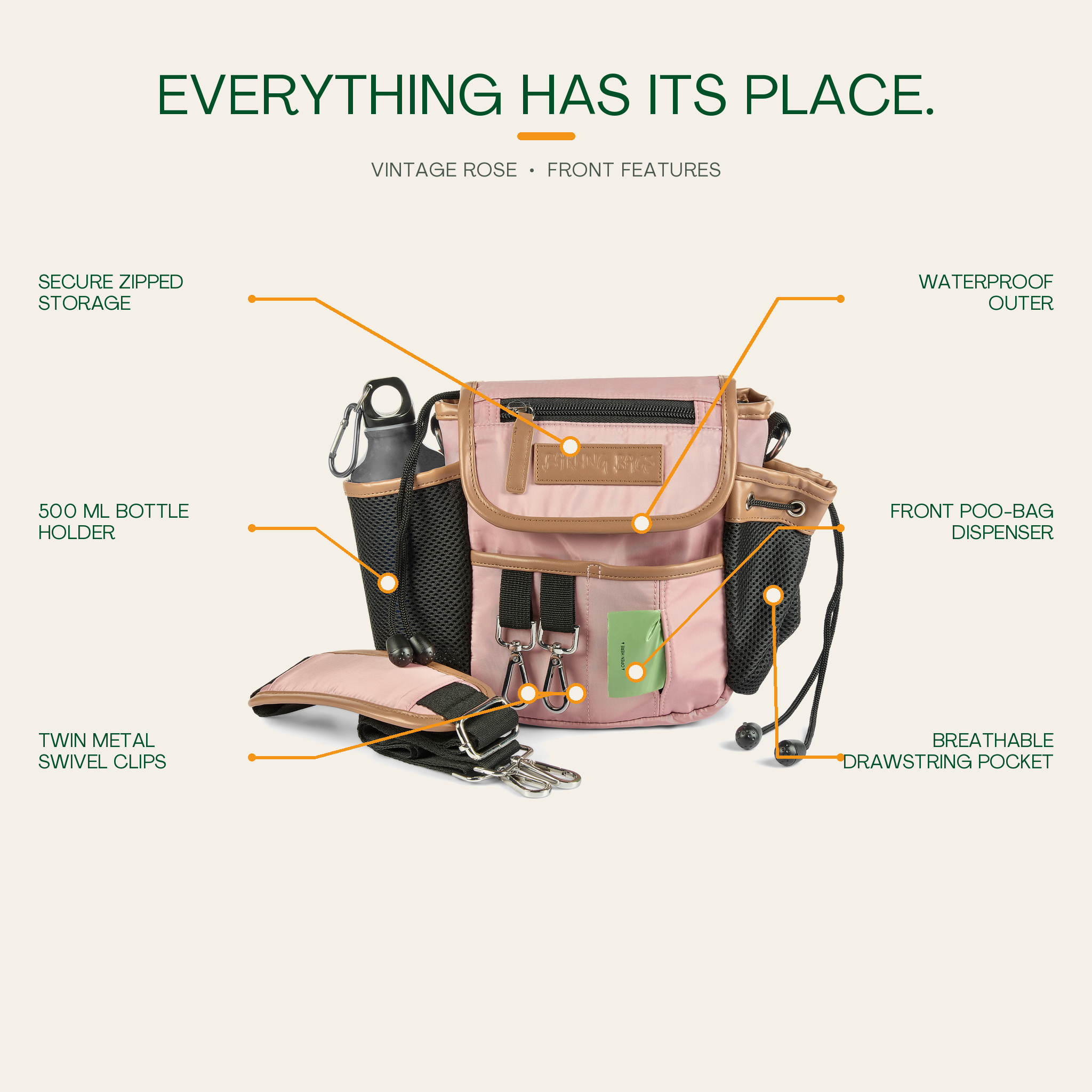
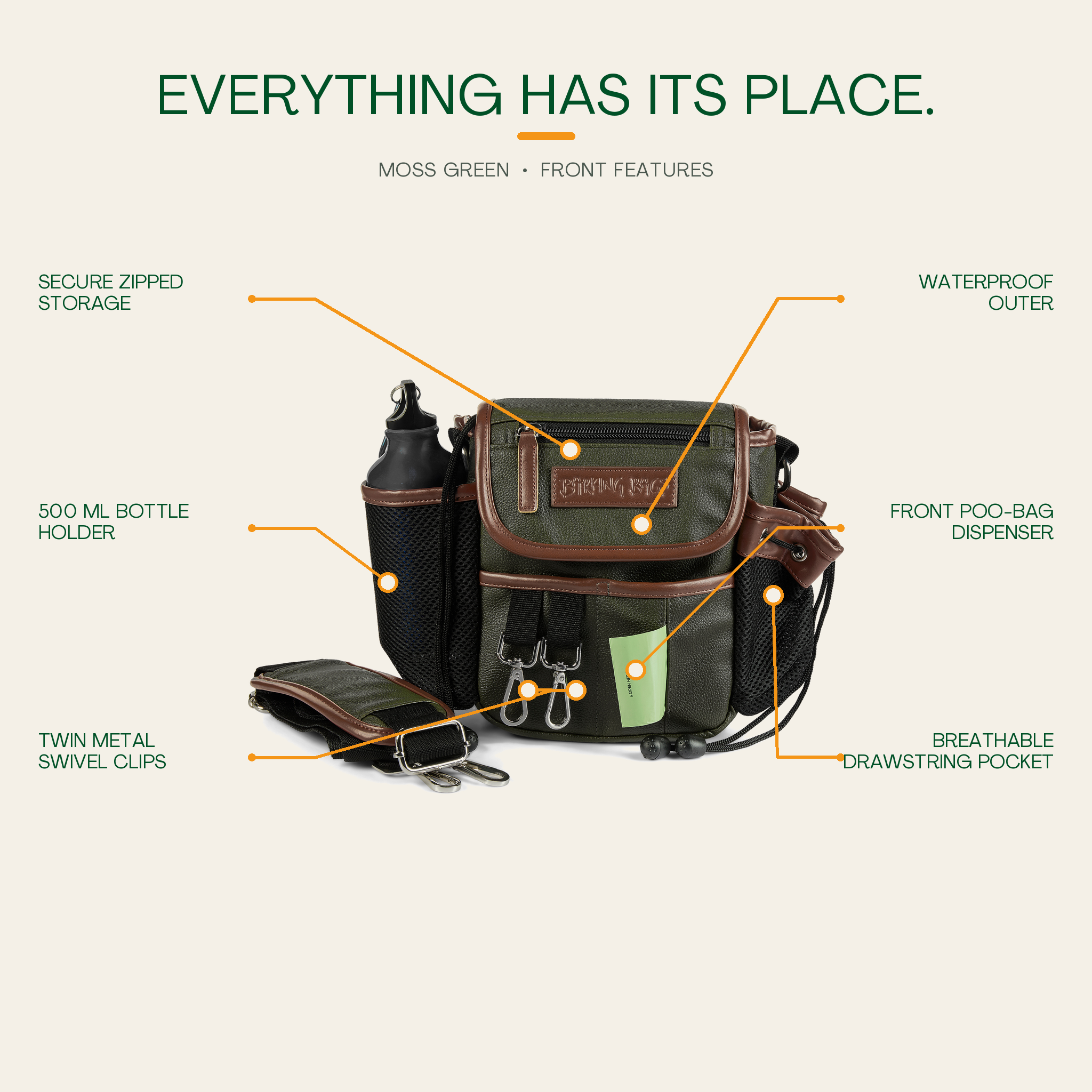
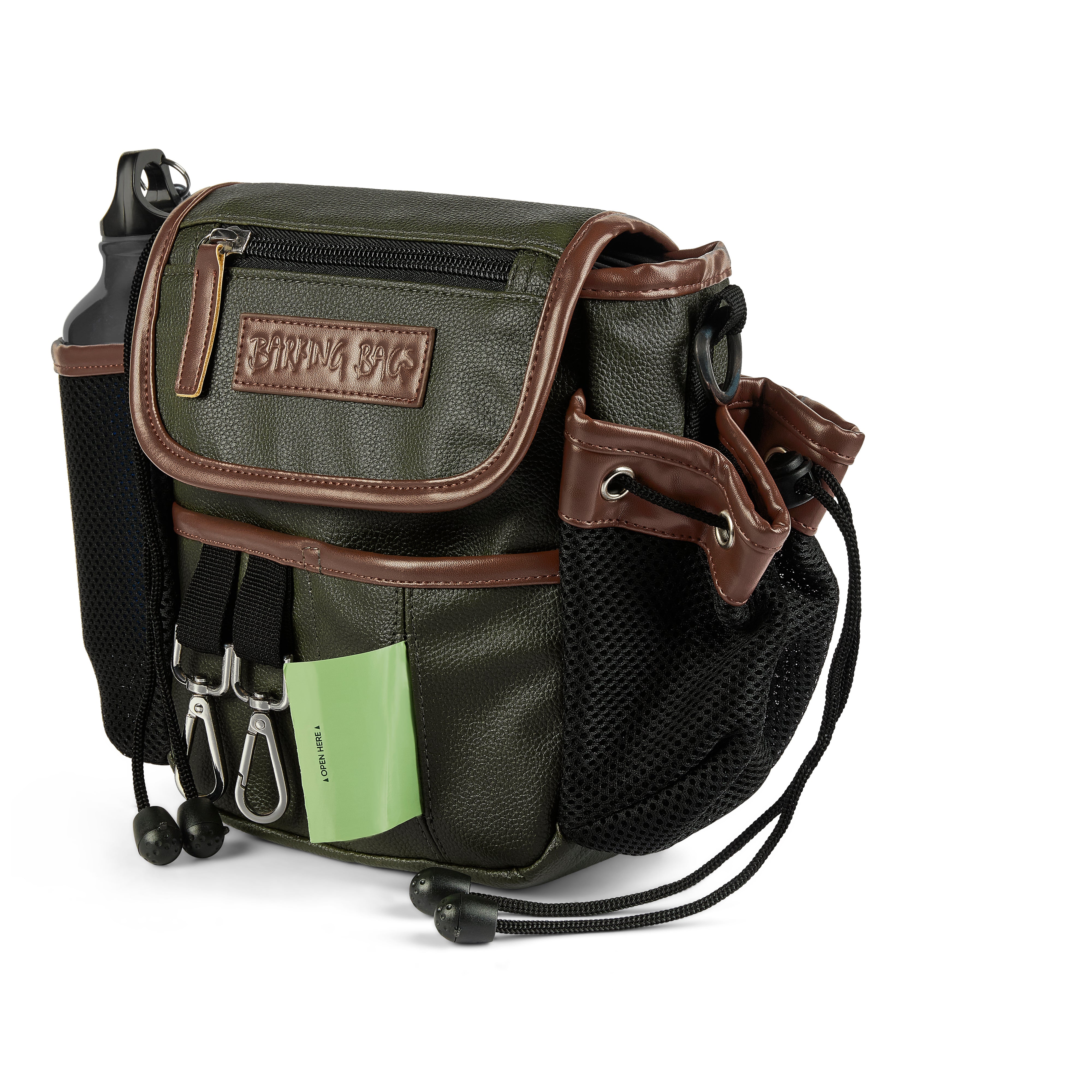
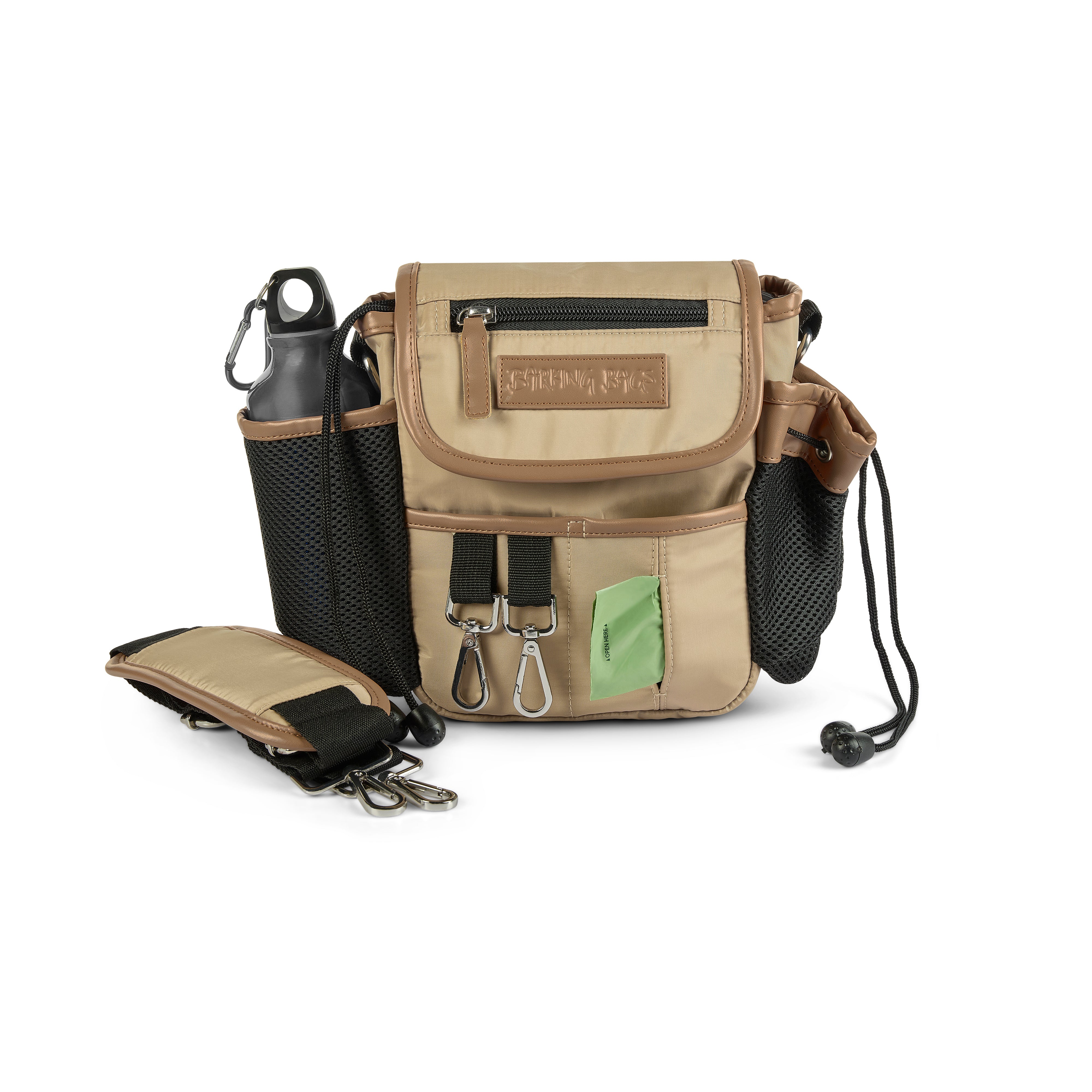
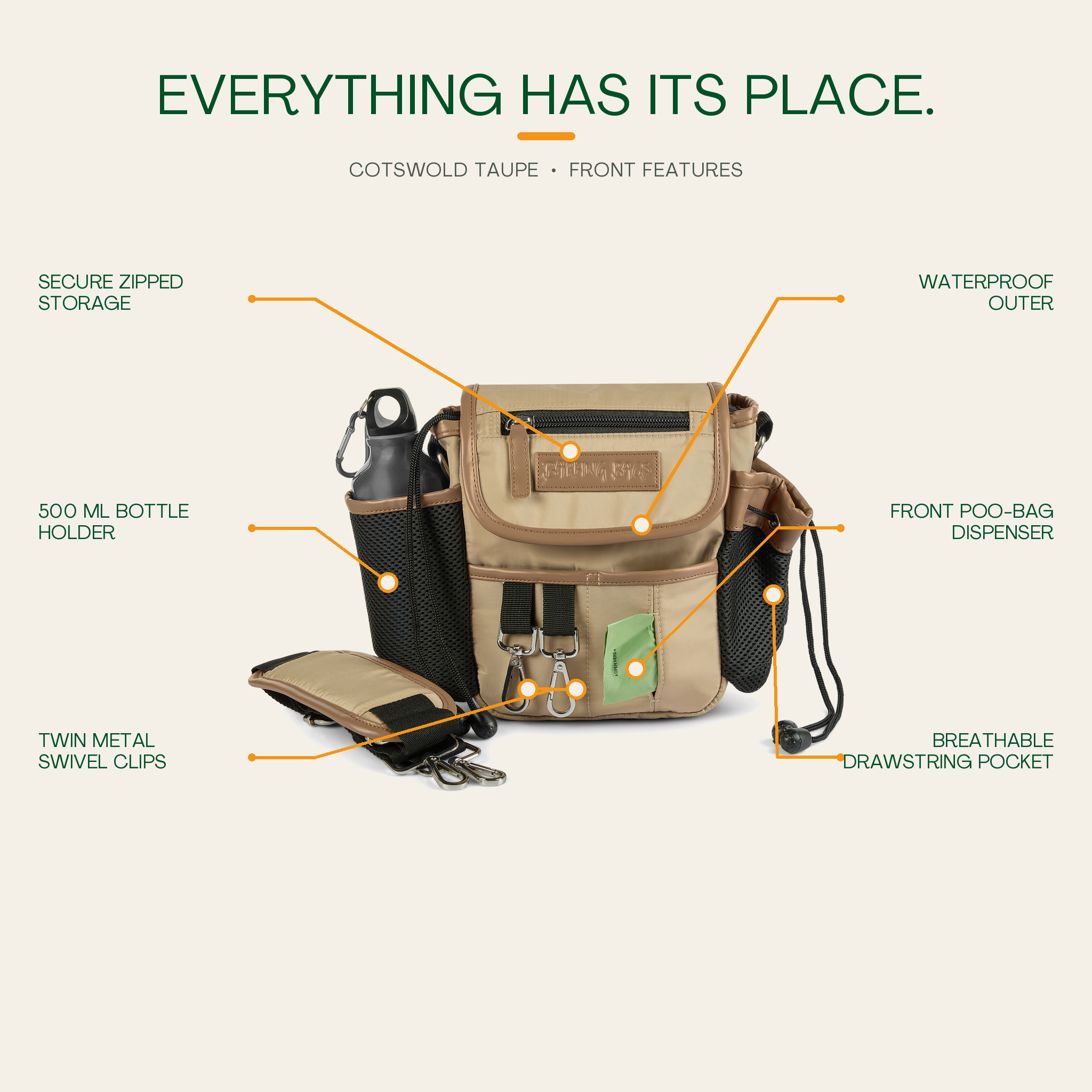
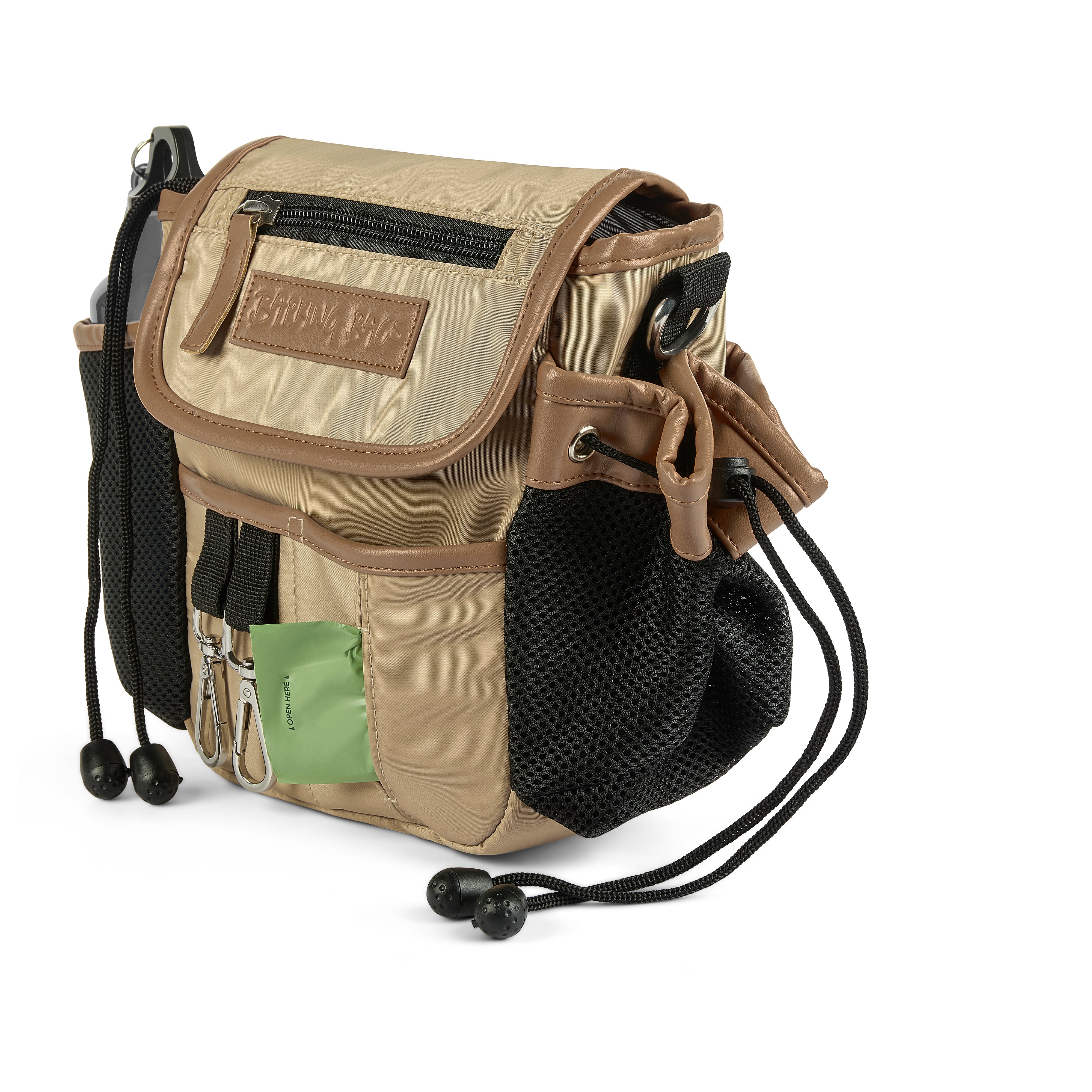
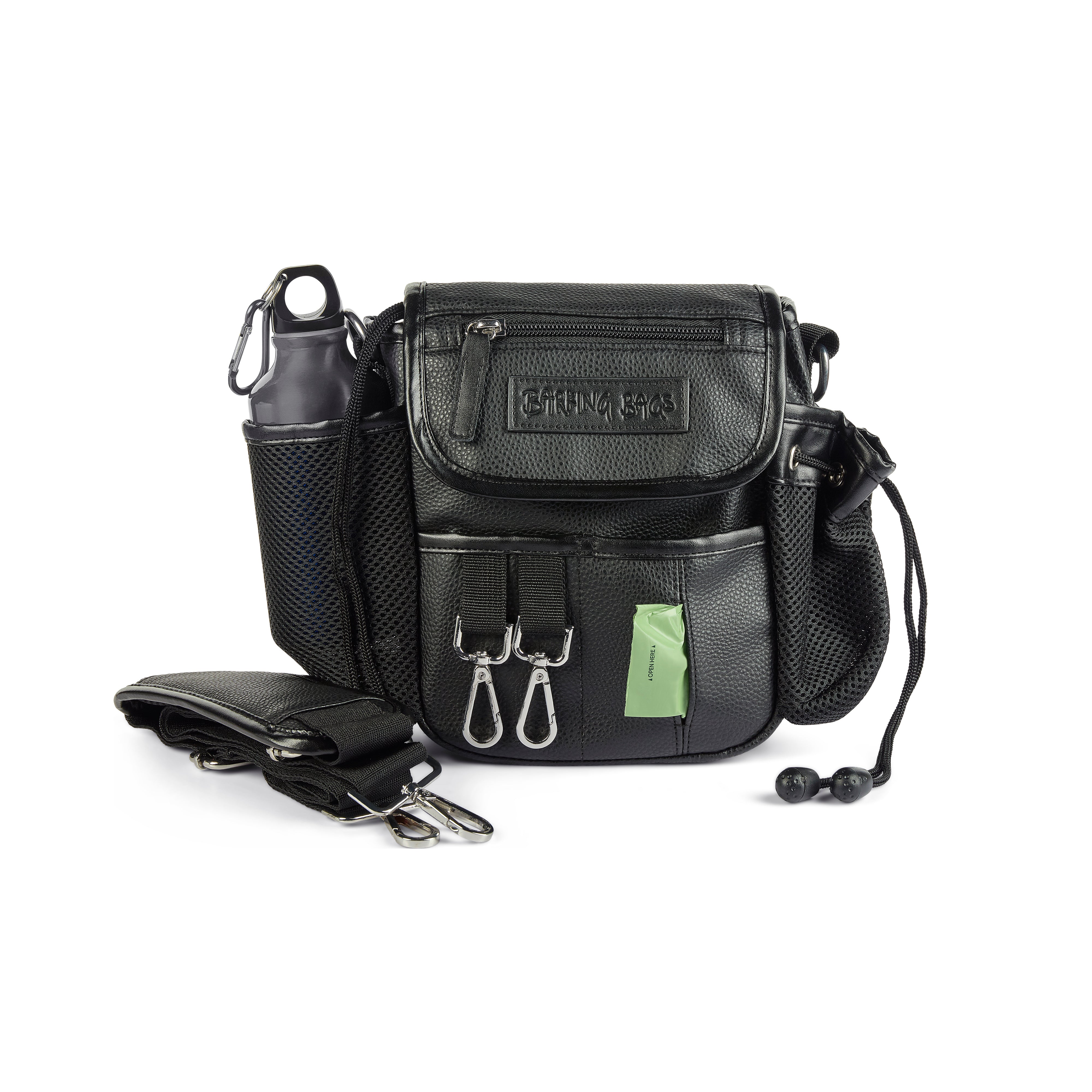
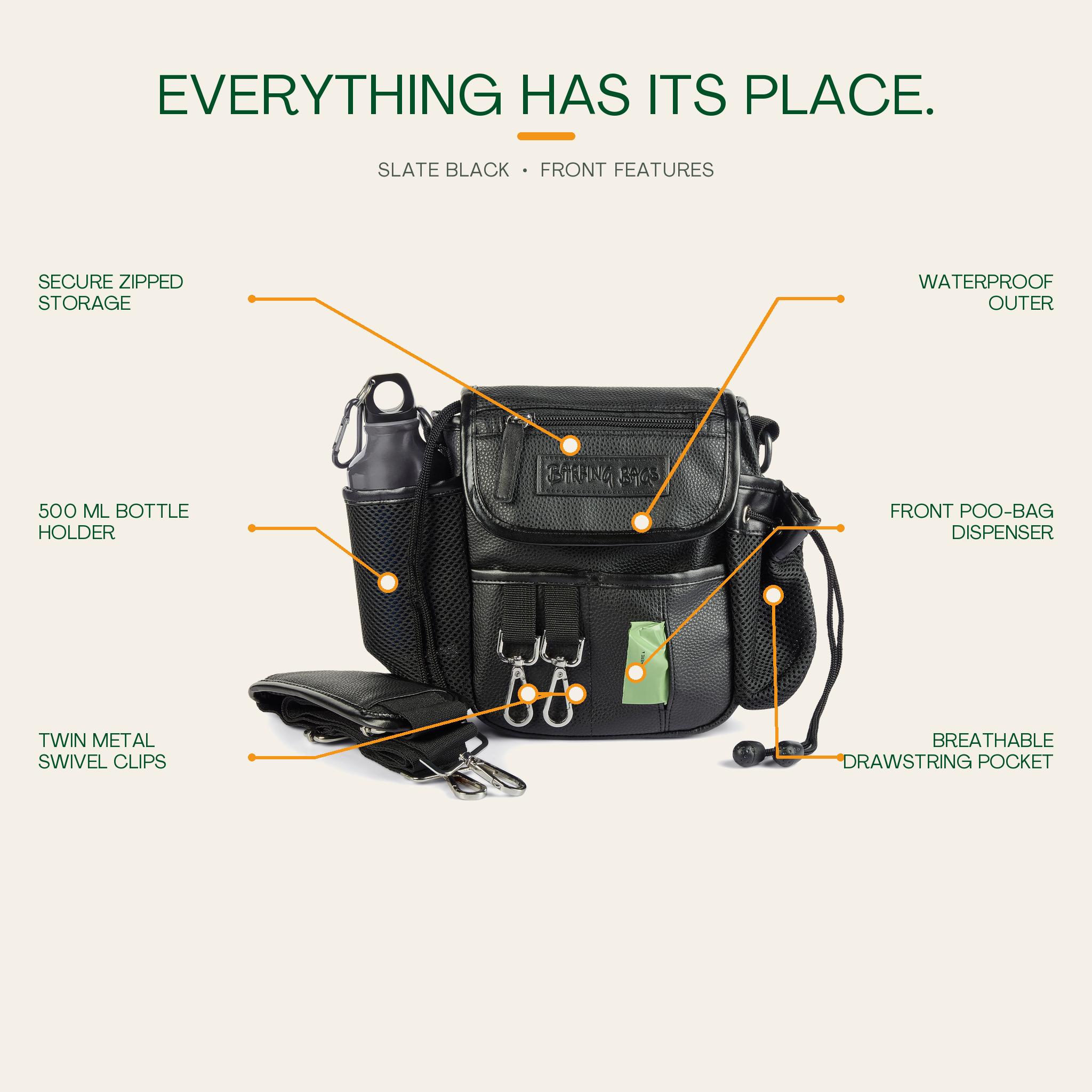
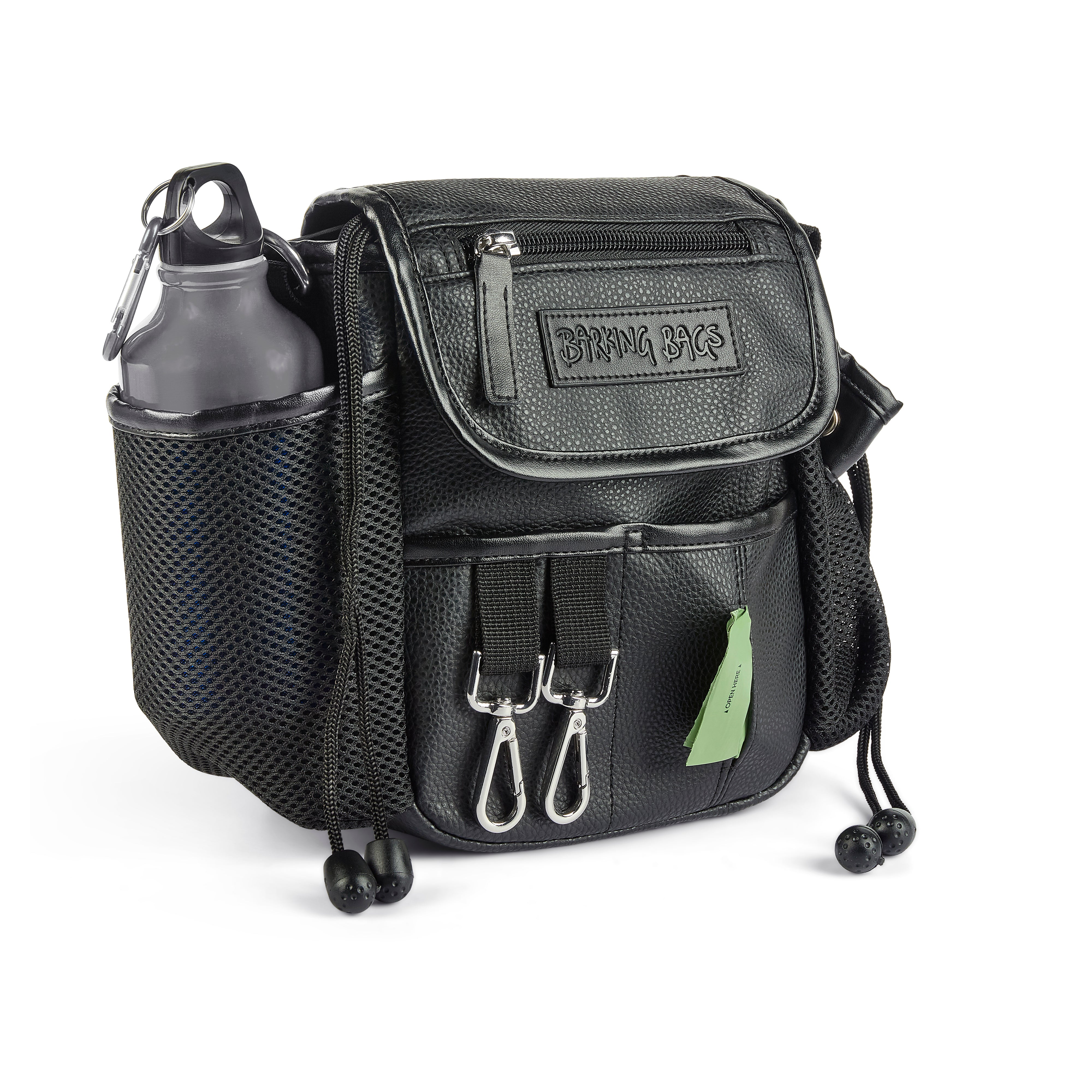
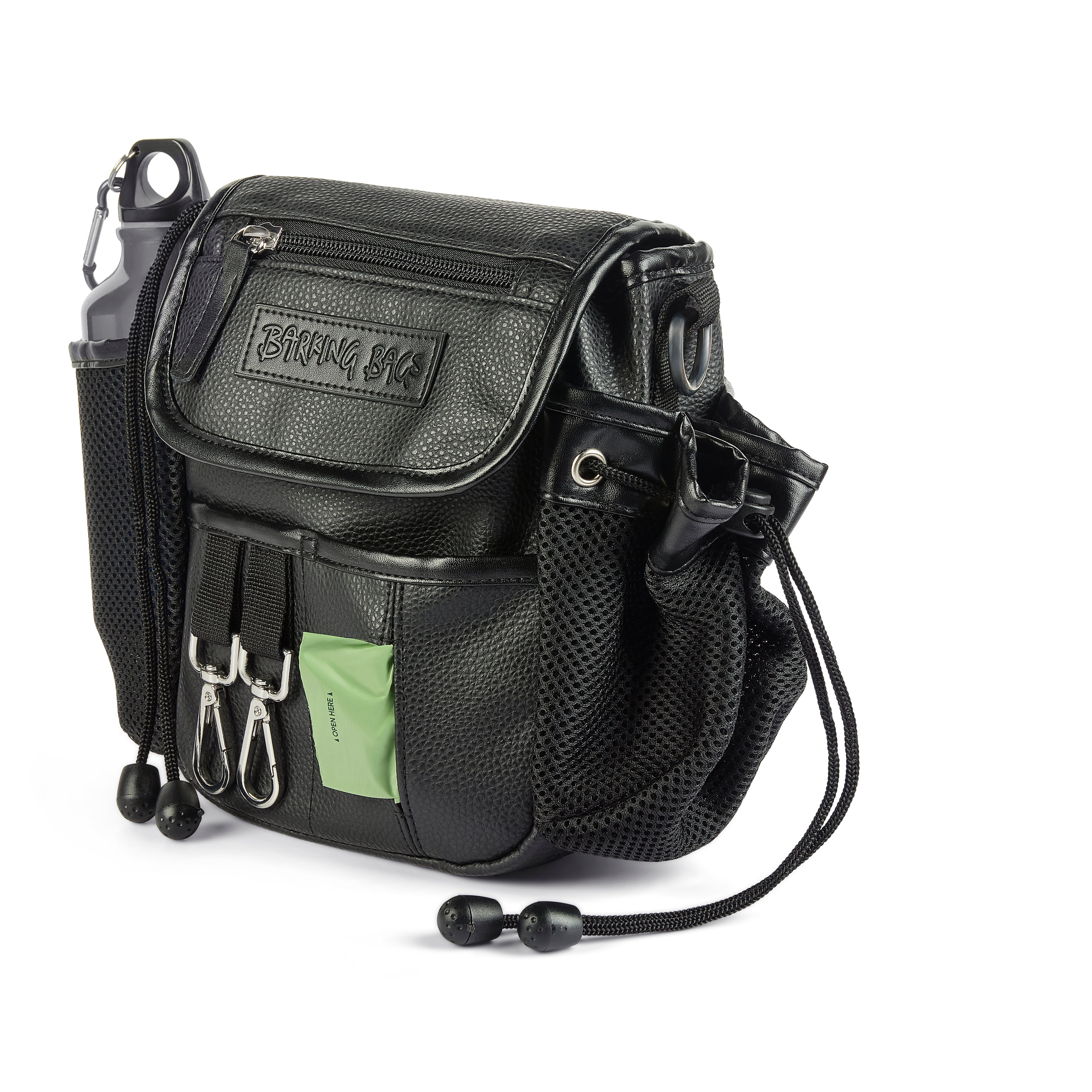
For a standard daily walk, there are a few non-negotiables. Poo bags come first. They are the one item every dog owner needs every single time, and they should be easy to grab quickly rather than buried at the bottom of a bag. A built-in dispenser or dedicated pocket makes a real difference here.
Treats are next, especially if you are reinforcing recall, loose lead walking or calm behaviour around distractions. Even if your dog is well trained, treats are useful for rewarding good choices in real time. The key is keeping them separate from everything else so they stay fresh and do not leave crumbs all over your phone and purse.
A lead is obvious, but where it sits matters. If you carry a spare slip lead, a long line or a second lead for flexibility, you need enough space to store it without the whole bag turning into a tangle. Walkers with puppies or dogs in training often need more room here than they expect.
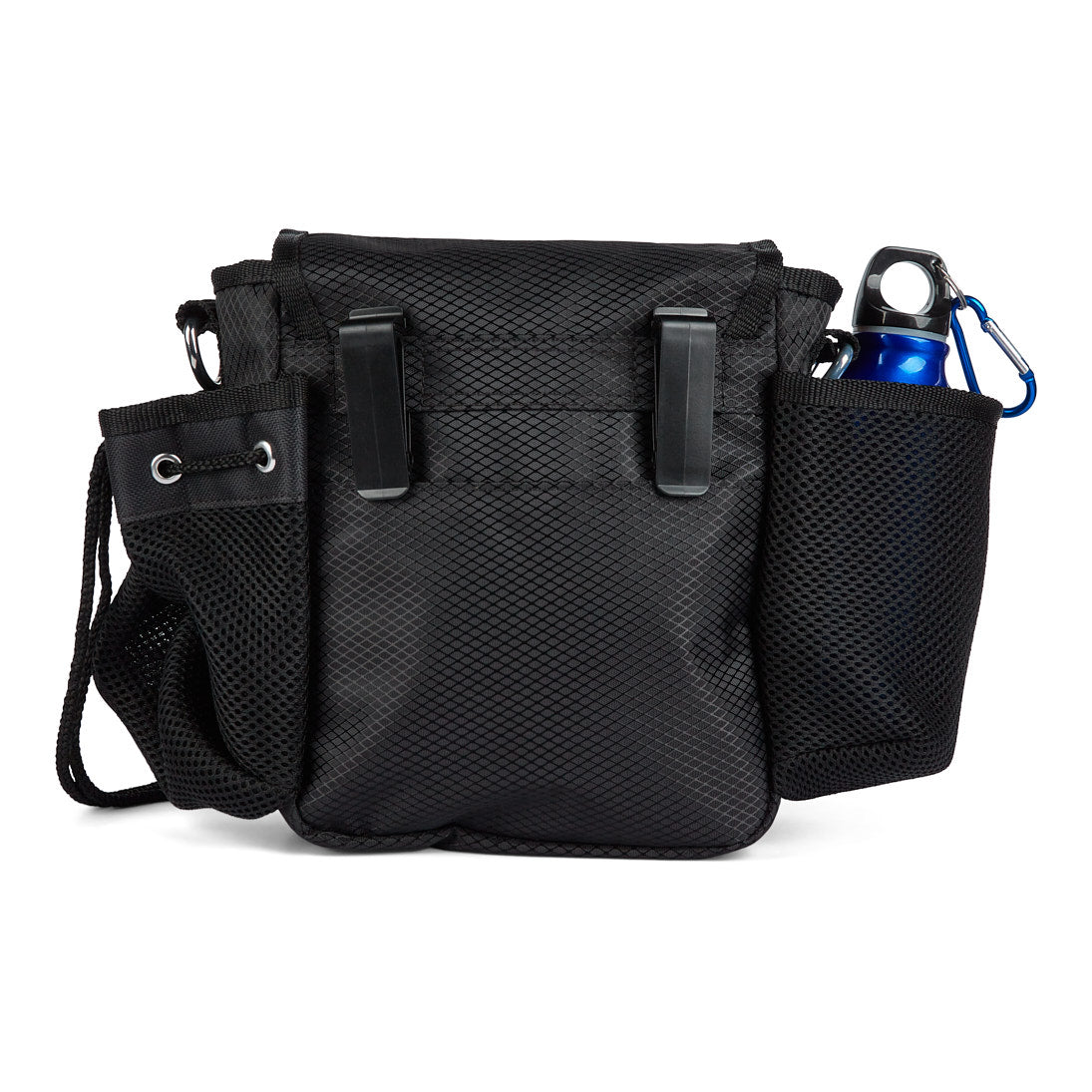
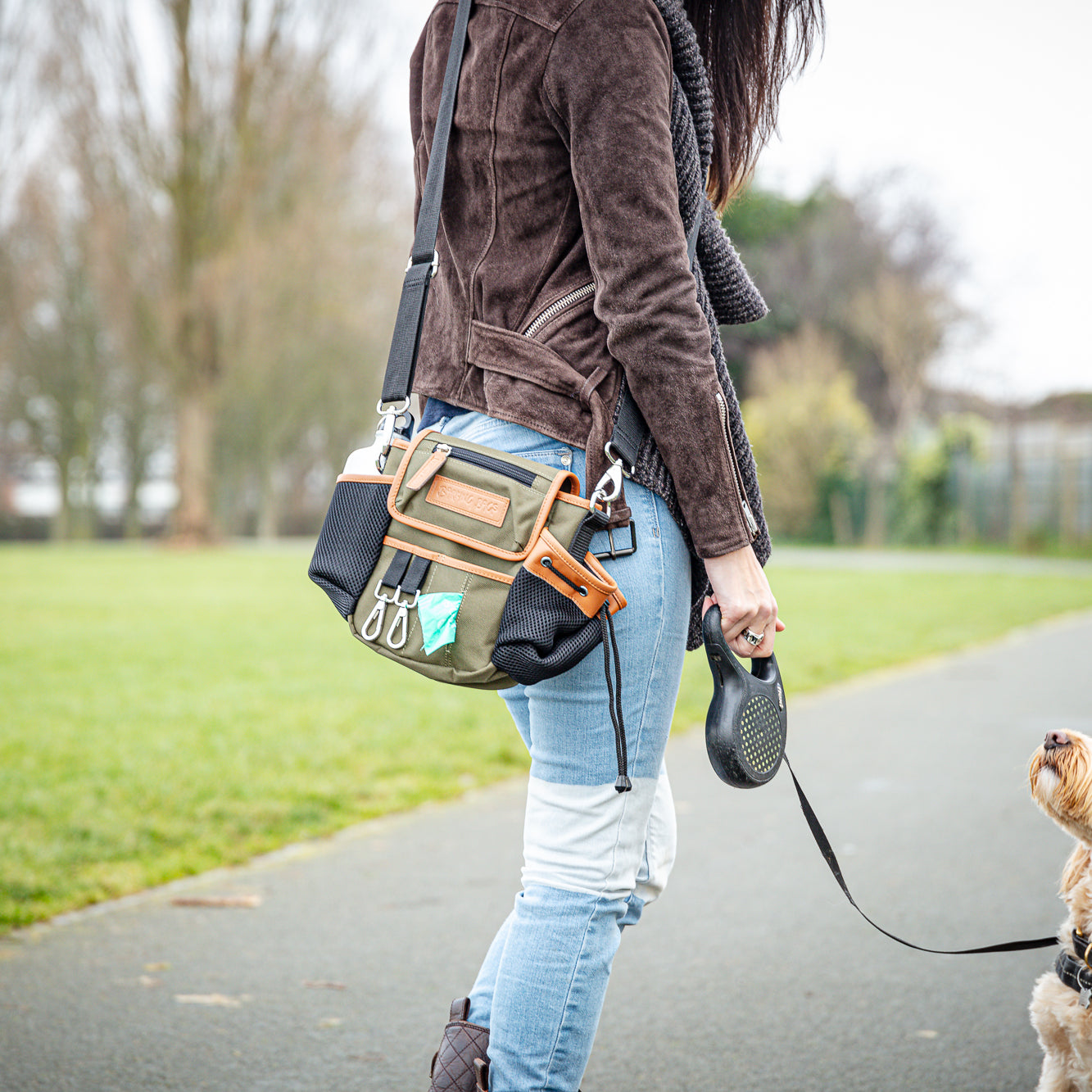
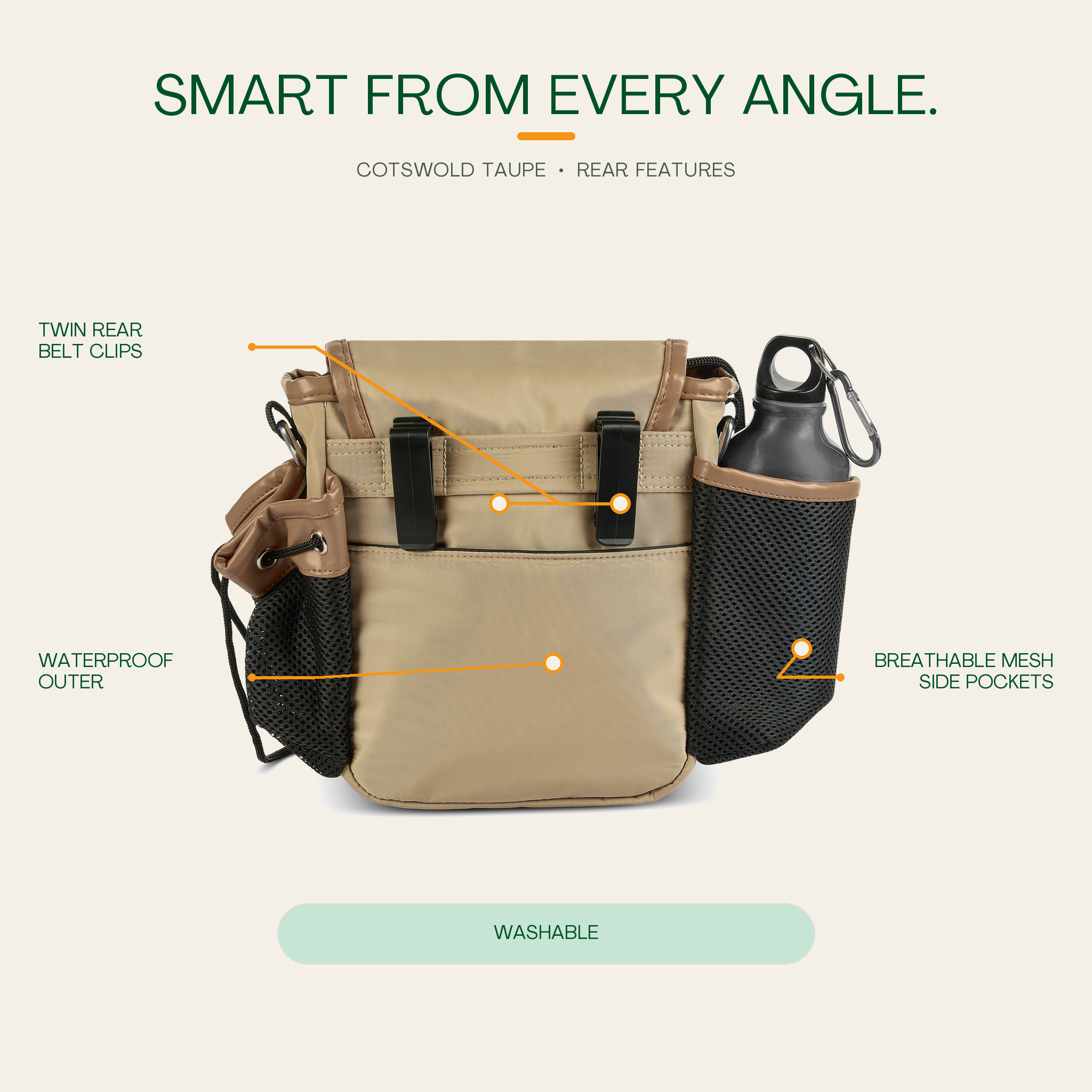
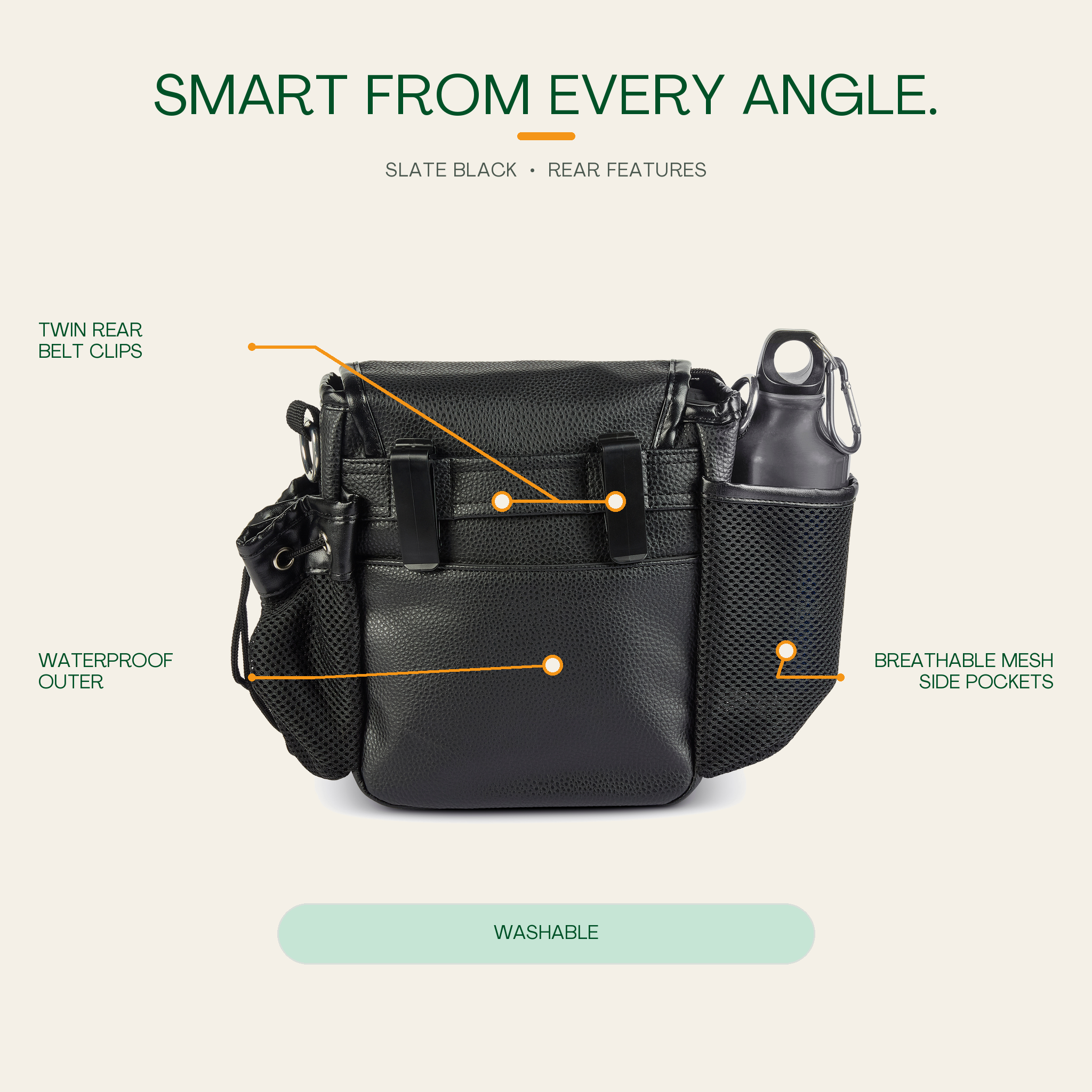
Then come your own essentials: phone, keys and bank card. This is where many people rely on a handbag, coat pocket or whatever tote is nearest the door. It works until it does not. A proper dog walking bag should let you carry your personal items securely without mixing them in with used poo bags or damp dog gear.
The core items every bag should organise well
If you strip it back, every dog walking bag should comfortably carry five things: poo bags, treats, lead accessories, phone and keys. That sounds simple, but the real issue is organisation. A bag can technically fit those items and still be frustrating to use.
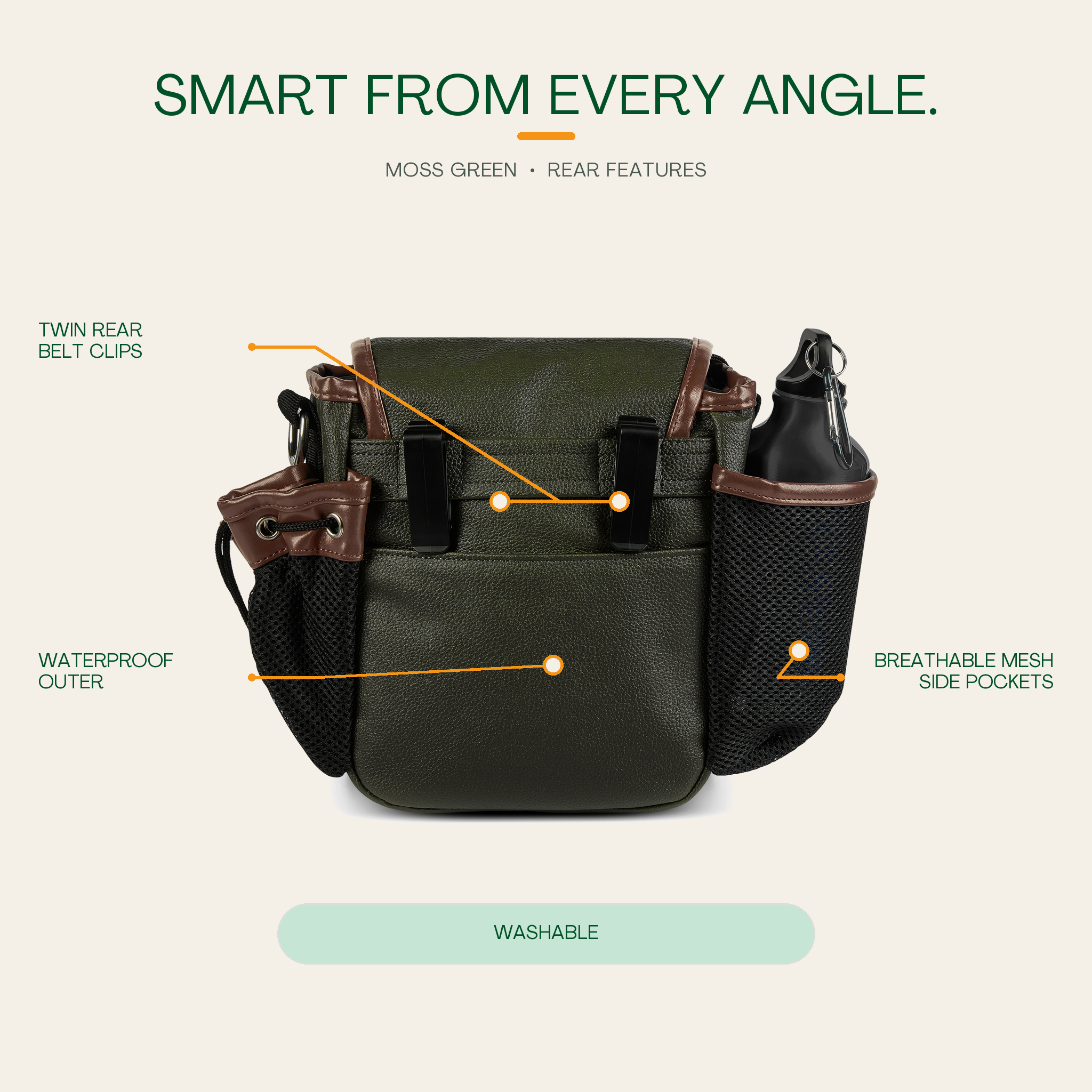
Good organisation means you can reach what you need one-handed, because the other hand is often busy holding a lead, a ball, or an overexcited spaniel. Separate compartments matter more than sheer size. Too much empty space can be just as annoying as not enough.
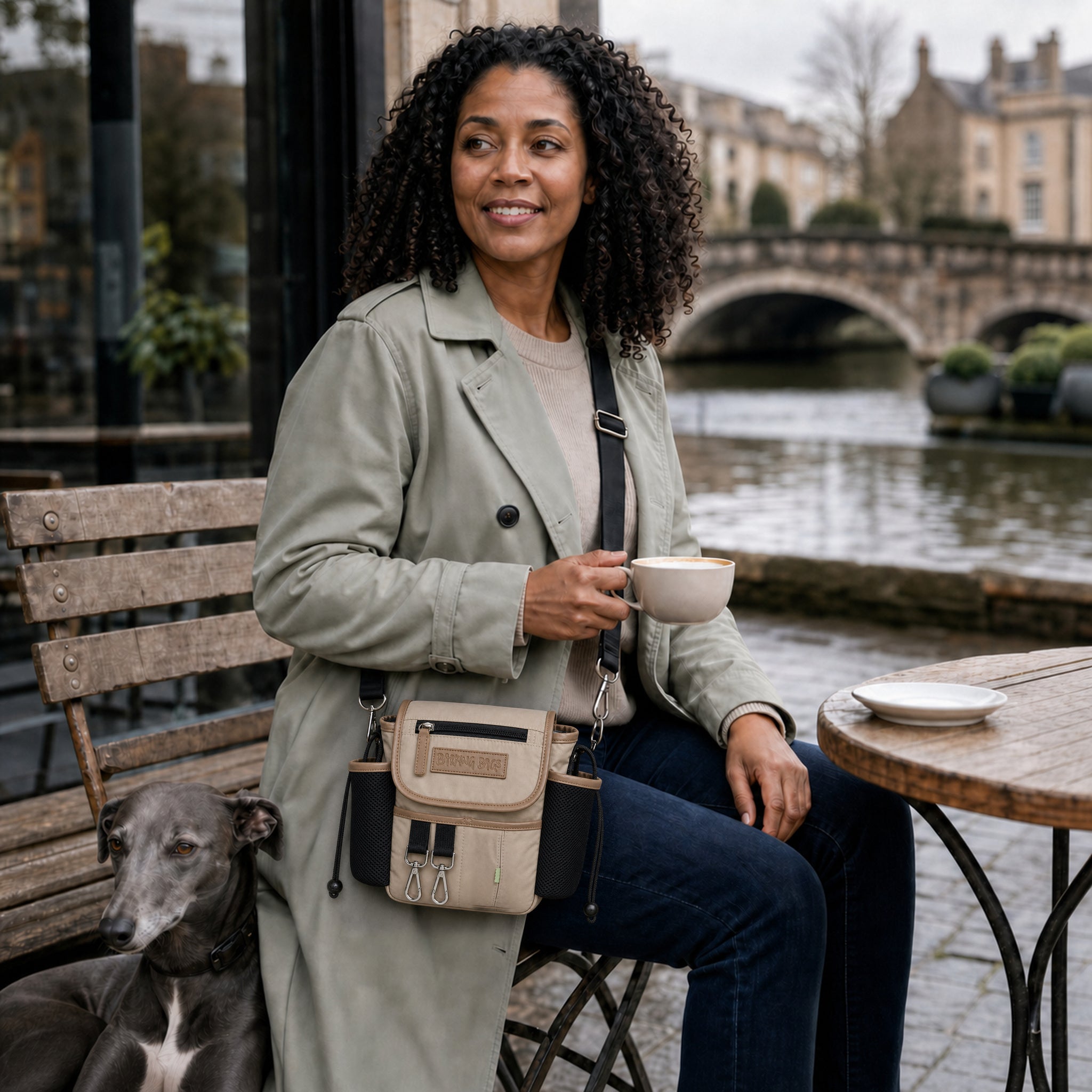
This is also where style and practicality should work together. A bag that looks smart but has no useful storage will not earn its place in your routine. Equally, if it feels clunky or overly utilitarian, many owners simply stop using it. The best setup is the one you actually want to take out every day.
What should a dog walking bag hold on longer walks?
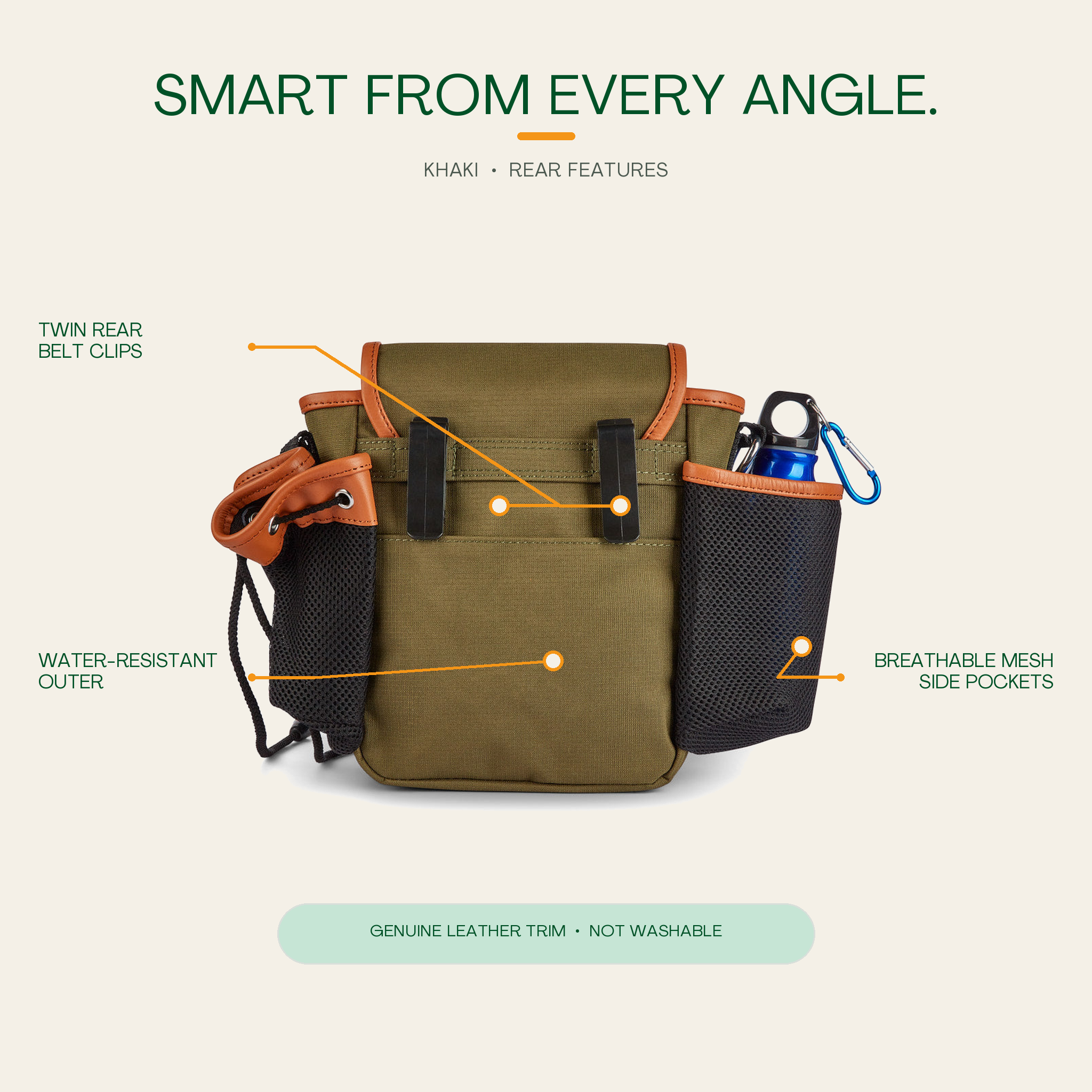
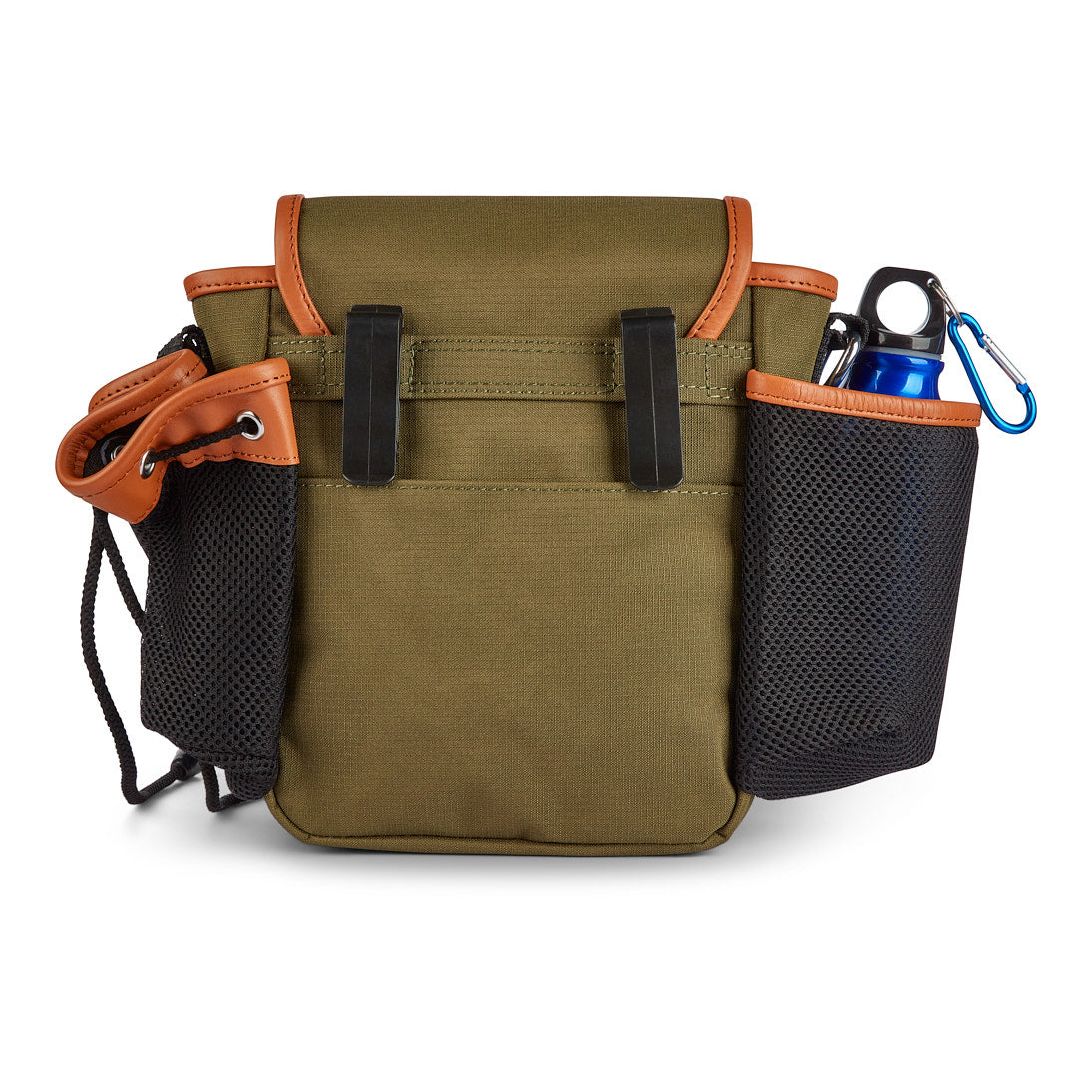
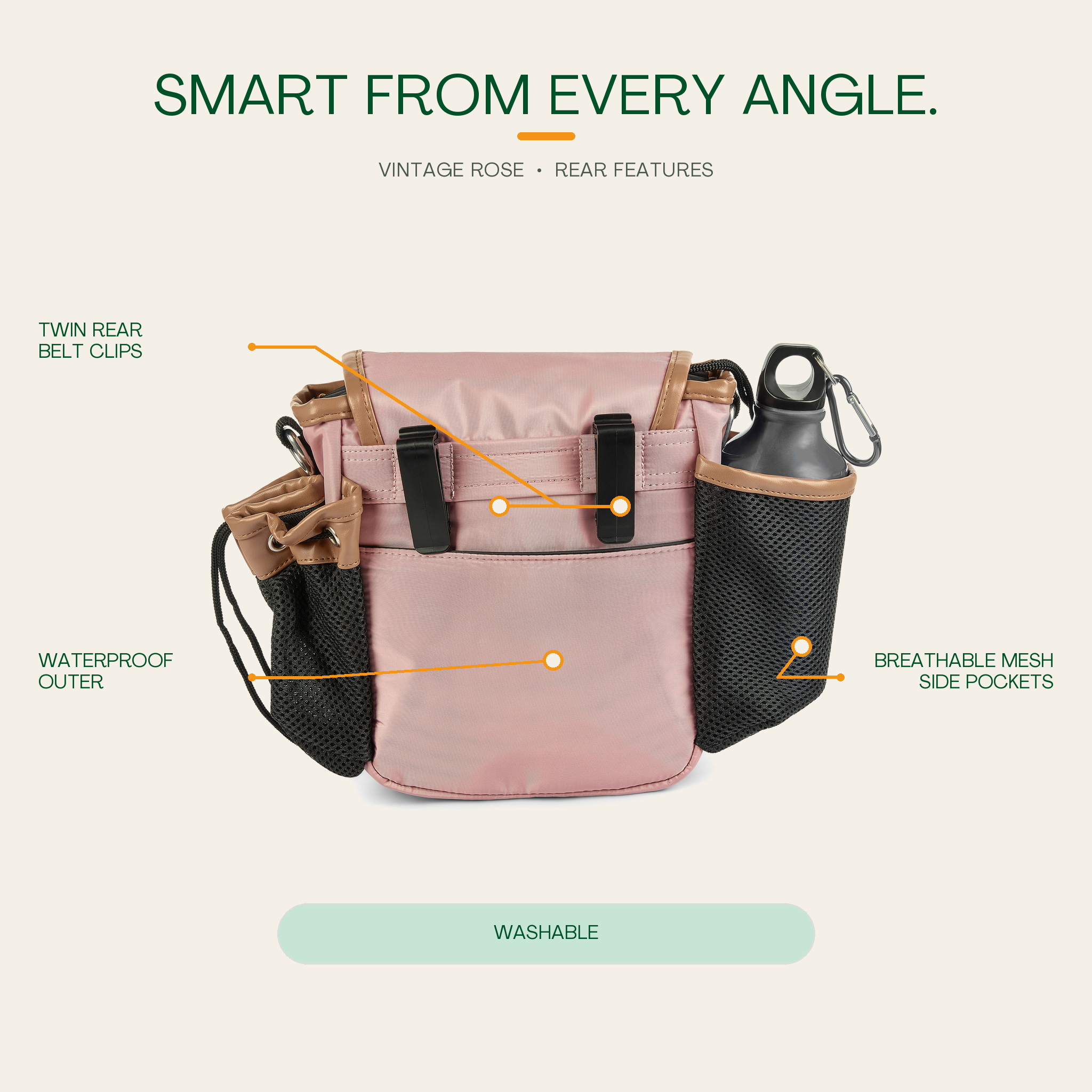
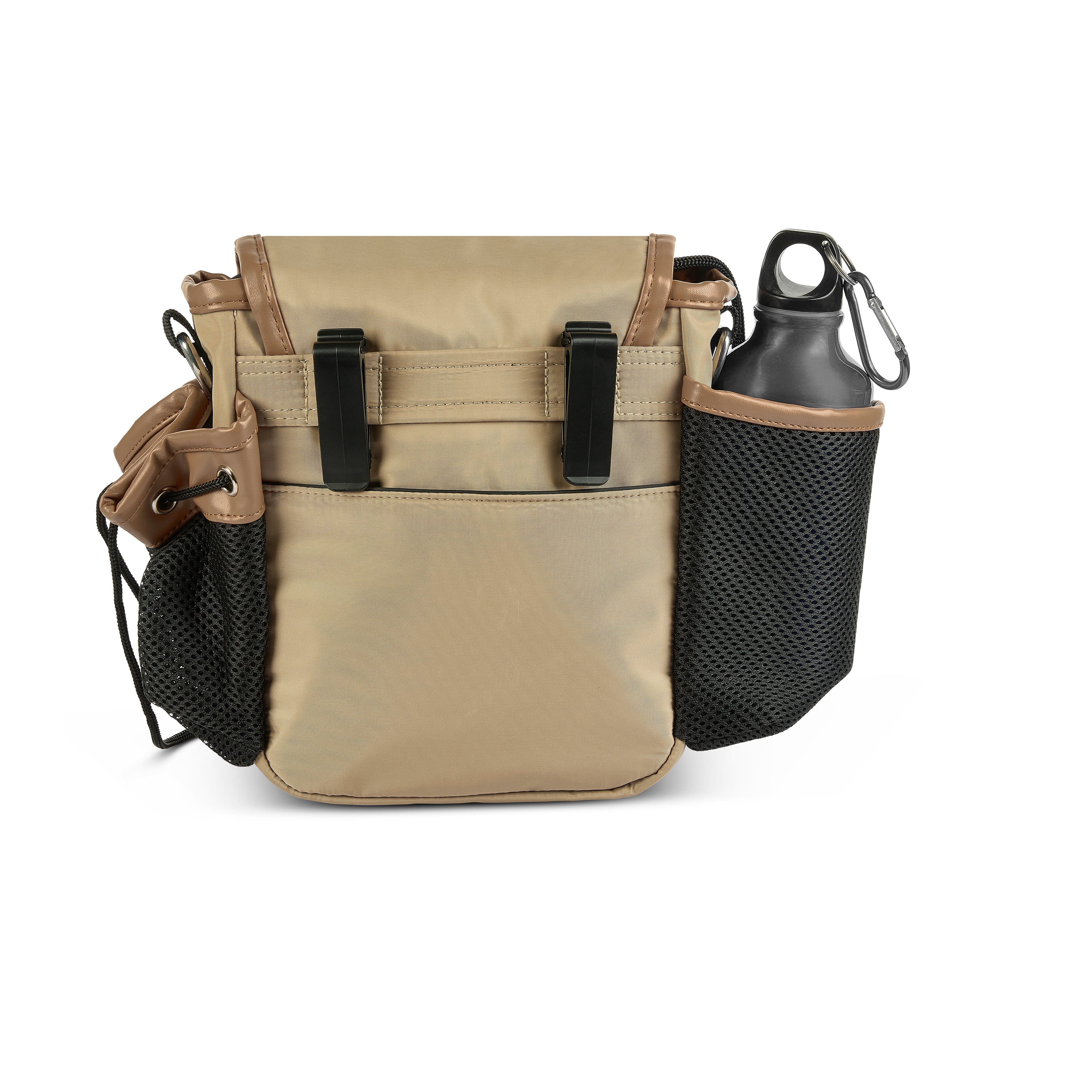
Once your walk goes beyond a quick local loop, your packing list changes. Water moves from optional to sensible, especially in warmer weather or if your dog is active. Some owners prefer a collapsible bowl, while others carry a compact bottle with a built-in trough. Either way, it needs a secure spot so it does not leak onto everything else.
For longer outings, you may also want extra treats or a small portion of food, particularly with puppies, high-energy breeds or dogs doing structured training. If your dog burns through tennis balls at an alarming rate or has one favourite toy that keeps them engaged, a separate section for that can be useful too.
A towel can earn its keep more often than people expect. In the UK, muddy paws and wet coats are not exactly rare. A compact microfibre towel is usually enough for a quick wipe-down before getting back into the car or heading into a café that welcomes dogs.
You might also carry hand sanitiser, tissues, or a lightweight charger if you are out for hours. None of these are glamorous, but all of them can be handy. The trick is being realistic. If your bag becomes a portable cupboard, it stops being comfortable.
Training walks need a slightly different setup
If your walks double as training sessions, what should a dog walking bag hold then? Usually, more treats and better access to them. You do not want to unzip three sections while your dog is offering the exact behaviour you have been working on all week.
A dedicated treat pouch or treat-safe compartment makes training smoother and cleaner. High-value rewards like cheese or sausage need to be stored in a way that is easy to clean afterwards. This matters even more for trainers and professional walkers who use the same bag repeatedly throughout the day.
You may also need a clicker, whistle, long line, toy reward or place marker depending on the kind of training you do. Not every dog owner will carry all of that, and that is the point. The right bag should support your routine, not force you into someone else’s packing list.
Seasonal extras are worth planning for
British weather has a habit of changing its mind halfway through a walk. That means a dog walking bag often needs to flex with the season.
In summer, water, a bowl and perhaps cooling gear matter more. In winter, you might prioritise paw balm, tissues, a pair of gloves or a compact layer if you are out longer than planned. During darker months, reflective accessories or a small torch can be practical additions, particularly for early morning or evening walks.
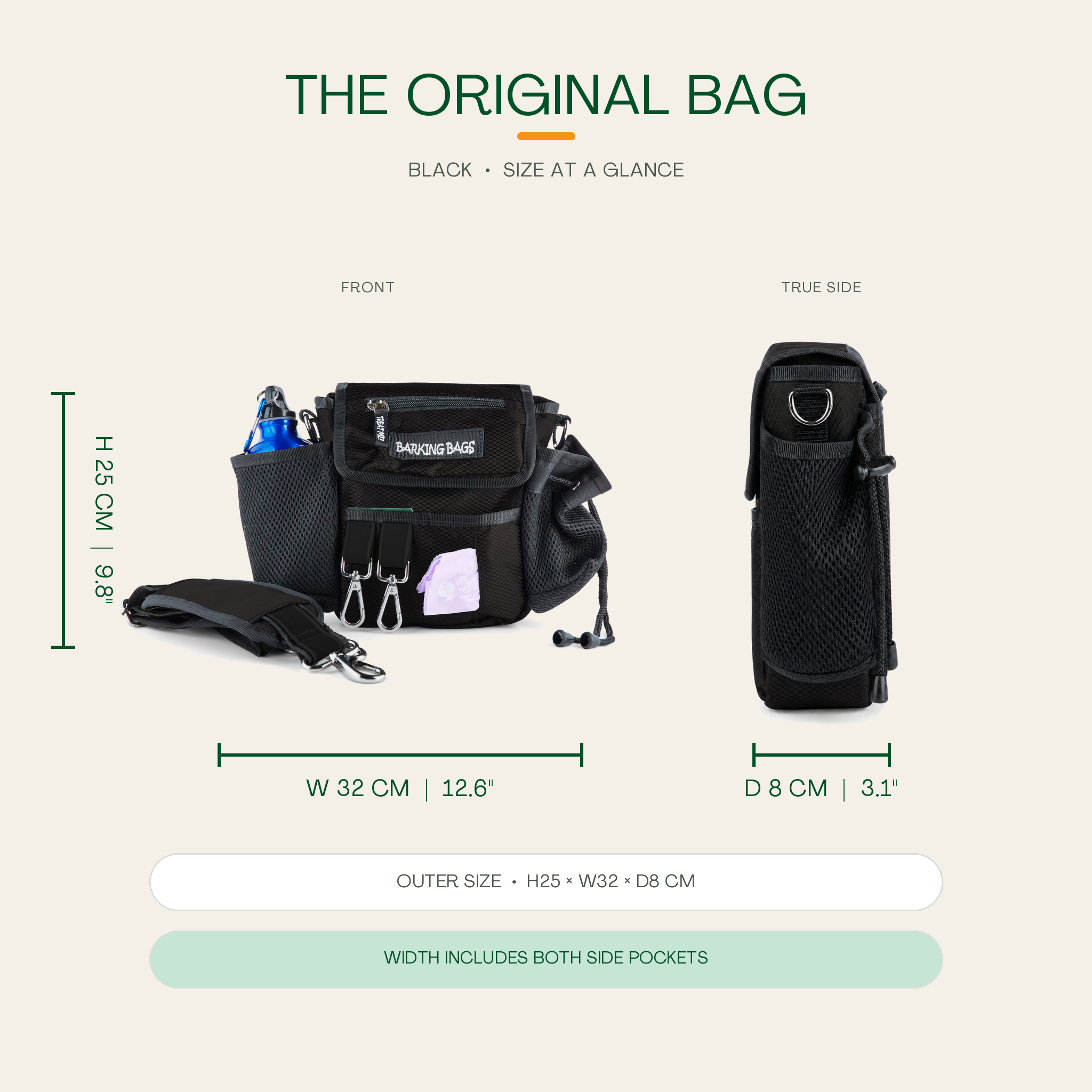
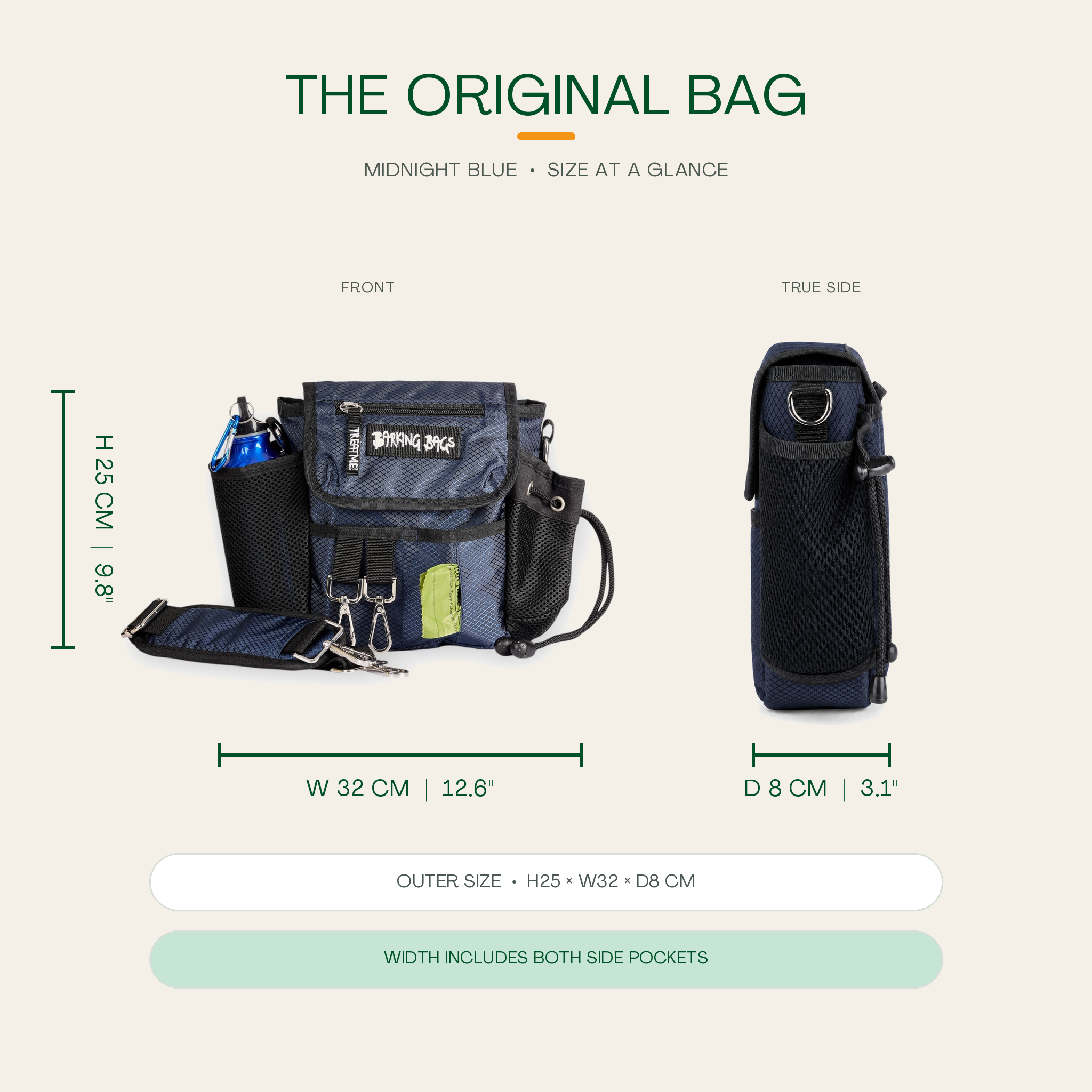
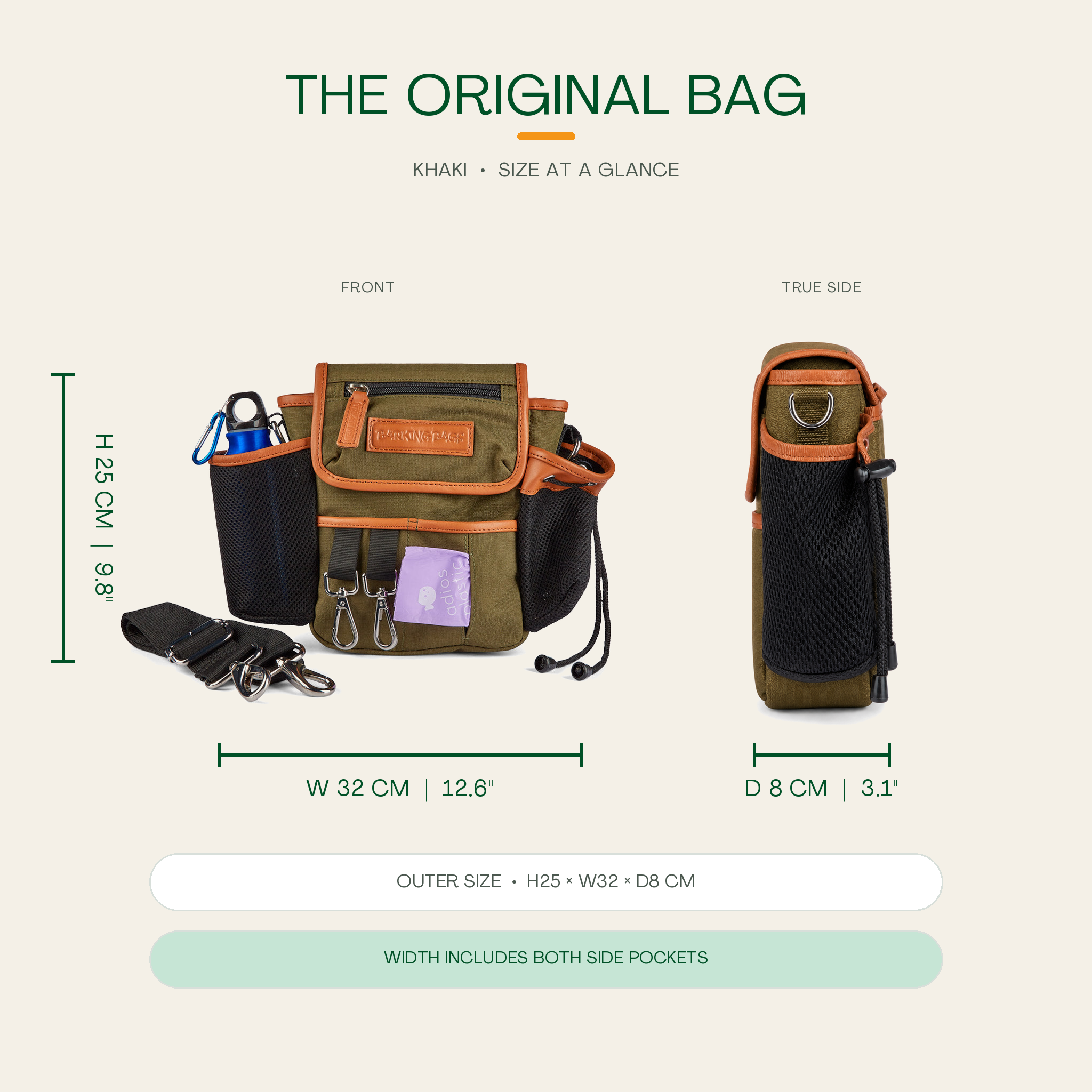
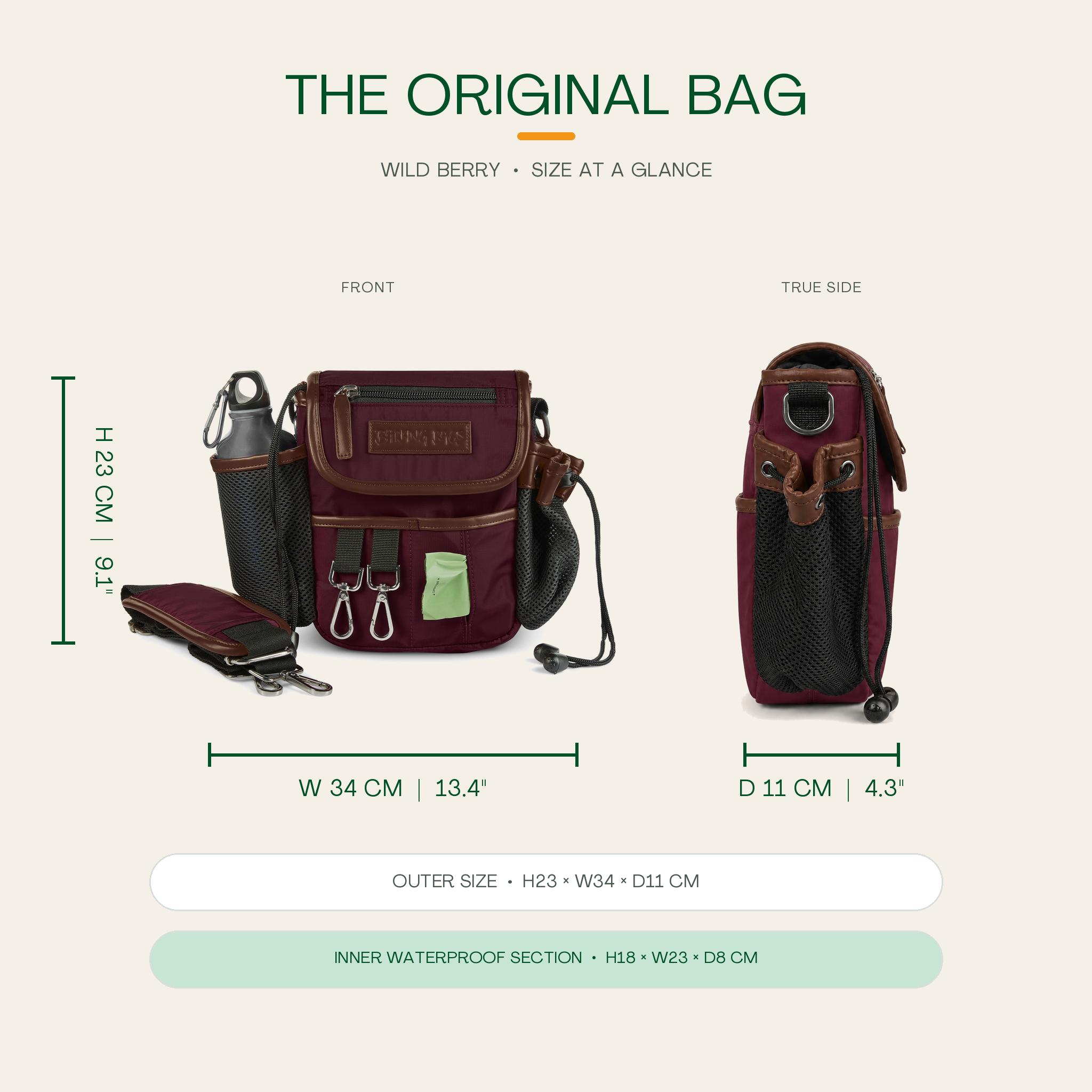
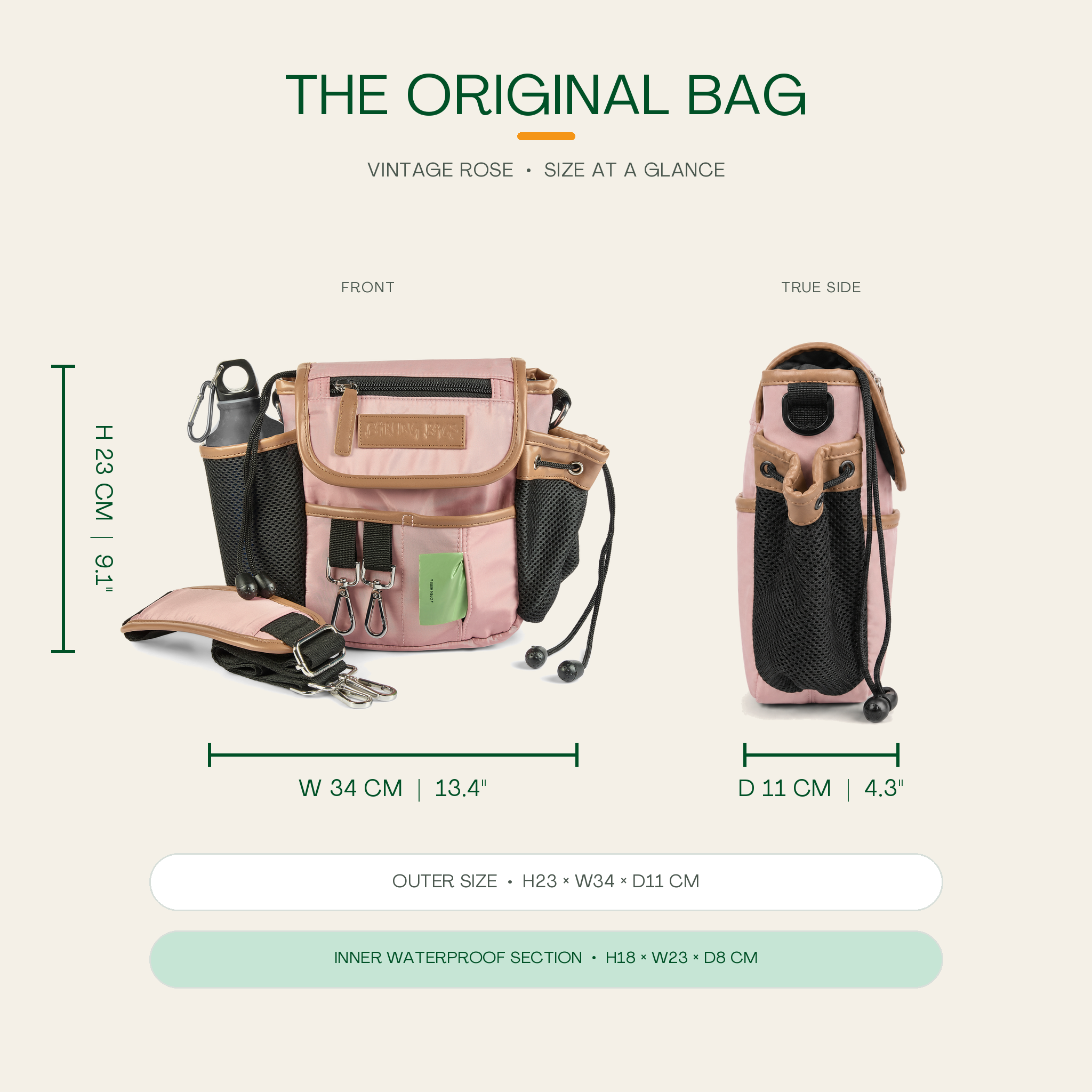
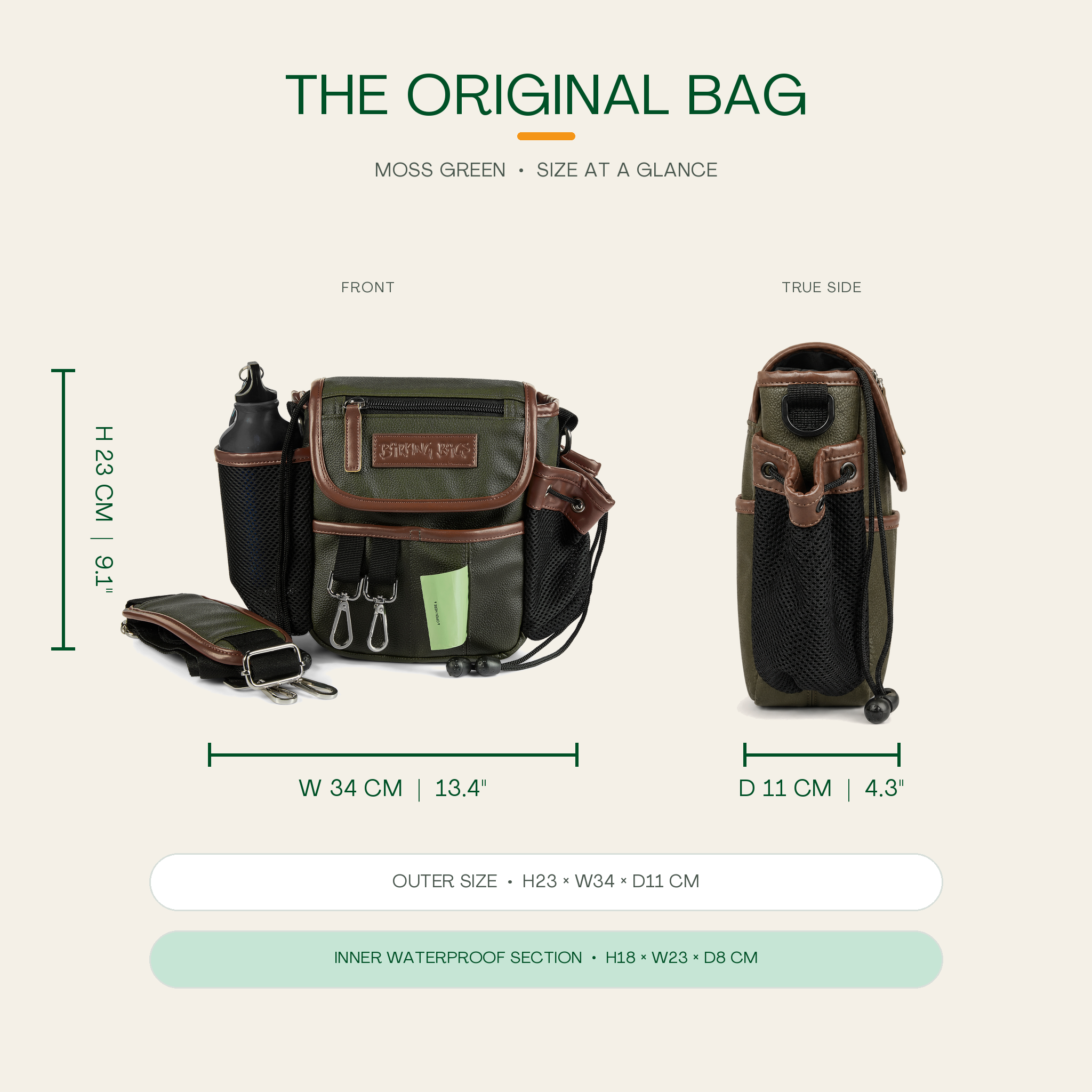
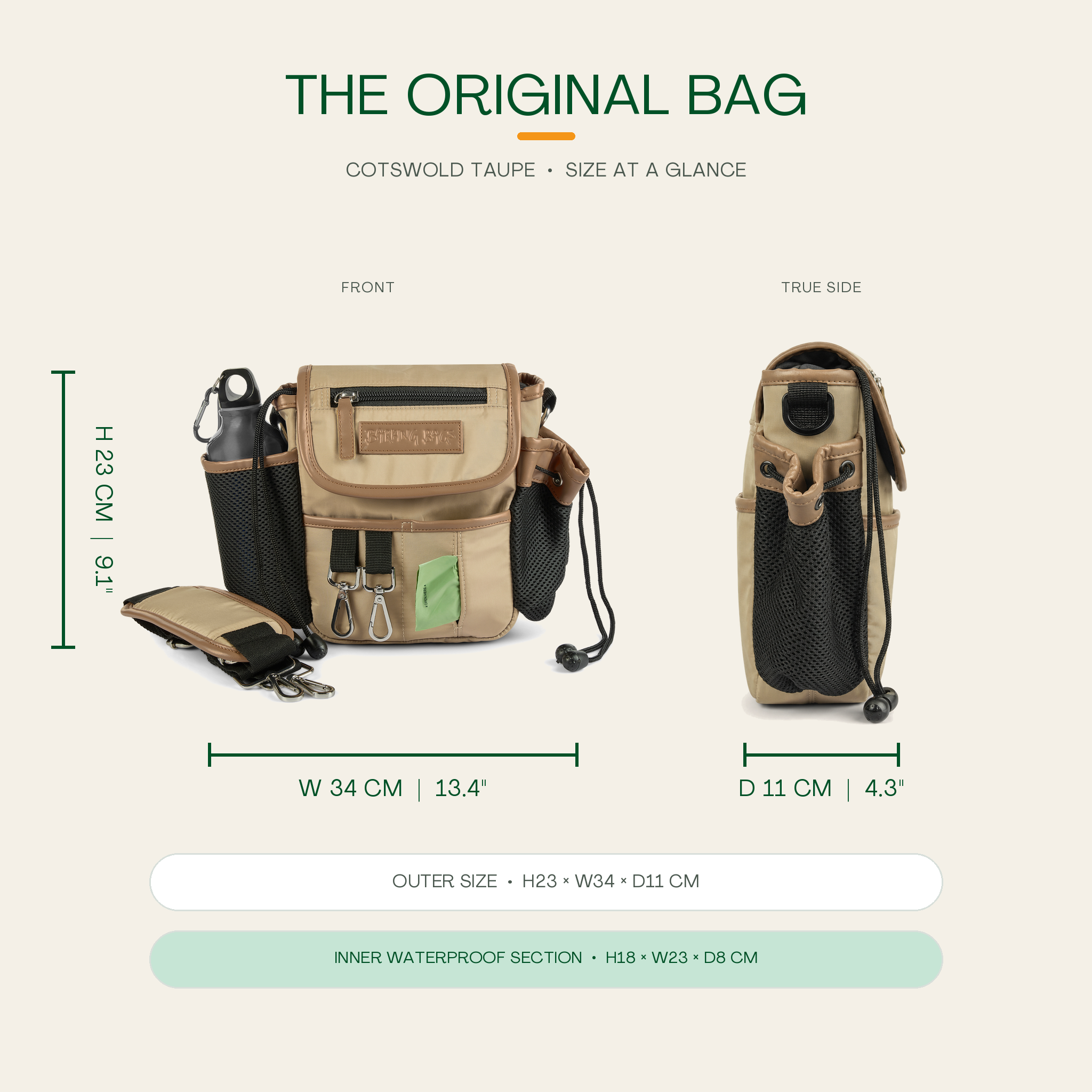
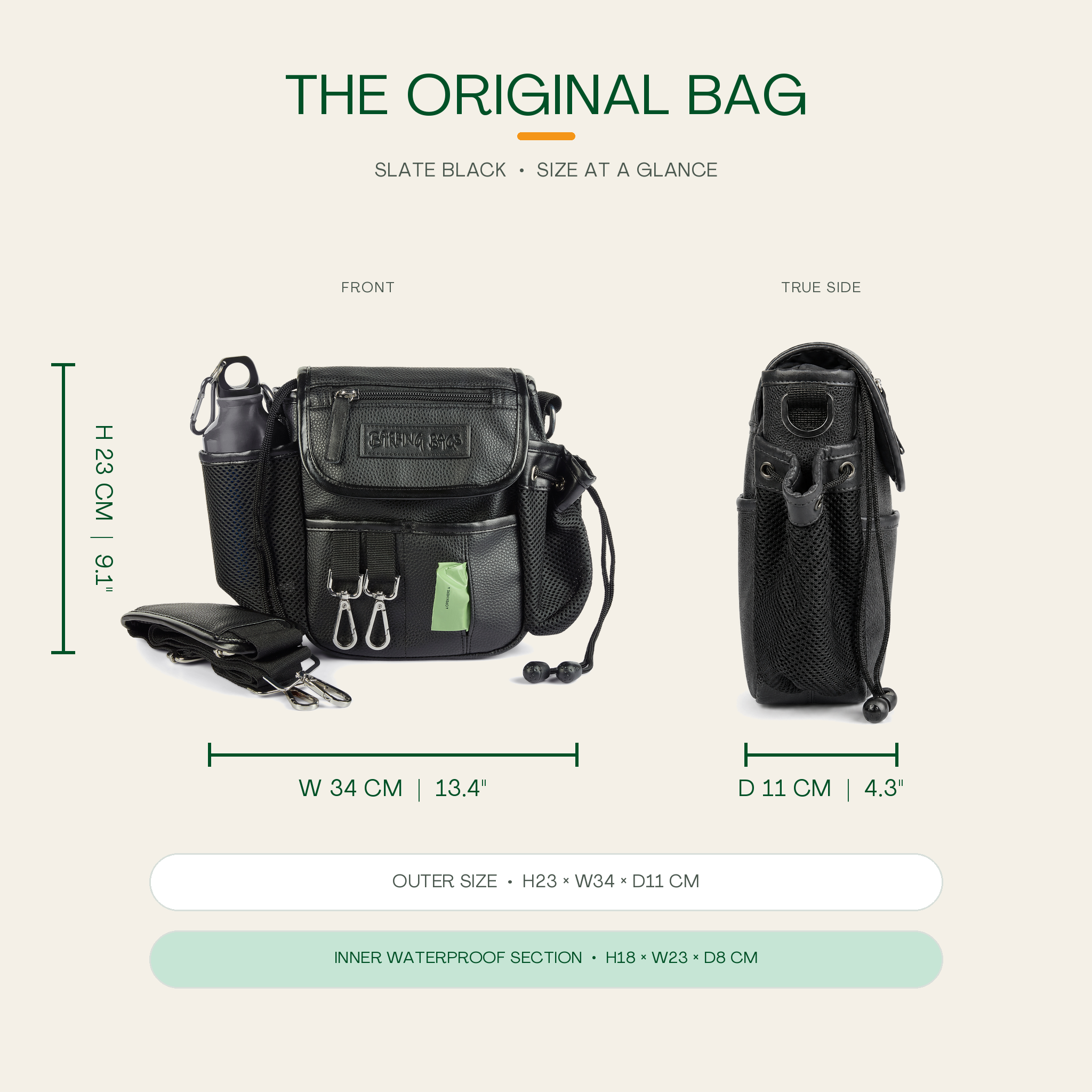
This is one of the clearest cases where bigger is not always better. A giant bag may sound useful for seasonal extras, but if it swings around, feels heavy or encourages overpacking, it can become a nuisance. A well-designed medium-sized bag with thoughtful compartments often works better than a large one with none.
The items that sound useful but often are not
It is tempting to treat a dog walking bag like emergency storage for every possible scenario. Sometimes that makes sense. Often, it just creates clutter.
Bulky toys, full food tubs, multiple spare leads and random household items tend to stay in the bag long after they stop being useful. The result is extra weight and less space for the things you actually need every day. If you are carrying the same forgotten items for weeks, your bag is working against you.
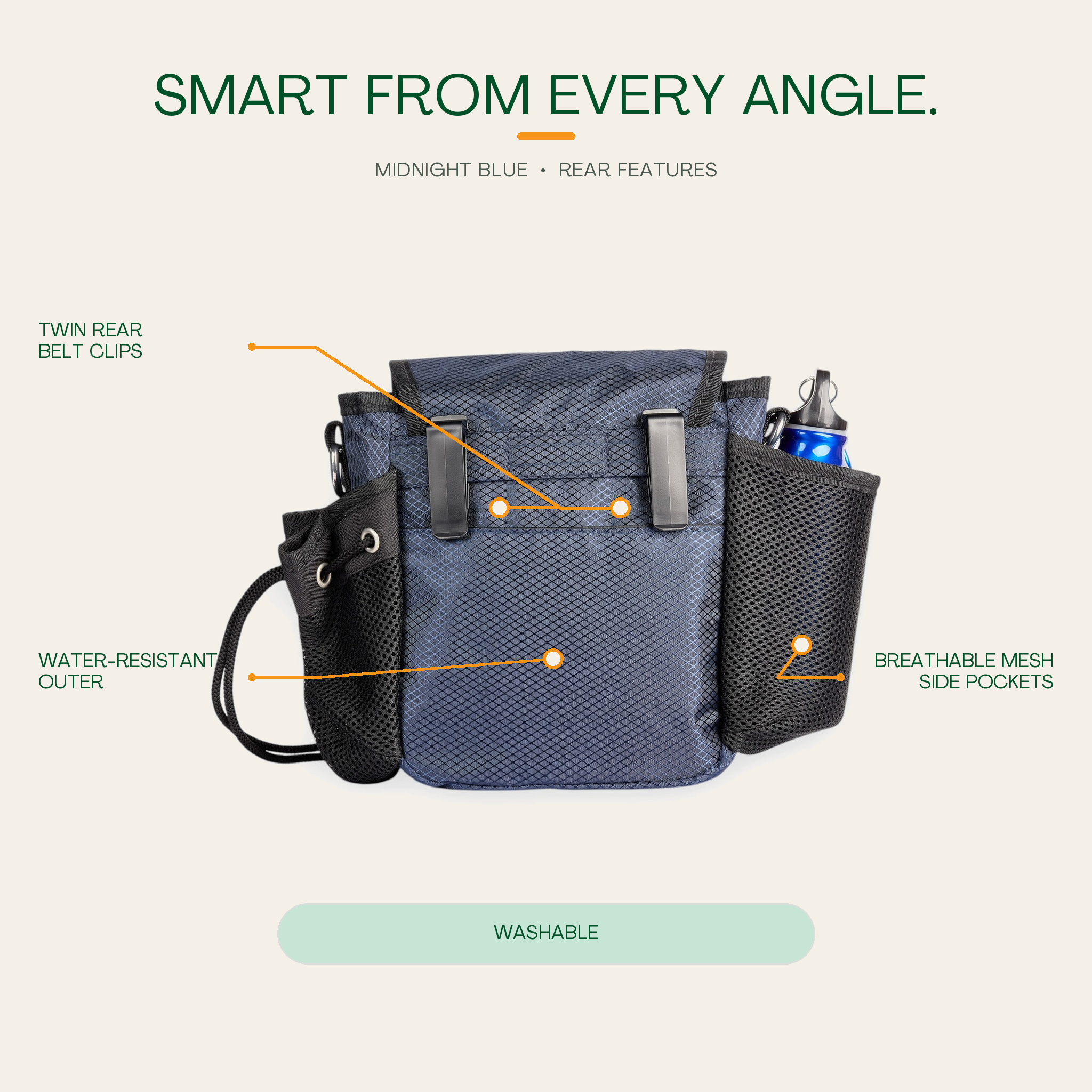
There is also a hygiene point here. Used treat wrappers, old receipts and loose biscuits at the bottom of a bag are not ideal. A dog walking bag should be easy to empty and reset. If it cannot cope with real-life mess, it is not especially practical.
Choosing what should stay in the bag all the time
The easiest way to stay organised is to create a permanent base kit. Poo bags, spare treats, sanitiser and a backup lead attachment can usually live in the bag full time. That way, you are not rebuilding your setup from scratch before every walk.
Then add temporary items depending on the day - water for a longer route, extra rewards for training, a towel if the park is looking particularly muddy. This approach keeps the bag ready to go while still giving you flexibility.
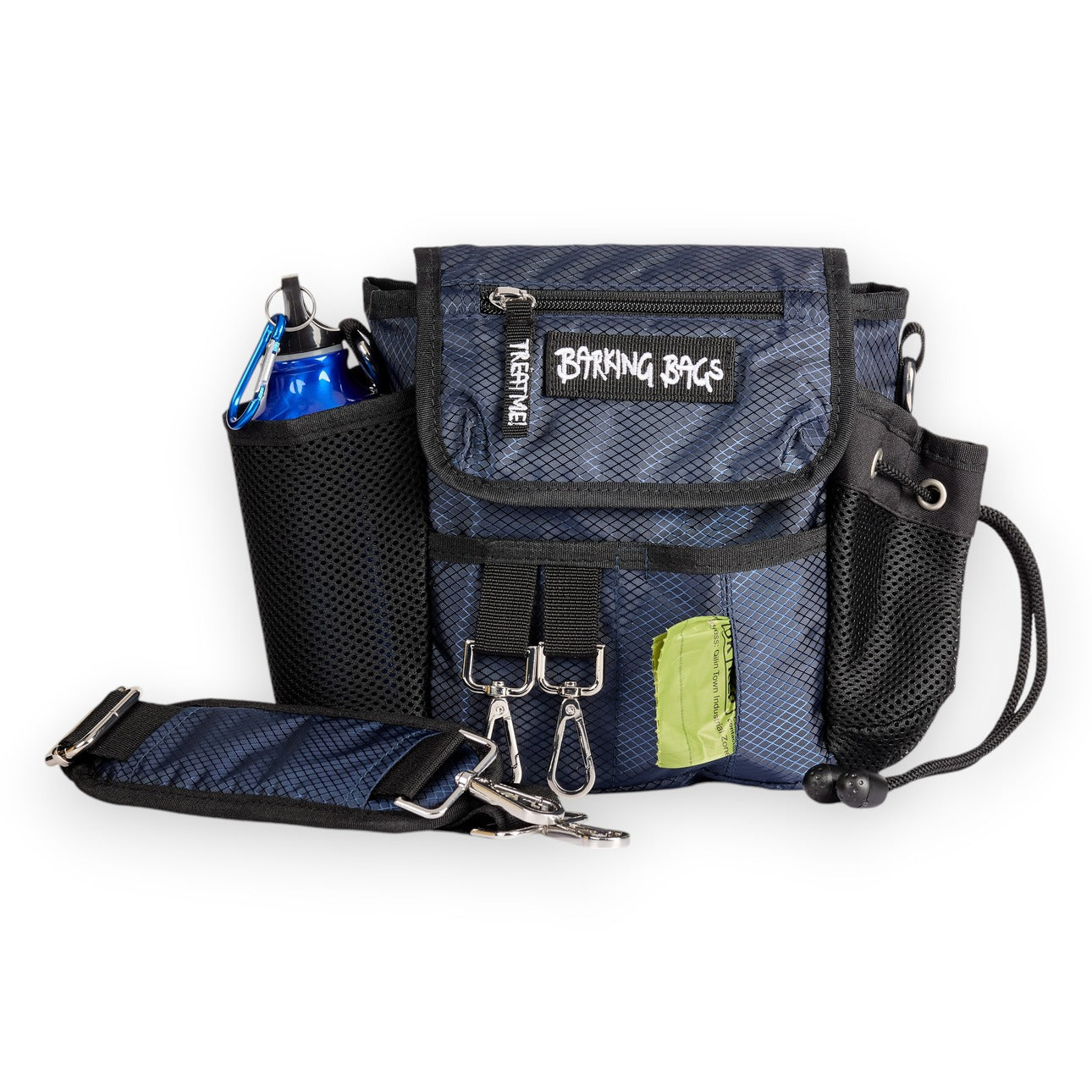
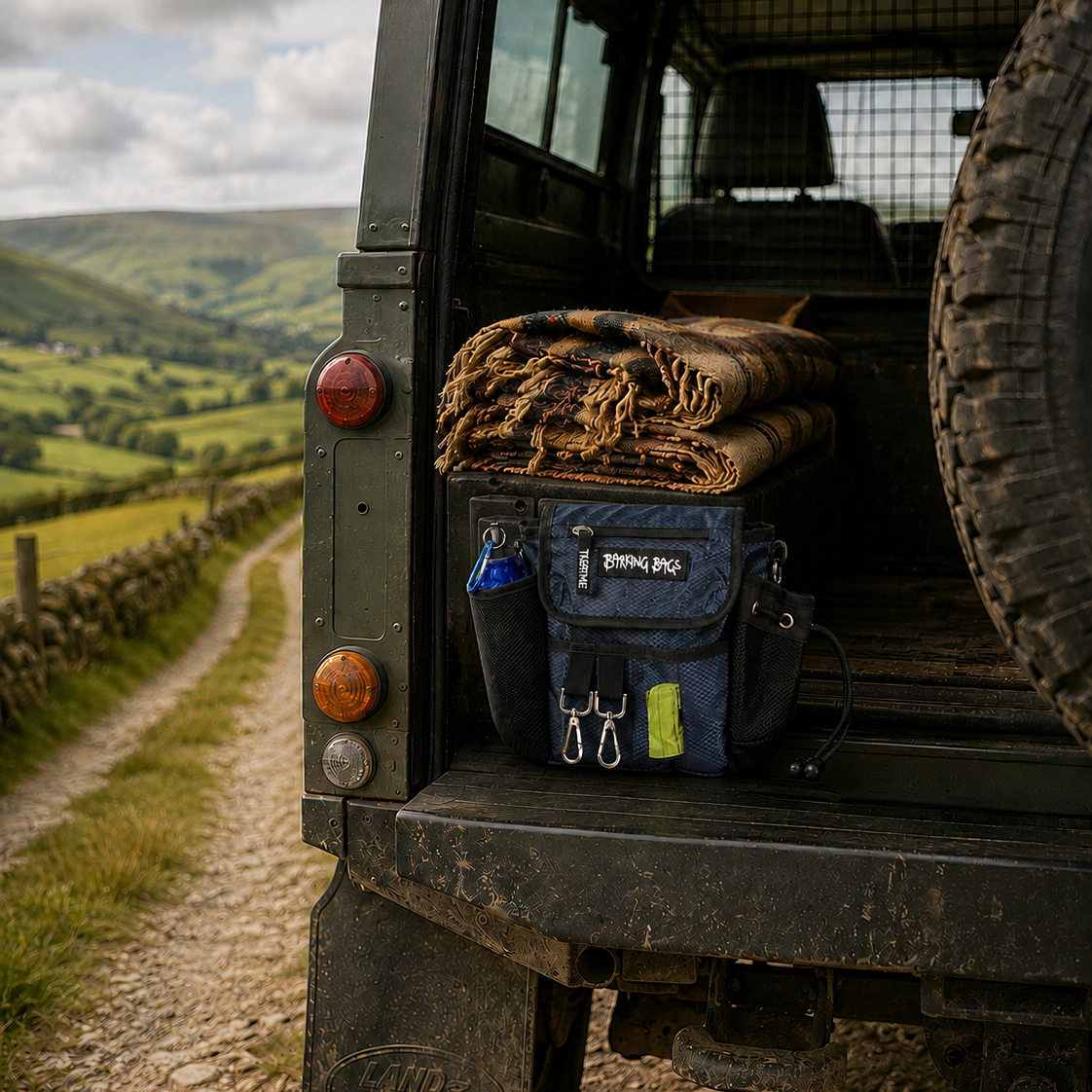
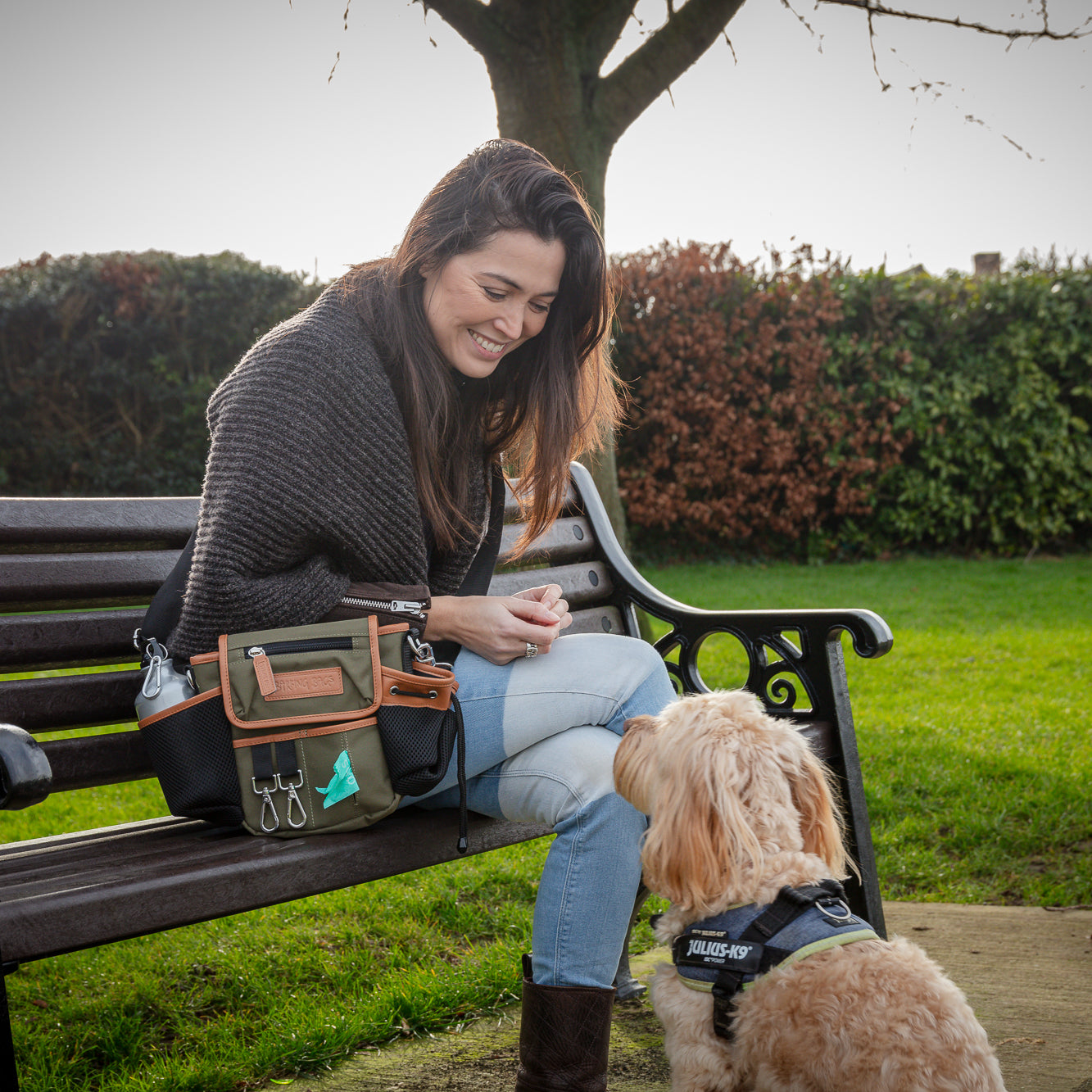
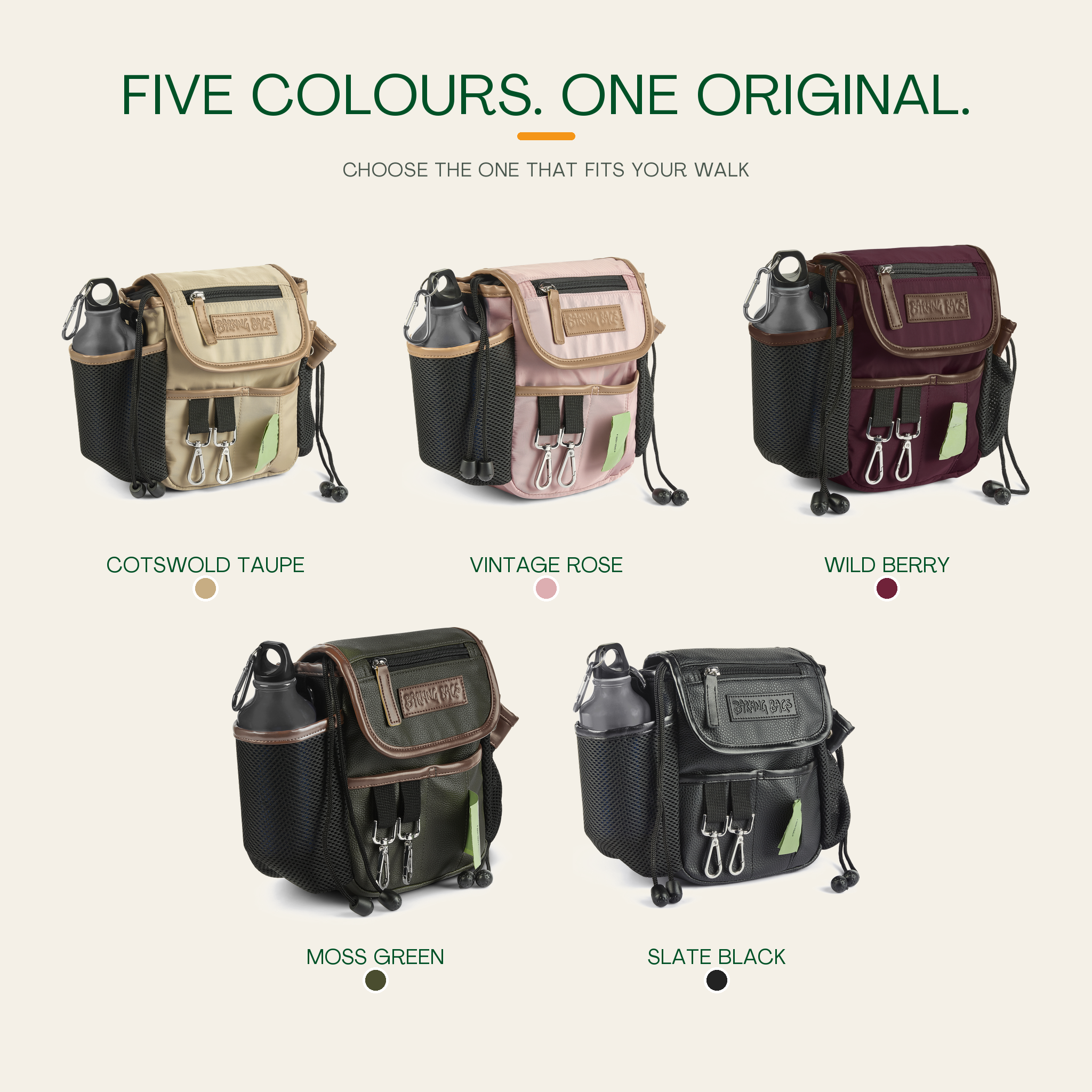
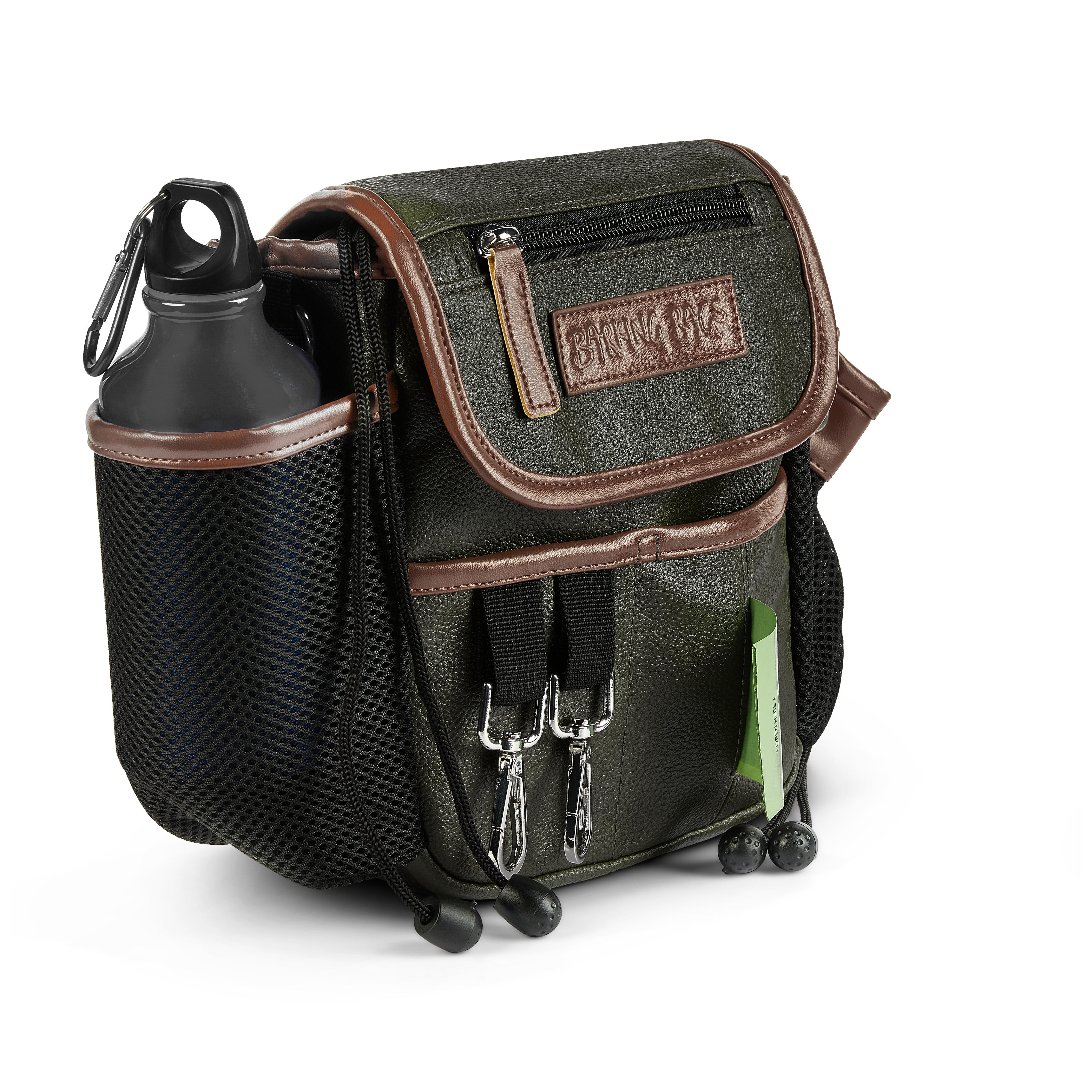
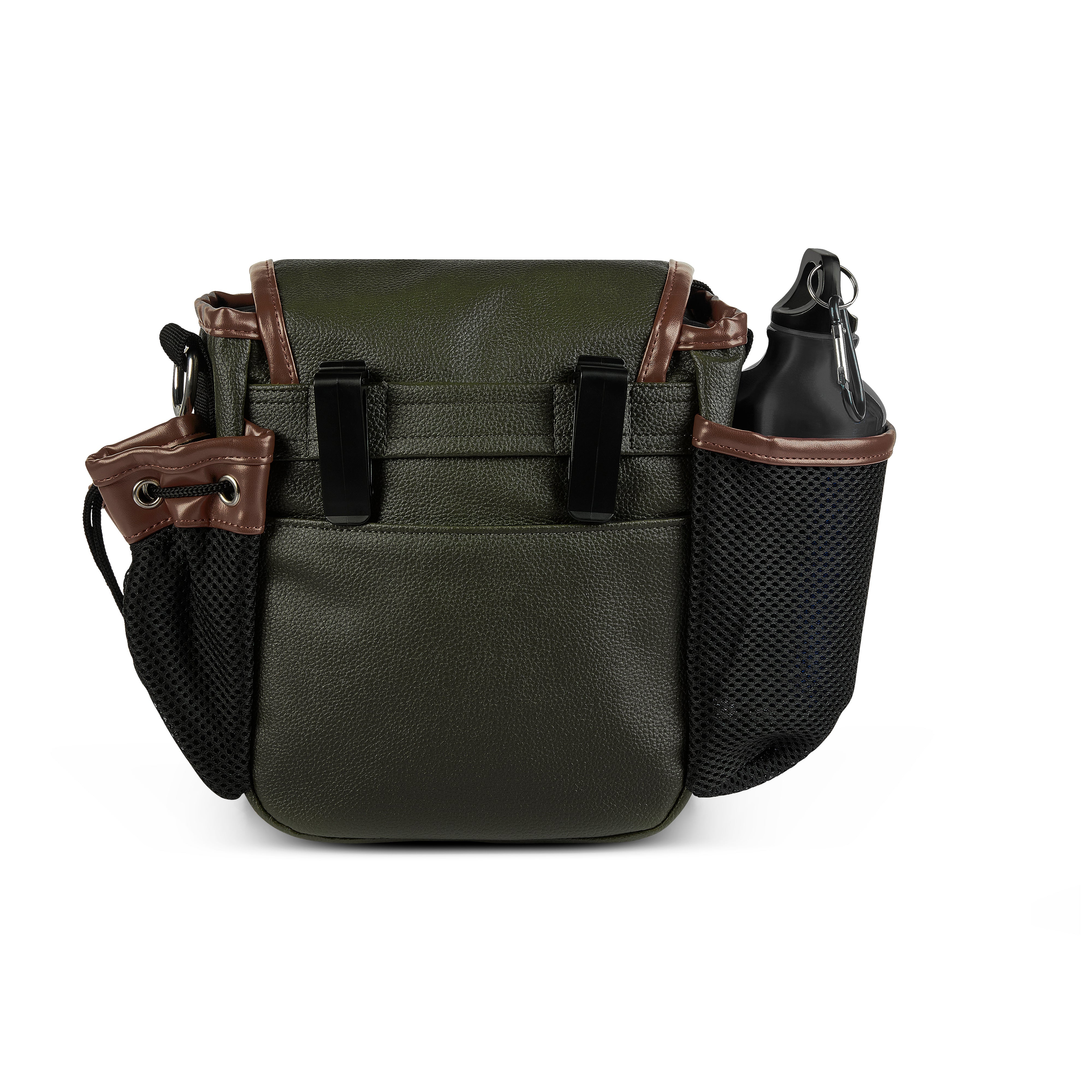
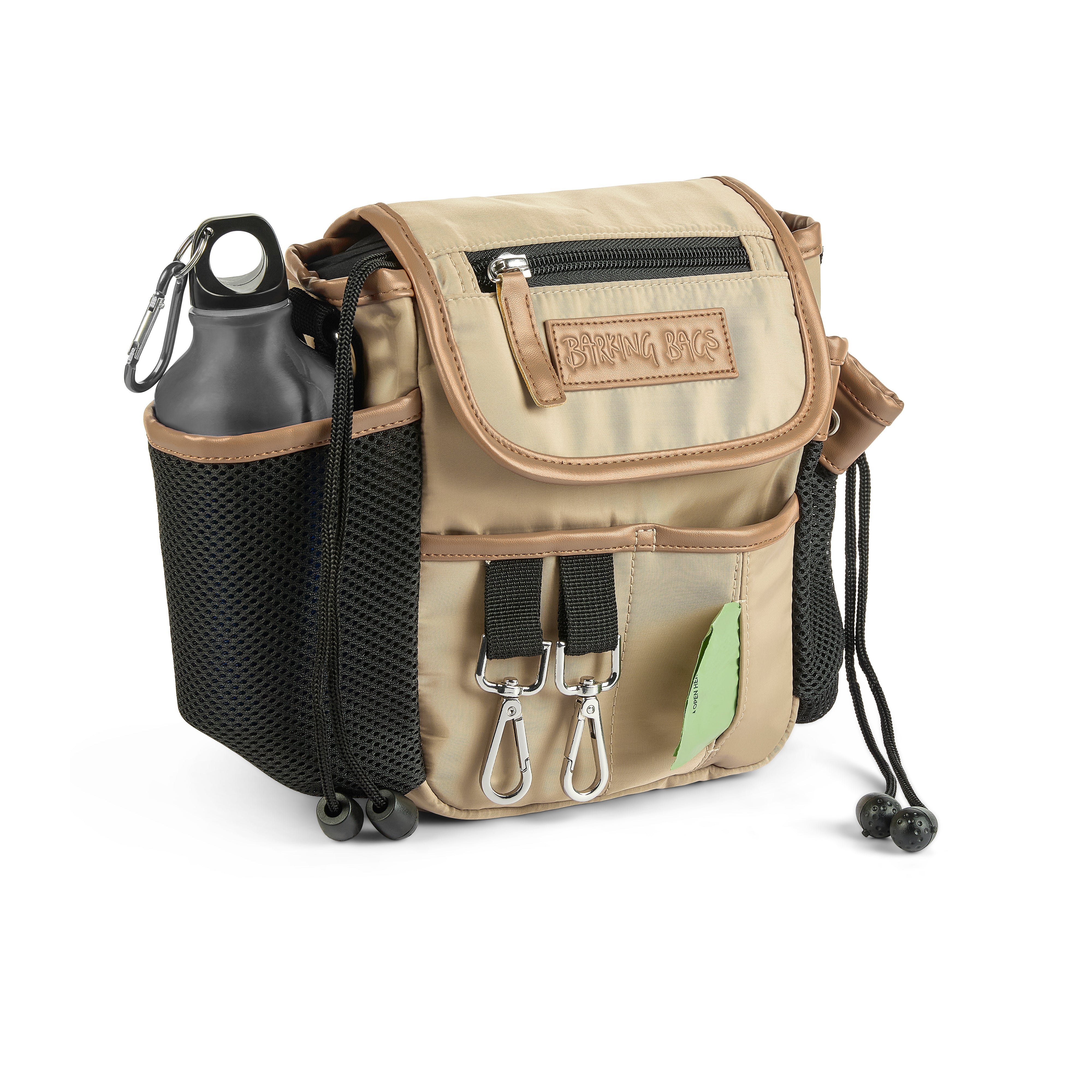
That is why purpose-built options tend to work so well. Bags made specifically for dog walks are designed around repeat use, quick access and sensible storage. At Barking Bags, that thinking sits at the heart of the category: carrying what you need for the walk, without compromising on style.
A good dog walking bag should make the walk feel lighter
The question is not only what should a dog walking bag hold, but what should it help you avoid? Usually, the answer is hassle. No more checking six pockets for a roll of bags. No more loose treats in your coat. No more trying to fit your phone, keys and dog gear into a handbag that was never meant for any of it.
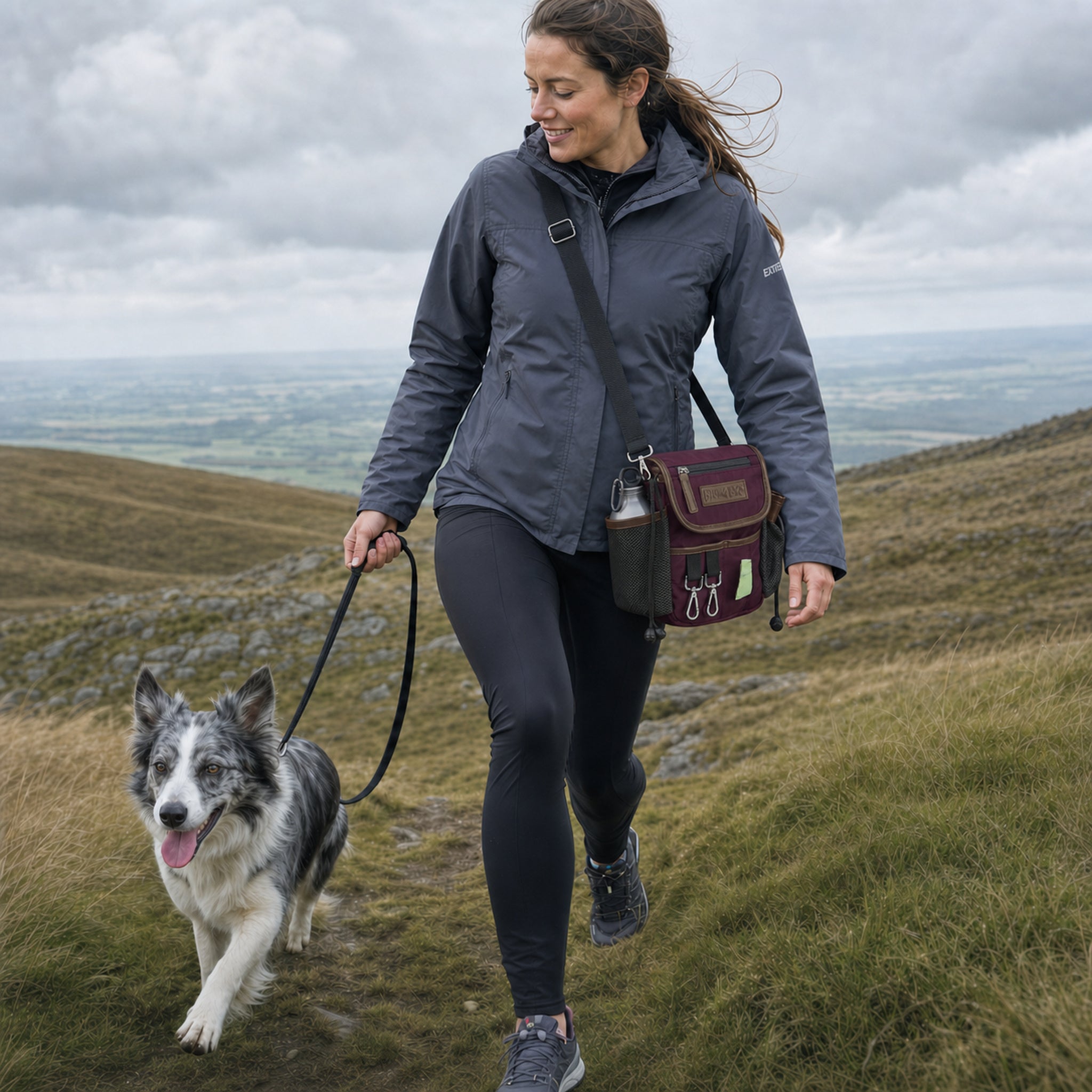
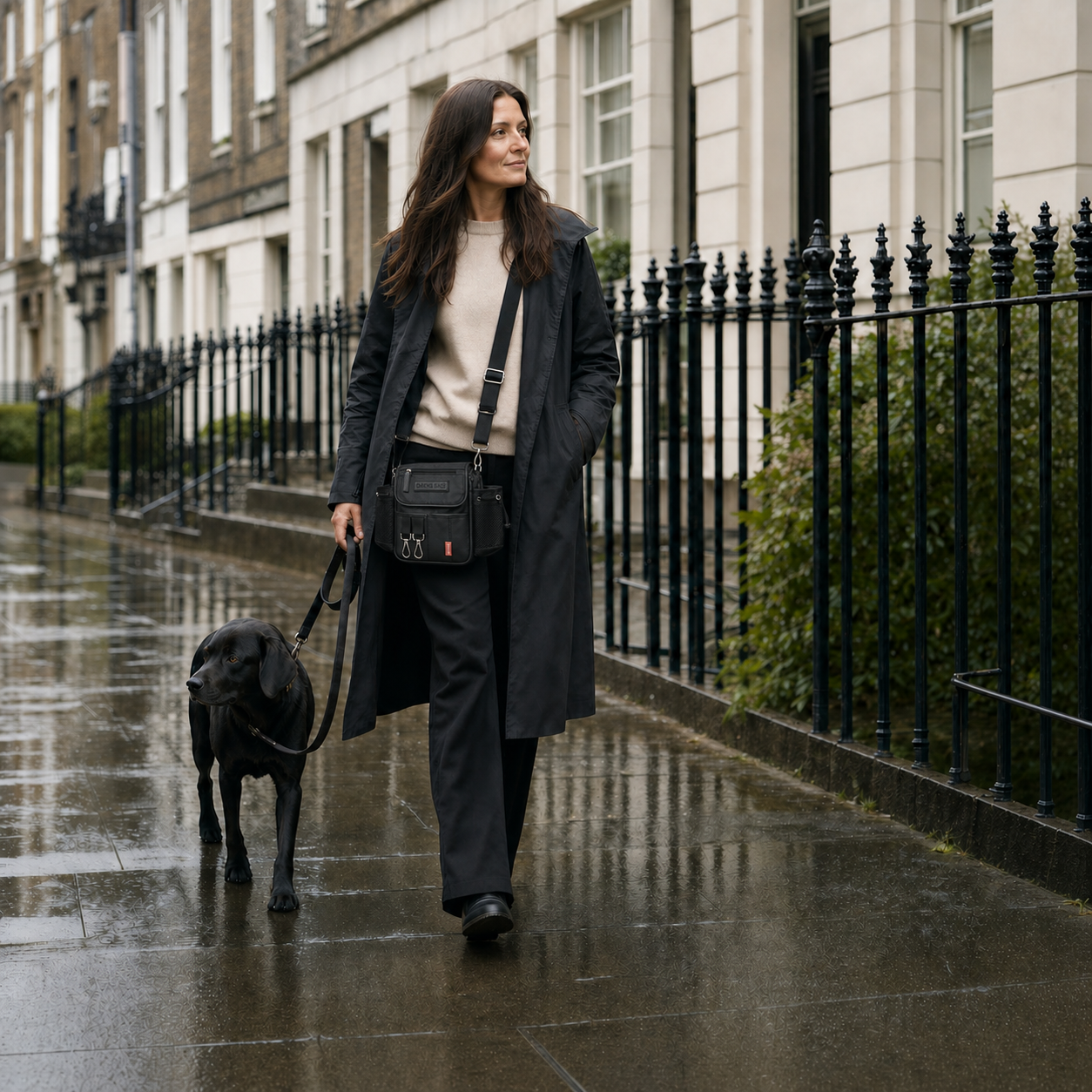
A well-packed dog walking bag should support the rhythm of the walk. Essentials should be easy to reach. Messy items should be contained. Personal items should stay secure. And the whole thing should feel comfortable enough that you grab it automatically on the way out.
If you are wondering what belongs in yours, start with the basics, then build around your real routine. The best bag is not the one carrying the most. It is the one that makes every walk feel more organised, more relaxed and a lot easier to enjoy.